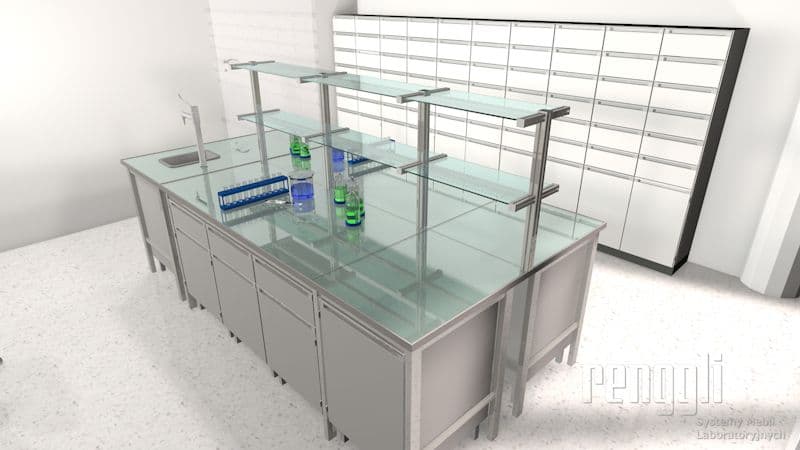
A CO₂ incubator is a specialized device used to carry out cell cultures in strictly controlled weather conditions, where stable temperature, adequate carbon dioxide concentration and high humidity are crucial. It is standard equipment in pharmaceutical and biological laboratories, and its proper operation also requires a properly designed environment, including ergonomic equipment such as medical furniture and laboratory furniture.
What are the applications of a CO₂ incubator in the laboratory?
The CO₂ incubator is a key device used in biomedical and pharmaceutical research, where it enables controlled cell culture and tissue culture in vitro. It is used, among m.in other things, to work with cell lines, stem cells and various types of tissues that require a stable growth environment.
In the field of clinical diagnostics,the CO₂ incubator is used in microbiological and virological studies, where maintaining appropriate weather conditions is crucial for the reliability of the results.
The device also plays an important role in tissue engineering and regenerative medicine, where it is used to grow cells on specialized media and biomaterials. This makes it possible to create tissue structures with a complex structure.
In more advanced applications, the CO₂ incubator also supports biotechnology, including 3D cell culture, which requires extremely homogeneous and stable growth conditions.
What environmental parameters does a CO₂ incubator need to control?
The CO₂ incubator must provide very stable environmental conditions, as even small fluctuations can affect the results of cell cultures.
- Temperature – typically in the range of +5°C above ambient temperature to +50°C, with a key operating point of 37°C. Temperature stability is paramount here, which ensures repeatable growth conditions in the incubation chamber.
- Carbon dioxide concentration – controlled from 0-20% using high-precision infrared (IR) sensors. Proper regulation of CO₂ affects the pH of the culture medium, which is stabilized thanks to the presence of a bicarbonate buffer.
- Relative humidity – maintained at 90-95% to prevent evaporation of media and support non-condensing humidification.
Various heating systems are used in modern devices. The water jacket ensures a very even temperature distribution thanks to high thermal inertia, whilethe air jacket allows for a faster response to changes and more dynamic parameter control.
The whole is managed by a microprocessor PID controller, which is responsible for precise monitoring of parameters and maintaining a stable controlled atmosphere throughout the device, also under changing operating conditions and opening doors.
How does a CO₂ incubator prevent contamination of samples?
Maintaining sterility in the CO₂ incubator is crucial for proper cell culture and protection against contamination. To do this, the device uses several layers of security.
One of the most important solutions is the built-in decontamination programs, including hot air sterilization at temperatures up to 180°C, which effectively removes microbes from inside the chamber.
Many models also use a HEPA filter, which ensures high microbiological purity and allows you to achieve up to ISO 5 cleanliness inside the work chamber.
Construction materials are also important. The stainless steel interior makes it easy to clean and reduces the growth of microorganisms, and the antibacterial copper elements additionally support protection against biological contamination.
An additional layer of safety is provided by alarm systems and temperature protection, which inform the user about deviations in operating parameters. In more advanced devices, biodecontamination is also used, e.g. with the use of hydrogen peroxide (H₂O₂), which allows for effective disinfection of the entire chamber without dismantling the device.
What requirements must the furniture in the CO₂ incubator environment meet?
Laboratory furniture in the vicinity of theCO₂ incubator must meet strict hygiene requirements and ensure full stability of the device's operation, especially when conducting sensitive cell cultures.
Eliminating mechanical vibrations is crucial – furniture must guarantee absolute stability so as not to disturb the incubation conditions and not affect the delicate cell cultures. Equally important is the ergonomics of the workstation, which allows for comfortable and safe operation of the device.
Work surfaces must be chemically resistant and easy to clean, which supportsthe sterility of the environment. For m.in example, high-pressure laminate (HPL) and antibacterial surfaces are used here, which limit the growth of microorganisms.
It is also important to meet occupational safety standards, including the requirements of BSL (Biosafety Level) safety standards, especially in biological and medical laboratories.
Proper ventilation of the rooms and the use of chemically resistant materials and high-quality construction materials further increase the safety and stability of the entire working environment, as well as support the control of conditions in the vicinity of the incubator.
How to safely stack and move CO₂ incubators?
The safe positioning and transport of CO₂ incubators is crucial for their stable operation and the protection of delicate cell cultures. Laboratories use solutions that both save space and maintain full operational safety.
Special stacking adapters are usedto stack incubators, which allow for stable placement of one device on top of another. This solution allows you to optimize laboratory space, especially in places with limited space.
When moving heavy equipment, wheeled bases are used, which facilitate the mobility of the equipment and at the same time allow for easy maintenance of cleanliness under the incubator, which is important for occupational hygiene. Such solutions are also used in the wider context of space organization, as in the case of treatment room equipment, where mobility and ease of cleanliness are crucial.
A very important element is alsothe validation and certification of such configurations. Any stacked or mobile setup must comply with the manufacturer's requirements and safety standards to ensure stability of operation, user protection, and proper incubation conditions.
May 29, 2026