Medical rooms
Furniture for an outpatient clinic: choice and requirements
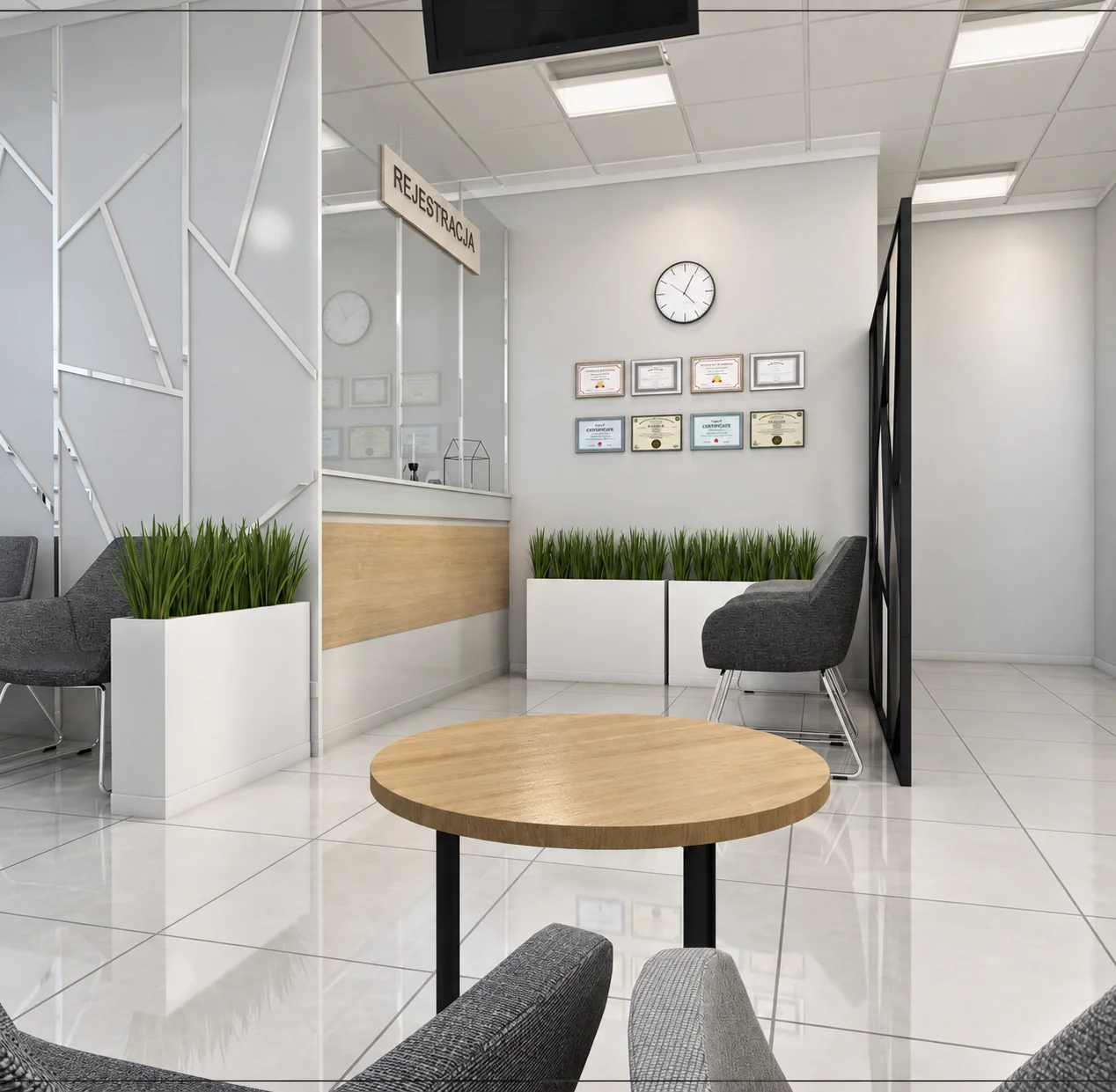
Furniture for an outpatient clinic must be washable and disinfectable. What to choose for the office, reception and waiting room, and which rules to check?
Offer
Medical furniture covers the cabinets, tables and fitted units used in doctor's offices, outpatient clinics and hospitals.
About the category
Renggli medical furniture is made either from acid-resistant stainless steel in grades AISI 304 and AISI 316L or from powder-coated sheet steel 0.8 to 1.5 mm thick. AISI 304 has a smooth, non-porous surface that does not absorb organic matter and makes it harder for microbes to adhere. AISI 316L contains added molybdenum, which raises its resistance to pitting corrosion, so it is the grade of choice for areas with high humidity and the most frequent disinfection.
Metal medical furniture in powder-coated sheet steel has a coating containing silver ions, 60 to 80 microns thick. It works well for document cabinets, shelving and doctor's office furniture. Stainless steel goes into worktops, cabinets and medical cabinet units, wherever the surface is in daily contact with water and cleaning products. For advice on planning a room like this, see our article on choosing stainless steel medical furniture.
Medical furniture in stainless steel and powder-coated sheet steel withstands daily cleaning and disinfection, provided the product suits the material. For stainless steel, alcohol-based or active-oxygen disinfectants are recommended because they do not damage the passive protective layer. Chlorine-based products should only be used well diluted and rinsed off thoroughly, as any residue can cause localised corrosion.
The requirement comes from a Polish regulation of the Minister of Health on the premises of healthcare providers (Dz.U. 2022, item 402): furniture must allow cleaning and disinfection. The exceptions are furniture in administrative and staff rooms, in psychiatric and addiction treatment clinics, and in practices run from residential premises. Design makes cleaning easier: wall-hung cabinets or cabinets on tall legs leave the floor clear, and mobile cabinets have locking castors. Our guide to furniture for medical clinics shows how these requirements apply to the consulting room, reception and waiting room.

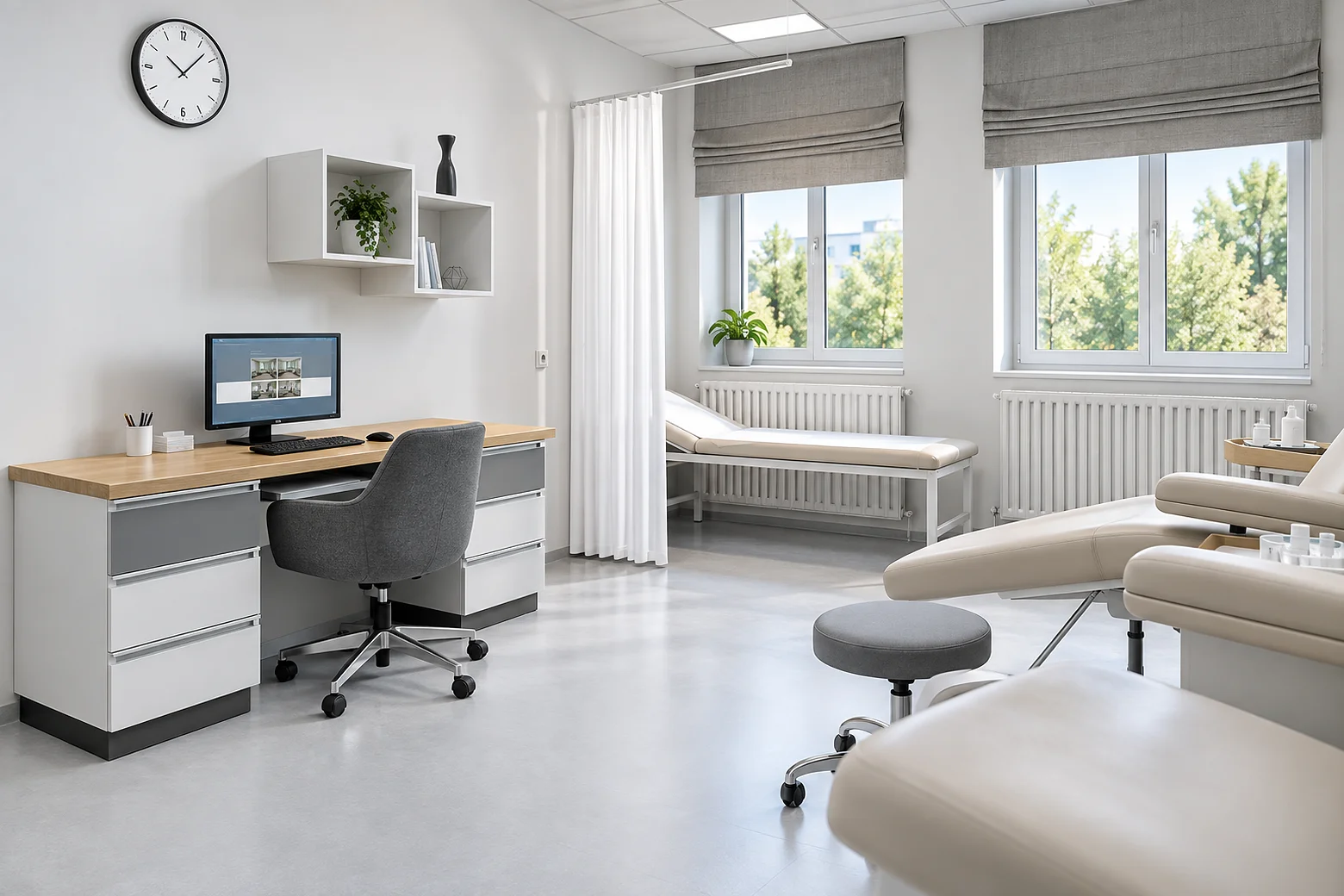
A doctor's office needs a desk, an examination table or couch, a medicine cabinet and a records cabinet. Treatment room furniture also includes a treatment table, mobile instrument trolleys and a worktop next to the washbasin. The regulation requires every room used for examinations or procedures to have a washbasin with hot and cold water, a soap dispenser, a disinfectant dispenser and a holder for disposable towels. The fitted units are therefore planned around this point, often with a stainless steel laboratory sink.
A family doctor's office must be at least 15 m². An individual medical practice office or a dental surgery must be at least 12 m², plus 8 m² for each additional dental chair. Rooms like these use desks height-adjustable from 70 to 120 cm and filing cabinets for A4 and B5 documents, with drawers rated for up to 40 kg. For a screen-based workstation at reception, Polish regulations (Dz.U. 2025, item 58) require a desk with a matt surface and an adjustable chair. Our specialist chairs suit both reception and the doctor's office. Furniture for waiting rooms, reception, staff rooms and offices is collected on our doctor's office furniture page. We cover the list required by regulations in our articles on mandatory doctor's office equipment and on what treatment room equipment includes.
Medical cabinets have lockable medicine compartments, shelf or drawer layouts and surfaces that resist disinfectants. Glazed doors with safety glass let nurses check stocks of dressings without opening the cabinet. Thermolabile medicines require a refrigerated cabinet that holds the temperature between +2°C and +8°C. Narcotics are stored in a separate lockable metal cabinet or a safe. For medical records archives we make medical shelving. For advice on choosing compartments, locks and dimensions, see our guide to selecting a medical cabinet for medicines.
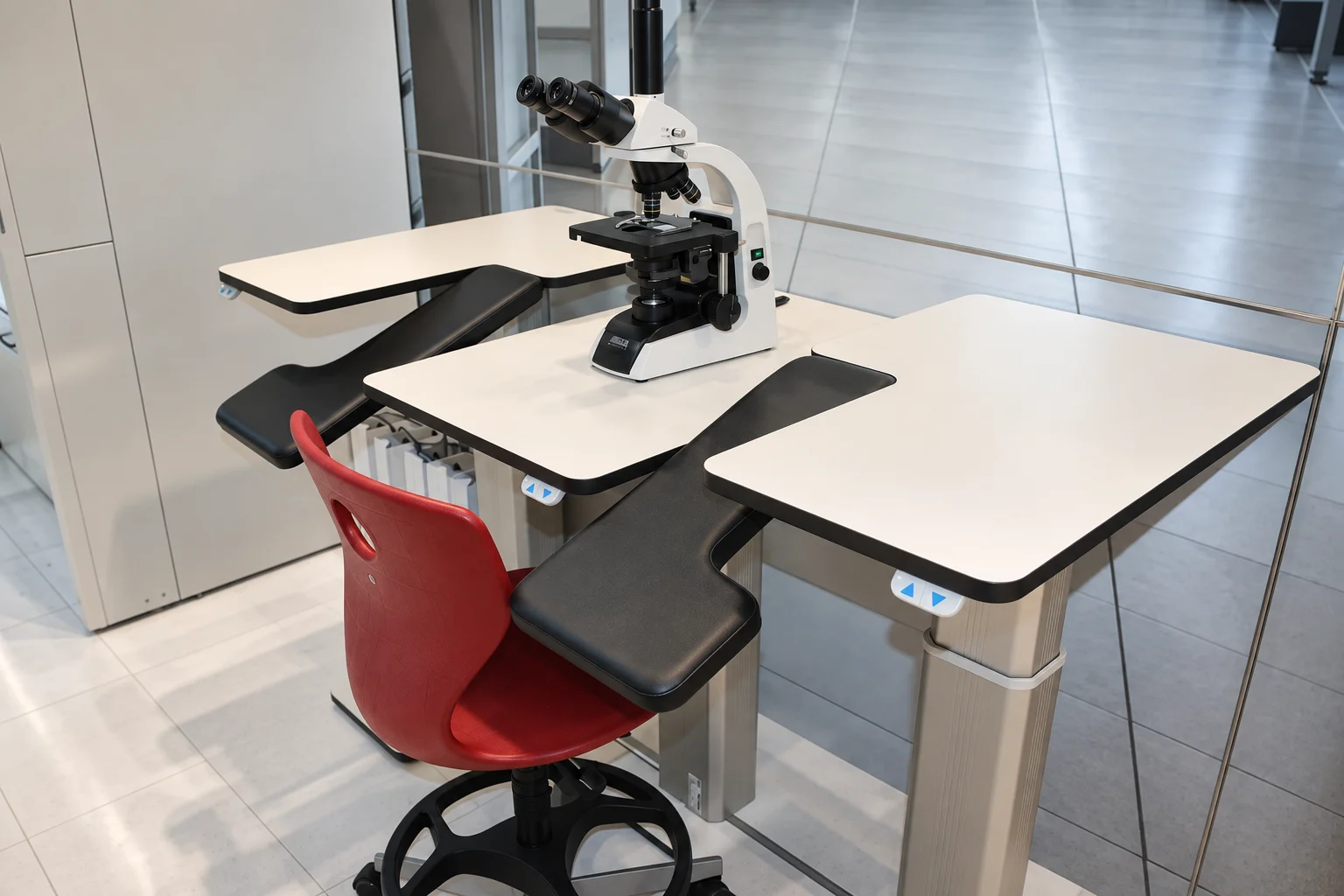
Medical tables have steel frames, disinfectant-resistant worktops and a load capacity of 150 to 200 kg. Newer models have electric height adjustment. A smooth worktop leaves fewer places for contamination to collect after a procedure. Microscope tables have an anti-vibration design, a worktop rated for up to 300 kg and height adjustment from 750 to 900 mm. They are used in histopathology laboratories, cytology labs and diagnostic offices. Anti-vibration weighing tables, also called balance tables, have a natural stone or composite worktop and adjustable feet. They damp vibration during weighing in hospital pharmacies and medical laboratories, and come in single and double workstation versions.
A room where chemical reagents are handled calls for laboratory furniture with chemical-resistant worktops. We explain the differences in our comparison of treatment room versus laboratory.
Hospital rooms are fitted with medical cabinet units, medicine trolleys, bedside cabinets and staff room units. Cabinet units, bedside cabinets and tables can be made from laminated board in a range of colours rather than plain white, which changes how patients experience the room. Staff room units increasingly look like domestic kitchens while still meeting the sanitary requirements set by regulations. Furniture for hospital wards is shown on our hospital room equipment page.
The price of medical furniture depends on the material, the dimensions and the functions each item needs. The biggest factors are:
Renggli medical cabinets are made of AISI 304 or AISI 316L stainless steel or of powder-coated sheet steel, and both versions withstand daily disinfection. Steel is cleaned with alcohol-based or active-oxygen products. Chlorine should only be used diluted and rinsed off thoroughly. A wall-hung cabinet or one on legs does not collect dirt at floor level, which makes the floor underneath easier to clean.
A medicine cabinet should lock with a key, protect its contents from sunlight and be easy to clean and disinfect. Thermolabile medicines require a separate refrigerated cabinet, and narcotics need a lockable metal cabinet or a safe. A thermometer and a hygrometer are installed where medicines are stored, and a well-organised arrangement of shelves and compartments reduces the risk of dispensing errors.
Stainless steel is the choice wherever the surface is in daily contact with water and disinfectants: by the washbasin, on worktops and in treatment room cabinets. Powder-coated sheet steel is enough in the doctor's office, at reception and in the archive, where furniture is cleaned regularly but not exposed to moisture. Acid-resistant stainless steel costs more as a raw material, so it usually goes only into the areas that need it.
Yes, we manufacture all our medical furniture to measure at our factory in Białystok. We start from a floor plan or the room dimensions, a list of workstations and details of the building services. The furniture design is free of charge when you order the furniture: you receive technical drawings in PDF and 3D visualisations in JPG. Building to measure makes use of awkward, irregular spaces without leaving dead zones where dirt collects. Steel furniture is made by bending sheet metal and gas-shielded welding, followed by weld inspection.
The couch, desk, washbasin and medicine cabinet are positioned so that the doctor can move between them quickly. The work area needs lighting with a colour rendering index (Ra) above 90 and a colour temperature of 4000 to 5000 K. A functional doctor's office is usually 12 to 16 m². For more detail, see our article on how to design an ergonomic doctor's office.
The Polish regulation on the premises of healthcare providers mainly requires that furniture in patient areas can be cleaned and disinfected. Some furniture counts as a medical device: the European Commission's MDCG 2021-24 guidance gives devices for supporting the patient as an example of class I devices. In tenders, the contracting authority sets the required standards and documents in the specification, for example EN 14727 for storage furniture.
Furniture for an outpatient clinic must be washable and disinfectable. What to choose for the office, reception and waiting room, and which rules to check?
A treatment room is a room designed to perform basic medical, diagnostic and nursing procedures in conditions that ensure the safety of the patient and staff. Unlike the laboratory, where the most important thing is the analysis of samples and the control of research processes, the practice focuses on working directly with the patient and maintaining high standards of hygiene.
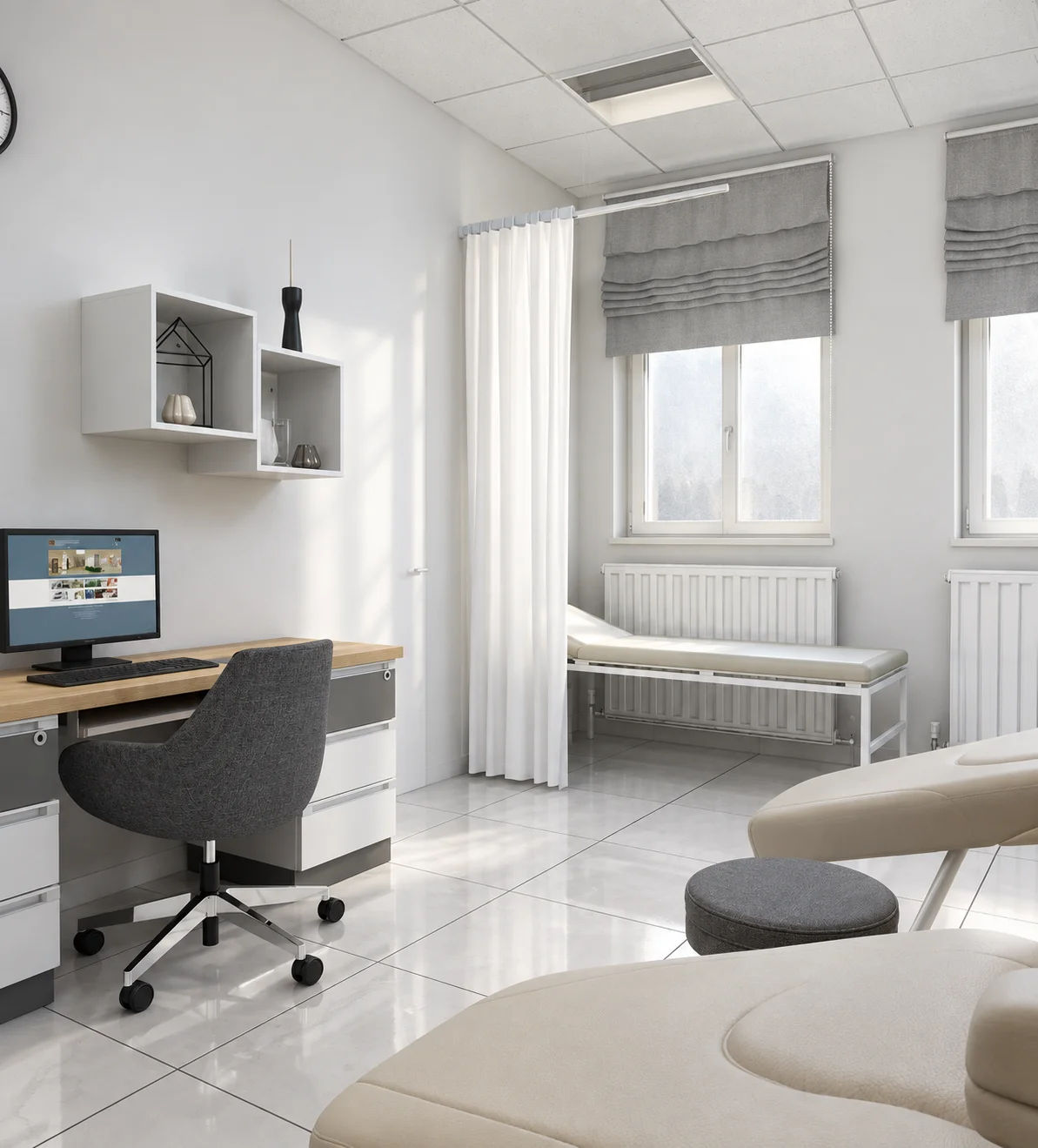
A modern doctor's office must meet strictly defined sanitary and organizational requirements resulting from the provisions of law. The key document regulating these issues is the Regulation of the Minister of Health of 26 March 2019., which defines minimum standards of equipment, hygiene and safety in entities performing medical activities. Thanks to these regulations, the office is to provide both patient comfort and safe working conditions for medical staff.
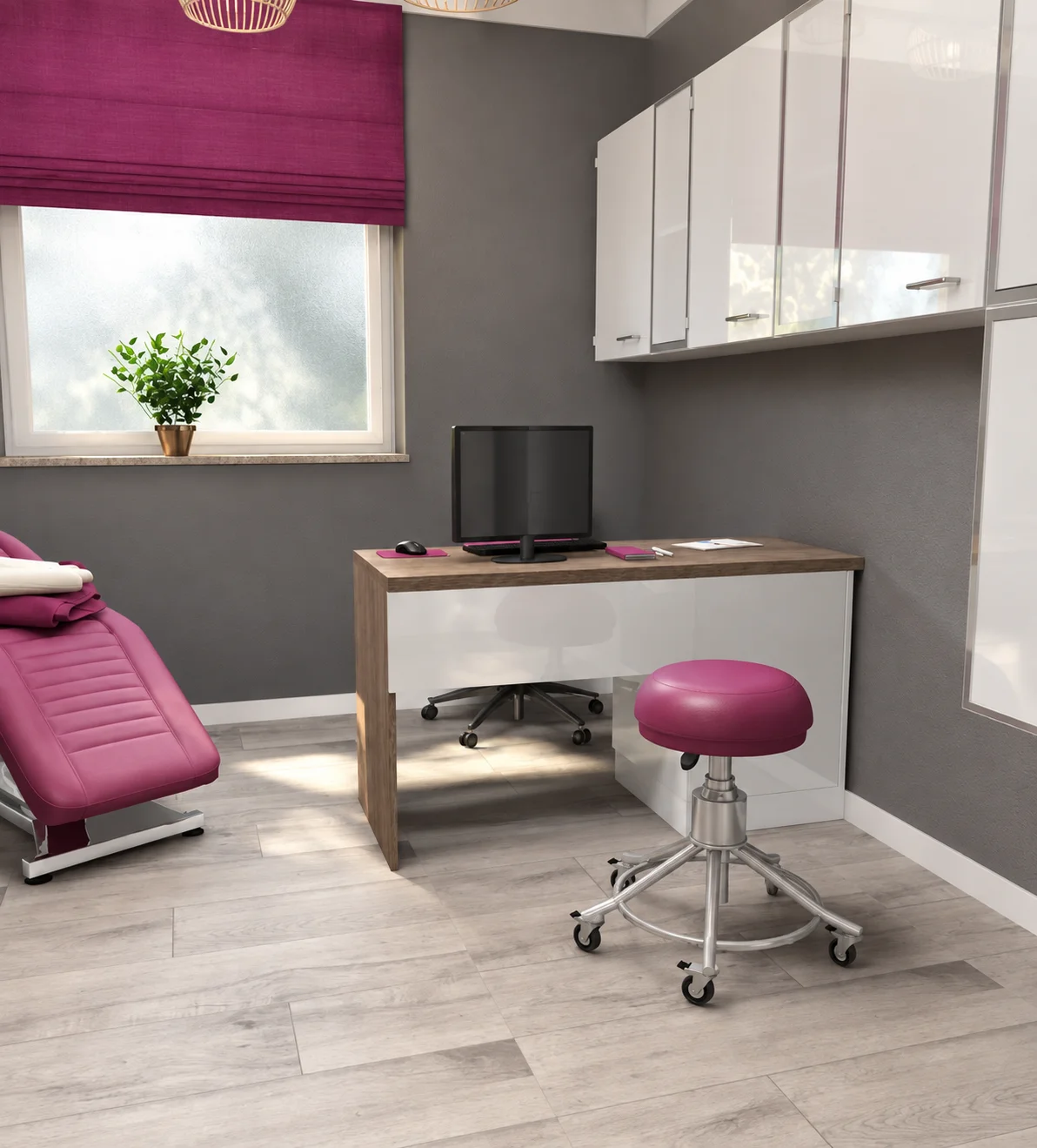
Artificial intelligence in medicine does not replace doctors - it becomes their silent but extremely effective partner. Thanks to decision support systems (DSS), hospitals and diagnostic startups in Poland, such as RSQ AI, are now able to detect cancerous lesions in the lungs or breasts with a precision that exceeds the human eye. AI accelerates diagnoses, personalizes treatment, and supports drug discovery, while also posing challenges related to ethics, data protection, and lack of empathy - issues that are increasingly being discussed by the AI in Health Coalition.
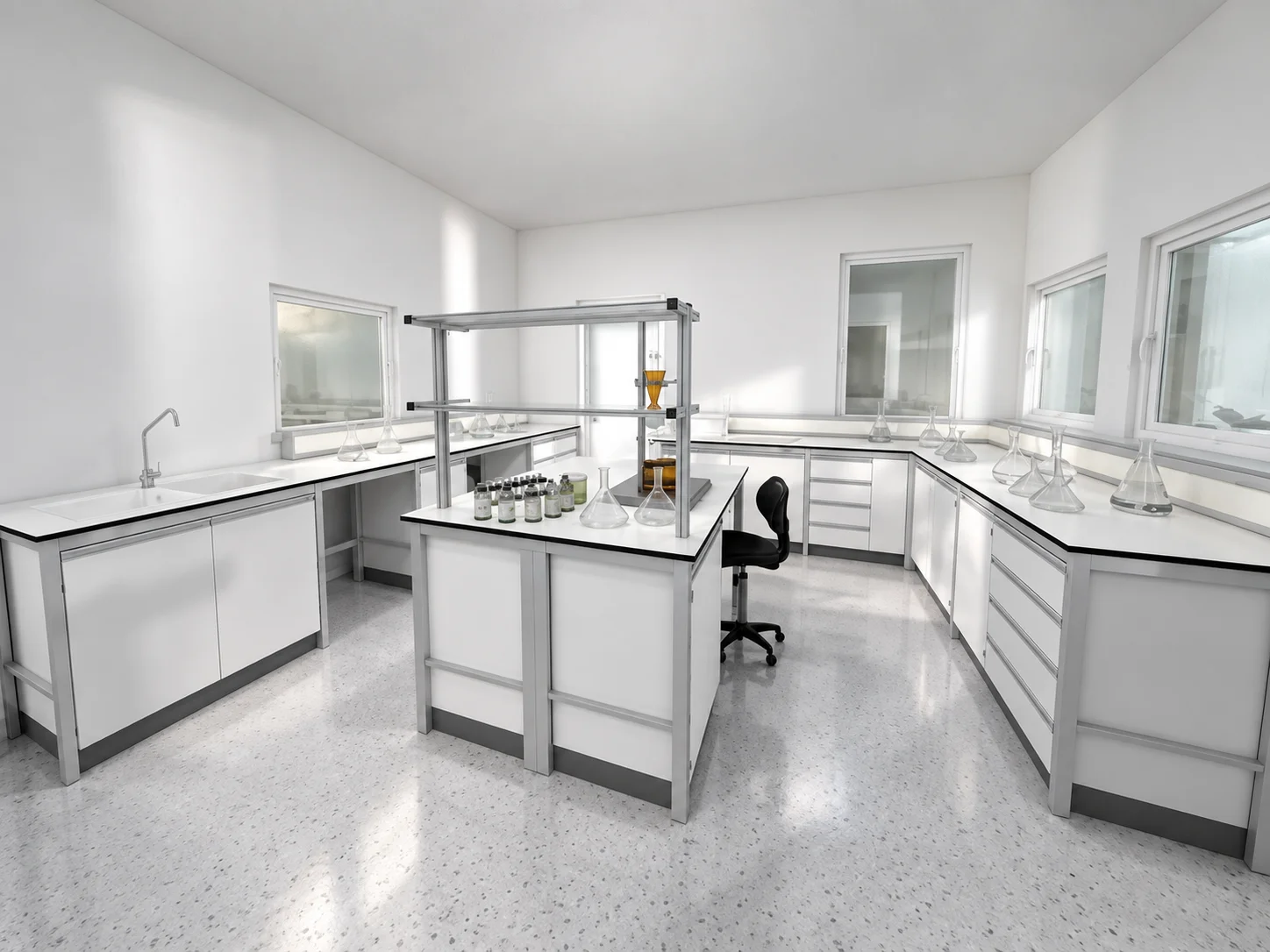
New projects, products and guides on laboratory furniture, in one place.
Tell us what has to happen in the room. We will pick the furniture and work out the rest.
Quote within 1-5 days, furniture design free with your order.