Medical rooms
Which treatment room sink to choose?
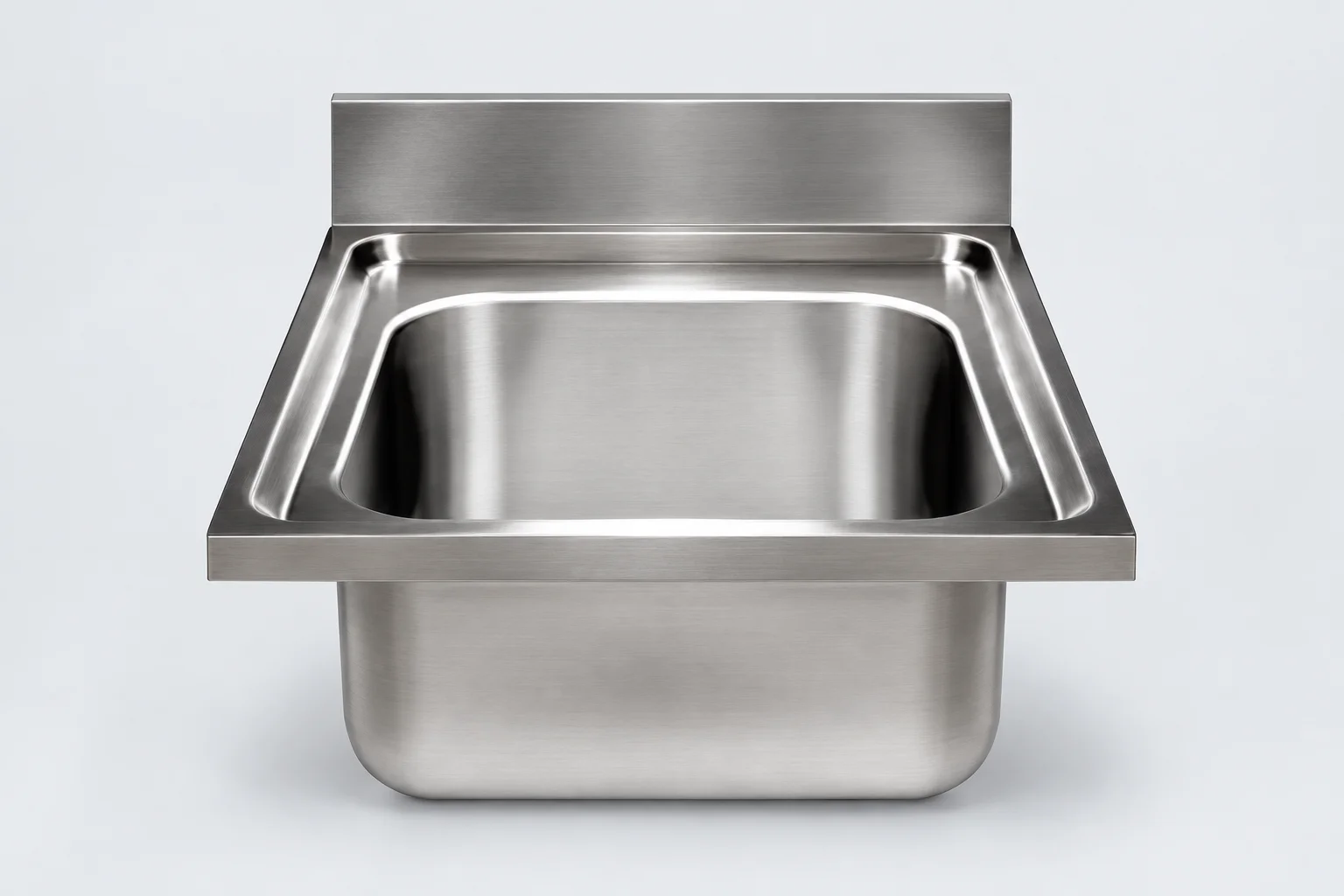
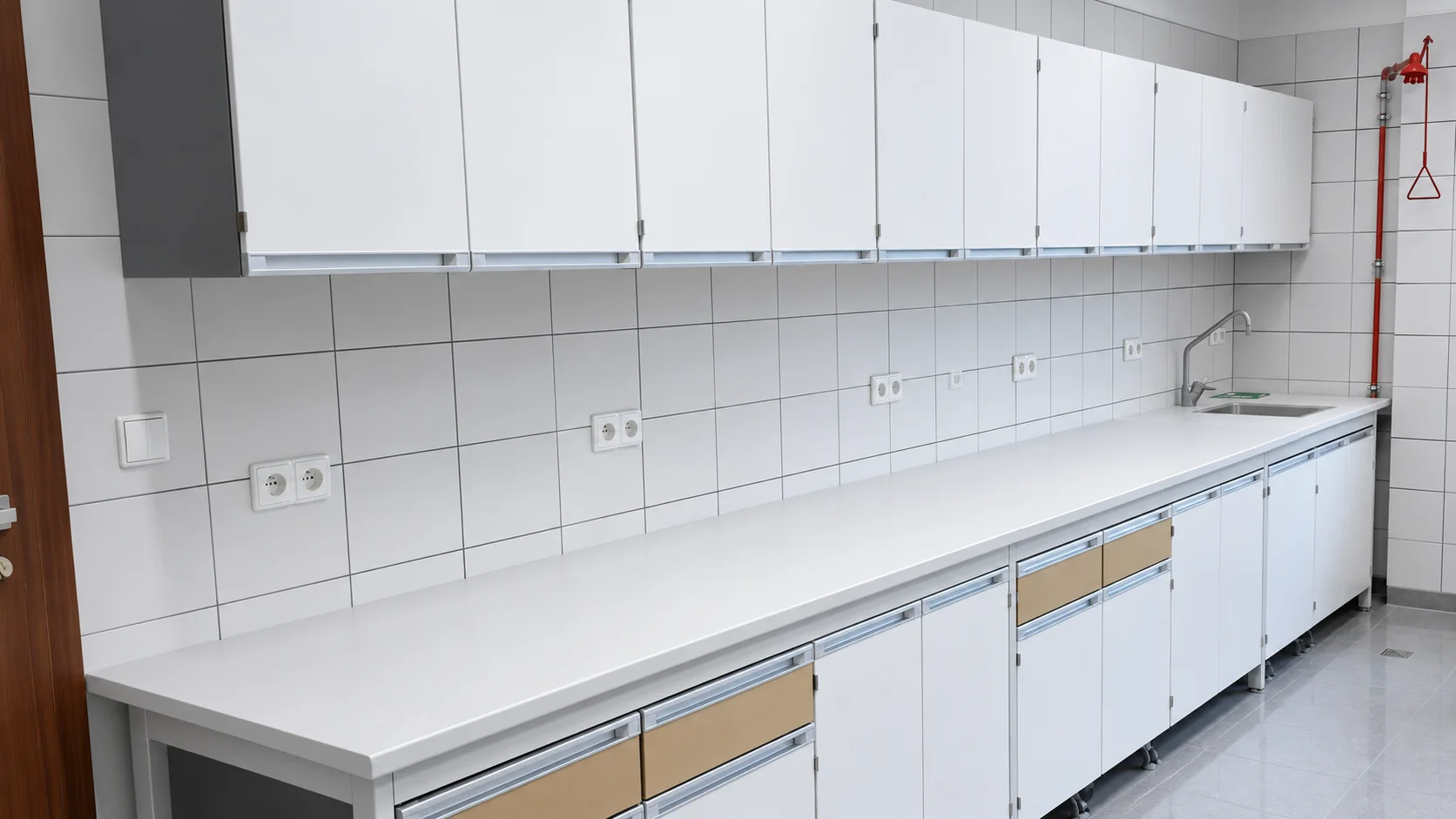
Which treatment room sink? Stainless steel, built into the units beside the handwash basin. We cover the steel grade, bowl, sink cabinet and cleaning.
Offer
Laboratory sinks are chemically resistant bowls for washing glassware, disposing of rinse water and preparing samples.
About the category
Choosing a laboratory sink takes three steps: match the material to the reagents, the bowl to the glassware being washed, and the mounting to the worktop and base cabinet. The material determines what the sink can withstand: concentrated acids, hydrofluoric acid, solvents, hot liquids or impacts. A chemistry laboratory has different requirements from a medical or microbiology laboratory, where ease of disinfection matters most. We compare the strengths and limitations of each material in our guide on what material to choose for a laboratory sink.
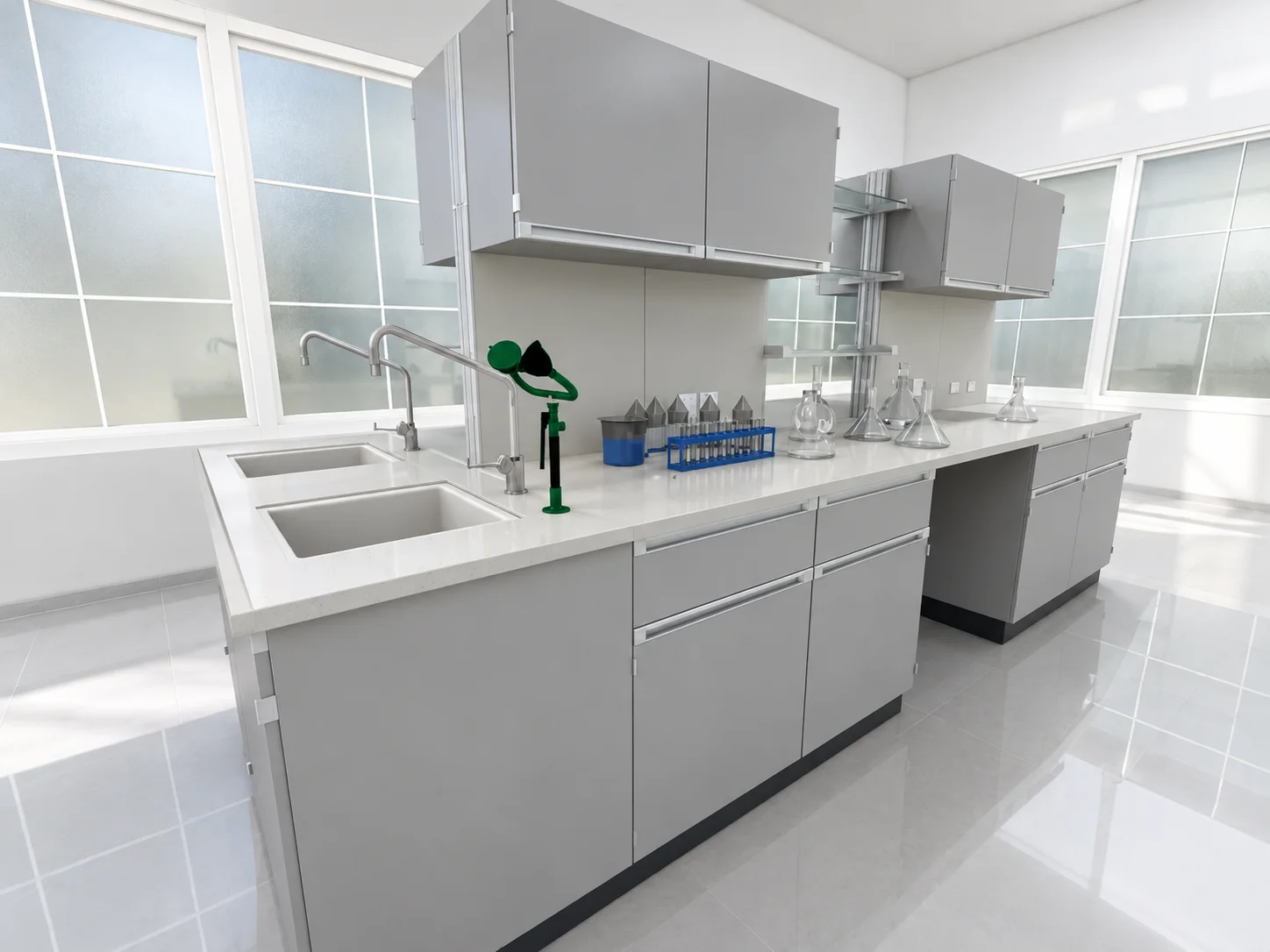
The washing area should be planned together with personal protection. Wherever a reagent could splash into the eyes, an eyewash station is needed. EN 15154 requires it to deliver at least 6 litres of water per minute for 15 minutes, and reaching it should take no longer than 10 seconds. We describe how to position them in our article on choosing safety showers and eyewash stations.
Each of the four materials has a different strength: ceramic withstands heat and concentrated acids, epoxy resin handles solvents, polypropylene resists hydrofluoric acid, and stainless steel copes with impacts and daily cleaning. All are available in single or double bowl versions.
A monolithic ceramic sink is made from very high-density stoneware. It is heat-resistant and fire-resistant, and withstands most concentrated acids and alkalis, dyes, organic solvents and scratching. It has two limitations: it cracks under heavy impact and does not tolerate thermal shock well. Hydrofluoric acid degrades the stoneware.
An epoxy resin sink is a monolithic unit with a smooth, non-porous surface. It resists organic solvents, dyes, high temperatures and rapid temperature changes well, and also offers good mechanical strength. It is used in chemistry, biology and physics laboratories.
A polypropylene sink is injection-moulded from chemically resistant polypropylene. It withstands acids and alkalis, including HF, as well as dyes and solvents, does not corrode and handles impacts well. It is less resistant to abrasion and scratching, and may deform at extreme temperatures.
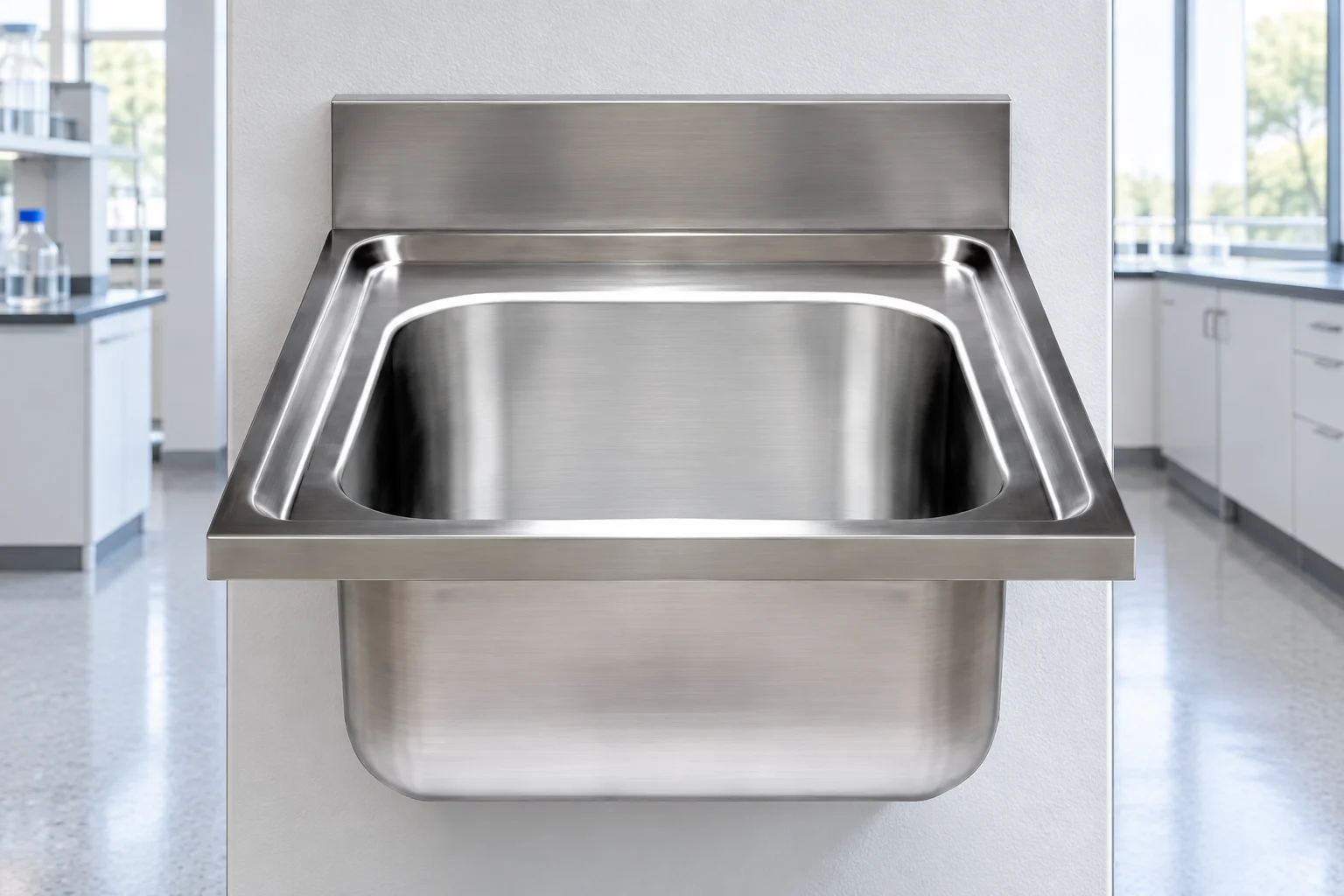
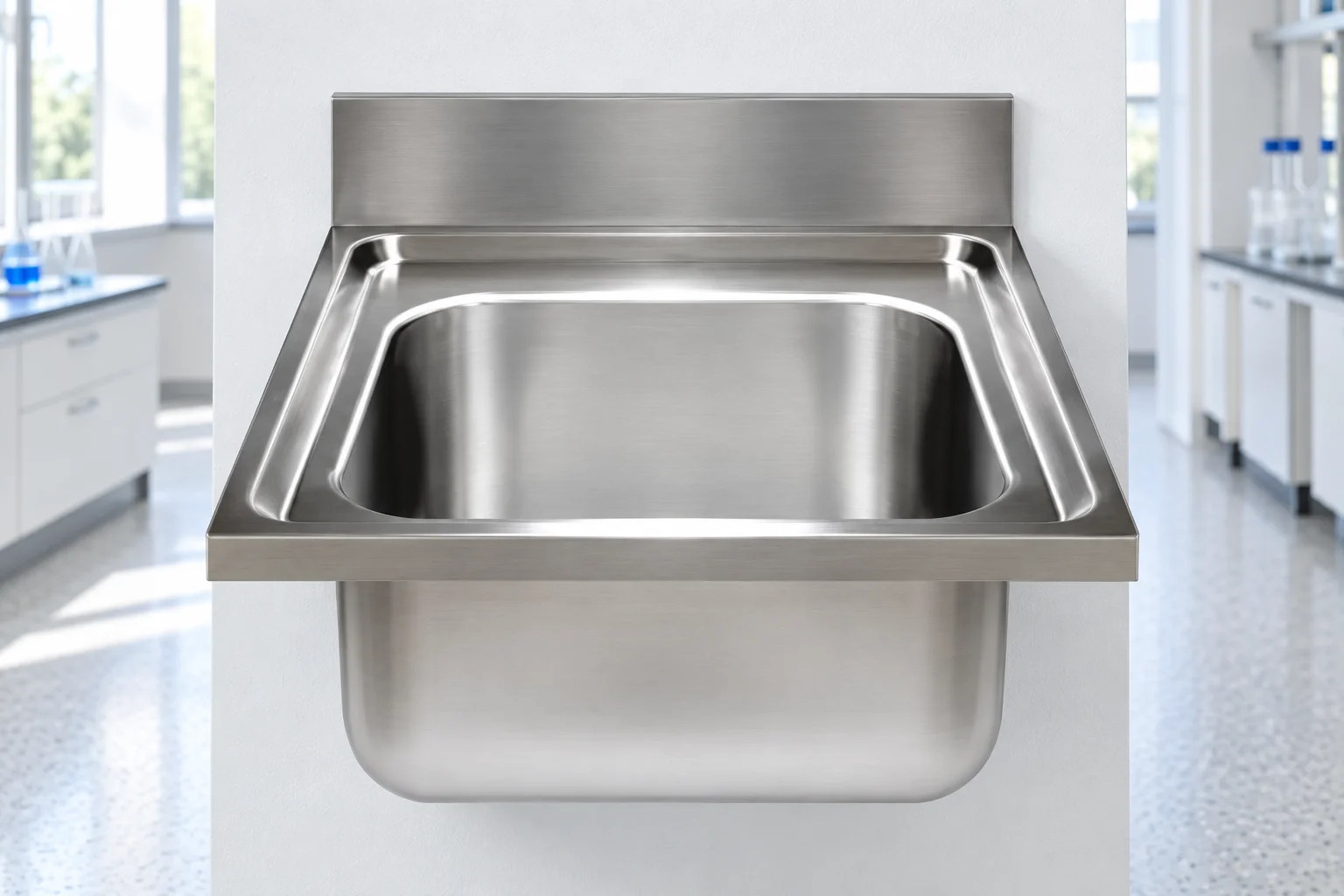
A stainless steel laboratory sink withstands impacts, abrasion and changing temperatures, and its smooth surface is easy to clean and disinfect. It is less resistant to concentrated inorganic acids, so it is more often found in medical and diagnostic laboratories than in chemistry laboratories.
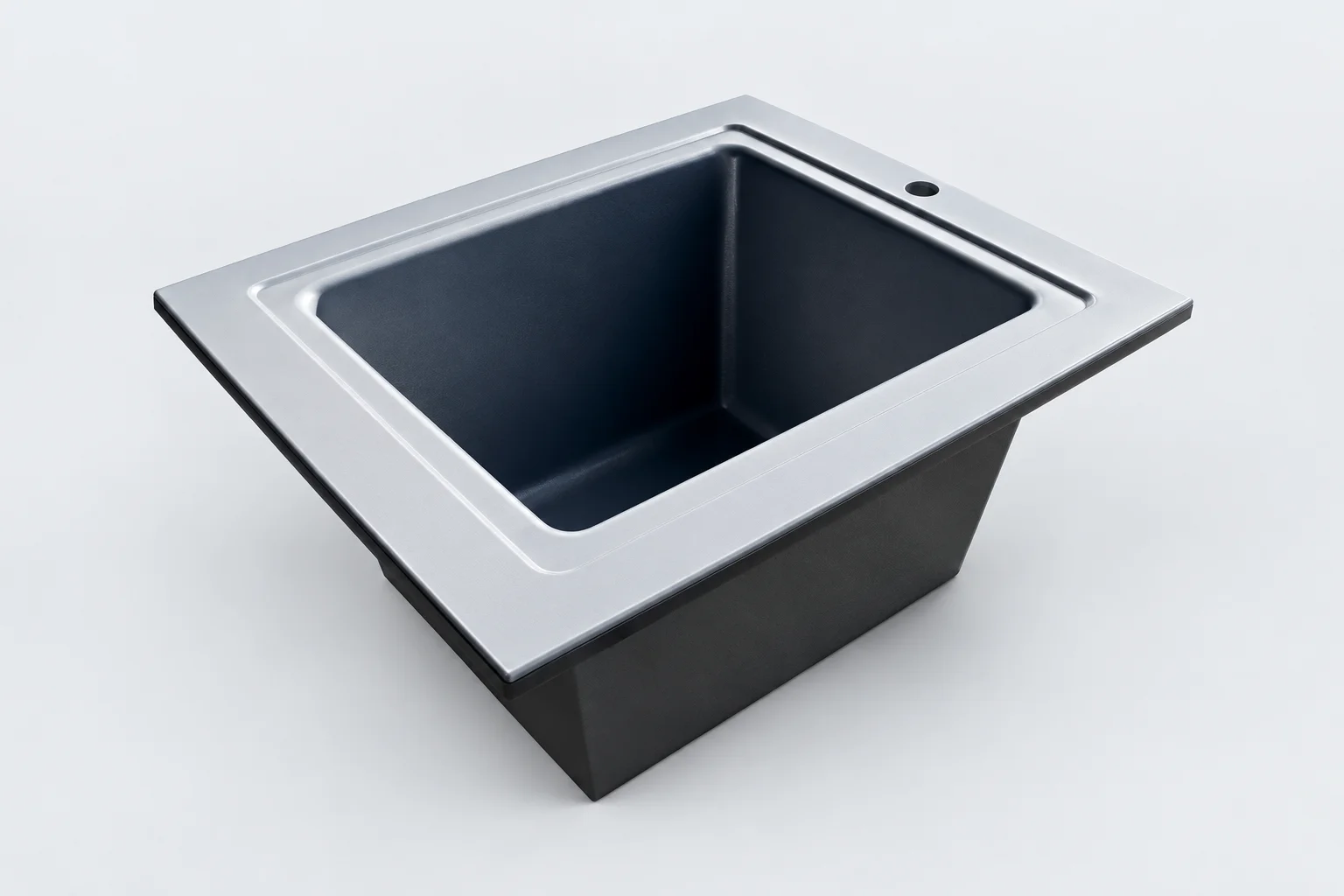
For work with hydrofluoric acid, the right choice is a polypropylene sink, which resists acids and alkalis including HF. Ceramic, although resistant to most other concentrated acids, is not suitable for HF. Polypropylene does not corrode, so it also suits rooms where corrosion is caused by the working environment itself. The sink can be built into a polypropylene worktop, so that the worktop and bowl are made of the same material. Where the sink receives concentrated acids other than HF together with hot liquids, ceramic is the better option, as polypropylene can deform at high temperatures.
Bowl dimensions are chosen to suit the size of the glassware being washed and the width of the base cabinet, ranging from small cup sinks to large bowls holding many litres. Measuring cylinders, flasks and burettes need a deep bowl, because in a shallow one they knock against the spout and are easily chipped. For washing tall flasks, plan a bowl at least 300 mm deep. The height and reach of the spout depend on the type of tap, so the bowl depth is set together with the laboratory taps and valves. In an 80 cm wide cabinet, leave space for the supply connections and trap. We cover the details in our article on how to choose sink dimensions and depth.
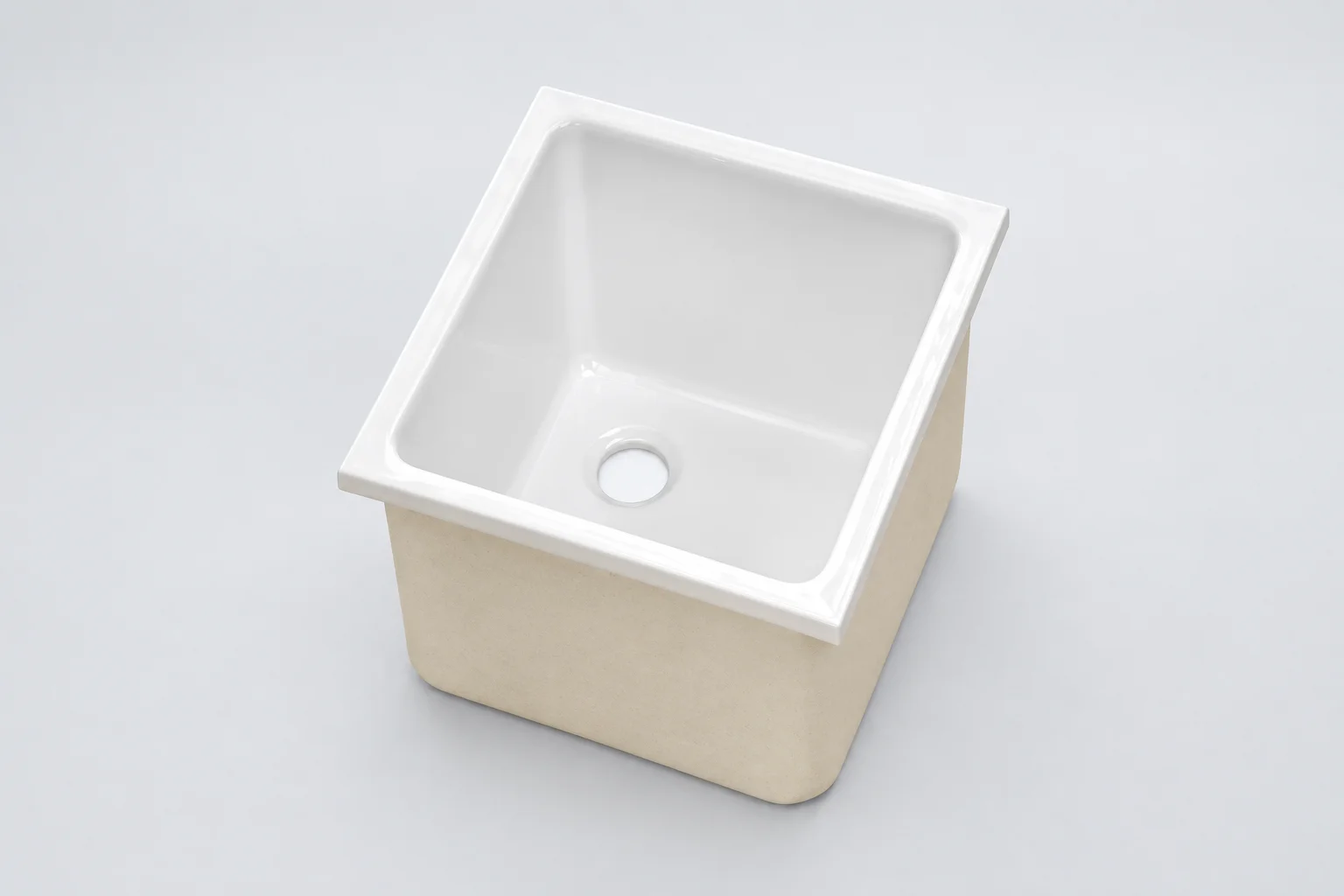
A sink can be installed as an inset unit, top-mounted, flush with the worktop, or bonded to the underside, in other words undermounted. A sink undermounted beneath a chemically resistant laboratory worktop hides its mounting flange below the worktop surface, leaving no gaps where reagent residues and microorganisms can collect. Top-mounted and inset installation make service access easier. The mounting options available depend on the material:
Small ceramic cup sinks are also fitted in laboratory fume hoods. At the Nencki Institute of Experimental Biology, the sink was installed in a run of phenolic resin worktops on steel frames.
A laboratory sink is connected to a chemical drainage system made of PP-H or PVDF pipes, laid with a fall of 1.5 to 2%. Wastewater discharged to the municipal sewer must have a pH between 6.5 and 9.5 and a temperature below 35°C. Where rinse water falls outside this range, a neutraliser is installed at the sink: an under-sink unit for a single workstation or a flow-through unit for a whole section. A passive neutraliser corrects the pH on a bed of carbonate or dolomite granules, while an active one measures it with a probe and doses acid or alkali by pump. We compare the types of equipment in our guide to choosing a laboratory wastewater neutraliser. Solvent waste requires sealed containers and ventilation. We describe one solution in our article on the S.C.A.T. waste collection system
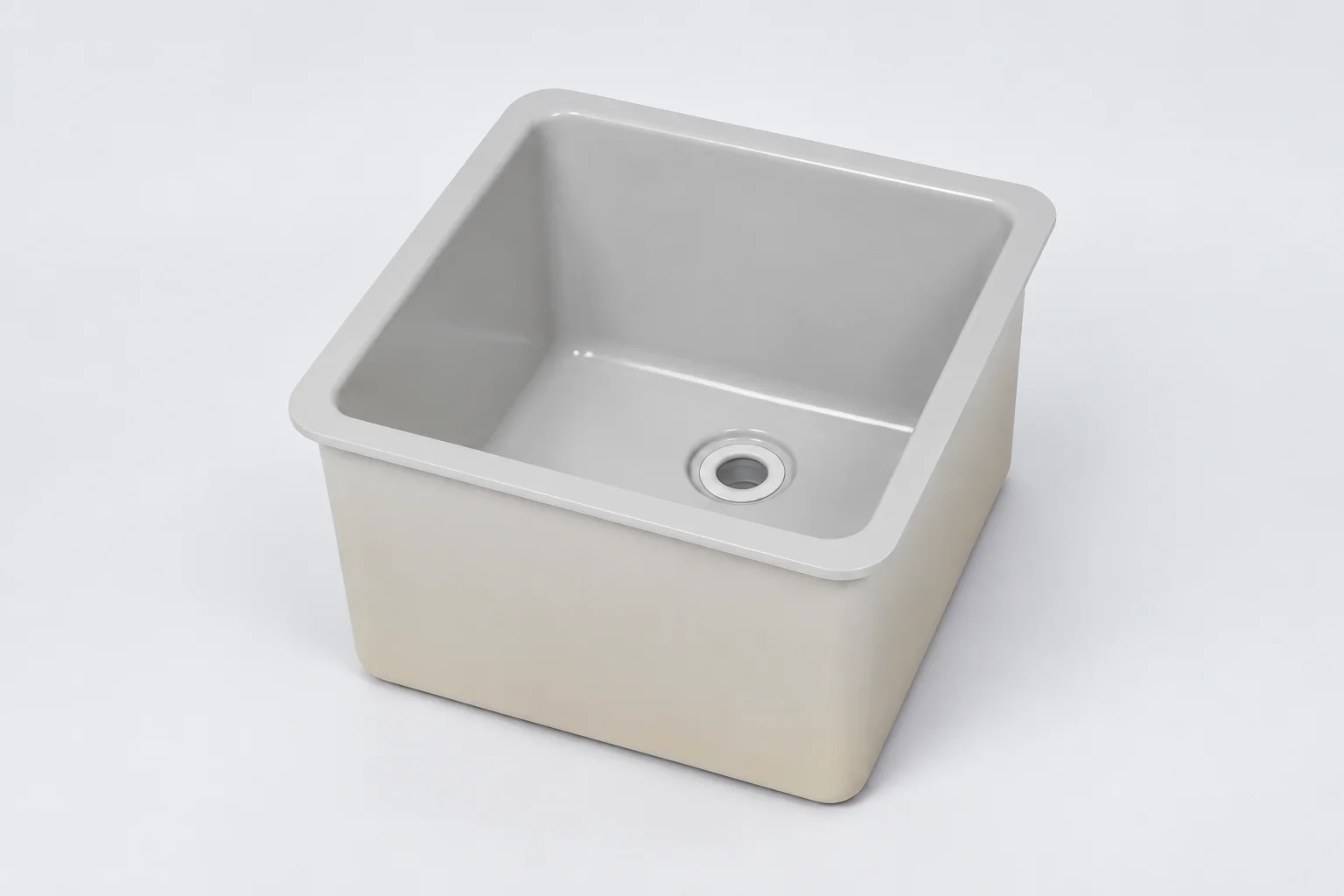
The price of a laboratory sink depends mainly on the material and the bowl dimensions. The cost is affected by:
When comparing materials, running costs also matter: a sink that cannot withstand the reagents used at the workstation will need replacing sooner.
Choose the material for the most aggressive substance that will go into the sink. Ceramic works well with concentrated acids and hot liquids, polypropylene with HF, and epoxy resin with organic solvents. Stainless steel suits medical and diagnostic laboratories, where equipment is washed more often than concentrated reagents are poured away. Each of these materials is available with one or two bowls.
A polypropylene sink, which resists acids and alkalis including HF, will withstand hydrofluoric acid. Ceramic is not suitable for this work: although it resists most concentrated acids, HF destroys the stoneware. Polypropylene has its weaknesses elsewhere, namely only moderate resistance to abrasion and scratching, so the bowl should be cleaned without sharp tools or abrasive powders.
For washing measuring cylinders, flasks and burettes, the bowl should be at least 300 mm deep. Small cup sinks are used where tall glassware is not washed, for example in fume hoods. The final depth is set together with the tap, because the lower the spout ends, the less room there is for a vessel under the water stream.
Yes, if acids, alkalis or other reagents go into the sink. Pipes, traps and tanks must be resistant to these substances, otherwise corrosion damages the building's internal plumbing and seals. Before discharge to the municipal sewer, wastewater often passes through a neutraliser. In Poland this obligation follows from the Polish Regulation of the Minister of Construction of 14 July 2006, and failure to comply can result in penalties and withdrawal of consent to discharge wastewater.
Yes, for tasks that do not involve concentrated inorganic acids, which steel withstands less well than ceramic and polypropylene. A steel sink handles impacts, abrasion and temperature changes well, so it works well for washing glassware and equipment. At a workstation where concentrated acids are poured away, a ceramic sink is the safer choice, and for hydrofluoric acid a polypropylene one.
Yes, ceramic cracks under heavy impact and from thermal shock, a sudden change in temperature, for example when cold water enters the bowl straight after a hot liquid. High temperature alone does not harm it, as the stoneware is heat-resistant and fire-resistant. If the temperature at the workstation changes frequently, epoxy resin, which resists such changes, is the better option.
Which treatment room sink? Stainless steel, built into the units beside the handwash basin. We cover the steel grade, bowl, sink cabinet and cleaning.
A laboratory sink with cabinet is chosen by reagents, number of bowls and plumbing. What to settle before ordering: material, bowls, cabinet, connections, waste
Safe operation with concentrated perchloric acid requires the use of a specialized fume hood. The laboratory fume hood must feature a water wash-down system and guarantee a minimum airflow velocity of 0.5 m/s.
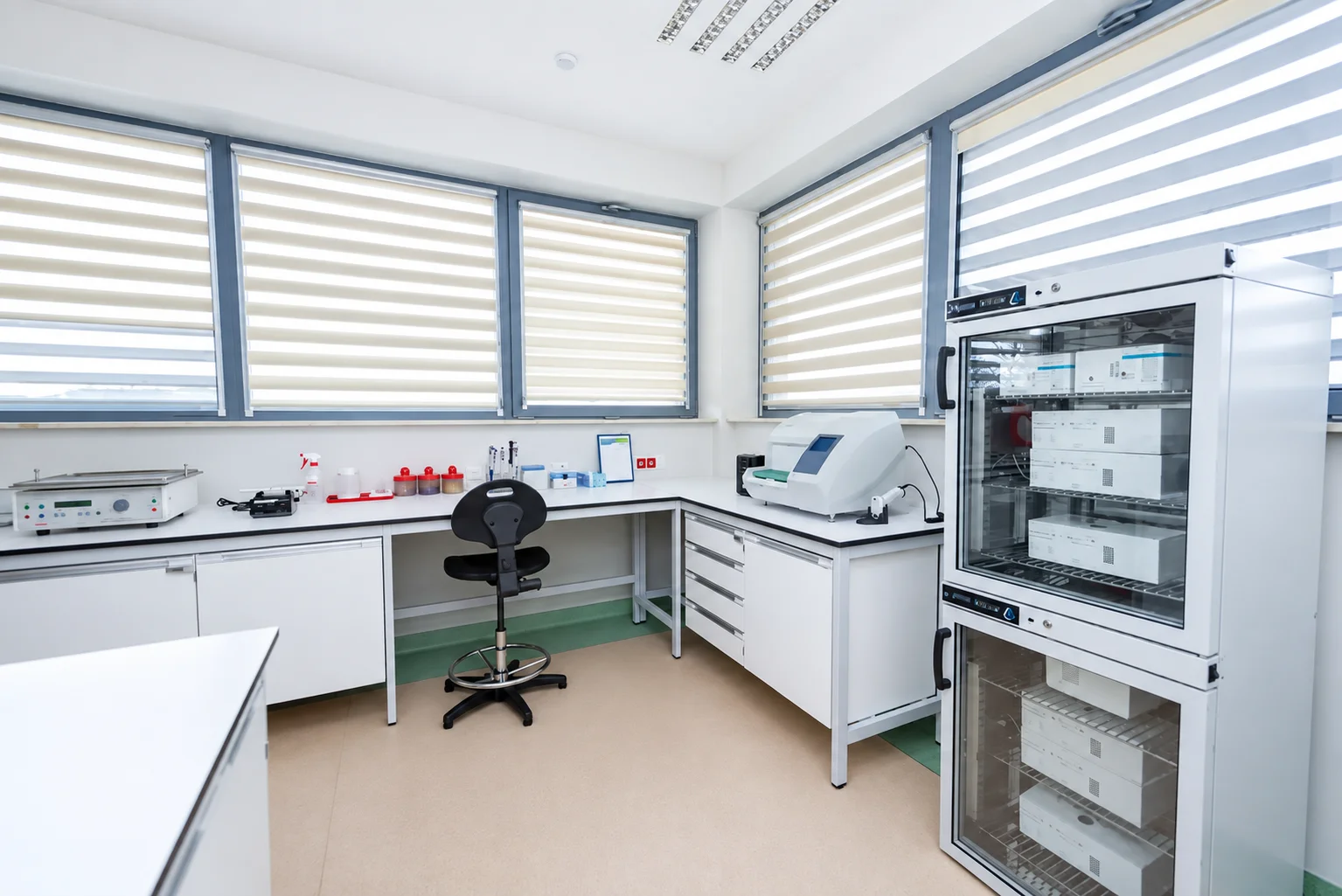
Bezpieczne meble laboratoryjne wymagają doboru blatów o potwierdzonej odporności chemicznej i mechanicznej. Badania wskazują, że certyfikowana zabudowa może wydłużyć żywotność stanowisk pracy o ponad 30%.
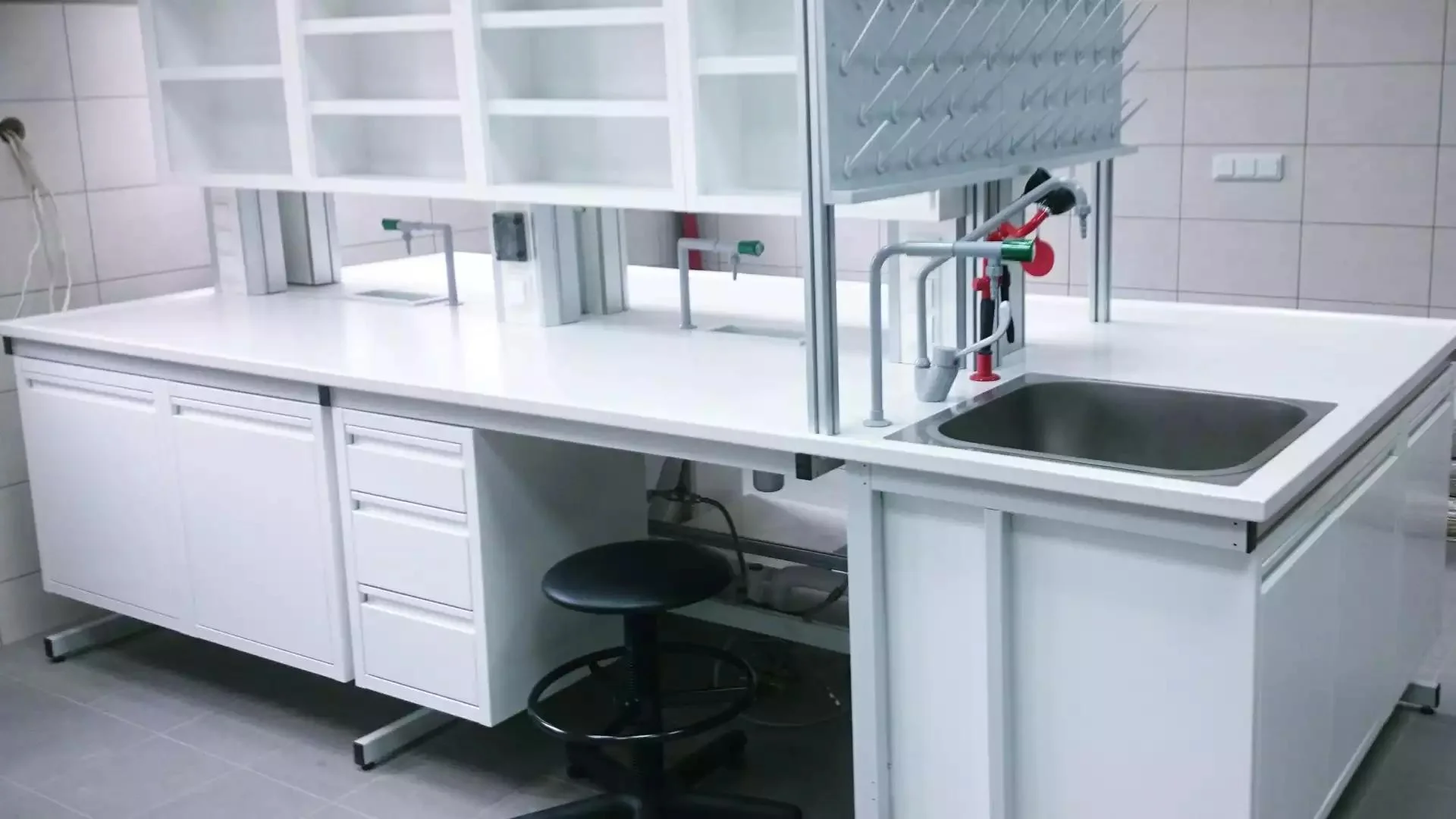
New projects, products and guides on laboratory furniture, in one place.
Tell us what has to happen in the room. We will pick the furniture and work out the rest.
Quote within 1-5 days, furniture design free with your order.