Skip to content

Offer

Laboratory countertops

Work surfaces in ceramic, epoxy and phenolic resin, glass, polypropylene and laminate. The material follows the reagents and the temperatures the bench has to take.

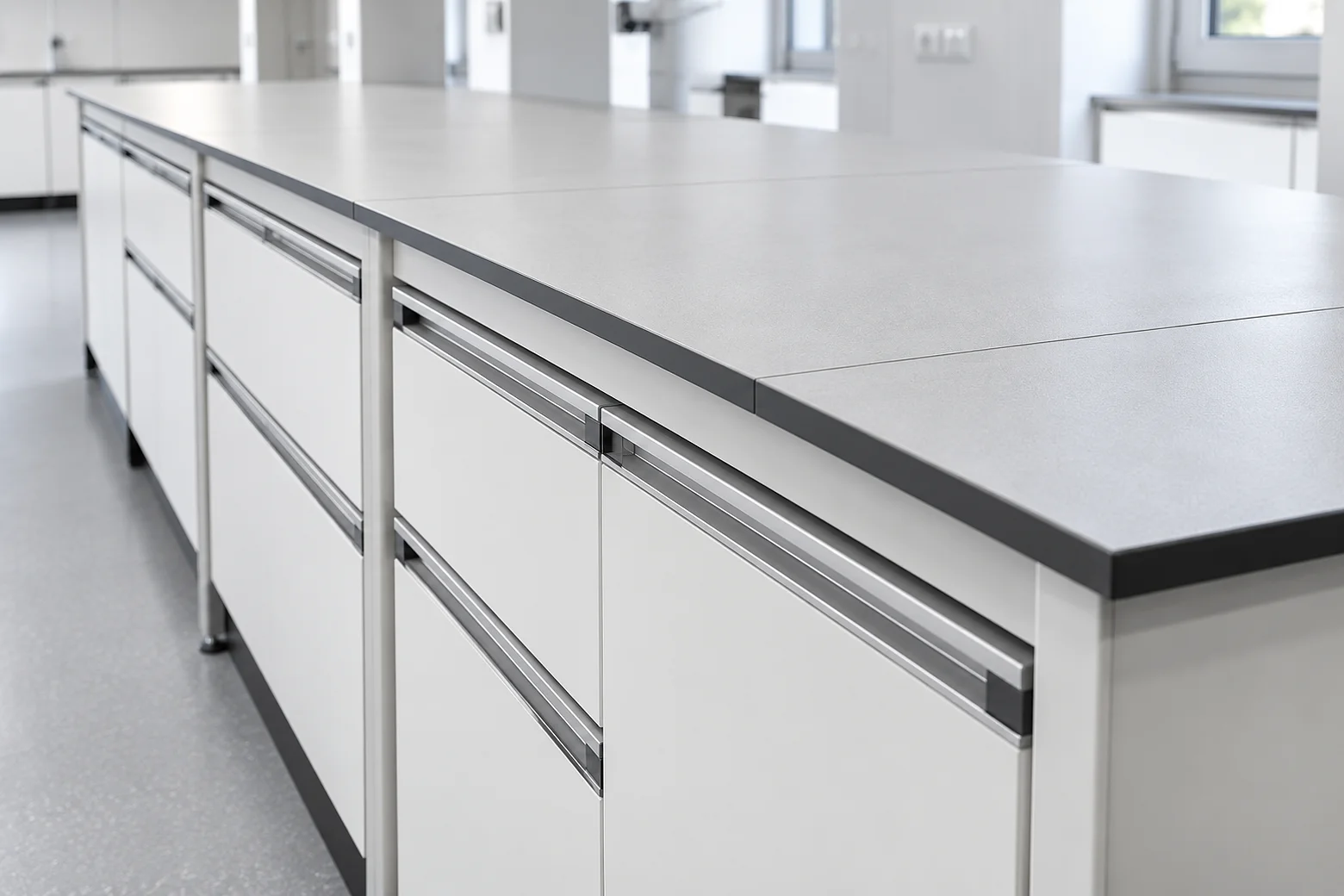
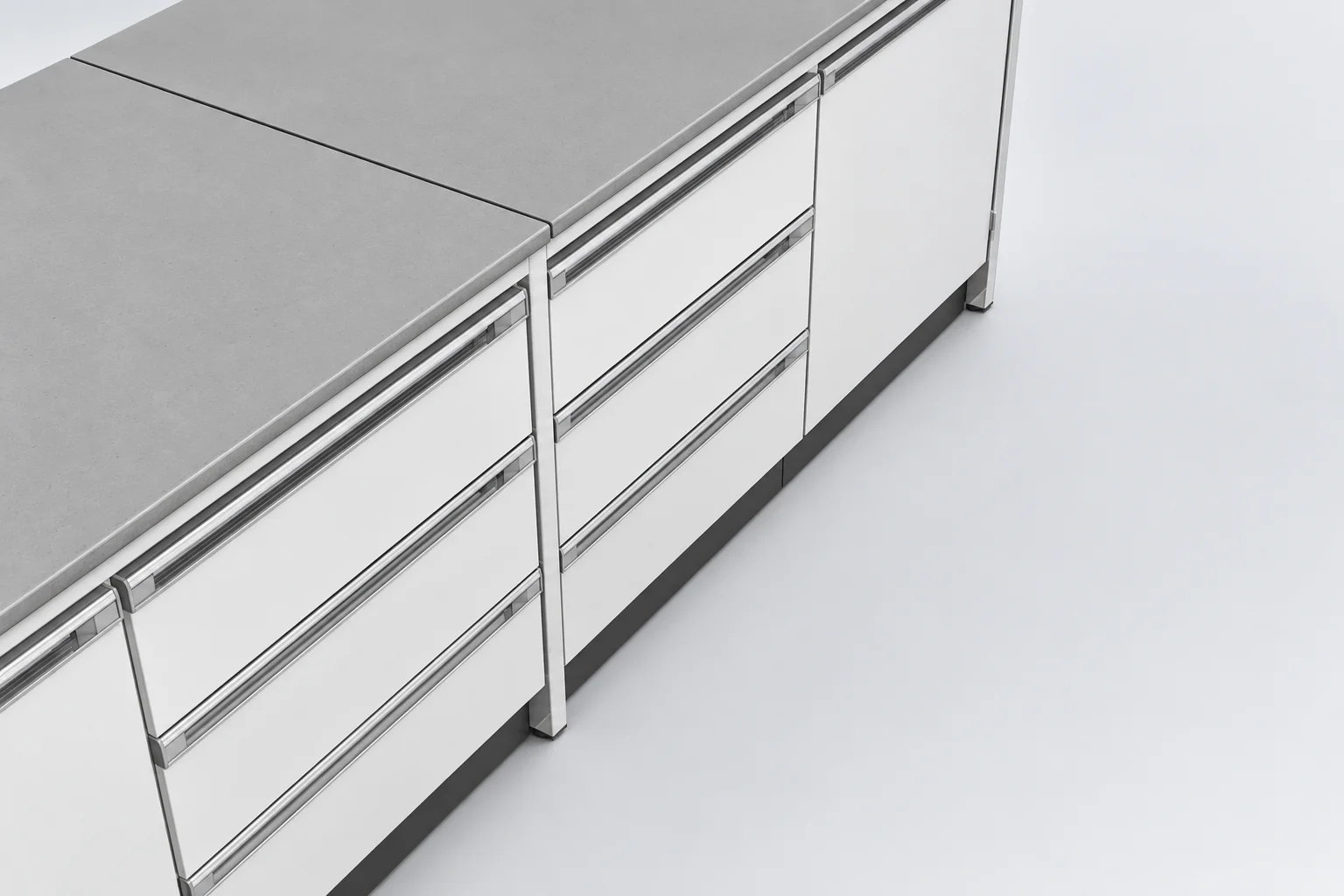
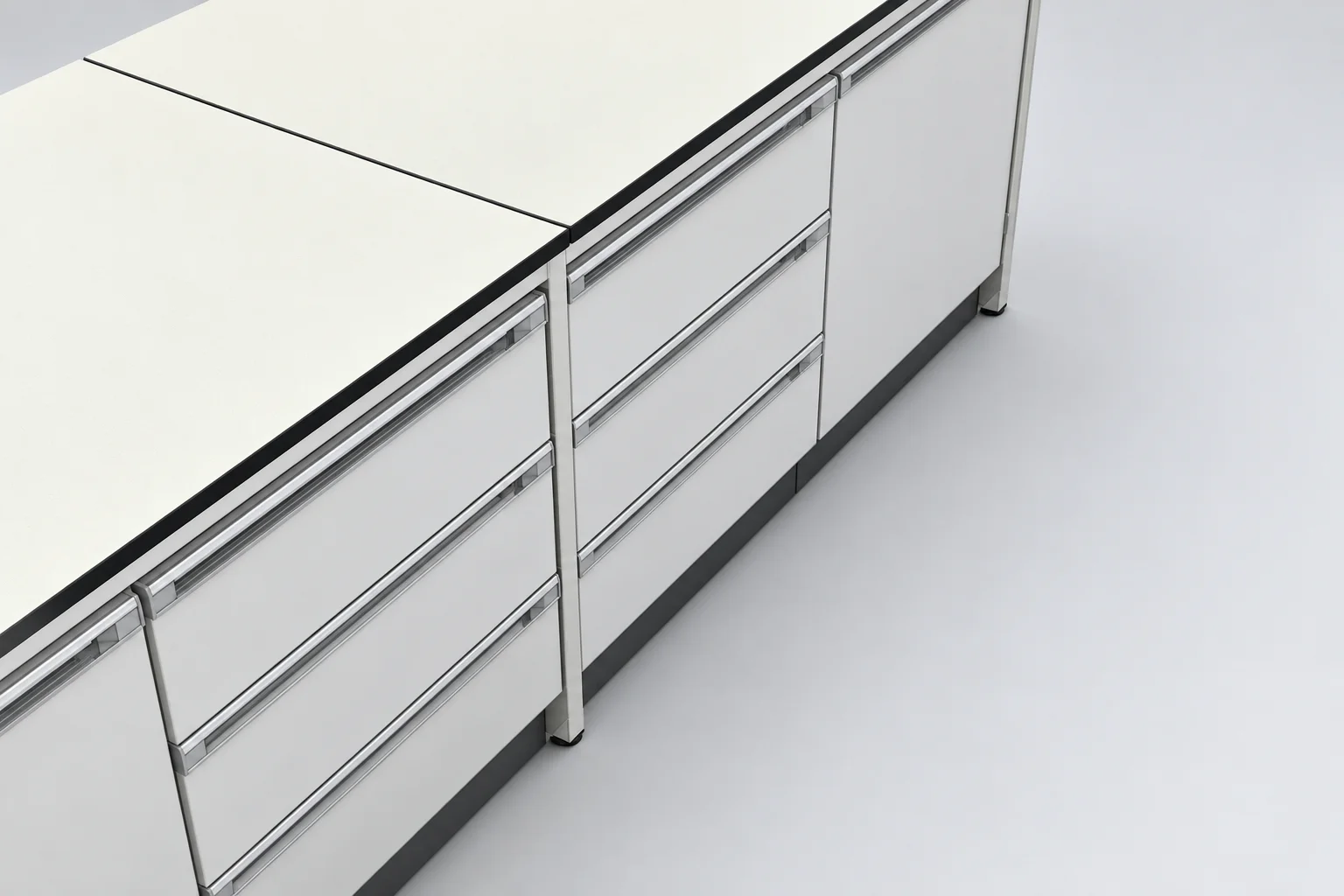
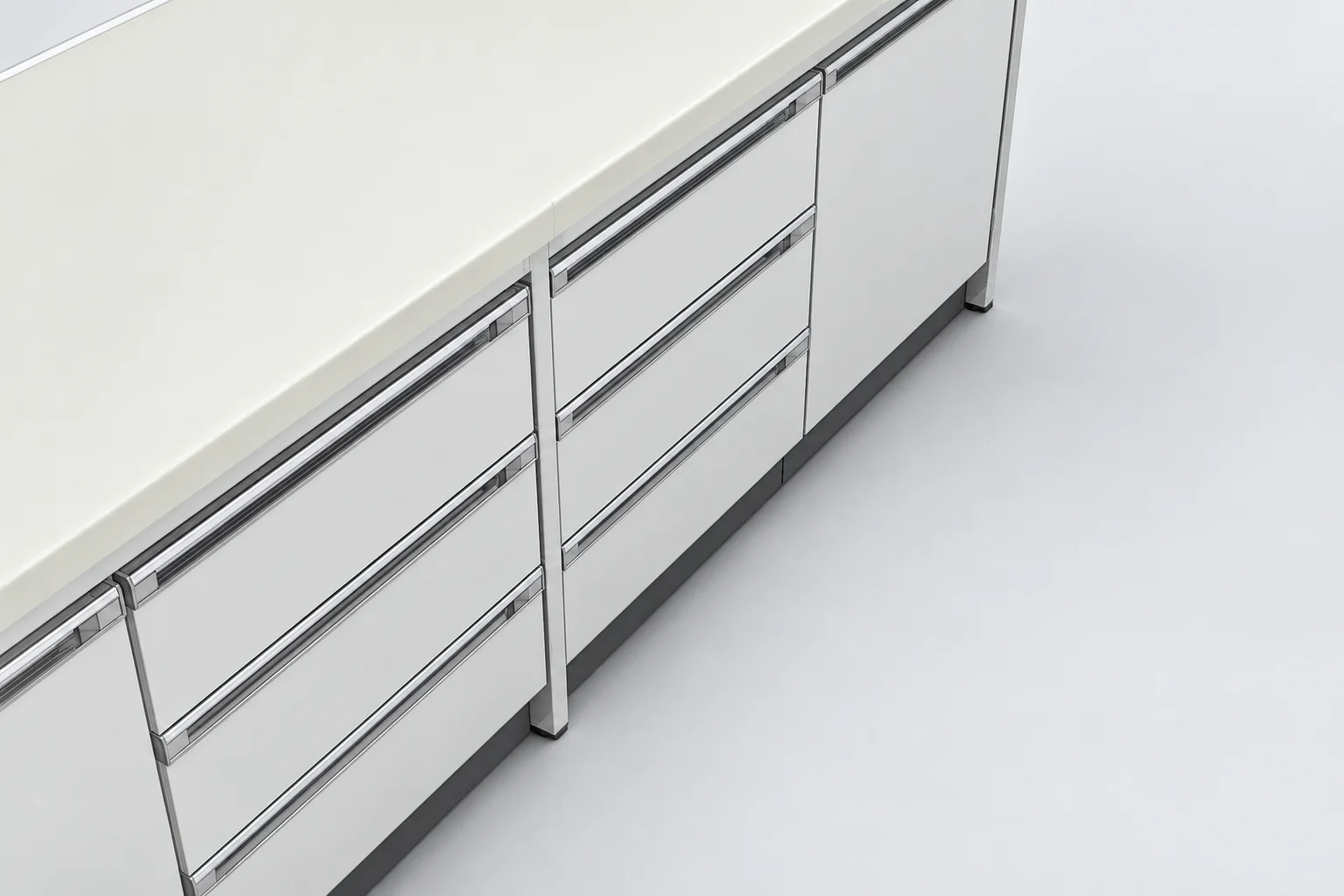
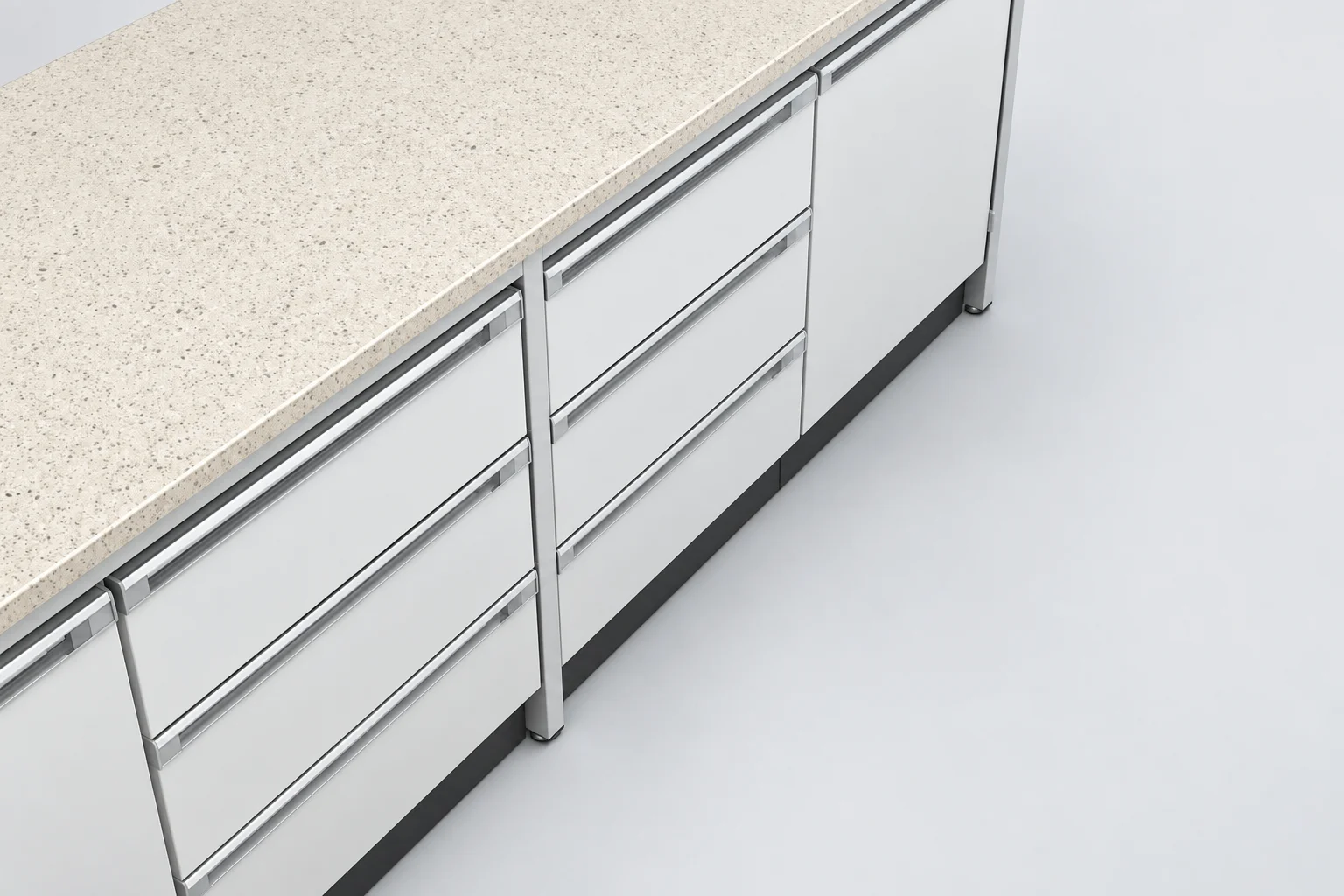
Grey laboratory worktops on drawer cabinets, close-up in a laboratory
Technical data

Chemical resistance table for countertops

About the category

Contents

Laboratory worktops

A well-designed work surface is one of the most important pieces of equipment in any research facility. Professional laboratory worktops from our offer represent a direct investment in personnel safety, work ergonomics, and long-term total cost of ownership (TCO) optimization. Thanks to a well-thought-out physical design, our solutions prove themselves in the most demanding environments - from industrial laboratories, through pharmaceutical and medical, to research and educational facilities. All worktops supplied by us are designed in strict compliance with current safety standards and OHS regulations, which guarantees full reliability in daily, intensive work with reagents.

Key technical parameters of our work surfaces

A high-class laboratory worktop must cope with extreme physicochemical loads on a daily basis. Our materials are selected for parameters that ensure the safety and continuity of analytical processes:

  • Extreme chemical resistance: The surfaces are adapted to frequent, direct contact with aggressive substances, including strong acids, bases, and volatile solvents.
  • Thermal and mechanical strength: The offered materials are characterized by increased tolerance to sudden temperature changes and outstanding resistance to abrasion and mechanical impact.
  • High hygiene and seamlessness: The smooth, non-porous structure completely prevents the absorption of liquids into the worktop, which facilitates its rapid sterilization and maintenance of strict cleanliness.
  • Active microbiological protection: Selected models of work surfaces are refined with specialized antibacterial coatings, which further increases the biological safety of the workplace.

Materials used - Solutions tailored to the specifics of research

We understand that every laboratory places different demands on its infrastructure. Properly selected thickness, shape, and structure of the worktop have a direct impact on comfort and reliability. That is why our offer includes a full cross-section of professional materials:

  • Monolithic ceramics: Used mainly in specialized chemical, medical, and biological laboratories. It guarantees maximum resistance to deep pitting and corrosive reagents.
  • Phenolic and epoxy resin: They are characterized by extreme resistance to chemicals and harsh environmental conditions.
  • Quartz-granite conglomerate (natural stone): The optimal choice where maximum structural stability, above-average vibration resistance, and heavy loads are crucial at workstations.
  • HPL laminate: An extremely cost-effective and ergonomic solution. Resistant to moisture, mild chemicals, and scratches, making it an ideal profile for teaching laboratories and schools.
  • Polypropylene and Laboratory glass: Specialized alternatives allowing for the creation of aesthetic, durable, and 100% washable workstations for specific applications.
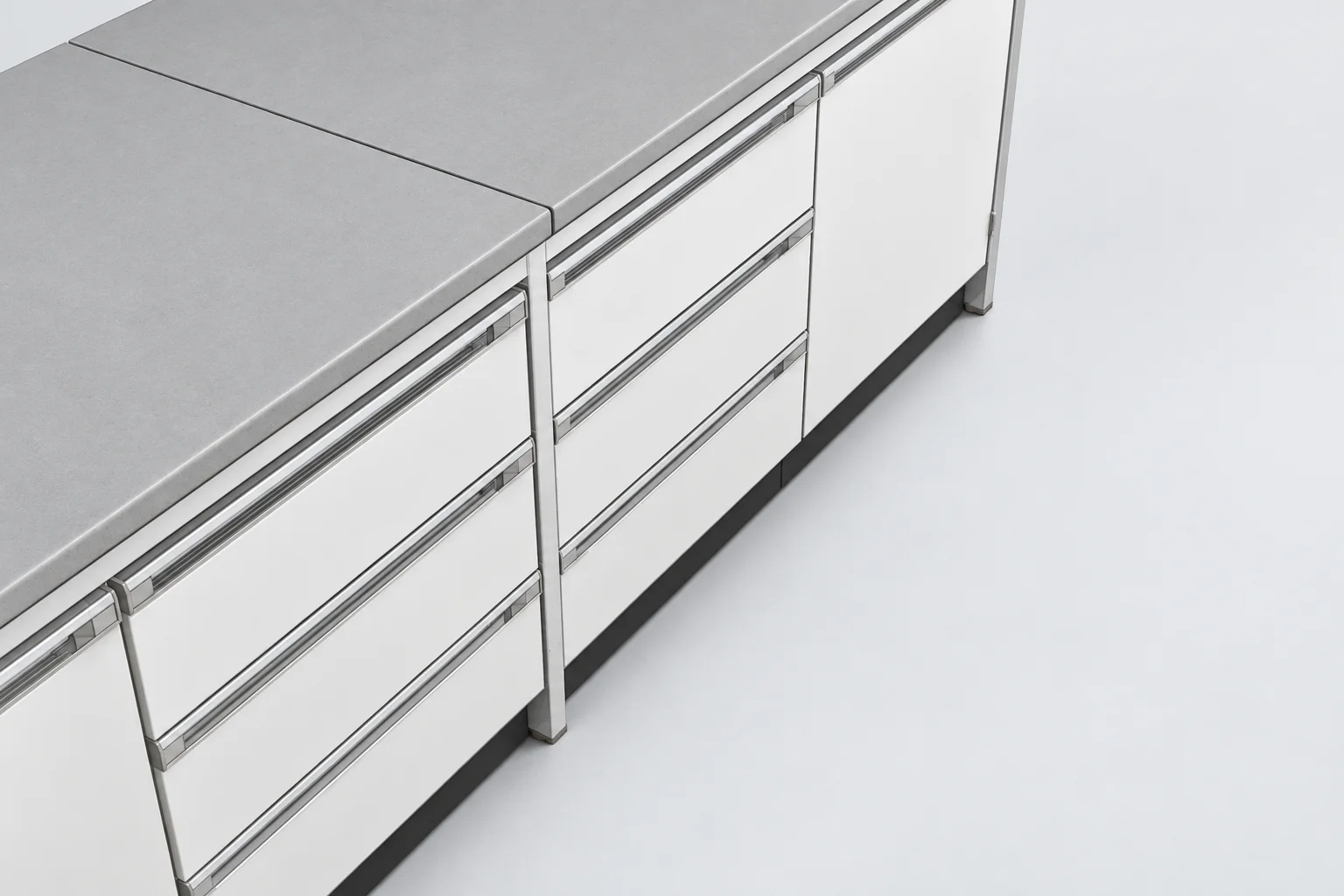
From this categoryEpoxy resin countertopEpoxy resin is a monolithic material with a consistent structure. It features a perfectly smooth surface, making it easy to maintain cleanliness.See productGrey epoxy resin worktop on drawer cabinets, close-up of the edge on a light background

Cleaning and maintenance of work surfaces

By choosing professional laboratory worktops, you gain surfaces designed for trouble-free compliance with rigorous hygienic standards. Thanks to the non-porous structure of materials such as solid ceramics or phenolic resins, daily disinfection is fast and fully effective. These surfaces do not require complicated maintenance procedures or the use of specialized protective agents; they are completely washable and resistant to standard disinfectants used in medical and research facilities. This allows for the maximum reduction of the time needed to prepare the workstation for subsequent analyses.

Expert advice on material selection

Choosing the right laboratory worktop is a key technological decision. Our team of technical experts supports investors at every stage, from analyzing the specificity of planned research, through verifying workstation loads, to the final selection of material. We take into account not only physicochemical requirements but also the planned budget and spatial conditions of the laboratory. Thanks to professional consultations, you gain the certainty that the selected work surface will meet all safety standards and ensure the highest functionality for years.

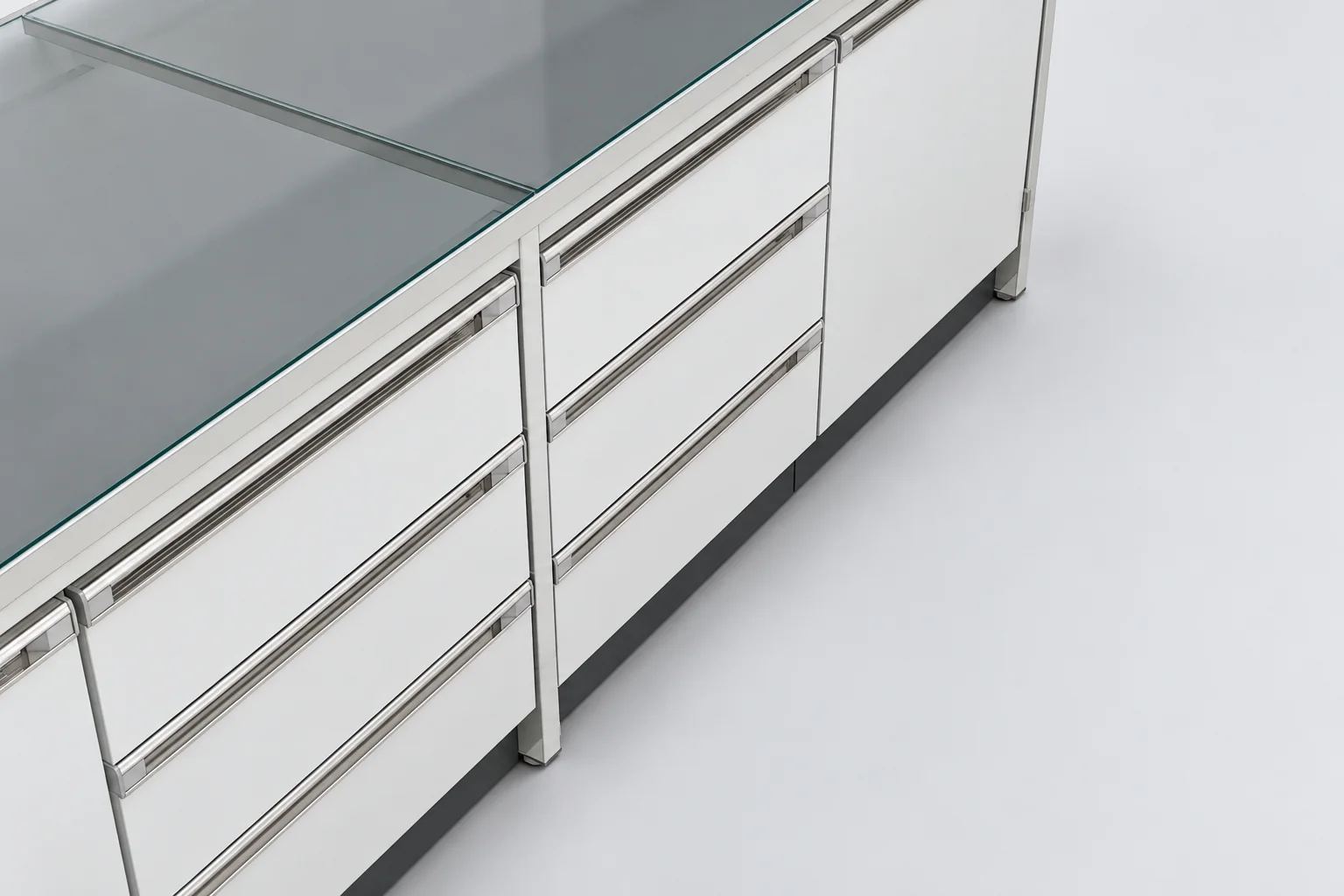
From this categoryGlass laboratory countertopThe glass countertop is made of 6 mm thick safety glass with a chemically etched top layer. The edges are coated with a chemical-resistant phenolic resin.See productGlass laboratory worktop on drawer cabinets, close-up of the edge on a light background

Prices of laboratory worktops

The choice of physical laboratory equipment should be based not only on initial costs but above all on a reliable assessment of the total cost of ownership over the years. Basic HPL laminate worktops are an economical solution (from several hundred to about 1000 PLN per running meter), which provides optimal functionality with a limited investment budget. For professional research facilities where the infrastructure is heavily exploited, we recommend worktops made of phenolic resin, epoxy resin, or ceramics. Although these are premium segment products (costing up to several thousand PLN per running meter), they represent the most profitable investment in the long term. Their uncompromising durability minimizes the risk of cracks, dulling, and chemical damage, which virtually eliminates the costs of premature worktop replacement and prevents downtime in laboratory work. The final price is always strictly calculated by our technical advisors based on the required square footage, target workload, and selected installation technology.

FAQ

Frequently asked questions

Laboratory worktops are work surfaces offered in seven material variants: glass, laminate, monolithic ceramics, phenolic resin, epoxy resin, quartz-granite conglomerate and polypropylene.

See also: all offer categories.

We make worktops in seven materials: ceramic, epoxy resin, phenolic HPL, glass, polypropylene, laminate and stainless steel.

The material follows the reagents and the temperatures on the bench. Monolithic ceramic is 20 mm thick and withstands 98% sulphuric and 65% nitric acid, epoxy resin absorbs less than 0.05% water and holds a constant load of about 180 degrees, and HPL laminate is some 60% lighter than ceramic but degrades above roughly 180 degrees.

Hydrofluoric acid calls for polypropylene, never ceramic and never glass.

HF attacks the silica in ceramic, glaze and glass and destroys those surfaces for good. A polypropylene worktop resists acids and alkalis including HF, and a sink can be injection moulded into it without a joint.

A floor plan or the room dimensions, a list of workstations and details of the services are all we need to prepare a quote.

The layout and the visualisation are ready before the quote, so it is clear what you are paying for. The office works Monday to Friday, 7:00 to 15:00.

See also: the contact form, the questions and answers page.

From the blog

We write about it

  • 6 min read
    Worktops, sinks and materials

    Laboratory sink: how to choose the size and design the chamber depth?

    The dimensions of the chamber are matched to the size of the washed glass and the width of the base cabinet. Proper determination of these dimensions allows for maintaining full ergonomics and optimal workflow in the wet zone. A wide selection of available solutions, from small sinks to large, multi-liter sink chambers facilitates the precise configuration of any workstation. The selection is usually made individually through a request for quotation, as professional laboratory sinks are made directly to measure.

  • 10 min read
    Worktops, sinks and materials

    Ceramic worktop vs. HPL laminate - comparison in terms of chemical resistance

    Ceramic worktop and HPL laminate are the two most commonly used solutions in laboratories, differing primarily in the level of chemical resistance and the range of applications. Monolithic ceramics provide virtually complete chemical inertia and thermal resistance of up to 1000°C, while HPL provides a lighter and more economical alternative for less aggressive working environments.

Newsletter

Stay up to date with Renggli

New projects, products and guides on laboratory furniture, in one place.

By subscribing you agree to receive messages from Renggli and accept the privacy policy. You can opt out at any time.

Not sure which countertop to choose?

Trust our experts and get the ideal countertop perfectly suited to the specifics of your laboratory! Contact us now!