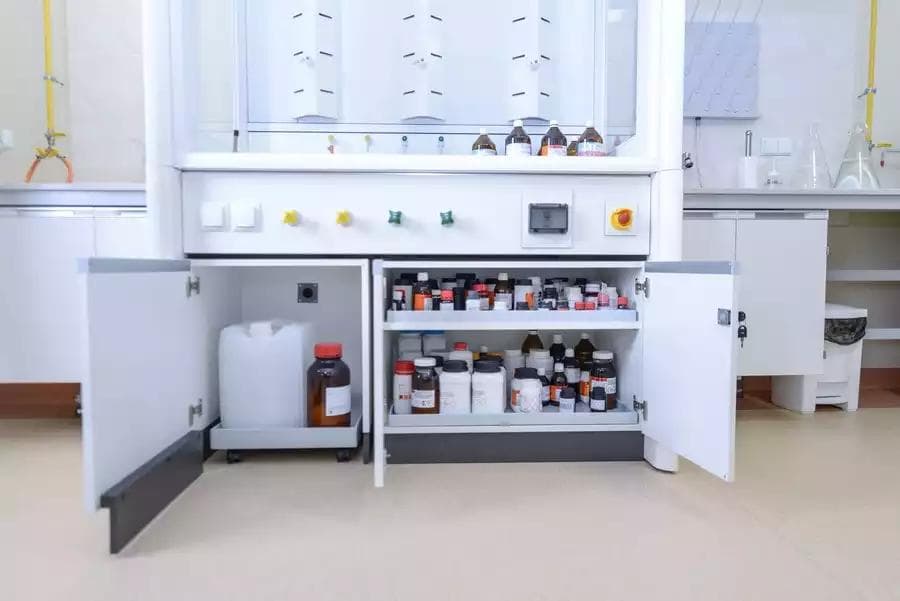
Storing chemical reagents in the laboratory is not a matter of alphabetical order – safety is what matters here. Each substance should be segregated by hazard class, not by name. Proper safety cabinets, ventilation, temperature control and consideration of chemical compatibility are the foundations of work in any laboratory. By following these rules, the risk of accidents, fires and contact with toxic or corrosive substances is minimized.
We explain step by step the main principles of health and safety in a chemical laboratory, i.e. how to store acids, alkalis, flammable and toxic substances, what technical values are required in laboratories and how to prepare an inventory of substances and safety data sheets (SDS) to ensure safe and compliant work.
What technical and ventilation requirements must a reagent warehouse meet?
A chemical reagent warehouse requires careful design and compliance with specific technical requirements to ensure the safety of workers and the protection of substances.
Key design principles:
- The building should be one-storey, made of non-flammable materials.
- The floor must be impermeable and easily washable, which allows for quick neutralization of possible leaks.
- Racks and appliances must be grounded to minimize the risk of electrostatic discharge.
- Emergency lighting must provide safety in the event of a power failure.
- It is forbidden to store chemicals in passageways and escape routes – each route must remain free and accessible.
Requirements that ventilation in the laboratory must meet:
- Mechanical ventilation with air exchange 3-6 times per hour is used as standard.
- For highly toxic substances, at least 10 air changes per hour are required.
- Exhaust ventilation is used in warehouses to effectively remove fumes and reduce the risk of accumulation of harmful gases.
In addition, the storage temperature and humidity must be controlled in the warehouse to maintain the chemical stability of the substance.
How to choose safety cabinets according to EN 14470-1?
The storage of flammable substances requires the use of safety cabinets in accordance with EN 14470-1, which specifies the fire resistance of cabinets – as standard for 90 minutes in the event of a fire.
The most important features of safety cabinets:
- Self-closing door with seal to prevent the spread of fire.
- Flame retardant insulation to protect stored reagents.
- Controlled airflow that allows chemical fumes to be safely discharged (ventilated cabinets).
- Cabinets must be placed on a stable, level and non-flammable surface, which minimizes the risk of tipping over or accident.
Formal and technical requirements:
- Each cabinet should havean EC/EU Declaration of Conformity and, if necessary, an ATEX certificate for hazardous areas.
- Annual health inspections and regular inspections of safety functions are necessary.
A well-selected fireproof cabinet not only protects reagents, but above all ensures the safety of employees and meets the legal and normative requirements of the laboratory.
How to properly segregate chemicals by hazard class?
In the laboratory, reagent segregation should be based on hazard classes and chemical compatibility, rather than alphabetically. The proper placement of substances minimizes the risk of accidents, fires and uncontrolled chemical reactions.
Basic rules of segregation:
- Acids should be stored separately from bases – their contact can lead to a violent reaction.
- Oxidants must not be kept near flammable substances.
- Substances that react with water must be stored away from water systems and sources of moisture.
- Heavy or shattering items should be placed on the lowest shelves to minimize the risk of injury or damage to containers.
- Keep an inventory of hazardous substances and regularly update safety data sheets (SDS).
This simple chemical compatibility table makes it easy to decide which groups of substances can be stored together:
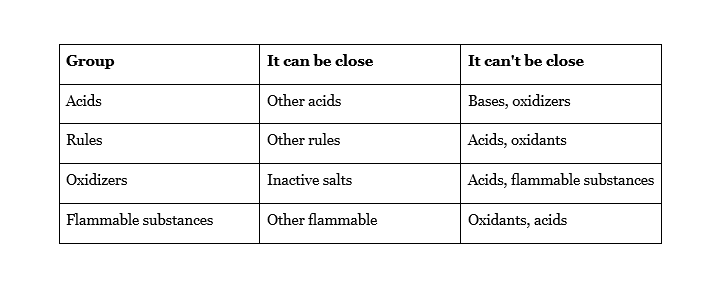
Following these rules maintains a safe working environment, protects personnel and minimizes the risk of serious accidents in the laboratory, and detailed guidelines for storing hazardous substances in the laboratory help in daily laboratory practice.
What is the importance of CLP labels and Safety Data Sheets (SDS) in storage?
Each chemical reagent in the laboratory must have its own Safety Data Sheet (SDS), and the laboratory should keep an up-to-date inventory of all hazardous substances. This is the foundation of safety and compliance.
The CLP/GHS label clearly indicates the properties of the chemicals. It should include the name of the substance, the CAS number, hazard pictograms, H and P phrases indicating potential risks and recommended precautions, as well as the concentration and date of opening the container.
Reagents must be stored in their original packaging, the material of which does not react with the contents. Any container with an illegible label requires immediate withdrawal or completion of information. Thanks to this, every employee always knows what the risks of a given substance are and how to use it safely, which significantly reduces the risk of accidents and mistakes in the laboratory.
How to safely store flammable, toxic and corrosive substances?
The storage of different groups of chemicals requires the use of appropriate safety cabinets and rules that minimize the risk of accidents. Flammable substances, including flammable liquids, should be kept in fireproof cabinets, away from sources of heat, light and sparks. This ensures that even in the event of a fire, the warehouse protects employees and reduces the spread of fire.
Toxic and poisonous substances require special care – they are stored in armoured cabinets or safes, accessible only to authorised personnel, and each transaction should be recorded in the records. This solution avoids uncontrolled access and protects against exposure to harmful substances.
Corrosive substances, such as acids and alkalis, are best stored in acid-resistant cabinets made of polyethylene or polypropylene, equipped with spill trays that protect against leaks and damage to the floor. Special cases require additional measures: volatile reagents in dark glass, hydrofluoric acid in plastic containers, sodium in paraffin, phosphorus immersed in water or thermolabile substances in laboratory refrigerators maintaining a temperature of +2 to +8°C.
What are the rules for storing technical gas cylinders?
Industrial gases are hazardous substances that require special care when stored. Each gas cylinder must be secured against tipping over – racks, chains or other stable fasteners are used for this purpose. This minimizes the risk of valve damage and uncontrolled gas release.
Cylinders should be stored in ventilated cabinets, preferably equipped with ramps to allow safe movement and use of gas. For warehouses specifically designed for gas cylinders, cabinets compliant with EN 14470-2 are used, which provide fire resistance and additional protection in the event of fire.
In practice, this means that chemical cabinets and gas cylinders must be adapted to the nature of the gas being stored, ventilated and stably positioned. Compliance with these rules ensures the safety of personnel, protects against accidents and allows you to fully control the risks associated with the storage of technical gases.
How to manage the records and disposal of chemical waste?
A safe laboratory requires not only proper storage of reagents, but also effective management of their records and disposal. In practice, two stock rotation rules are used: FIFO (first in, first out) and FEFO (first expired, first out). This minimizes the risk of using expired substances and keeps the inventory of chemicals up to date.
Chemical waste should be collected in appropriate containers, most often made of HDPE, in separate rooms or on dedicated racks. Each container should be marked with a waste code in accordance with the applicable regulations, which allows for proper segregation and subsequent disposal. Regular inspection of expiration dates and systematic disposal of expired reagents is essential for the safety of personnel and environmental protection.
The chemical warehouse should be additionally equipped with a non-draining emergency sewer, which protects against the effects of a possible leak. Proper keeping of records of reagents and the application of the principles of safe disposal of hazardous waste are the foundation of a professional and safe laboratory.
What protective equipment and emergency equipment should the warehouse be equipped with?
A safe chemical reagent warehouse requires both permanent equipment and mobile equipment that enables rapid response in emergency situations. Every laboratory should have emergency showers and eye washers to immediately neutralize the contact of chemicals with the skin or eyes. An important element is alsoemergency ventilation, which allows for quick removal of harmful fumes in the event of a leak.
Mobile equipment includeschemical fire extinguishers, fire blankets, sorbents and spill removal kits that allow you to react immediately to spills.
Personal protective equipment (PPE) should not be forgotten. Protective gowns, nitrile gloves and safety glasses should be available in the warehouse to protect personnel from contact with hazardous substances. In addition, the warehouse should be equipped with a first aid kit and clearly placed workplace instructions that inform about what to do in the event of an accident.
Proper equipment of the warehouse with PPE, emergency equipment and instructions significantly increases work safety and minimizes the effects of possible chemical accidents.
March 12, 2026