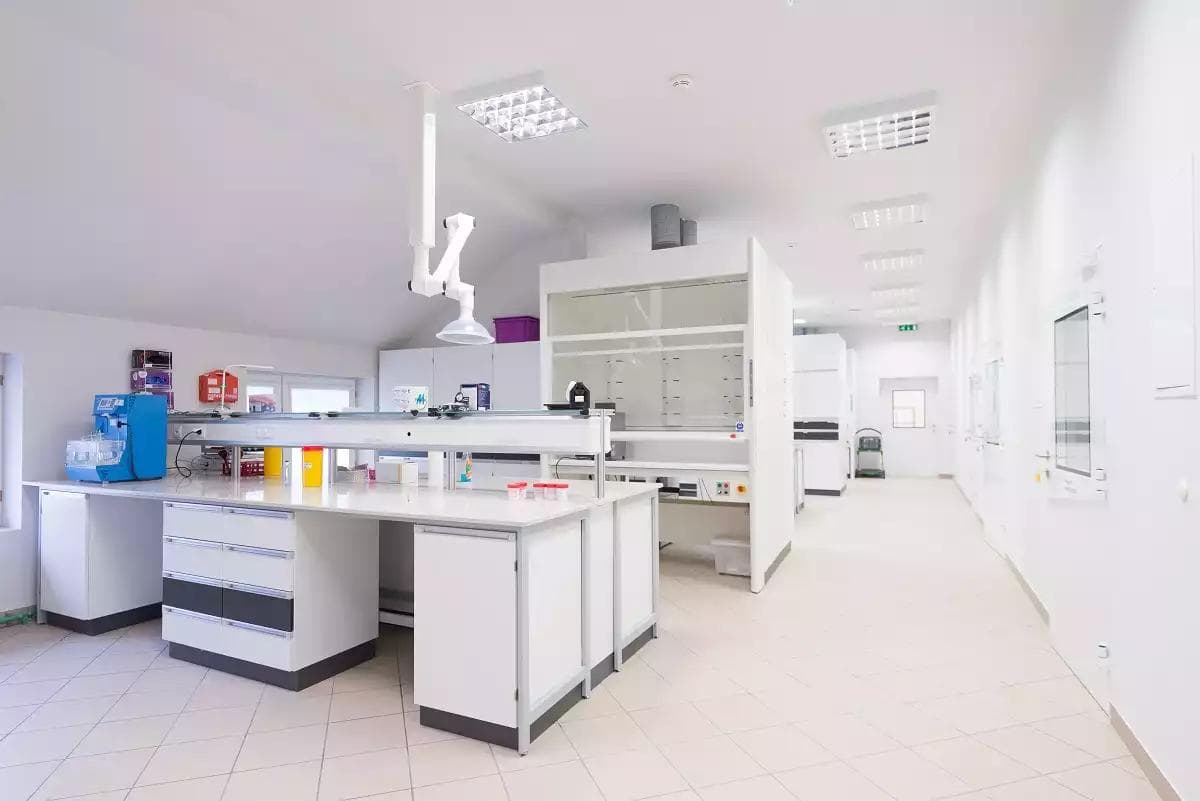
A laboratory incubator is one of the basic devices used in microbiology, cell biology and diagnostics. It allows you to maintain stable conditions of temperature, humidity and gas atmosphere, thanks to which it is possible to safely grow microorganisms and cells. In practice, these devices most often work with equipment such as medical furniture, which help to create an ergonomic and safe workplace.
What is a laboratory incubator?
A laboratory incubator is one of the basic laboratory equipment used to store and grow material under strictly controlled conditions. It is used to work with various types of biological, microbiological and chemical samples, requiring a stable environment during testing.
The device allows precise control of parameters such as temperature, humidity and the composition of the atmosphere inside the chamber, which is crucial for the correct incubation of samples and the thermostating process of samples.
In order for the incubator to function properly and maintain stable operating conditions, it should be placed in a properly prepared position, away from sources of vibrations, drafts and sudden temperature changes.
What is the difference between a laboratory incubator and a greenhouse?
Although the terms incubator and laboratory greenhouse are often used interchangeably, in practice they refer to devices with slightly different applications and scope of operation. Incubators are mainly used to grow and store biological material in stable conditions, while greenhouses are more often used for processes that require higher temperatures.
A typical laboratory greenhouse usually operates at temperatures above 70°C and is used, for m.in example, for drying laboratory glassware or heating materials. Laboratories also offer specialized solutions, such as medical heaters, CO2 cell culture heaters,and refrigerated heaters that allow them to operate in lower temperature ranges.
A special type of device is a water heater, which, thanks to the use of a water bath, provides very accurate and even temperature control. This solution reduces the risk of thermal fluctuations and is often used in precise laboratory procedures.
Both devices are important laboratory equipment, but the choice of a specific solution depends on the type of research carried out and the required operating parameters.
What are the types of laboratory incubators?
Depending on the application and the type of research conducted, laboratories use different types of incubators, which differ in the temperature range, the way the air circulates and the control of the atmosphere.
- Microbiological incubator – the most commonly used model for growing microorganisms. It typically operates at temperatures up to 100°C and can use gravitational convection (natural convection) or forced air circulation (forced convection) for better temperature stabilization.
- Refrigerated incubator – allows operation in the range of approx. 5–70°C. It is available as a compressor incubator or a modelbased on a Peltier cell, which provides quieter and more energy-efficient operation.
- CO2 incubator – used mainly in cell cultures. It maintains a constant concentration of about 5% CO2 and an appropriate level of humidity inside the chamber.
- Multi-gas incubator / gas incubator – in addition to CO2 control, it also allows you to regulate the oxygen level, thanks to which it is possible to conduct breeding in hypoxia or normoxia conditions.
- Shaking incubator – used for liquid farming, where it is necessary to mix and maintain a constant temperature at the same time.
- Illuminated Cooled Incubator / Photoperiod Incubator – allows the simulation of environmental conditions, including the day-night cycle, which is why it is often used in the study of plants and photosensitive microorganisms.
- Portable and hybrid models – compact devices with 12V power capability, adapted to work vertically or horizontally, used in mobile laboratories and field work, among m.in others.
The selection of the right incubator depends primarily on the type of research being conducted, the required environmental parameters and the method of growing biological material.
How to choose a laboratory incubator for your research?
The choice of a laboratory incubator should primarily depend on the type of research being conducted and whether heating, cooling, or controlling parameters such as humidity, carbon dioxide concentration or oxygen concentration are crucial. In practice, this means matching the device to a specific application, not choosing a "universal" model.
For cell culture and tissue culture, especially mammalian cells, CO2 incubators are best suited, as they maintain stable gas conditions and often also allowfor the control of normoxia or hypoxia. On the otherhand, in the case of suspension culture and intensively multiplying bacterial cultures, shaking incubators, i.e. so-called systems for bacterial culture and liquid culture, are a better choice.
For drug stability testing, pharmaceutical testing, and some applications in microbiological and botanical studies, refrigerated incubators are crucial to maintain low and stable temperatures for extended periods of time.
A very important criterion is also the capacity of the incubator, i.e. its chamber dimensions and the number of available shelves in relation to the planned number of samples. An incubator that is too small limits work, and too large can worsen energy efficiency and stability of conditions.
Temperature uniformity, door opening frequency and quality of the control system are also important. Modern devices use a microprocessor controller and advanced PID control, which allows to maintain stable conditions even with variable chamber loads.
How to prepare a workstation for a laboratory incubator?
Preparing a suitable workplace for the incubator is crucial for its stable and safe operation and compliancewith health and safety rules and laboratory ergonomics.
For smaller models that can be placed on a lab table, you should provide a stable, level surface and adequate space around the device. Ventilation space is very important, as it allows proper air circulation and prevents the device from overheating. You should also take care of free access to the door, so that its opening is not restricted in everyday work. In more complex installations, laboratory fume hood sets are also used, integrating ventilation and air filtration systems.
Larger incubators with a capacity of more than 400 l already require dedicated space on the floor. In their case, the key is the appropriate load-bearing capacity of the substrate and the well-thought-out placement within the entire laboratory workstation, so as to ensure convenient service and use access.
Regardless of the size of the device, it is necessary to provide access to basic utilities: a stable power supply, water intake (if the incubator controls humidity) and a gas system, including CO2 connections or N2 connections in the case of gas incubators.
In modern laboratories, properly selected laboratory furniture is crucial for the ergonomics of work and the organization of the test station.
How to prevent contamination in a laboratory incubator?
Contamination preventionin a laboratory incubator is based on both the functions of the device and the correct GLPand SOP operating procedures. It is crucial to maintain sterility and reduce the risk of contaminant transfer between samples, i.e. cross-contamination.
Modern incubators use built-in decontamination systems, such as hot air sterilization (often at a temperature of approx. 180°C), which effectively removes microorganisms from the inside of the chamber. In addition, UV sterilization with the use of a UV lamp is used, which acts on work surfaces and reduces the growth of microorganisms. Laboratory fume hoods are also particularly important in laboratory work, as they ensure control over the fumes and the safety of the operator.
The material of the inner chamber is also of great importance. Stainless steel and copper are used, m.in example, which have natural antimicrobial properties and make it easier to maintain high sterility in the device.
In practice, work procedures are also very important – limiting the frequency of opening the incubator door, quickly handling samples and taking care of the cleanliness of the station. All these activities significantly reduce the risk of contamination and allow to maintain stable, controlled breeding conditions.
May 30, 2026