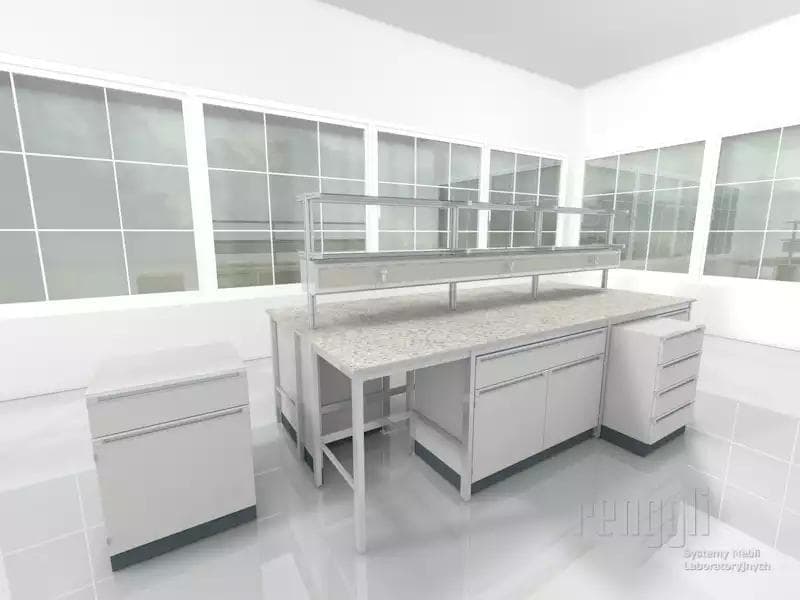
Microbiological and chemical laboratories differ not only in the scope of research, but also in the way the space is organized and the selection of equipment. In microbiology laboratories, sterility, contamination control and microbial safety are paramount, while chemical laboratories focus mainly on working with chemicals, reagents and vapours. For this reason, other laboratory furniture, ventilation systems and specialist equipment such as laboratory fume hoods or laboratory fume hood sets are used to help ensure proper working conditions and compliance with health and safety requirements.
What is the difference between a microbiological laboratory and a chemical laboratory?
A microbiological laboratory is a place designed to work with microorganisms and microorganisms, where mainly microbiological tests are performed. The most important here are sterility, cleanliness control and reducing the risk of cross-contamination that could affect the results of analyses or work safety. For this reason, specialized medical furniture and equipment are used to maintain sterile conditions.
A chemical laboratory, on the other hand , is used to perform chemical analyses, syntheses and physicochemical tests. In such laboratories, the most important thing is the resistance of the equipment to aggressive chemicals, high temperature and fumes. That is why laboratory fume hoods and materials resistant to acids, alkalis and solvents play an important role here.
Both types of laboratories operate in accordance with the principles of Good Laboratory Practice (GLP) and require high quality work and appropriate documentation. Measurement consistency is also important, which allows for reliable and reproducible test results.
What are the functions of furniture in a microbiological and chemical laboratory?
In a microbiology laboratory, equipment must first and foremost facilitate sterility. Therefore, laboratory furniture has smooth, easy-to-clean surfaces and is resistant to frequent disinfection with strong chemicals. It is also important to reduce the risk of biofilm formation, which is why materials that do not absorb moisture and are easy to keep clean are used.
In the chemical laboratory, resistance to corrosive substances such as acids, bases or solvents is of greater importance. Both laboratory tables and laboratory cabinets must withstand contact with aggressive chemicals and intensive use. In some laboratories, weighing tables are also used to reduce vibrations and improve the accuracy of measurements.
Modular equipment systems are increasingly being used, as they allow you to easily change the layout of the workstations as the laboratory grows. Such solutions also improvework ergonomics and allow for better adjustment of equipment to the type of examination. The workstations are often complemented by laboratory stools, which work well in work requiring frequent movement between equipment.
Regardless of the type of laboratory, the equipment should have appropriate safety certificates, confirming its durability and the possibility of using it in demanding laboratory conditions.
What worktop materials provide chemical resistance and sterility?
Choosing the right material for lab worktops is of great importance in both microbiological and chemical laboratories. Quartz sinter works very well in microbiology laboratories because it is hard, scratch-resistant and impermeable to bacteria and mold. This makes it easy to maintain the sterility of the work surface.
In chemical laboratories, epoxy resin and technical ceramics are most often used. These are chemically resistant and heat-resistant materials that tolerate contact with aggressive reagents, high temperature and intensive use. Such chemical-resistant worktops are indispensable where acids, bases and solvents are regularly used.
Stainless steel also remains a popular solution, especially in the washing and sample preparation zones. It is durable, corrosion-resistant and easy to disinfect, which is why it is often used in workplaces that require high hygiene.
In laboratories with a lower chemical load, HPL boards and laminate are also used, which are a more economical option. Although they have lower resistance than epoxy resin or ceramics, they still work well as work surfaces for basic laboratory applications.
What equipment is necessary in a microbiology laboratory?
The basis of work in a microbiological laboratory is specialized laboratory equipment, which allows you to maintain sterility and safely cultivate microorganisms. One of the most important devices is the autoclave, used to sterilize tools, glass, culture media and microbiological media.
Incubators are also of great importance, as they maintain a constant temperature needed for the proper cultivation of microorganisms. Microscopes are used to observe the samples, allowing for the analysis of cells and microorganisms at high magnification.
When working with biological material, laminar flow beds and laminar flow chambers of at least the second class are also extremely important. They ensure adequate flow of filtered air, thus protecting both the sample and personnel from contamination.
An important element of the facilities are also washrooms equipped with washer-disinfector devices, which allow for thorough washing and disinfection of laboratory glassware. This allows you to maintain high purity and repeatability of laboratory processes.
What equipment is crucial in a chemical laboratory?
In a chemical laboratory, the basic elements of equipment are fume hoods and a chemical fume hood, which ensure safe work with volatile, toxic and strong vapor substances. They act as a laboratory extractor, removing hazardous gases and protecting personnel from contact with chemicals and hazardous materials.
Analytical equipment also plays an important role, which allows for accurate examination of the physicochemical composition of samples. The most commonly used devices include chromatographs and spectrophotometers, used in qualitative and quantitative analyses of various chemical reagents.
Analytical balances are also an important piece of equipment, providing precise weight measurements in laboratory processes.
Chemical laboratories also use specialized chemical cabinets and reagent cabinets that are ventilated and protect against the accumulation of hazardous fumes. This makes the storage of chemicals safer and compliant with health and safety requirements.
How to design a safe workflow and ventilation systems?
In a microbiology laboratory, a well-planned technological sequence that is based onthe principle of a one-way path is crucial. This means that material and personnel move in one direction – from the dirty zone to the clean zone – without being able to retract, which reduces the risk of cross-contamination transmission and helps maintain sterility.
In such a system, washbasin and apron mucus play an important role, which constitute a physical barrier between the zones and enforce hygienic procedures, such as changing protective clothing or disinfecting hands. Additionally, exhaust systems and mechanical ventilation are used to help maintain controlled environmental conditions.
In chemical laboratories, extensive ventilation systems, including supply and exhaust ventilation and local ventilation, are crucial, ensuring the safe removal of fumes of flammable and toxic substances. This reduces the risk of personnel being exposed to hazardous gases and maintains stable working conditions.
A properly designed workflow in both types of laboratories minimizes the risk of contamination of samples, improves work organization and significantly increases occupational safety (OHS).
May 16, 2026