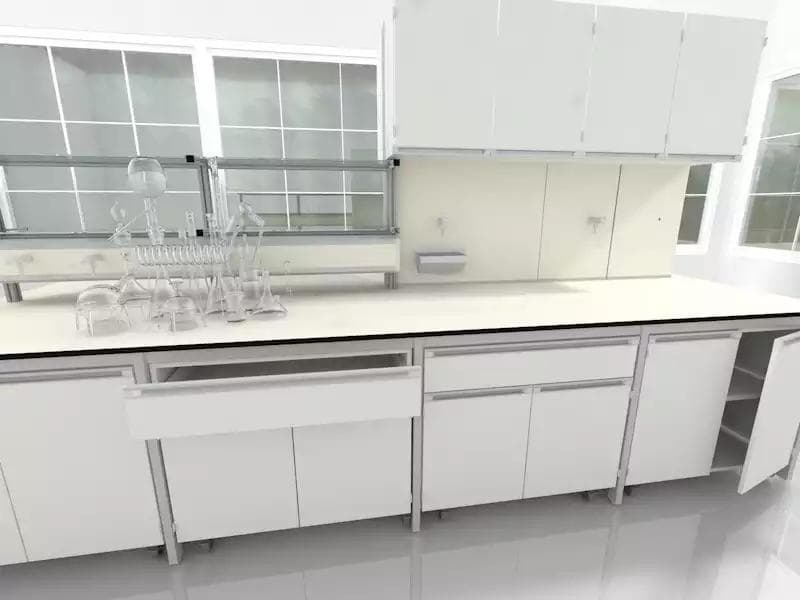
Modular laboratory furniture allows for quick reconfiguration of the research space and adaptation to new technological processes. The use of mobile modules reduces the time of reorganization of workplaces by up to 70%. As a manufacturer of Renggli, we design systems compliant with PN-EN standards, guaranteeing a safe and flexible working environment.
Such solutions allow you to quickly change the layout of the laboratory without downtime. This allows the research space to be easily adapted to new projects and technological requirements.
What is modular laboratory furniture and how does it differ from classic built-in furniture
Modular laboratory furniture is a flexible workstation system based on independent frames that replace the fixed installation on pedestals. Unlike solutions such as permanent laboratory buildings or brick laboratory furniture, they are not permanently attached to the building, so they can be freely moved and expanded.
Their biggest advantage is the ability to quickly change the layout of the laboratory without renovations and long downtime. Modular laboratory furniture allows you to adapt the space to new research processes and changing technological requirements.
The differences from classic solutions can be summarized in several points:
- easier to change the configuration of workstations
- shorter assembly and reconstruction time
- lower costs of changes during use
- Better access to installations and easier cleaning
In modern laboratories, modular laboratory equipment plays an important role, which allows various elements to be combined into a coherent system. It also uses modular fume hoods, which can be moved and adapted to the layout of the room.
An important element are also mobile weighing stations – anti-vibration tables designed to work with precise equipment. They reduce the impact of vibrations, which improves measurement stability.
In practice, the best modular laboratory furniture combines flexibility with adaptation to different types of examinations, and is increasingly also designed as ergonomic modular laboratory furniture that makes everyday work easier.
These types of systems work well in dynamic research spaces, although in small laboratories they require careful planning to maintain comfort of use and good work organization.
Safety standards, worktops and chemical resistance in modular laboratory furniture
The choice of worktop material and compliance with the PN-EN 13150 standard determinethe safety and chemical resistance of modular laboratory furniture. The requirements of PN-EN 14727 and PN-EN 14056 are also important, which determine, m.in, the stability and construction of laboratory furniture systems.
The most commonly used countertop materials:
- worktops made of technical ceramics – the highest chemical and thermal resistance
- phenolic resin – good acid resistance and easy cleaning
- epoxy composites – high chemical and mechanical resistance
- HPL laminates – for less aggressive environments
In medical and diagnostic laboratories, non-porous, corrosion-resistant and easy-to-disinfect surfaces are required. In chemical work zones, access to safety showers is also used.
Safety cabinets must have a fire resistance of 30 or 90 minutes and equipment such as double walls, automatic closing and spill trays.
Modular metal laboratory furniture (e.g. chemical racks) should be anchored to the ground for stability.
SEFA standards and GIS requirements (2026) confirm that modern modular laboratory furniture must combine chemical, mechanical resistance and ease of hygiene.
Structural components that determine the flexibility of furniture systems
The flexibility of modular laboratory furniture is primarily determined by frames, fittings and mobile elements. In modern laboratory furniture systems , type C and type H load-bearing frames are mainly used.
The C-type support racks provide more legroom and easier access to the workstation. They are often chosen where ergonomics and freedom of movement are important. H-type frames, on the other hand, offer higher load-bearing capacity and greater rigidity of the structure, which is why they are suitable for heavier laboratory equipment and apparatus.
An important construction material is stainless steel, which is standard in environments that require high hygiene due to its corrosion resistance and ease of cleaning. This directly affects the durability of the entire body.
Mobility is provided by wheels with mechanical locking, used in solutions such as modular laboratory furniture on wheels. They allow you to quickly move the workstations, and at the same time stabilize them during operation. Chemically resistant hinges are also used in cabinets and mobile modules, which increases the service life of the components in contact with aggressive substances.
Modular metal laboratory furniture in the form of integrated systems, where the fume hoods are mounted directly on the frames, are also becoming more and more common . This solution allows you to easily change the layout of work zones without interfering with building installations.
The selection of the right components determines how well the system withstands intensive use and how quickly it can be adapted to new test processes.
How Ergonomic Modular Laboratory Furniture Optimizes Small Research Spaces
In small laboratories, ergonomic modular laboratory furniture makes the most of limited space without sacrificing working comfort. The key here is proper layout planning and selection of adjustable elements at the design stage, i.e. whenapproaching how to design modular laboratory furniture for a specific room.
The basis of ergonomics is the ability to adjust:
- worktop height
- the angle of inclination of the work surface
- chair heights and backrest settings
Such solutions improve the working position of personnel and reduce fatigue during long laboratory procedures.
In confined space, modular laboratory furniture on wheels works well, which can be quickly adjusted depending on the tasks at hand. In practice, mobile laboratory cabinets and other movable laboratory furniture are also implemented, which allows you to change the layout of workstations without interrupting work.
Tests of ergonomic workstations show that mobile systems increase the smoothness of the team's work, especially in laboratories with variable research processes. Mobile laboratory furniture also improves access to equipment and shortens the distance between workstations.
When implementing, it is worth paying attention to several elements:
- stability of the structure at full load
- easy to lock the wheels
- resistance of work surfaces to intensive use
- Quick configuration change
Flexible laboratory furniture designed in this wayincreases safety and work efficiency, especially in small spaces, where every centimeter matters.
Practical reconfiguration of modules or how to efficiently change the layout of workstations
The process of rearranging flexible furniture for the laboratory is based on modular design and quick disconnection of the installation, without the need for specialized tools.
The reconfiguration is done step by step:
- disconnection of utilities (electricity, water, gas)
- unlocking modules and wheels with mechanical lock
- transfer or exchange of positions
- re-securing the structure
- Connection and installation test
Thanks to this, changing the layout does not require renovations or downtime. Chemically resistant hinges and robust mobile components allow for multiple reconfigurations without loss of stability.
How to Plan and Choose the Best Modular Lab Furniture in 2026
In 2026, the selection of the best modular laboratory furniture ismainly based on TCO analysis, technology integration and R&D work flexibility.
Increasingly, the design of modular laboratory furniture is becoming a standard, taking into account:
- built-in cabling management
- RJ45 and USB-C ports in the countertops
- integration with LIMS and Smart Lab systems
- preparation for IoT laboratory infrastructure
In practice, the reorganization of R&D laboratories in 2026 shows that well-designed modularity can reduce downtime by up to approx. 70%. Compliance with GLP laboratory design requirements and maintaining an appropriate ISO cleanliness class, especially in research and production environments, is also crucial.
Finally, the integration of utility connections directly into the tables plays an increasingly important role, which affects the pace of implementation and the scalability of the entire infrastructure.
Supply of utilities – integration of the installation with modular laboratory tables
In modular laboratory tables , the correct supply of media: water, gas and electricity is crucial. Modern technical installation systems use solutions that allow for safe and quick connection of installations with mobile workstations.
The most commonly used are installation media boxes, mounted above or below the table, which allow easy access to the connections without interfering with the table structure. An alternative is technological bridges, i.e. overhead or suspended installation guidance systems that organize the wiring and wires of utilities.
Ceiling systems, such as power columns and installation panels, are also becoming increasingly popular. Thanks to them, the floor space remains fully mobile, which is important for the price of modular laboratory furniture, where the flexibility of the installation affects the total cost of implementing the system.
The final choice of how to distribute media depends on the layout of the laboratory and its level of mobility. Each solution must be compatible with the design of the racks, which are the fixing point for the entire installation system.
Certified manufacturer as a guarantee of compliance and safe implementation of systems
Choosing a certified supplier of laboratory furniture systems has a direct impact on safety and compliance with standards such as PN-EN 14727 and PN-EN 14056. Only a manufacturer with full design control can guarantee the correct fit of the design to the working conditions of the laboratory.
The professional approach includes not only the supply of equipment, but also technological audits and support in the design of GLP laboratories. Such actions minimize the risk of errors at the implementation stage and allow for better adaptation of the system to the research processes.
FAQ - Frequently Asked Questions
1. How long does it take to assemble and configure the modular furniture system for the first time?
Installation is about 50-70% faster than fixed installation and usually takes several to several hours. It does not require construction work, it is based on ready-made modules and quick couplings.
2. How to take care of the countertops and frames to maintain chemical resistance?
Regular disinfection with products with neutral pH and quick removal of aggressive substances is enough. Non-porous surfaces make it easy to maintain hygiene.
3. Can I combine systems from different manufacturers?
This is not recommended. Rack differences and incompatibility can compromise stability and compromise compliance.
4. What module dimensions work well in small labs?
Most often 900–1200 mm wide. It is also important to maintain approx. 1200 mm of transition between rows.
5. Why is furniture integrated with Smart Lab systems?
This allows you to control your media and collect data automatically. Countertops with USB-C and RJ45 ports reduce wiring and streamline workflows.
6. What to avoid when choosing modular laboratory furniture?
Lack of PN-EN 14727 certification and mixing of incompatible systems. This can reduce safety and durability.
7. In which laboratories are modular furniture best suited?
In R&D, pharmacy, biotechnology and medical laboratories, where equipment and work arrangements often change.
8. What influences the need for modular furniture?
Rapid changes in technology, equipment rotation and the need to reduce the cost of laboratory downtime.
June 07, 2026