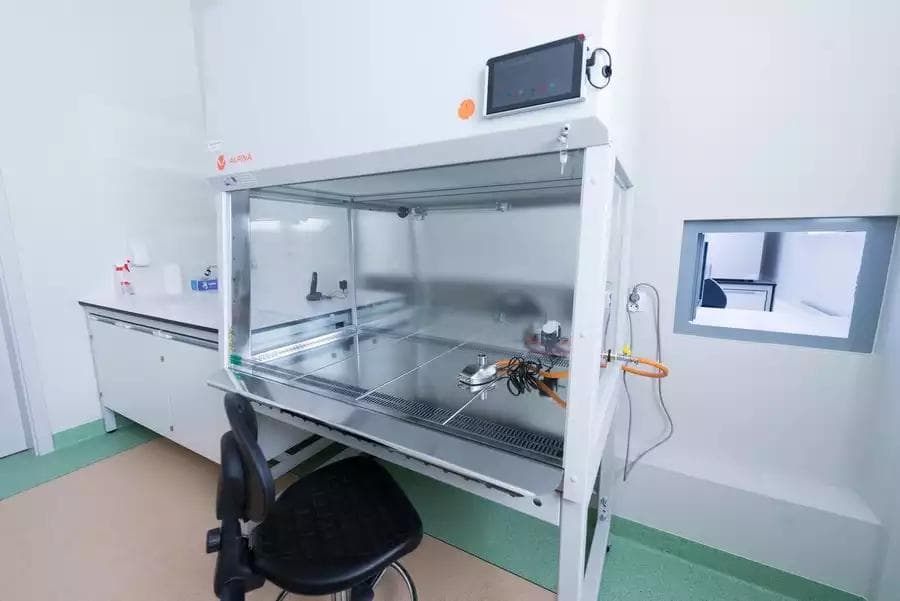
Technical gas installations in laboratories require well-thought-out design, precise assembly and compliance with applicable standards. Improperly constructed systems can lead to leaks, fires or poisoning, so every step – from planning to technical acceptance – is important for the safety of workers and the protection of equipment.
What is the design and construction of technical gas installations?
The design of a technical gas installation begins with a technical design, in which it is determined how much gas will be needed (technical gas demand balance) and what pipe diameters are suitable. At this stage, you often work with a design office that takes into account the nature of the facility – the installation is planned differently in a laboratory and in a large production hall.
The construction of the installation must be carried out in accordancewith the principles of good engineering practice, regulations and applicable safety standards. For example, the PN-EN ISO 7396 standard applies to medical installations.
The whole process includes several stages: concept, project preparation, selection of equipment, installation and commissioning of the installation. 3D designs of technical gas installations are also increasingly used, which allow to visualize all pipes, equipment and tapping points, and at the same time check compliance with the technical conditions of the facility
What are the components of a gas distribution system?
Gas distribution systems in laboratories and industrial plants consist of several basic components that ensure a safe and stable supply of gas to end equipment.
First, we have the power sources – these can be single gas cylinders, bundle cylinder sets, cryogenic tanks or gas generators. It is from these sources that the gas enters the installation.
The gas then flows through the appropriate fittings, which include m.in:
- pressure reducers of the first and second stage,
- expansion stations,
- expansion panels,
- shut-off valves,
- quick couplings and cylinder welding reducers,
- cylinder manifolds, which allow you to combine several cylinders into one supply line.
The entire installation is equipped with appropriatelaboratory armature that control the flow and pressure of gases in the system.
Another element is transmission pipelines that connect the gas source with the place of its use, and consumption points – special terminals from which devices take the medium. Thanks to them, the gas goes safely and stably to the end equipment. For non-flammable gases, non-flammable gas valves are used, which allow the supply to be safely cut off without the risk of leakage or system failure.
Laboratory valves are used at the tapping points, which allow for safe regulation of the gas supply to the end devices. This system ensures continuity of supply, allows pressure control and minimizes the risk of leakage throughout the system.
What is the difference between gas installations for industry, laboratories and medicine?
Industrial installations and welding mainly handle shielding gases, such as argon or CO₂, and flammable gases, such as acetylene. They are characterized by high flow rates, robust design and simpler pressure regulation, tailored to machines and production processes.
Very high precision is required in laboratories – high-purity gases (e.g. 5.0 and 6.0 purity) and carrier gases such as helium are used for techniques such as chromatography. Installations must allow for accurate pressure regulation and minimize the risk of contamination.
Specific medical gases are usedin medicine, primarily medical oxygen and nitrous oxide. Installations must meet stringent cleanliness standards and ensure reliable continuity of supply so that patients have constant access to gases.
Installations for the power industry and hydrogen technologies are also becoming more and more frequent, which require additional protection and control due to the specific properties of hydrogen.
How to choose the materials and cleanliness class of pipelines for the type of gas?
The choice of pipeline materials depends primarily on the type of gas and the required purity of the gases. For installations requiring high cleanliness and corrosion resistance, 316L stainless steel or other acid-resistant steel is used, while copper works well in standard medical installations and some technical gases.
Pipelines are connected by different methods depending on the cleanliness requirements. Orbital welding ensures the highest cleanliness and tightness, which is why it is used in laboratory and medical installations. Brazing is common in copper and less demanding installations.
When designing the installation, gas purity classes are also taken into account – e.g. 4.0, 5.0 or 6.0. The higher the class, the more demanding are the preparatory treatments of pipes, such as electropolishing, degreasing, or the use of special fittings, e.g. double-ring or VCR fittings, to maintain full tightness and cleanliness of the pipeline interior.
What detection and monitoring systems ensure operational safety?
In laboratories and industrial plants, gas detection systems are responsible for protecting against hazards. Gas detection ranges from flammable gases such as hydrogen or acetyleneto poisonous gases that can be dangerous to the health of workers.
The plants are equipped with monitoring systems that constantly monitor pressure, cylinder fill level and alarm states, including gas shortage signaling. If a problem is detected, industrial automation can shut off the gas supply using solenoid valves, and flame retardant fuses are also usedto reduce the risk of explosion. In combustible gas installations, special valves for combustible gases are used, which cooperate with the system of detection and automation that cuts off the supply in the event of a failure.
With such systems, compliancewith occupational health and safety (OHS) rulesis easier and the operation of the entire gas system becomes much safer.
How does the installation and technical acceptance of the installation by the Office of Technical Inspection take place?
Installation of gas installations should only be carried out by certified installers with the appropriate G3 energy licenses. The work includes the correct fixing of the pipelines, the connection of equipment and fittings, and the verification of compliance with the design documentation.
After the installation is completed, a technical acceptance is carried outby the Office of Technical Inspection (UDT). The UDT inspector verifies the compliance of the installation with the applicable regulations, European directives and the PED (Pressure Equipment Directive), as well as checks the full quality documentation.
During acceptance, standard tests are performed, including pressure tests, leak tests and control of the correct operation of valves and tapping points. After positive verification, a acceptance protocol is drawn up, which confirms that the installation is ready for safe operation under technical supervision.
Why are regular maintenance and periodic inspections of installations crucial?
Service and maintenance of technical gas installations ensure safe operation and maintenance of continuity of supply. During regular service work, the tightness of pipelines is checked, pressure reducers are checked, gas detectors are calibrated and other activities necessary for the proper operation of the system are performed.
According to the regulations, periodic inspections of pressure equipment are mandatory, which allow to detect potential faults and prevent failures. Lack of systematic maintenance of the installation increases the risk of leaks, failures and the need for costly repairs of the installation.
Regular technical service of pressure and cryogenic equipment is therefore not only a legal requirement, but above all a way to ensure the safe and stable operation of the entire system and to keep the installation in optimal condition for many years.
How to choose a professional contractor for technical gas installations?
When choosing a contractor for technical gas installations, it is worth choosing a company that offers comprehensive services – from design, through installation, to subsequent service and maintenance.
Check whether the company has the appropriate construction and gas qualifications, as well as current certificates confirming competence. It is also important to have experience in the implementation of projects in a given industry, e.g. in medicine or laboratories, where the requirements are particularly stringent.
It is a good practice to verify references, visit the contractor's project and assess its technical facilities. A professional contractor should offer expert advice, analysis of customer needs and support in the modernization or expansion of existing systems.
To sum up, safe technical gas installations require a well-thought-out design, proper selection of materials and fittings, regular servicing and monitoring of gases and pressure. The use of appropriate valves and tapping points, along with compliance with standards and regulations, allows you to maintain continuity of supply and minimize the risk of leakage or failure. Choosing an experienced contractor guarantees professional advice, installation and subsequent operation of the system.
March 10, 2026