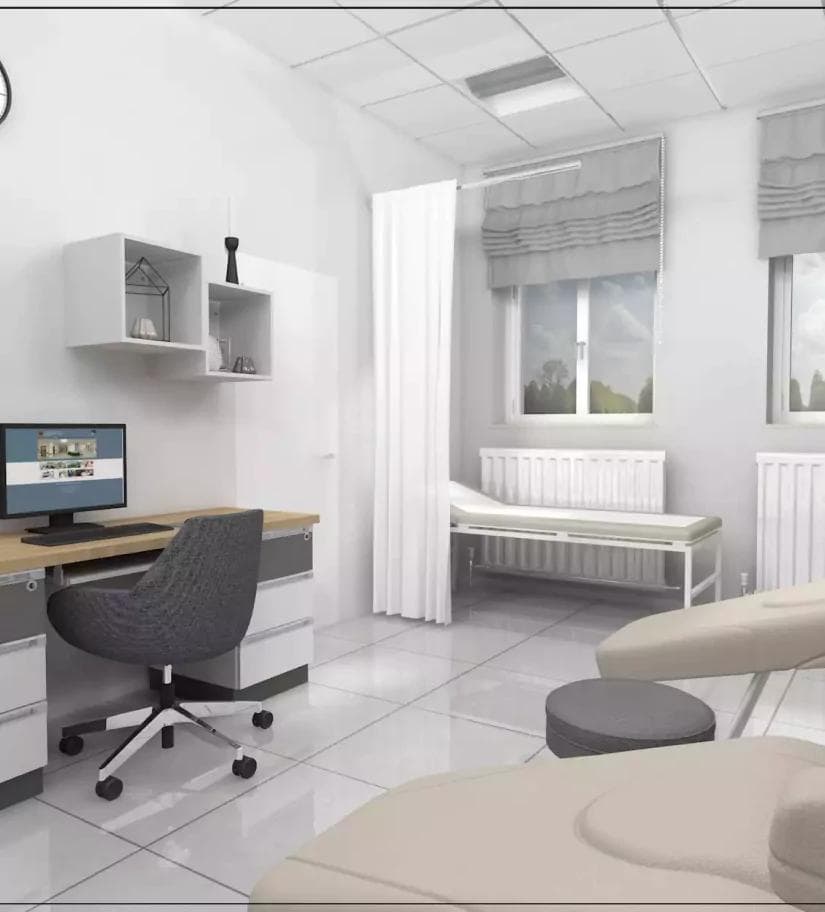
A treatment room is a place with increased sanitary requirements, where medical procedures requiring sterility and infection control are performed. Its equipment must comply with the applicable standards and be confirmed by appropriate documents such as certificates and attestations. Below, we discuss what a properly equipped treatment room should look like step by step.
What sanitary requirements and certificates must be met by the equipment of a treatment room?
The equipment of the treatment room must meet the strict requirements of the Sanepid and the standards resulting from the provisions ofthe National Health Fund and the Regulation of the Minister of Health. This applies both to the quality of the equipment and to the hygienic and sanitary conditions in which medical procedures are performed.
Each element of equipment, including furniture and appliances, should have an appropriate Hygienic Certificate of the National Institute of Health (PZH)anda Certificate of Conformity, confirming compliance with safety standards and approval for use in health care. In many cases, compliance with quality systems such as ISO 9001 and complete technical documentation of the equipment are also required.
Washable surfaces are also an important requirement – both walls, floors and furniture must be resistant to disinfectants and easy to clean. This is crucial to maintain sanitary standards and reduce the risk of infections.
The office must be equipped with a washbasin with running water and touchless fittings, including elbow dispensers for soap and disinfectants. In addition, a separate sink is required, intended only for washing and disinfecting medical instruments.
An important aspect of the functioning of a treatment room is also the GDPR (personal data protection), which regulates the way patient records are stored and secured so that they are protected from unauthorized access.
How to divide a treatment room into functional zones?
The regular organization of the treatment room is based on the division of space into several functional zones, which is crucial for maintaining aseptics and safety of medical procedures. Such an arrangement also facilitates the work of the staff and is important during the inspection of the Sanepid.
In practice, the following zones are distinguished:
Clean zone – a place where staff and materials are prepared, sterile instruments are stored and administrative work is carried out
sterile zone – an area where medical procedures are performed, where full aseptics is maintained
dirty zone – space for storing and pre-processing of used tools and materials
storage zone – a place to store medicines, dressings and medical equipment
Such a division is necessary to maintain technological order and reduce the risk of cross-infections. It has a direct impact on maintaining asepsis, i.e. the sterility of the work environment.
In addition, the proper arrangement of the zones takes into account the rules of health and safety and ergonomics of the work of medical staff, which allows for efficient performance of procedures, minimizes unnecessary movements and increases the safety of both patients and staff.
What medical furniture is necessary in a treatment room?
Properly selected medical furniture in the treatment room is crucial for ergonomics of work, patient safety and maintaining hygiene standards. The central element isthe doctor's couch (or treatment table, often also a treatment bed), which should be height adjustable and seamless upholstery, allowing easy disinfection and maintaining asepsis.
Medical cabinets also play an important role:
metal medical cabinets (often acid-resistant steel or stainless steel) for storing equipment and medicines
Filing cabinet for safe storage of patient records
lockable medical cabinets for dressing materials and protective equipment
An important element of the equipment is also a mobile treatment table / medical trolley, which allows for convenient transport of tools and materials within the office. Thanks to the wheel lock, it provides stability during treatments.
Other necessary elements of equipment are:
medical stool ensuring ergonomics of staff work
a medical screen that guarantees the patient's intimacy
Medical desk for record keeping
medical chairs for staff and patient
medical steps for easy access to the couch
drip stand used in treatment procedures
Treatment chair or blood collection chair
medical assistant and surgical table depending on the specialty
Bedside cabinet as an additional auxiliary element
A medical refrigerator designed to store medicines and vaccines, equipped with a temperature monitoring system that ensures control of storage conditions for sensitive preparations, is also an indispensable equipment.
How to equip the sterilization and disinfection zone of instruments?
The sterilization and disinfection zone is a key area in the treatment room, responsible for ensuring full sterilization ofreusable instruments and maintaining a high level of asepsis. Its equipment must enable the entire decontamination process – from initial cleaning to preparation of tools for reuse.
The basic device is an autoclave (class B steam sterilizer), which is responsible for the proper sterilization of medical instruments. Before being placed in an autoclave, the tools undergo a decontamination process, often using an ultrasonic cleaner, which effectively removes biological contamination and organic residues.
Auxiliary devices are also used in the sterilization zone:
sleeve sealer, used for hermetically packing tools in sterile packages
a distiller that provides water of appropriate purity for technological processes
disinfection trays, used for pre-disinfection of tools
disinfectants, hand and surface disinfectants, and disinfectant wipes
An important element of the equipment is also a UV-C bactericidal lamp, which supports the disinfection of air and work surfaces, reducing the risk of microbiological contamination.
The entire process must be documented – sterilization documentation is kept, including m.in autoclave workflows, parameter control and confirmation of process effectiveness.
What disposable materials and personal protective equipment are needed?
In the treatment room, personal protective equipment (PPE) and disposable materials play a key role, ensuring the safety of both patients and staff and minimizing the risk of infection.
The basic PPE includes:
Disposable gloves
medical masks
protective gowns
visors (for high-risk procedures)
Necessary dressing and injection materials include:
needles, syringes, ventilators (cannulas)
injection kit and blood collection kit
dressing materials: gauze pads, sterile gases, sterile compresses, plasters, bandages
disposable medical pads
catheters used in medical procedures
An important element of work organization is the medical waste management system, which includes:
red bags for infectious waste
containers for sharp instruments (e.g. needles and scalpels)
appropriate labelling and segregation in accordance with medical waste codes
safe disposal in accordance with regulations
The hygiene zone of the office must also include:
soap dispenser
disinfectant dispenser
Disposable towels
Such equipment is the basis for safe work and proper organization of medical procedures in each treatment room.
What diagnostic and rescue equipment should be in the office?
Each medical office must be equipped with basic diagnostic equipment and devices that enable a quick reaction in life-threatening situations. An appropriate kit allows you to assess the patient's condition and take rescue measures even before the arrival of the medical team.
Basic diagnostic equipment includes:
blood pressure monitor
Thermometer
Stethoscope
pulse oximeter
Blood glucose meter
Medical scale with height gauge
The office must also have professional medical lighting, i.e. a treatment lamp, providing precise, bright daylight, necessary during examinations and procedures. Office furniture, such as a desk and chair for staff,is also used for administrative work and record-keeping.
In the field of surgical procedures, reusable surgical tools are also used, such as:
scalpels
surgical scissors
tweezers
needle holders
A key piece of emergency equipment isthe AED (Automatic External Defibrillator), which allows immediate help in the event of sudden cardiac arrest and significantly increases the patient's chances of survival.
In the case of more advanced diagnostics, there may also bean ECG machine in the office, supporting the assessment of heart function.
Each medical device should have up-to-date technical passports that document inspections, calibrations and the technical condition of the equipment, which is essential for patient safety and compliance with inspection requirements.
April 03, 2026