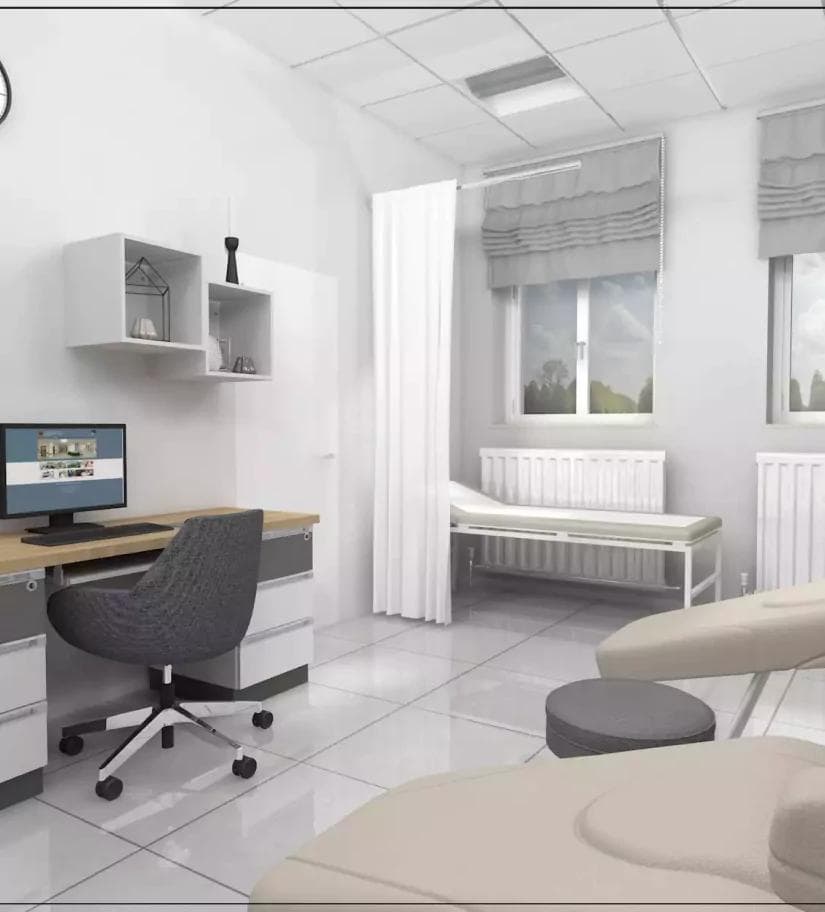
A treatment room is a room designed to perform basic medical, diagnostic and nursing procedures in conditions that ensure the safety of the patient and staff. Unlike the laboratory, where the most important thing is the analysis of samples and the control of research processes, the practice focuses on working directly with the patient and maintaining high standards of hygiene.
Therefore, both properly selected medical furniture and specialized laboratory furniture must meet different requirements in terms of construction, material resistance and workplace organization. The differences also apply to the equipment of the treatment room or the equipment of the pharmaceutical laboratory, which is designed for completely different procedures and safety standards.
What is the difference between the equipment of a treatment room and a laboratory?
A treatment room is a placewhere invasive procedures such as dressings, injections or minor medical procedures are performed. Hygiene, sterility and quick and effective disinfection of surfaces are key here, as the priority is to reduce the risk of cross-infections and ensure the safety of the patient and staff.
The laboratory is a research space where analyses and experiments are conducted with the use of chemical reagents. In this environment, equipment must be resistant to chemicals, intensive use, and provide stable working conditions and safety during analytical work.
In practice, this means that:
- the treatment room is designed in termsof hygiene, sterility and minimization of cross-infections,
- laboratory in terms of working with chemical reagents, stability of workstations and general occupational safety.
The furniture in the office must be able to clean quickly and keep it clean after procedures, while in the laboratory it is adapted to contact with chemicals and analytical work.
What medical furniture is necessary in a treatment room?
In a treatment room, well-selected medical furniture is essential, which supports both the work of the staff and the safety of the patient during procedures.
The most important element is the treatment table, which allows you to adjust the height and angle of inclination, so that you can precisely position the patient for the procedure and provide convenient access during work.
Mobile furniture is also of great importance:
- tool tables on wheels that allow quick access to instruments,
- medical assistants who organize and streamline work during the procedure.
Depending on the purpose of the office, the following are also used:
- treatment chairs, especially at collection and dentistry points,
- medical screens that provide the patient with intimacy,
- drip stands, necessary for infusion.
An important element of the equipment is also equipment supporting occupational health and safety:
- autoclave for sterilizing instruments,
- bactericidal lamp for disinfection of air and surfaces,
- AED defibrillator as part of the emergency equipment.
The whole thing should be designed to ensure high ergonomics of work, easy disinfection and quick access to the most important tools.
What specialized furniture and equipment must be included in the laboratory?
In any medical laboratory,the basis for safety is properly selected laboratory furniture and equipment that ensure controlled working conditions and protection of personnel and samples.
A key element is laboratory fume hoods, i.e. laboratory extractors that protect users from harmful fumes, gases and aerosols generated when working with chemicals.
Weighing tables, often called anti-vibration tables, also play an important role. Equipped with anti-vibration modules, they eliminate vibrations, which is essential when working with very precise measurements and analytical equipment.
In modern laboratories, the organization of space is also of great importance:
- modular furniture allows you to flexibly adjust the layout of the workstations,
- Scalability allows the lab to expand as the number of tests and devices increases.
Smooth work surfaces are also important to facilitate hygiene and reduce the risk of contamination, especially in environments that require high cleanliness, such as microbiology laboratories.
What materials are used to make medical and laboratory furniture?
In medical furniture, especially in treatment rooms, stainless steel is most often used, because it does not absorb body fluids, is resistant to intensive surface disinfection and tolerates frequent washing with chemicals. Seamless upholstery is also an important element, which reduces the accumulation of microorganisms and makes it easier to maintain hygiene.
In laboratory furniture, where aggressive substances are used, other solutions are used:
- polypropylene – resistant to many chemicals and easy to clean,
- Worktops made of laboratory ceramics, conglomerate,and epoxy and phenolic resins that provide high chemical and thermal resistance.
HPL laminate is also often used in dry and research zones, which works well for standard laboratory work. Regular laminate board, on the other hand , is not recommended in a humid environment or exposed to chemicals, as it is more likely to deteriorate.
The choice of materials always depends on the working environment – medical or laboratory – and the level of exposure to chemicals and hygiene requirements.
How to organize the safe storage of medicines and medical records?
The basis of a well-organized office are medical cabinets, which allow safe and orderly storage of medicines, surgical instruments and disposable materials. The most commonly used is a doctor's cabinet – often glazed – which allows for a quick preview of the contents, and at the same time protects it from unauthorized access and maintains order in the workplace.
An important element of the equipment are also filing cabinets, used to archive medical records. Their design allows for the secure storage of patient data in accordance with GDPR requirements, while ensuring easy access to documents while maintaining control over their circulation.
The workstation is complementedby a doctor's desk, which should be ergonomic and equipped with lockable drawers. This allows you to better protect patient data and keep your records and work materials organized.
What sanitary and quality standards must medical equipment meet?
In a well-designed treatment room, it is very importantto organize the space that reduces the risk of infections. Therefore, clear zones are separated: a clean zone, a dirty zone, a storage area and a part intended for the patient. This division makes it easier to maintain hygiene and reduces the risk of microbial transmission between areas.
Equipment, including medical furniture, must meet specific PN-EN standards, which concern safety of use, durability and resistance to intensive disinfection. These requirements are particularly important in environments where sterility and repeatability of procedures are important.
At the same time, furniture and equipment used in healthcare must be certified as medical devices and meet strict sanitary requirements. Their compliance is controlled by m.in. Sanepid, which verifies compliance with sanitary and epidemiological procedures in medical facilities.
In addition, the equipment should have appropriate medical certificates and hygienic attestations, which confirm its safety in contact with the patient and the possibility of use in clinical and surgical conditions.
May 19, 2026