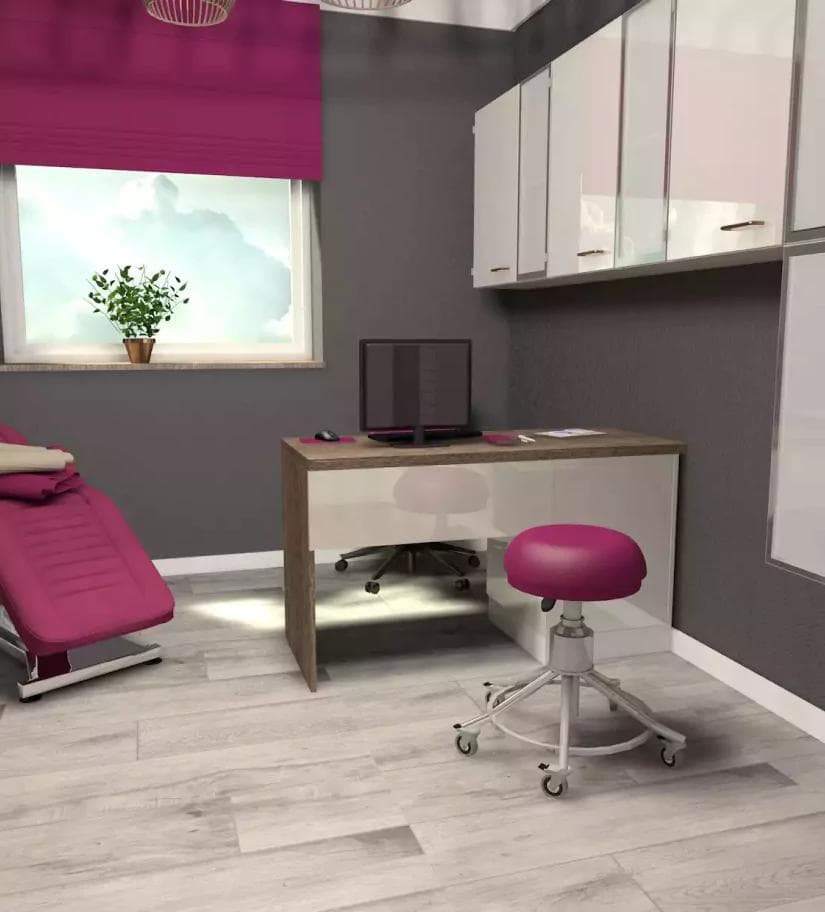
A modern doctor's office must meet strictly defined sanitary and organizational requirements resulting from the provisions of law. The key document regulating these issues isthe Regulation of the Minister of Health of 26 March 2019., which defines minimum standards of equipment, hygiene and safety in entities performing medical activities. Thanks to these regulations, the office is to provide both patient comfort and safe working conditions for medical staff.
What regulations specify the mandatory equipment of a doctor's office?
The requirements for the organization and equipment of a doctor's office are primarily determined by the Regulation of the Minister of Health of 26 March 2019., supplemented by the Act on Medical Activity. It is these legal acts that regulate what technical, sanitary and functional conditions must be met by the place where health services are provided.
The doctor's office must meet strict sanitary and hygienic requirements, and compliance with them is supervised by the Sanepid (State Sanitary Inspectorate). The inspections include both the equipment and the technical condition of the premises and compliance with safety regulations.
In terms of space, the office should have an adequate area – usually a minimum of about 12 m² is assumed, which ensures the freedom of work of the staff and the safety of patients. Accessibility for people with disabilities is also an important requirement, which includes, among m.in things, appropriate entrances and manoeuvring space.
Construction and installation requirements are also important. Floors and walls must be made of materials that are easily washable, non-absorbent and resistant to disinfection, often with the use of non-slip floors, which minimizes the risk of accidents. Efficient mechanical or gravity ventilation, and often air conditioning, ensuring appropriate hygienic and sanitary conditions and work comfort, is also mandatory.
What medical furniture is mandatory in the office?
The basic medical furniture in a doctor's office includes the equipment necessary to conduct examinations, keep records, and ensure the comfort of the patient and staff. Mandatory elements includea doctor's couch (or medical couch) for examinations in a lying position, a doctor's desk, as well as a specialist chairfor the doctor and a chair for the patient.
All furniture for a doctor's office must have appropriate hygienic certificates, and their design should allow for easy disinfection. Therefore, seamless surfaces and chemical-resistant materials are often used, which increases sanitary safety.
A medicine cabinet is also mandatory in the office, often in the form of a glass doctor's cabinet, which allows for the control of stored preparations, and a filing cabinet, which is used to safely store documentation and ensurethe protection of patients' personal data.
An important element of the equipment is also a medical screen, which plays an important role in ensuring the patient's intimacy during preparation for the examination. A medical stool is also used in addition, facilitating the ergonomics of the staff's work.
What sanitary and hygienic equipment is required?
The basis of hygienic equipment in a doctor's office isa handwashing station, i.e. a washbasin with hot and cold water, equipped with a touchless (or elbow) faucet, which reduces the risk of contamination. At the washbasin, there must be: a liquid soap dispenser, a disinfectant dispenser and a container for paper towels, allowingeffective hand disinfection.
Medical waste management is also an important element, including properly marked medical waste bins, which must be opened with a foot pedal to avoid contact of the hand with the surface of the container. Waste requiressubsequent disposal of medical waste in accordance with applicable regulations.
The practice must also be equipped with personal protective equipment (PPE), such as disposable gloves, surgical masks and protective gowns, which reduce the risk of infection and contact with biological material. In addition, disposable hygienic pads are used for the couch, ensuring cleanliness and safety of the patient.
What diagnostic equipment must be in a doctor's office?
The basic diagnostic equipment of each doctor's office includes a stethoscope, a blood pressure monitor, a non-contact thermometer and a pulse oximeter. This kit allows for an initial assessment of the patient's condition and quick detection of basic vital function disorders.
It is also an absolute obligation to have a first aid kit, often supplemented with basic medicines and emergency equipment. In life-threatening situations, it can also include elements such as a defibrillator or a cardiac monitor, which support rescue operations until the arrival of a medical team.
Depending on the specialization, the office may require additional diagnostic equipment, such asa medical scale with a height meter, an ECG machine, a glucometer, an ultrasound scanner (ultrasound), a spirometer, or an ECG holter. In specialist offices, tools such as an otoscope, laryngoscope or neurological hammer are also used, which allow for more accurate diagnostics.
What technical documents must medical equipment have?
Each medical apparatus and equipment used in the office must meet the requirements for medical devices and have appropriate certificates, including, above all, the CE Certificate, which confirms compliance with safety and quality standards.
A technical passport is a mandatory part of the documentation, which keeps a complete history of the device – including inspections, repairs, maintenance and calibrations. Such medical documentation of the equipment allows for control of its efficiency and safety of use.
In a medical facility, it is also necessary to keep records of equipment and keep an eye on the dates of technical inspections, as this is regularly verified during an inspection conducted by the Sanepid. In addition, the operation of the office is associated with the obligation to have civil liability insurance, which protects the activity in the event of possible medical events.
What devices are required in a treatment room?
A treatment room is a room with increased sanitary rigor, in which medical procedures requiring sterility and infection control are performed. For this reason, it must be equipped with specialized equipment and clearly separated zones: sterile and dirty, which minimizes the risk of cross-infections.
The basic element is an additional sink designed for washing and pre-decontamination of tools, as well as an autoclave (e.g. class B) used for full sterilization of reusable equipment. An ultrasonic cleaner, a sleeve sealer are also often used in the sterilization process, and the process is controlled using chemical and biological indicators.
Treatment equipment also includes furniture and equipment necessary to perform medical procedures, such as a treatment chair or treatment table, a treatment table, an IV stand, and a treatment lamp or shadowless lamp to provide adequate lighting to the treatment site. Adequate general lighting of the entire room is also important.
The office must also contain materials and accessories used during medical procedures, such as syringes and needles, sterile gases and compresses, surgical instruments, compression stasis or ENT spatulas. A container for used needles and syringes is also necessary to ensure the safe disposal of medical sharps.
In addition, the treatment room should have a refrigerator for storing medicines, and all work must be carried out in accordance with the strict rulesof the sterile zone and the dirty zone, which is the basis for safe and correct medical procedures.
March 31, 2026