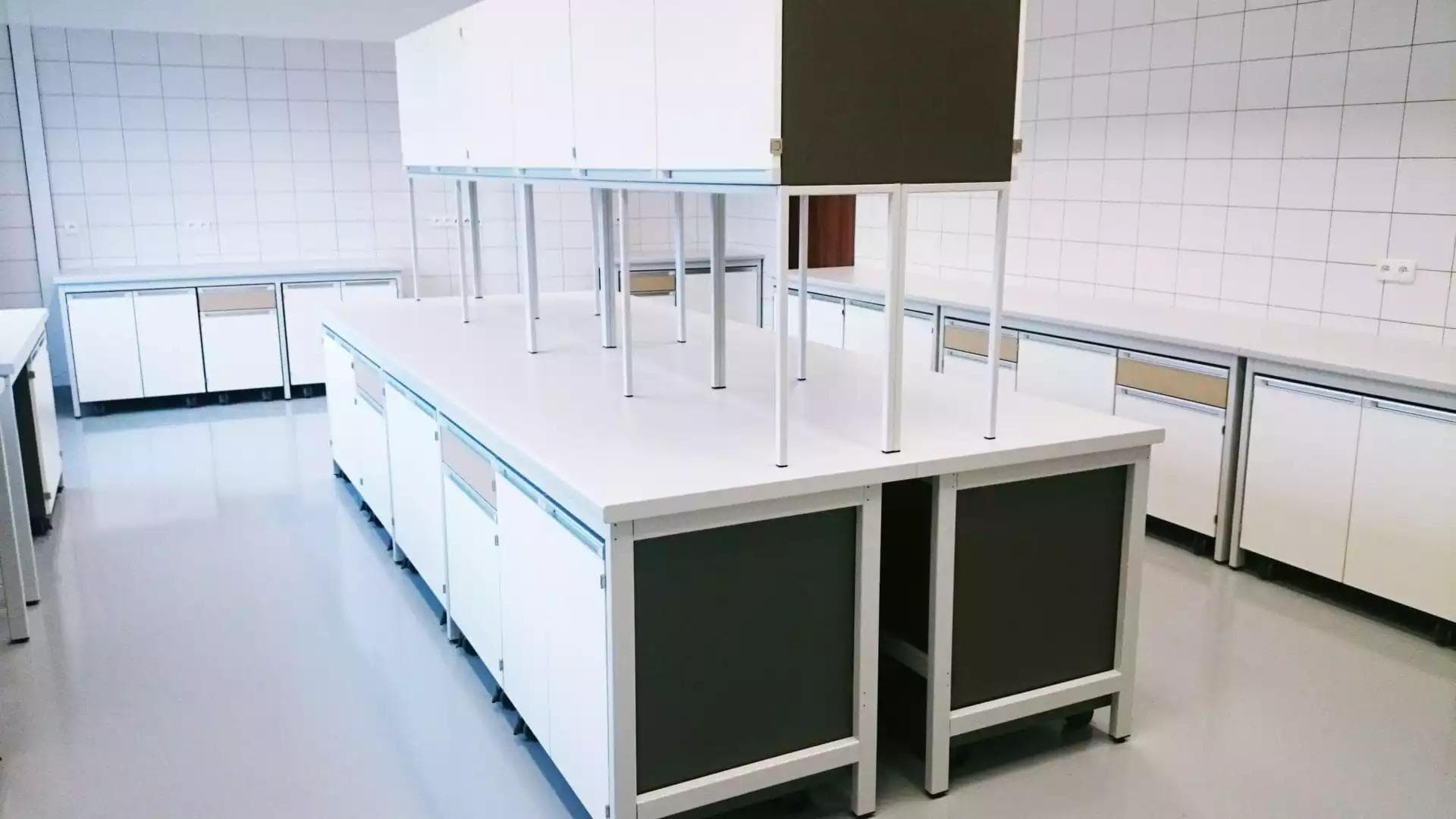
The importance of chemical resistance in daily laboratory work
The worktop is the most heavily used piece of equipment in any laboratory. Every day it comes into contact with reagents, solvents, disinfectants, high temperatures, and mechanical loads. No other piece of furniture is so frequently exposed to spills and the direct action of aggressive substances.
When chemical resistance is insufficient, the surface becomes matte, softens, or cracks. This is not just an aesthetic problem. Microcracks and a porous structure retain substance residues, which promotes cross-infections and sample contamination, ultimately compromising the reliability of results.
The consequence is also premature furniture replacement, downtime, and higher costs. A resistant worktop is an element of occupational health and safety that protects both the personnel and the integrity of research processes.
Overview of materials used for worktop production
The market currently offers a wide range of materials for laboratory worktops. Each of them has a different profile of chemical, thermal, and mechanical resistance, so there is no universal solution. The final choice is determined by the specific nature of the research conducted.
The raw materials used include composites and conglomerates, resins, polypropylene, glass, ceramics, and stainless steel. Polypropylene withstands many acids and bases well, but has limited thermal resistance. Glass is chemically resistant, but brittle and sensitive to impacts.
Before choosing, it is worth analyzing the list of reagents used, their concentrations, contact time, and the method of cleaning the surface. Hygiene requirements and mechanical loads are also significant. A comparison of the most frequently chosen materials can be found below.
Solid ceramics, resins, or acid-resistant steel - what works best?
Solid ceramics is the leader when working with aggressive acids. It is practically non-absorbent, resistant to high temperatures and most reagents, although it does not tolerate hydrofluoric acid. It works best where the chemical risk is greatest.
Phenolic or epoxy resin is excellent for general and analytical laboratories. It provides good resistance to a wide range of acids, bases, and solvents at a reasonable cost, although strong oxidizers can damage it.
Acid-resistant steel is irreplaceable in Cleanroom zones and microbiological laboratories, where a smooth, easy-to-disinfect surface counts. However, you must remember its sensitivity to chlorides, including hydrochloric acid, which cause pitting corrosion.
Fume cupboards and weighing tables - zones of the highest chemical risk
A worktop installed in a fume cupboard is in constant contact with concentrated fumes and spills, often at elevated temperatures. It must therefore meet the most stringent requirements. It should also retain spilled liquids, for example, through raised edges or grooves.
The material used in fume hoods should comply with standards for fume cupboards, including the EN 14175 series. Solid ceramics is most often chosen here. A surface that is too weak shortens the lifespan of the entire device and increases the risk of failure.
Weighing tables pose different challenges. In addition to chemical resistance, they require anti-vibration properties that ensure the stability of precise measurements. The structure is usually massive and decoupled from substrate vibrations.
At the same time, the weighing worktop must withstand contact with reagents and cleaning agents. Only the combination of both features guarantees the repeatability of weighing results.
The impact of acids, bases, and solvents on specific surfaces
Sulfuric and hydrochloric acid behave differently on various surfaces. Solid ceramics retains its smoothness and color, even after prolonged contact. A conglomerate with a resin binder and mineral fillers, on the other hand, may be etched and dulled, and concentrated sulfuric acid damages the binder.
Organic solvents, such as acetone, toluene, or dichloromethane, can permanently damage improperly selected binders. This manifests as swelling, softening, and loss of surface tightness.
Bases, for example, sodium or potassium hydroxide, cause micro-damage to the structure of some plastics upon long contact and elevated temperatures. Over time, they promote the accumulation of contaminants and hinder disinfection.
Proper maintenance and cleaning of work surfaces
Even the most resistant worktop requires proper procedures after an aggressive substance is spilled. An immediate reaction is crucial: collecting the liquid with a sorbent, followed by neutralization. Acids are neutralized with a mild alkaline solution, for example, sodium bicarbonate, and bases with a weak acid. The whole area must be rinsed with water, remembering personal protective equipment and the safety data sheet.
On a daily basis, mild detergents, water, and soft cloths are sufficient. Ethyl or isopropyl alcohol is usually used for disinfection, according to the worktop manufacturer's recommendations.
For resin worktops, avoid strong abrasives, wire scrubbers, and scouring pastes, which scratch the protective coating. Dirt and reagents accumulate in scratches. For stainless steel, do not use agents containing chlorine. Regular inspection of the surface condition allows for early detection of damage.
Modularity and system solutions in laboratory design
The selection of the worktop is an integral part of the entire furniture system. The worktop cooperates with the frame, cabinets, installations, and workstation equipment. A systemic approach to design allows the laboratory to be tailored to actual research processes.
The ability to personalize frames in terms of height, load capacity, and design is important. Seamless joining of worktops is equally crucial. Gaps are places where chemicals accumulate, and their disinfection is difficult, which promotes contamination.
Installation superstructures integrate utilities such as electrical sockets, water and gas connections, and lighting. They organize the workspace and improve safety. The modular design also facilitates future expansion and reorganization of the laboratory.
Summary: Resistance that guarantees durability
The chemical resistance of the worktop affects personnel safety, occupational hygiene, and the reliability of results. The choice of material should be based on an analysis of the reagents used, their concentrations, and contact time. Solid ceramics, resins, and acid-resistant steel perform well in different conditions.
A resistant worktop is not a cost, but an investment in decades of failure-free work. It limits downtime, replacement costs, and the risk of contamination, and proper maintenance additionally extends its lifespan.
September 29, 2026