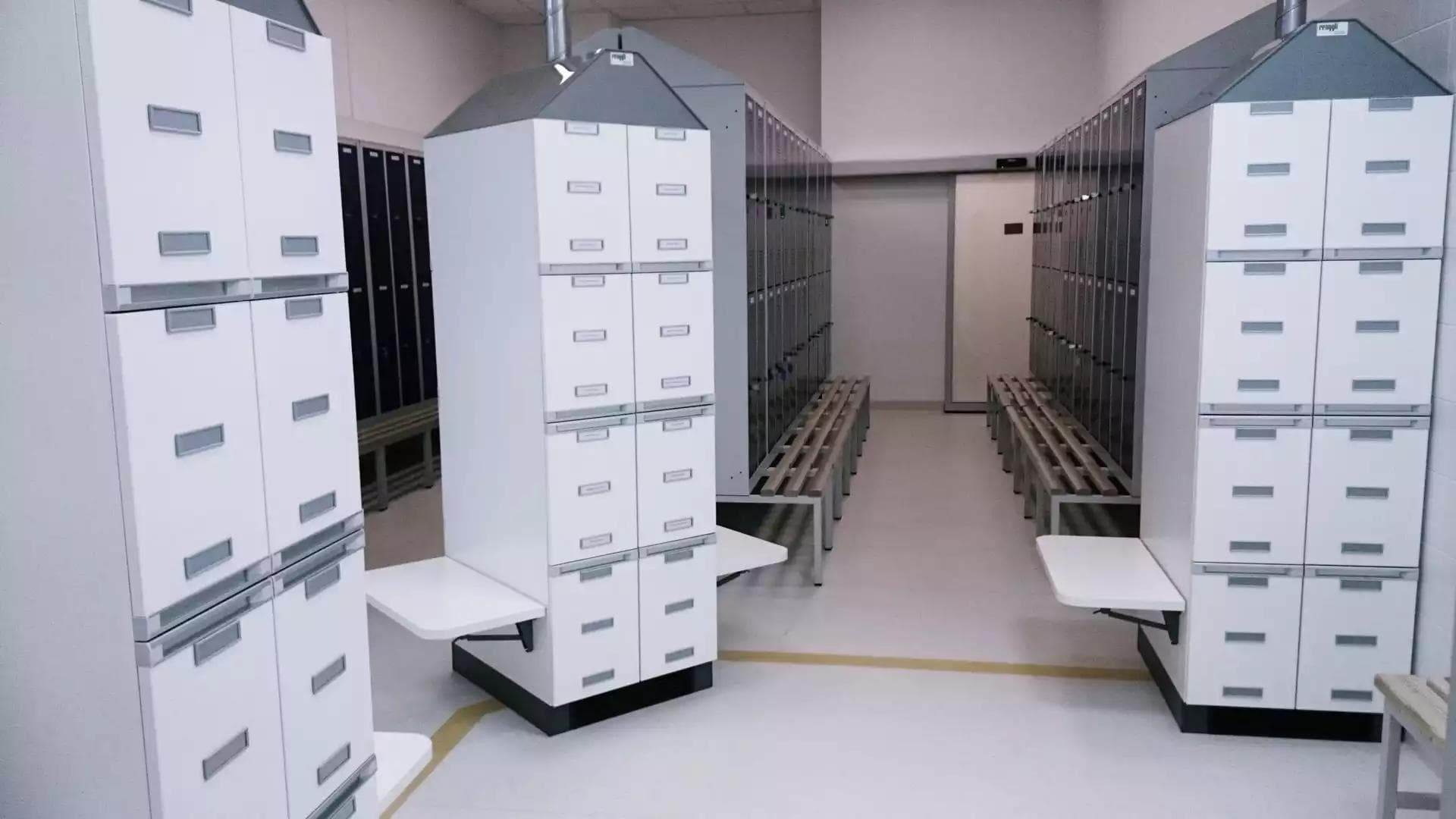
The importance of an individual approach in laboratory design
Modern research facilities require solutions that fully respond to specific analytical procedures. For this reason, strict personalization is becoming the standard, successively replacing ready-made, mass-produced concepts. An individual approach to the arrangement of storage space allows for the precise adjustment of infrastructure to the nature of the work being carried out.
Chemical, microbiological, or analytical laboratories differ drastically in terms of storage requirements. Reagents, specialized apparatus, and sensitive biological samples need different environmental conditions. Design that takes these critical differences into account eliminates the risk of procedural errors.
The decision to implement furniture designed to specific parameters is an investment in long-term work efficiency. This completely avoids the compromises forced by catalog solutions, which rarely work well in a demanding research environment. The space becomes a highly functional tool.
Space optimization with custom cabinets from Renggli
Limited floor space and unusual architectural layouts, such as slants, recesses, or extensive wall installations, pose a challenge when equipping facilities. A custom-made design allows for an uncompromising maximization of available usable space. Every cubic centimeter of the room is effectively utilized.
The use of modular systems gives engineers the freedom to plan the layout. Storage structures can reach right up to the ceiling, fully utilizing vertical architecture, which is crucial in smaller units. This ensures adequate cubic capacity without having to reduce work zones.
Additionally, personalized segments fit perfectly into the gaps between analytical workstations. Properly selected overall proportions prevent the room from being overwhelmed, which makes it easier to maintain clear communication routes.
Storage safety as an element of modern laboratory design
In a laboratory environment, rigorous health and safety rules are an absolute priority, determining every aspect of the infrastructure. Current standards impose the need for absolute segregation of chemical reagents and hazardous materials. Proper planning of cabinets is the foundation of prevention.
Storage space designed to specific guidelines allows for collision-free and highly controlled storage of substances. Dedicated zones for different classes of reagents prevent mistakes when retrieving them, minimizing the risk of dangerous cross-reactions.
Appropriate construction, furniture tightness, and integrated ventilation significantly reduce personnel exposure to toxic fumes. This guarantees stable and safe working conditions, even during hours of complex analytical procedures.
Types of specialized safety cabinets in the offer
Equipping modern research facilities requires the implementation of dedicated structural solutions. The basic protective elements are ventilated reagent cabinets. These devices are connected directly to the building's central exhaust system, which ensures continuous and forced air exchange, preventing the accumulation of dangerous gases.
Another extremely important category are cabinets for acids and bases, which require a rigorous selection of materials. Their internal chamber must be absolutely lined with solid, chemically resistant polypropylene. They are equipped with specialized polypropylene trays with a raised edge. Such an engineered construction of the drip tray prevents corrosive liquids from spilling onto the lower levels of the furniture in the event of a container failure.
In turn, advanced fire-resistant safety cabinets are used to store flammable substances. They are characterized by certified fire resistance (e.g., up to 90 minutes), giving time for personnel evacuation and firefighting operations. Their most important feature is the mechanisms of automatic door closing and working gap sealing the moment a sudden increase in ambient temperature is detected.
Selection of materials for custom cabinets and the specificity of conducted research
Proper selection of construction materials is a key design stage, determining the resistance of the infrastructure. Depending on the degree of chemical environment aggressiveness, the cabinetry can be made of high-quality powder-coated steel. This coating provides increased mechanical strength and protection against scratches.
An alternative to steel profiles are extremely durable HPL panels and appropriately laminated melamine boards. The use of a specific material is dictated by the chemical resistance class required at a given workstation. These materials are characterized by a compact molecular structure, blocking the penetration of contaminants.
Work ergonomics - how custom furniture facilitates daily tasks?
A modern cabinet has ceased to perform purely a storage function, becoming an important tool in an analyst's daily work. An individual design provides the ability to precisely adjust the height and spacing of shelves to the operator's reach. This eliminates the need to assume unnatural body positions while working.
A significant technical convenience is the installation of smooth running systems in drawers with high load capacity. This allows for the smooth extension of heavy equipment or containers without the need to engage excessive physical force. The installation of glass doors, on the other hand, allows for the instant visual location of reagents.
Thoughtful structural solutions drastically reduce the time needed to prepare a workstation. Good ergonomics directly translate into lower staff fatigue, the reduction of manual errors, and a significant increase in the overall efficiency of research processes.
Integration of furniture with ventilation systems and technical installations
Extensive technical infrastructure, including pipelines, valves, and wiring, often dictates the layout of analytical rooms. Mass-produced catalog furniture often conflicts with these connections, forcing unsightly alterations. Custom-built cabinetry eliminates this problem right at the spatial design stage.
Thanks to dimensional adjustment, modules are designed in such a way that they seamlessly bypass or mask installation elements. This allows maintaining the purity of the laboratory form, hiding the complex network of connections from sight.
These solutions guarantee maintenance engineers easy and non-invasive service access. Properly integrated inspection panels enable the efficient inspection of technical gas reducers, supply and exhaust ventilation ducts, and main cable routes.
Excellent quality and aesthetics of Renggli laboratory systems
Modern analytical facilities now also serve a representative function, being the showcase of a research center. Investment in technologies with the highest engineering pedigree is a guarantee of outstanding durability and timeless, minimalist design. The visual aspect plays a significant role in building the institution's prestige.
Consistent colors of the fronts, precise fit of work panels, and the elimination of visible mounting joints create an impression of sterility. Attention to such architectural details creates an organized and coherent workspace, which affects the transparency of processes.
High quality of finishes builds a highly professional image of the entire unit. This is of key importance not only in the eyes of contractors or business partners, but it also gains immense importance during rigorous verifications carried out by auditors.
September 25, 2026