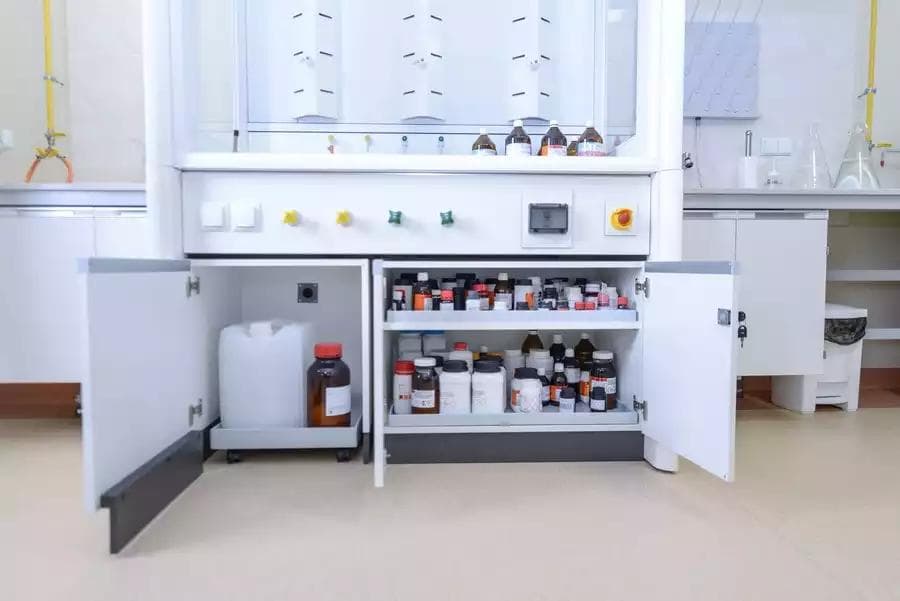
Custom medical cabinet – how to choose and secure medicines
A professional custom medical cabinet is the only way to safely store medicines and ensure trouble-free acceptance of the facility by the Sanitary Inspectorate. Class I certified systems ensure a stable temperature from +2°C to +8°C for thermolabile substances. As the Swiss manufacturer Renggli, we deliver durable constructions directly from the factory in Białystok.
The most important features of a medical cabinet for medicines
A medicine cabinet should provide controlled storage conditions; thermolabile medicines require a refrigerated cabinet of +2°C to +8°C, and narcotics a separate, lockable metal cabinet or safe. A safe medical cabinet is the foundation of protecting the stability of preparations. Proper storage of medicines in a healthcare facility requires rigorous organizational procedures. In the case of thermolabile products, a controlled temperature of +2°C to +8°C is crucial, which is guaranteed by specialized, refrigerated medical cabinets for medicines. Separate, very strict rules apply to controlled substances. Every cabinet for psychotropic drugs must have a certified espagnolette lock, which is detailed in the Drug Addiction Prevention Act. Always consult the storage method with internal procedures and GIS guidelines so that appropriate storage systems fully protect the laboratory against unauthorized persons.
Medicine storage standards and the medical cabinet
Professional medical cabinets facilitate maintaining optimal humidity and temperature conditions for medicinal products. Unlike regular open shelves, a dedicated medicine cabinet effectively protects preparations against harmful solar radiation. Properly designed storage systems facilitate microclimate maintenance, preventing substance degradation. A constant controlled temperature guarantees the high effectiveness of pharmacotherapy, which is why the installation of thermometers and hygrometers is required everywhere. In turn, ergonomic organization of the assortment in medical cabinets prevents dangerous personnel mistakes when dispensing medicines.
Safe medical cabinet in a treatment room
In a treatment room, a medical cabinet provides immediate yet controlled access to dressing materials. A properly selected medical cabinet effectively optimizes the daily work of the staff. Every treatment room requires very efficient access to equipment and first aid medicines during medical procedures. Glass doors play a crucial role, and the safety glass built into them facilitates lightning-fast and touchless inventory verification for nurses. The design of the furniture must allow for very easy surface washing, as resistance to frequent disinfection is the absolute basis for preventing hospital-acquired infections.
For whom is a certified medical cabinet mandatory?
Furniture for doctor's offices, pharmacies, and laboratories should provide the highest standard of hygiene and safety of use. A professional medical cabinet is essential medical facility equipment, ordered by clinic managers, pharmacists, and interior designers, among others. Restrictive Sanitary Inspectorate requirements dictate that the medical cabinet for the office and laboratory equipment must be fully safe and easy to sterilize. In turn, the use of appropriate, proven construction materials ensures full biocompatibility. Proper laboratory furniture, such as laboratory sinks or a durable stainless steel sink, ensures that the equipment of doctor's offices easily passes rigorous official inspections, e.g. those ordered by the District Sanitary-Epidemiological Station.
What legal requirements regulate the storage of medicines?
Refrigerated medicine cabinets should maintain a temperature of +2°C to +8°C with continuous monitoring, which constitutes the absolute technical foundation of this type of furniture. These issues are specified in detail by the Regulation of the Minister of Health (Journal of Laws 2025, item 1202). According to the law, the requirements for medical cabinets focus on the safety of pharmacotherapy. A stable controlled temperature is mandatory, therefore cabinets with data loggers for continuous parameter monitoring must be used. Lack of such supervision worsens the stability of medicinal substances and endangers patients, which also results in penalties from inspection authorities. By choosing the modular RL6 system, you gain certainty that this professional medical facility equipment will easily meet the imposed criteria.
Dimensions of medical cabinets and custom office design
Individual custom medical cabinets optimize space, offering document drawers and a flexible interior layout. An appropriate medical cabinet and a spacious pharmacy cabinet require precise adjustment to the architecture, which is why a valued medical cabinet manufacturer facilitates the arrangement of offices. A classic medical cabinet and a doctor's cabinet can feature convenient adjustable shelves (adjustment pitch every 25 mm). Individually tailored dimensions facilitate the assembly of variants such as MD-W/1, MD-W/2, or free-standing MDBW/1s and MDBW/2s. A dedicated medical filing cabinet often supports, for example, the B5 format. In the offer of Renggli Sp. z o.o. (Białystok, NIP 5423234535, KRS 485655) there is various free-standing medical furniture available. To learn the details of the offer and adjust these custom medical cabinets, we invite you to send an inquiry directly to our factory.
How to secure cabinets for medicines and narcotics?
General medicines are protected by glass doors and locks; narcotics require solid, metal cabinets or safes with strong bolting. A standard medicine cabinet uses certified cylinder locks. It also frequently utilizes safety (tempered) glass, which greatly facilitates the personnel's preview of the assortment located inside, without the physical need to open the furniture. Psychotropic substances require different solutions and, according to the Drug Addiction Prevention Act, must be kept in a closed, metal cabinet or cassette. In rooms where laboratory fittings or laboratory valves are located, daily work is facilitated by quiet self-closing drawers, while a strong steel frame and high shelf load capacity ensure trouble-free operation.
Metal cabinets or HPL laminate - what to choose?
Metal cabinets provide high structural load-bearing capacity, and models made of HPL laminate - high resistance to aggressive disinfection chemistry. Traditional models are based on solid raw materials, where a durable steel frame provides the furniture with high mechanical load capacity. When choosing the right product, analyze the comparison: stainless steel vs. HPL laminate. Ordinary powder-coated sheet metal (steel sheet thickness 0.6-0.8 mm) works perfectly in classic, dry doctor's offices. However, with intensive sterilization using chlorine or alcohol, HPL laminate will be much better, as it demonstrates total resistance to aggressive chemistry and moisture. On the other hand, in the cleanest compounding rooms, stainless steel (AISI 304) is often crucial. Just like durable laboratory worktops, precise weighing tables, or anti-vibration weighing tables, it ensures sterility.
Powder-coated steel (0.6-0.8 mm)
- Chemical resistance: Average (risk of corrosion with scratches)
- Mechanical load capacity: High (stable steel frame)
- Ease of sterilization: Good (smooth surface)
Stainless steel AISI 304 (1.4301)
- Chemical resistance: High (resistance to most acids and bases)
- Mechanical load capacity: Very high
- Ease of sterilization: Excellent
High-pressure laminate (HPL)
- Chemical resistance: Very high (complete resistance to chemicals and moisture)
- Mechanical load capacity: High (flexible and impact-resistant)
- Ease of sterilization: Excellent (crevice-free structure)
How to choose a medical cabinet for a facility?
A professional medical cabinet should have a crevice-free, disinfection-resistant surface, facilitating the maintenance of the highest sanitary standards. The specialized purpose of the furniture distinguishes it from regular storage cabinets, offering solutions created strictly for medical purposes. The selection of furniture requires an in-depth analysis of its exact function in the medical facility. The ordered cabinets and all professional equipment should always ensure the highest level of hygiene and reliability. It is worth choosing products designed exclusively with the medical environment in mind, which guarantee elevated protection standards. The crevice-free construction of the cabinets, resistant to alcohol and chlorine, is also crucial. Both stainless steel and HPL laminate guarantee smooth and highly sterile surfaces. The entire arrangement can be successfully complemented by laboratory chairs, laboratory stools, and office furniture in the reception area, as such consistency significantly facilitates cleaning.
July 21, 2026