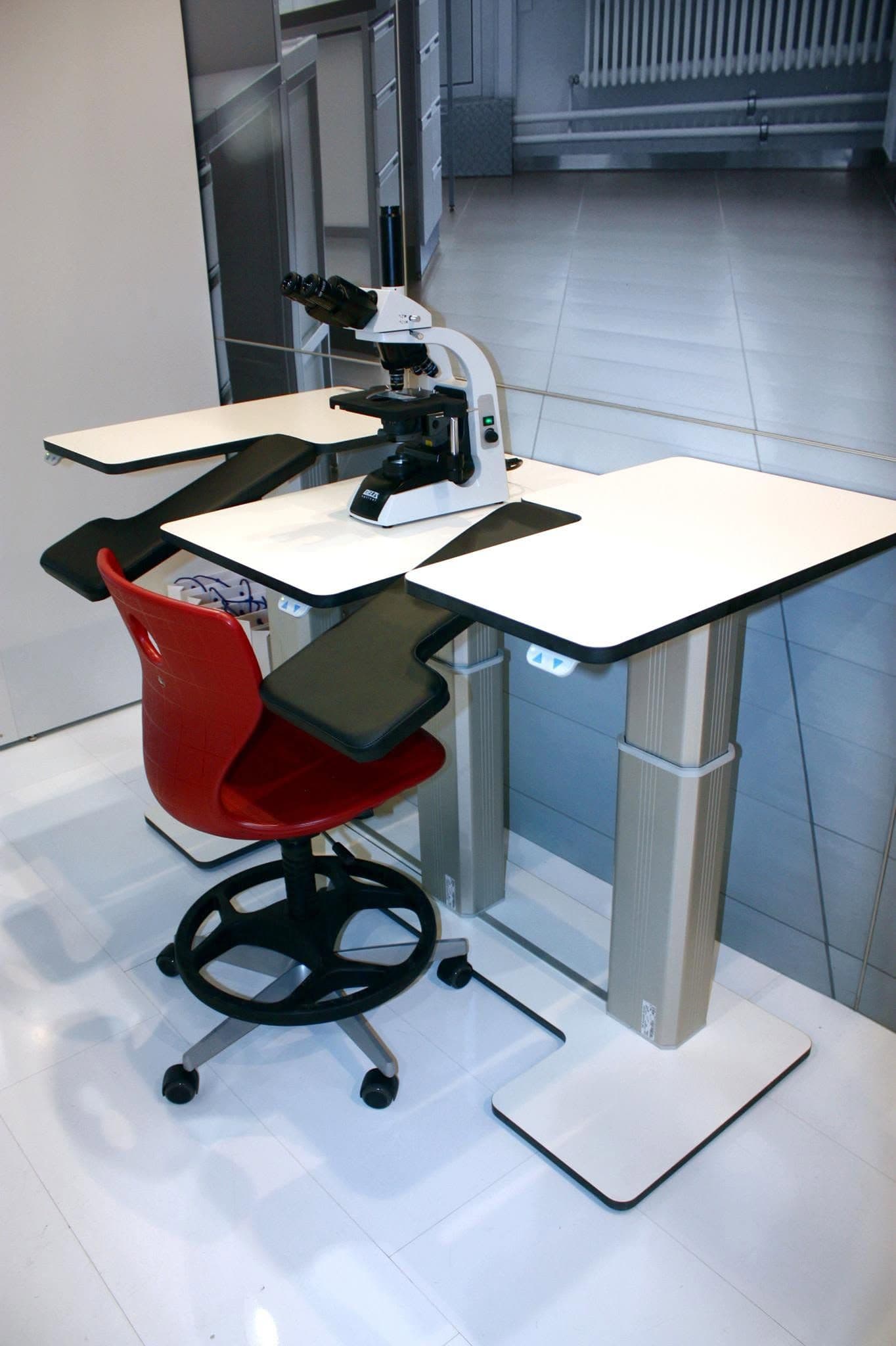
The importance of stability: why is a professional analytical balance table essential?
In a modern laboratory, where samples with microscopic masses are analyzed daily, even the smallest structural vibrations of the building can falsify the final result. Therefore, a dedicated, specialized analytical balance table is not a luxury, but an absolute operational necessity. Standard laboratory furniture unfortunately transmits vibrations originating from busy communication routes, mechanical devices working nearby, and even from the ordinary footsteps of personnel moving around the room. The lack of proper shock absorption makes maintaining the calibration of sensitive measuring devices almost impossible. Professional construction solutions are designed in such a way as to completely isolate the sensitive balance from the detrimental influence of the external environment. In this article, we will look at the ten most important technical aspects that you must pay attention to before placing your final order.
1. Type of balance and 2. Equipment load capacity - where to start the configuration?
The first step in designing a professional weighing station is always strictly determining exactly what type of balance will ultimately be used on it. This is the starting point for all further calculations. Technical balances, precision analytical balances, or ultra-sensitive microbalances differ drastically in terms of space requirements, sensitivity to interference, and the weight of the device itself. In the case of microbalances, it will be absolutely necessary to use the most advanced damping systems and much heavier stone blocks. The second, equally important technical parameter is the declared load capacity. The selected piece of furniture must safely and stably support not only the measuring apparatus itself, but also heavy auxiliary equipment, batches of tested samples, and any large-size draft shields. The load-bearing structure should feature a reinforced, rigid frame that guarantees high static strength without the slightest risk of material deformation. It is good engineering practice to ensure that the maximum permissible load of the tabletop is at least several dozen percent higher than the expected total weight of the planned equipment.
3. Construction and 4. Vibration isolation system - the heart of the weighing table
A solid and massive construction constitutes the physical foundation of every precise measurement station. In the laboratory industry, welded steel frames are most commonly used, additionally protected with a powder-coated finish, which ensures the desired integrity and mechanical stability of the entire system. Nevertheless, the absolutely most important element, directly responsible for the highest precision of readings, is the built-in vibration isolation system. It is what determines the ultimate class of the equipment and its suitability in the most demanding, trace chemical analyses. The highest class weighing tables consist of two completely independent and separated parts. The first of them is the external work table (casing), on which the laboratory technician can freely lean while working. The second is the internal weighing top, separated by an expansion joint from the external frame. The internal block, most often made of heavy, polished granite, rests on special vibration isolators, such as advanced elastomers or pneumatic systems. Thanks to them, even if an employee leans on the external table or accidentally hits it, kinetic vibrations will not be transferred to the sensitive mechanism, guaranteeing the unwavering stability of the ongoing measurement.
5. Level adjustment and 6. Dimensions - matching the space
You must be fully aware that even the most advanced multi-stage shock isolation system will not fulfill its function if the entire piece of furniture is not perfectly leveled relative to the floor. For this reason, precise, mechanical level adjustment is crucial. The legs of a professional weighing station must absolutely be equipped with massive threads, enabling micrometric height correction. Solid locknuts are also required, which will effectively prevent the equipment from spontaneously deregulating under the influence of loads and the passage of time. Another practical aspect is the actual external dimensions of the workstation. They should be chosen very meticulously, so that the table fits freely and while maintaining evacuation routes in the designated space of a specific laboratory room. These dimensions must leave an appropriate amount of free space for hassle-free maintenance of the balance and comfortable preparation of analytical materials. Too small a work area will force the transfer of accessories to adjacent countertops (which slows down the process and risks spilling the sample), while too large an area will unnecessarily take up valuable space.
7. Countertop material and 8. Chemical resistance of the work surface
A workstation intended for precise weighing is repeatedly exposed every day to direct contact with highly aggressive reagents, concentrated acids, or volatile solvents. For this reason, the physical material of the external countertop must meet a strictly defined specification. In modern and safe laboratories, conglomerates based on hardened epoxy resins, high-density monolithic ceramics, or certified, flame-retardant HPL laminates are most often chosen. Each of these materials has its own unique performance properties, which should be matched to the specifics of the facility. The decisive factor in this case is the maximum high chemical resistance of the surface. In the event of an accidental spill of a dangerous substance during the mass transfer procedure, the countertop must not undergo permanent discoloration, irreversible tarnishing, or structural damage. In turn, the internal weighing block itself, usually made of natural, hard granite, also shows excellent tolerance to most chemicals. However, it must be firmly remembered that its task is to provide mass inertia, and not to serve as a sink or a basic area for dirty preparatory work.
9. Ergonomics and 10. Working conditions - staff health and efficiency
Every innovative and efficient laboratory must be designed with the people who spend a significant part of their professional lives in it in mind. Properly thought-out workplace ergonomics have a direct, measurable impact on the health comfort and ultimate efficiency of analysts. The optimal height of the external worktop should be adapted to the selected mode of tasks performed. By default, it is about 750 mm for typical seated work, or about 900 mm for preferred work in a standing position. Extremely important is also the so-called free space, located right under the countertop. The design of the support frame must absolutely guarantee an adequate amount of legroom for the operator, which prevents painful posture defects and chronic fatigue during hours-long series of pipetting or weighing. The last key area of analysis is the target working conditions prevailing in the room. Different, rigorous requirements are set by microbiological laboratories (frequent sterilization, lack of porosity), different by certified Clean Room zones (reduction of micro-dust emissions), and still different by standard university chemical synthesis laboratories.
Budget and quality: weighing table price - what exactly affects it?
When planning the equipment and multi-month budgeting of a new research facility, many main investors ask themselves the rational question of what exactly determines the final price of a weighing table. It is worth approaching this cost estimate in a purely analytical and forward-looking way. The total cost of the final purchase is directly related to the market class of the construction materials used and the technological advancement of the anti-vibration modules used. Noticeable differences in offers primarily result from the accuracy of engineering execution and the selection of raw materials. The cheapest, budget solutions usually rely on very simple steel profiles with relatively small, light stone blocks. This type of compromise works basically only for prosaic technical balances with low reading resolution. On the other hand, highly advanced premium models, dedicated to the world's most sensitive microbalances with ionizers, use complex, self-leveling pneumatic systems and massive, heavy granite slabs. This significantly increases the initial investment cost, but in return guarantees the uncompromising, absolute measurement precision required for accreditations.
September 21, 2026