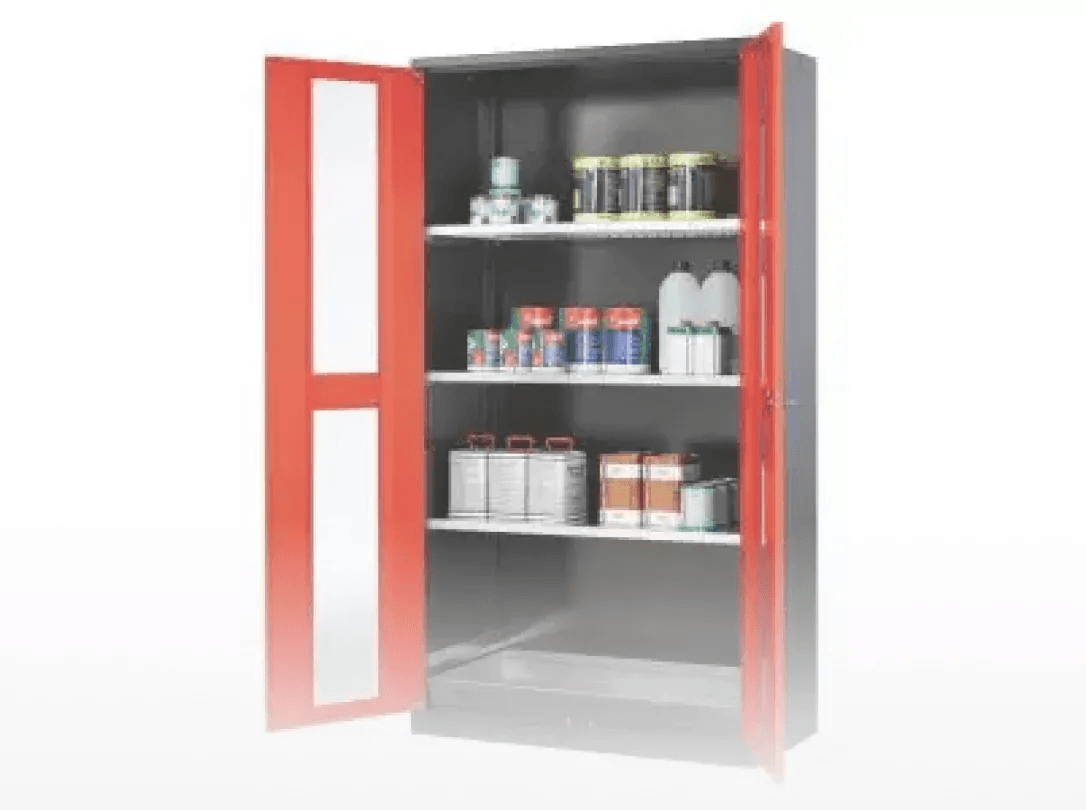
A modern laboratory combines precision of analysis with strict occupational safety requirements. Proper storage of glassware and reagents determines efficiency and staff protection against hazardous substances. Therefore, properly planning furniture arrangements at an early design stage helps avoid costly changes in the future.
The role of optimal space organization in a modern laboratory
A modern laboratory is a space where the precision of performed analyses meets strict occupational safety requirements. The daily operation of a facility (whether it is a research, control, or industrial laboratory) relies on efficient access to equipment, laboratory glassware, and chemical reagents.
Proper storage of equipment is not merely a matter of interior aesthetics. Above all, it is a determining factor in the efficiency of the staff's daily work and the level of protection against hazards resulting from contact with dangerous substances.
For this reason, planning furniture arrangements should be an integral part of the project as early as the concept creation stage of a new facility or the modernization of an existing one. Decisions regarding the placement of cabinets, worktops, and work zones made at an early stage help avoid costly organizational changes in the future.
Division into zones - ergonomics and location of laboratory cabinets
Functional organization of a laboratory is based on dividing the space into distinct work zones. The most common are the analytical zone, where measurements and tests are performed, the equipment washing and decontamination zone, and the storage zone for reagents and auxiliary materials.
Each of these zones requires a different type of furniture. In the analytical zone, under-bench cabinets work best, enabling quick access to frequently used tools, while the storage zone should be equipped with tall cabinets and top units, allowing for effective use of vertical space.
The placement of furniture relative to traffic routes is also of key importance. Cabinets and cupboards must not restrict the free movement of staff or impede evacuation in an emergency, which is particularly important when working with hazardous materials.
The principle of ergonomics dictates placing the most frequently used equipment in the so-called reach zone, between the worker's hips and shoulders. Heavier reagents and less frequently used apparatus should be placed in properly secured freestanding cabinets, located away from the immediate workstation.
Rules for the safe storage of chemical reagents
Safe storage of chemicals is one of the pillars of risk management in a laboratory. The basic rule is the separation of reagents according to their physicochemical properties - acids, bases, and flammable substances must be stored separately, in dedicated and properly labeled cabinets.
It is unacceptable to store chemicals together with laboratory glassware or general auxiliary equipment. Contact between mismatched substances can lead to chemical reactions and equipment corrosion, and in extreme cases, a threat to the health and life of the staff.
For this reason, cabinets intended for storing reagents are made of corrosion-resistant materials, such as polypropylene, or equipped with interiors lined with chemical-resistant material. This solution ensures the durability of the furniture and reduces the risk of structural damage due to contact with vapors or substance leaks.
Certified safety cabinets and ventilation integration
Storing flammable liquids requires the use of safety cabinets meeting the requirements of the EN 14470-1 standard. Certified fire-resistant cabinets ensure the fire resistance of the structure for a specified time, which in practice gives the staff an additional margin for safe evacuation or firefighting actions.
Equally important is the integration of such cabinets with the central laboratory ventilation system. Connection to the exhaust system allows for the constant removal of volatile substance vapors outside the room, reducing their concentration in the air and minimizing the risk of creating an explosive atmosphere.
A properly designed safety cabinet ventilation system should account for both air supply and exhaust, as well as an appropriate number of air exchanges per hour. These parameters are determined at the installation design stage, adjusting them to the type and amount of stored substances.
Protection of laboratory glassware and small apparatus
Having discussed the rules for storing chemicals, it is worth paying attention to the protection of delicate equipment, such as laboratory glassware and small measuring apparatus. Beakers, flasks, pipettes, and other glass elements are susceptible to mechanical damage, so their storage requires properly designed solutions.
In practice, full-extension drawers work well, allowing free access to their entire contents without having to reach deep into the cabinet. Soft-close systems, in turn, reduce the risk of a drawer closing abruptly, which could lead to breaking the stored glass.
Additional protection is provided by special inserts and non-slip mats, stabilizing glass vessels and dampening vibrations generated during the daily use of furniture. It is also worth considering glass-fronted cabinets, which allow for quick visual identification of contents without opening the doors, reducing the time needed to locate the right equipment.
Modular Renggli solutions for demanding environments
The challenges described above—division into zones, safe storage of chemicals, and protection of laboratory glassware—require furniture that can be flexibly adapted to the changing needs of the facility. Renggli systems are based on a modular design, where individual furniture elements, such as tall cabinets, under-bench cabinets, and top units, are freely combined depending on the room layout.
The modular structure allows for the reconfiguration of the cabinet layout in the future without the need to replace the entire set of furniture. In practice, this means the possibility of expanding the laboratory with additional workstations or changing the purpose of individual zones as the facility's operations develop.
These solutions also enable matching the materials of fronts and worktops to the specifics of a given work environment. A pharmaceutical laboratory, where the priority is the ease of surface disinfection, has different requirements than an industrial laboratory, where resistance to mechanical loads and contact with aggressive substances is crucial.
Such constructional flexibility ensures that modular furniture responds both to the current organizational needs of the laboratory and to the requirements resulting from applicable occupational health and safety regulations and safety standards.
Summary - a well-planned laboratory is an investment
Storage in a laboratory requires a holistic approach that combines division into functional zones, ergonomic furniture placement, safe separation of chemical reagents, and adequate protection of glassware and small apparatus. None of these elements should be treated as secondary, as they all affect both work efficiency and staff safety.
August 14, 2026