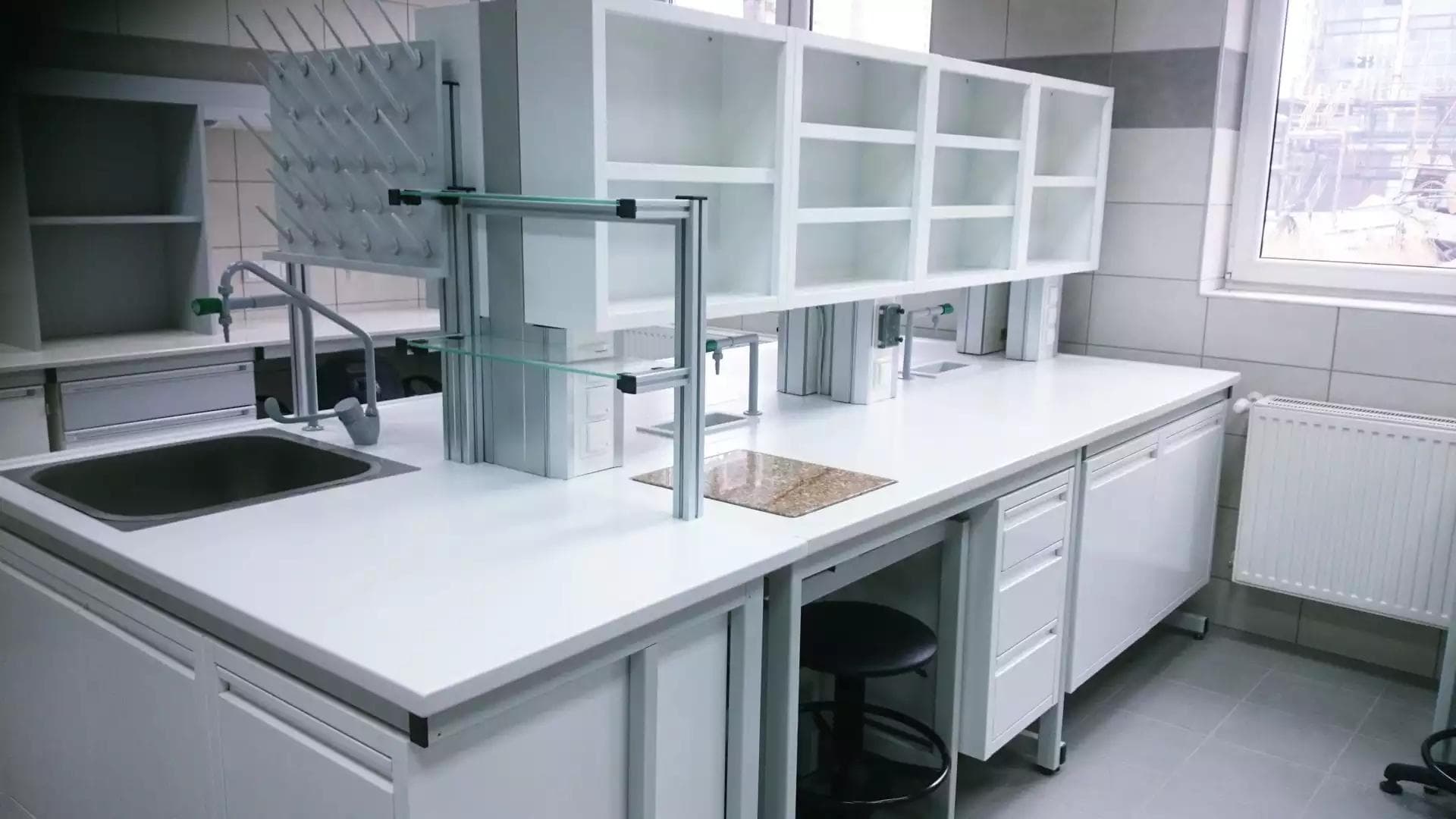
Chemical wastewater discharge systems from the laboratory - requirements and solutions
Safe discharge of chemical wastewater from the laboratory requires pipes resistant to acids and bases - made of PP-H or PVDF. Renggli, a Swiss manufacturer of laboratory equipment, designs workstations (furniture, sinks, fume hoods, fittings) integrated with the drainage installation.
How to safely discharge chemical wastewater from the laboratory?
Laboratory sewage systems must withstand aggressive reagents over a wide pH range - which is why PP-H or PVDF pipes are used, not standard domestic sewage systems. Designing a chemical drainage installation requires a completely different approach than sizing a classic sanitary network.
In research and industrial laboratories, chemical wastewater containing concentrated acids, bases, solvents, and strong oxidizers is regularly generated. Introducing such substances into a standard PVC or cast-iron pipe leads to immediate pitting corrosion, unsealing of joints, and dissolution of the material.
Every professional laboratory wastewater discharge installation is based on dedicated plastics showing high chemical resistance, such as homopolymer polypropylene (PP-H) or polyvinylidene fluoride (PVDF). The choice of the appropriate raw material depends on the research profile of the facility and the temperature of the medium. It is equally important to properly shape gravity lines, where a slope of 1.5–2% is recommended, which prevents stagnation and crystallization of deposits.
An essential element of each discharge station is the installation of specialized components. The workstation consists of a properly selected sink made of solid technical ceramics or epoxy resin, a dedicated chemically resistant siphon preventing the escape of harmful vapors, and properly adapted laboratory fittings.
The sewage infrastructure and other laboratory installations must be carefully planned already at the stage of the architectural concept of the new building. This prevents costly reconstructions and collisions with other technical lines.
Which pipe material to choose: PP-H or PVDF?
PP-H handles acids and bases well at lower temperatures, while the more expensive PVDF works well with strong oxidizers and high temperatures.
By choosing polypropylene (PP-H) pipes, an economic and highly resistant solution for most inorganic acids and bases at temperatures up to approx. 60°C is obtained. This is the most commonly used material in routine analytical and educational laboratories.
On the other hand, a PVDF installation for wastewater is a premium class solution designed for operation in extreme conditions. Polyvinylidene fluoride shows excellent resistance to concentrated oxidizing acids, halogens, and temperatures exceeding 100°C.
A key aspect of installing both systems is butt or socket (thermal) welding, which creates a uniform, monolithic structure devoid of gaskets susceptible to degradation. Each time, the final choice should be based on verifying the safety data sheets of the used media and matching it to materials such as solid technical ceramics.
Sink and fume hood drains - where does the wastewater come from?
Workstations equipped with fume hoods require integrated sink systems resistant to sudden exothermic reactions.
The main sources of discharge are sample preparation zones and dishwashers. When analyzing wastewater discharge, special laboratory sinks or ceramic sinks are installed in places such as laboratory fume hoods.
A solid technical ceramic construction, built directly into a chemically resistant laboratory worktop, ensures complete tightness. It is also important to safely discharge hot washings from automatic dishwashers.
What does laboratory wastewater neutralization involve?
Neutralization of wastewater with extreme pH values using flow-through devices or automatic stations protects municipal infrastructure and the aquatic ecosystem. Proper wastewater management requires bringing extreme pH down to standards before discharging into the network.
Standard neutralization of acidic wastewater takes place through a flow neutralizer with a dolomite bed or automatic acid and base dosing stations. The system of devices is complemented by a laboratory pollution settler. It constitutes the initial stage of wastewater treatment, effectively capturing any solid particles.
How does automatic wastewater neutralization work?
The use of automatic neutralization stations allows for the safe dilution, discharge, or complete neutralization of post-reaction wastewater.
An automatic wastewater neutralizer bases its operation on continuous measurement of parameters in a reaction tank equipped with a stirrer. A precise pH electrode constantly monitors the reaction of incoming washings.
When the pH exceeds the set range, dosing pumps automatically introduce the appropriate dose of acid or base. Only after reaching the target value does the discharge valve open. Such systems ensure safe dilution and neutralization of post-reaction wastewater in continuous mode, eliminating the risk of human error and protecting the sanitary installation.
What standards and regulations govern the discharge of laboratory wastewater?
Wastewater discharge is regulated by the ordinance on the conditions for introducing industrial wastewater into the sewage system (including pH 6.5-9.5), and sewage system design - by the PN-EN 12056 standard.
Wastewater management in research facilities is subject to strict legal regulations. The basic legal act defining the permissible concentrations of pollutants is the Regulation of the Minister of Construction of July 14, 2006, on the method of fulfilling the obligations of industrial wastewater suppliers and the conditions for introducing wastewater into sewage devices.
This act specifies that the pH of wastewater discharged into the municipal network must be between 6.5 and 9.5, and the temperature cannot exceed 35°C. The regulations also prohibit the introduction of substances that pose a threat to the health of network workers.
In turn, the design of the installation itself in terms of hydrology and geometry is regulated by the PN-EN 12056 standard (Gravity drainage systems inside buildings). Proper selection of equipment and dimensioning of laboratory furniture must strictly harmonize with these guidelines.
Which wastewater parameters must be controlled (pH, BOD5)?
The most important parameters are the pH reaction and pollution indicators, including BOD5, which determines the load of organic substances.
The basic indicator subject to continuous or periodic control is pH. Exceeding permissible values threatens damage to the municipal network and high financial penalties imposed by water supply companies.
The second key parameter is BOD5 (five-day biochemical oxygen demand). It determines the amount of oxygen necessary for microorganisms to oxidize organic pollutants contained in wastewater. High BOD5 values indicate a significant load of organic substances, which forces the use of appropriate pre-treatment devices before the final discharge of chemical wastewater occurs.
When is a water permit required?
Discharging wastewater containing substances particularly harmful to the aquatic environment requires obtaining a water permit decision.
According to the Water Law, introducing industrial wastewater containing substances particularly harmful to the aquatic environment into sewage devices requires obtaining a water permit. This applies to many chemical, biological, and industrial laboratories.
The application for a permit must include a water law survey specifying, among other things, the expected amount and composition of wastewater and the pre-treatment devices used. The entire chemical drainage installation must be designed in accordance with the issued decision.
Discharging without the required permit constitutes a serious violation of regulations, threatened with financial sanctions and suspension of the plant's operational activities, which directly affects the investor's legal security.
How to integrate the drain and neutralizer with the workstation?
The neutralizer and settler are usually installed in an under-counter cabinet, with service access without dismantling the furniture.
Modern Renggli laboratory furniture, designed in a modular concept (e.g., the RL6 system), allows for the ergonomic hiding of apparatus directly under the work string. These devices are placed in under-counter cabinets, ensuring problem-free service access.
Ergonomics and the appropriate preparation of modules for easy connection to the main sewage pipes of the building are also crucial. Comprehensive design consulting by Renggli in Białystok guarantees optimal layout of installation penetrations and safe routing of pipes to the network.
August 05, 2026