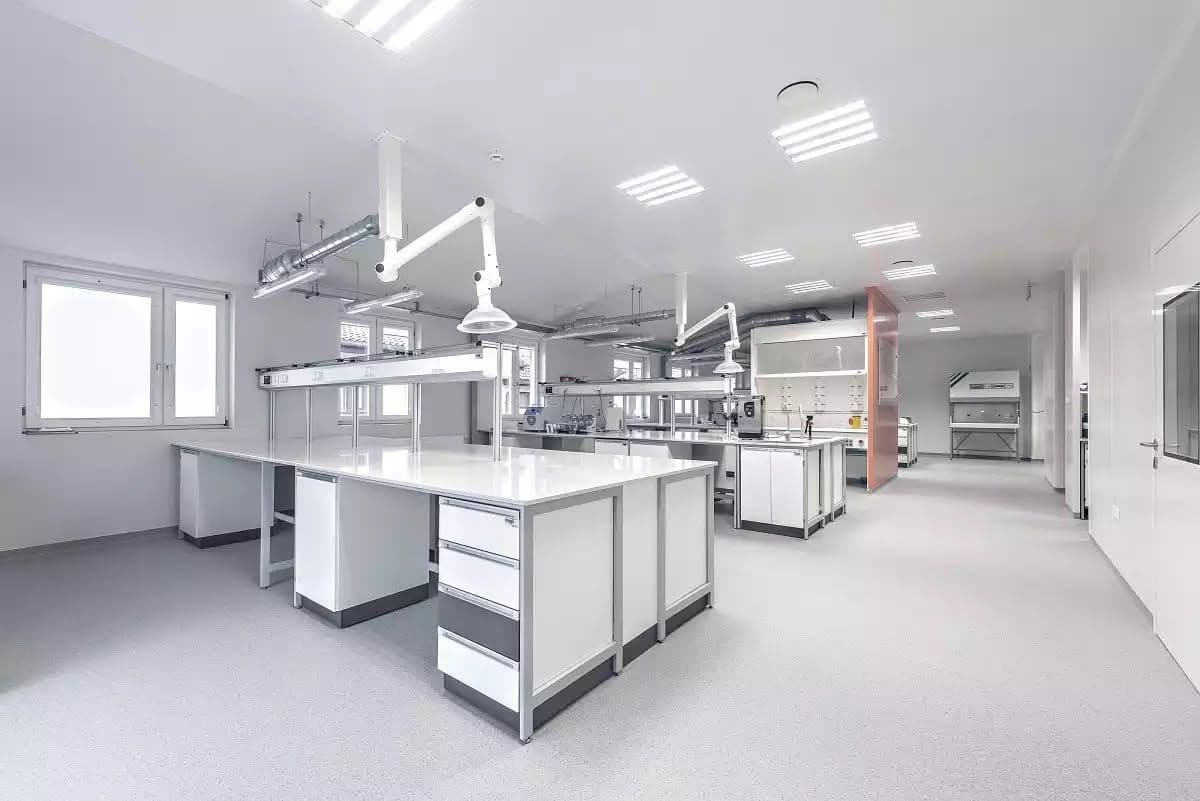
An Investment for Years – Why Does the Quality of Laboratory Furniture Matter?
Equipping a laboratory is the foundation upon which research precision and personnel safety rest. The decision to choose the right tables, safety cabinets, or fume hoods is not merely a matter of aesthetics, but primarily a strategic step determining the long-term efficiency of the facility. Why is professional laboratory furniture an investment that always pays off?
Safety and uncompromising compliance with standards
In environments exposed to the continuous action of aggressive chemical reagents and volatile organic compounds (VOCs), there is no room for half-measures. High-class laboratory and medical furniture must meet rigorous guidelines, such as the PN-EN 14727 and ISO 9001 standards. This guarantees structural stability even under maximum load. It is also a measurable investment in occupational safety. Suitably selected solutions, for example, fume hoods isolating the operator from toxic substances in compliance with the PN-EN 14175 standard, equipped with sensors and airflow monitoring systems, effectively minimize the risk of accidents during daily operations.
Materials for special tasks
A key aspect determining the lifespan of the equipment is its chemical and mechanical resistance. When designing furniture with the toughest operating conditions in mind, it is necessary to select raw materials with the highest parameters:
- Acid-resistant steel: The use of worktops made of this material ensures a load capacity of up to 150 kg (in fume hoods up to 200 kg), guaranteeing full sterility and resistance to pitting corrosion.
- Monolithic ceramics and epoxy resin: Irreplaceable in chemical laboratories, exhibiting excellent resistance to aggressive working environments.
- Plastics (PP/PVC) and HPL laminates: Provide high protection against moisture and weaker acids.
Such a selection of materials guarantees 100% resistance to moisture and intensive cleaning cycles with aggressive biocidal preparations.
Ergonomics and modularity of Renggli systems
Modern science and industry require flexible organization of the workspace. Advanced furniture solutions allow for the creation of layouts perfectly tailored to the specifics of the analyses conducted:
- RL1 System: Based on fixed plinth cabinets integrated with worktops, perfect for environments with strictly defined technological processes.
- RL5 System: Utilizes solid structures with suspended cabinets, which makes keeping the floor absolutely clean as easy as possible.
Regardless of whether we are equipping a facility dealing with biomedical engineering, testing medical equipment, or research stations for analyzing the purity of aquatic environments, the appropriate configuration of extensions, shelves, and media connections directly eliminates measurement errors and significantly increases work ergonomics.
Total Cost of Ownership (TCO), or why initial savings can be deceptive?
At the budget planning stage, cheaper, standard furniture may seem like a tempting choice. However, it is professional, certified equipment that determines the final maintenance cost. The solid workmanship of steel structures ensures a significantly lower Total Cost of Ownership (TCO) in the long run. Top-quality furniture from a reliable manufacturer does not undergo premature degradation and does not require frequent servicing, and its surfaces easily withstand daily, intensive use.
Professional equipment for a research facility is not a cost, but a foundation of reliability. By choosing certified solutions and the expertise of proven manufacturers with modern machinery, you gain the certainty of manufacturing precision and professional support at every stage. Investing in quality translates directly into team safety, result accuracy, and the long-term prestige of a modern laboratory.
July 17, 2026