How to identify media and safely match laboratory taps
Correct media identification in the laboratory is based on the EN 13792 standard, which defines the color coding of valves and taps. Clear labeling of tapping points reduces the risk of error with flammable gases, oxygen, or vacuum. Renggli, a Swiss manufacturer of laboratory equipment, supplies taps tailored to the safety requirements of facilities.
What are laboratory taps and what media do they handle?
Laboratory taps are specialized valves and laboratory faucets that control the flow of media. These solutions are mounted directly on elements such as laboratory benchtops and laboratory furniture. Laboratory design requires clear visual identification for liquids and gases.
The basis of the coding is the EN 13792 standard, meaning that clear media labeling protects the health of personnel. However, this standard does not cover medical gases (which are regulated by the EN 737 standard). When choosing receiving valves in a laboratory, it is important to remember that modern laboratory media tapping points are primarily intended to facilitate quick orientation for employees.
Gases, liquids, and vacuum – media under control in the laboratory
Modern laboratory infrastructure requires the distribution of many diverse substances within a single workstation. All media supplied through laboratory media tapping points are subject to strict color coding. This system allows for immediate verification of the installation's contents, which dramatically shortens the response time of personnel during daily research procedures.
Among the media requiring strict labeling, water stands out in various options (cold, hot, and demineralized) as well as flammable gases, which include, among others, hydrogen and methane. A separate group consists of non-flammable gases, such as nitrogen or argon, as well as oxygen, compressed air, and vacuum. Each of these media is characterized by different physicochemical properties.
It is the specific features and potential risks associated with an uncontrolled leak of these substances that justify the use of such a rigorous system. Color markings according to EN 13792 ensure that even in stressful or emergency situations, the user can flawlessly identify the hazard. A properly described installation eliminates the probability of accidental release of dangerous gaseous substances into the environment.
What is the media color code according to the EN 13792 standard?
The correct visual identification imposed by the EN 13792 standard is implemented in a multi-level manner. A key element of the system is the three-zone color code placed on control elements, such as cocks and a knob with a color marker. Visual information is most often supplemented by a text abbreviation or an unambiguous chemical symbol, which excludes any doubts for the operator.
The construction that characterizes professional laboratory installation taps differs significantly from solutions for general use. A typical valve consists of elements such as a solid valve body, a ceramic head ensuring smooth regulation, a properly profiled spout nozzle, and a threaded connection guaranteeing tightness. Additionally, an external powder-coated epoxy coating effectively protects metal parts from the destructive action of aggressive chemical vapors.
The implementation of the standard facilitates distinguishing the purpose of individual tapping points. A perfect example of this is the commonly used yellow color, which clearly signals the presence of flammable gases. On the other hand, the blue color indicates the flow of oxygen in the installation, allowing dangerous media to be immediately distinguished from other installation lines supplied to the workstation.
What colors correspond to specific media?
The EN 13792 standard precisely assigns specific colors to individual groups of substances, creating a coherent and intuitive system. Thanks to this, advanced technical laboratory equipment allows the user to recognize the type of medium even before physically turning the valve. This directly translates into shorter working hours and minimization of human errors.
Here is the key color breakdown assigned to individual media groups in accordance with the EN 13792 standard:
- Flammable gases (e.g., hydrogen, methane): Marked in yellow.
- Oxygen: Indicated by blue.
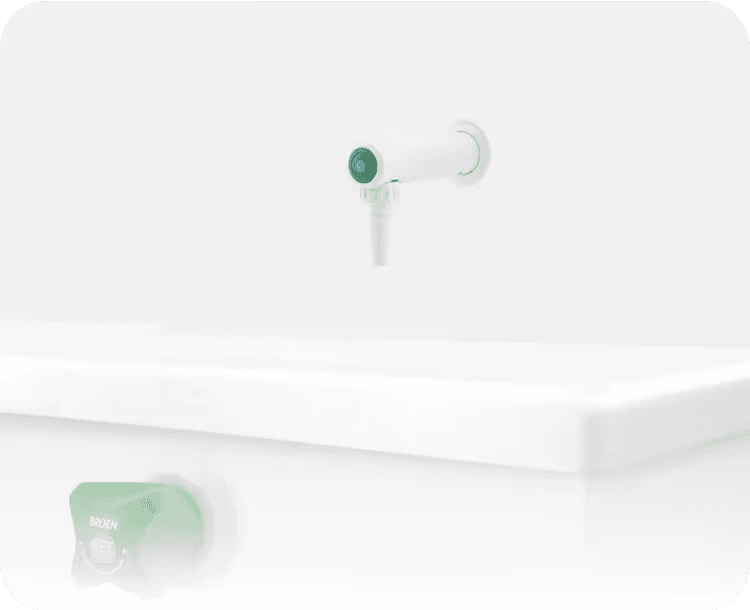
- Water (tap, demineralized): Coded in green.
- Non-flammable gases (e.g., nitrogen, argon): Marked in gray.
- Vacuum: Identified by a plum or dark pink shade.
The use of such a clear division makes moving within integrated research stations problem-free. Seeing a color collar in a shade of yellow, the employee gains absolute certainty that they are dealing with a flammable substance, requiring special precautions and appropriate ventilation.
How are valves, knobs, and tap spouts marked?
Effective media labeling in practice requires the use of durable and abrasion-resistant structural elements. For this purpose, manufacturers use special colored collars placed at the base of the control elements and replaceable covers on the knobs. These elements are additionally equipped with durable pictograms and clear chemical symbols that specify the type of flowing medium.
This approach to marking brings huge advantages in the context of daily operation. Clear labeling allows for the instant shut-off of the supply of a specific medium in the event of a sudden failure or leak in the research system. When designing modern taps, great importance is also attached to aspects such as ergonomics and ease of cleaning. Smooth surfaces covering the bodies and knobs facilitate rapid decontamination and prevent the accumulation of contaminants, which is a priority in a laboratory environment.
Chemical resistance of taps – how to match them to aggressive media?
The correct selection of components in a laboratory environment tolerates no half-measures. A domestic sanitary tap is not suitable for working with acids or solvents. Ordinary metals and simple seals would undergo rapid corrosion and degradation, creating a direct risk of leaking aggressive reagents.
Professional laboratory taps are based on the best materials. Bodies made of brass or stainless steel are covered with a protective epoxy coating with exceptional chemical resistance. Internal seals are also crucial (depending on the medium, materials such as PTFE, EPDM, or NBR are used).
A summary of the most important materials in chemically resistant taps:
- Stainless steel: Designed to work with extremely aggressive chemicals and acids, ensuring a sterile and safe working environment.
- Powder epoxy coating: Provides external protection for the valve body against falling vapors and atmospheric corrosion.
- PTFE (Teflon) seals: Guarantee maximum chemical resistance to most solvents, acids, and bases.
Although specialized laboratory equipment is a higher investment, the price-to-durability ratio is favorable. High chemical resistance means a significantly lower cost of use over the long term, eliminating the need for replacements and costly downtime.
Why do color markings increase work safety?
Laboratory design and the implementation of color codes are the foundation upon which laboratory safety rests. The lack of markings or their illegibility leads to catastrophic consequences: ignition of flammable gases, contamination of samples, or damage to apparatus.
To minimize the risk of errors, a mechanical "Press & Turn" safety device (press and turn) is used in gas valves. It forces a deliberate, two-stage action, which is pressing the knob and turning it. This prevents accidental opening of the valve by bumping it with a lab coat. Such integration of safety systems is crucial in places like a laboratory fume cupboard. The appropriate placement of valves protects against disruption of laminar airflow while giving quick access to media.
August 03, 2026