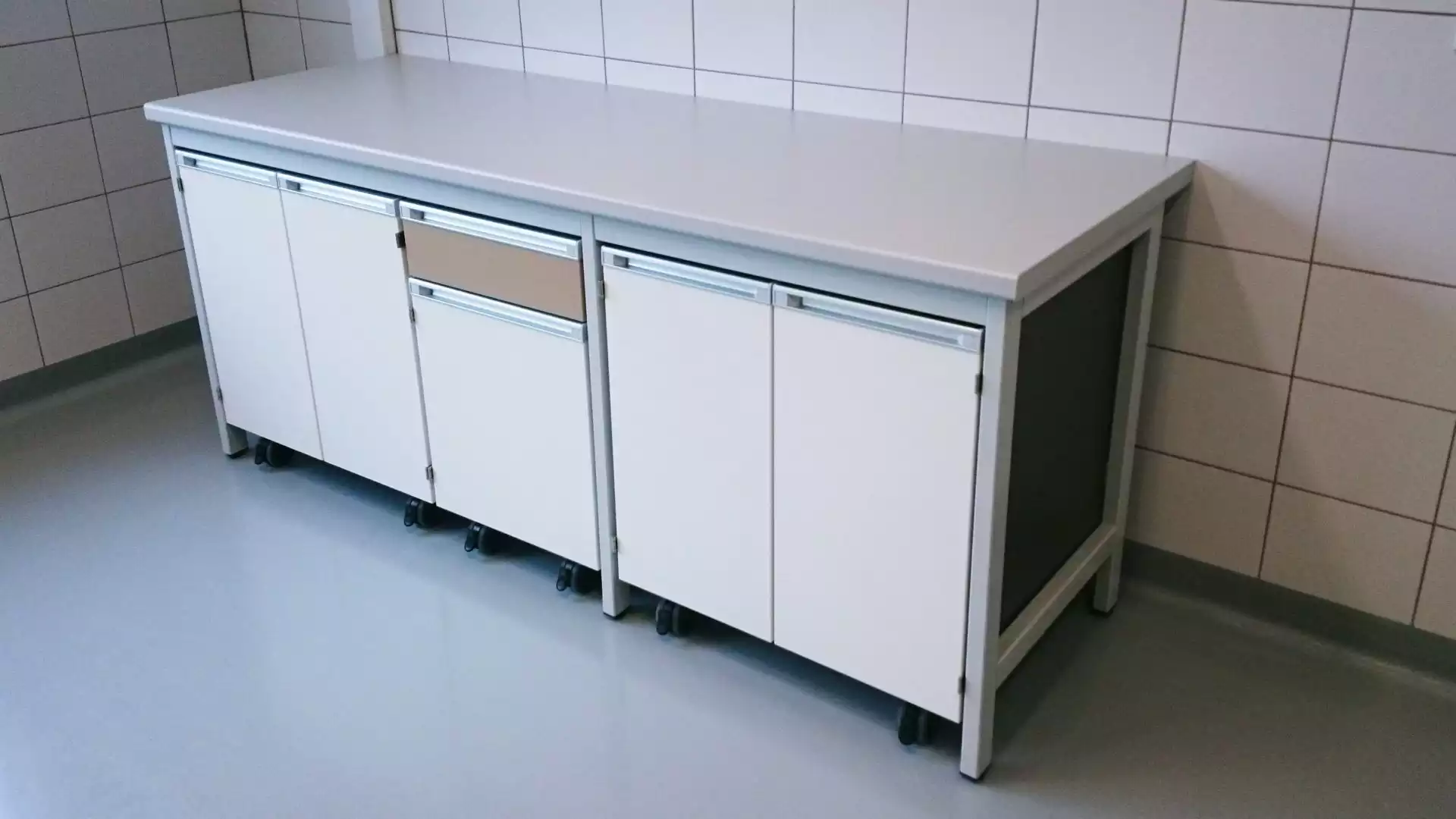
The Importance of the Work Surface in Everyday Laboratory Work
Designing a workstation in a laboratory requires taking into account the specific nature of the processes being carried out. There is no single universal material on the market that will work as a perfect worktop in every research space. The choice is always a compromise between physicochemical properties and the investment budget.
Before making a final decision, a detailed analysis of exposure factors must be conducted. The degree of contact with aggressive acids and bases is crucial, as well as the frequency of using organic solvents. Equally important are mechanical loads, including continuous vibrations generated by centrifuges, working in high temperatures, and strict sterilization procedures.
The answer to these diverse requirements is the zoning of the laboratory space. It involves dedicating specific materials to individual workstations, which allows for cost optimization while maintaining maximum safety and ergonomics.
Solid Technical Ceramics - Uncompromising Protection Against Aggressive Chemicals
Solid technical ceramic slabs represent the highest standard of protection in highly corrosive environments. This material is characterized by absolutely uncompromising resistance to concentrated acids, including sulfuric, nitric, and hydrochloric acids. Ceramic work surfaces also easily withstand extremely high temperatures, making them irreplaceable during the most demanding analytical processes.
Due to its unique parameters, solid ceramics is the main material used in the construction of fume hoods and in advanced analytical laboratories. The safe extraction of vapors in fume hoods is often associated with the risk of spilling aggressive reagents, against which ceramics perfectly protect the furniture structure.
However, this solution has some structural limitations. The exceptionally high dead weight of ceramic slabs requires the use of solid, reinforced supporting frames. Furthermore, despite its considerable hardness, this material is susceptible to damage and cracking upon point impacts with heavy objects.
Epoxy Resin - Monolithic Durability for Heavy-Duty Tasks
Poured epoxy resin is widely recognized as the gold standard for equipment in many modern research centers. Its greatest advantage is its fully monolithic structure. The lack of pores, joints, and micro-crevices means that the surface does not absorb spilled substances and is extremely easy to maintain in rigorous cleanliness.
This material offers excellent chemical resistance and complete inertness to moisture. Unlike ceramics, epoxy resin is characterized by significantly higher flexibility, which translates into excellent mechanical strength and high impact resistance, eliminating the risk of accidental chipping.
Due to the balanced proportions between mechanical and chemical resistance, epoxy resin worktops are perfectly suited for workstations dedicated to general chemistry and physical chemistry. They constitute a solid, long-lasting base for heavy analytical apparatus and multi-station island tables.
Phenolic Core HPL Laminates - Versatility and Hygiene
Solid high-pressure laminate (HPL) with a phenolic core is currently the most popular choice among investors, mainly due to its excellent price-to-quality ratio. Although this technology is not intended for working with concentrated, fuming acids, the HPL worktop easily handles dyes, solvents, and chemicals in lower working concentrations.
The outer coating of new-generation laminates often exhibits antibacterial properties, which significantly facilitates maintaining a high level of hygiene. The smooth and non-absorbent surface prevents the multiplication of microorganisms, which is a critical parameter in research with biological material.
The main applications of this material are educational laboratories, microbiological and biochemical spaces, and standard analytical workshops. It is a versatile solution for facilities looking for aesthetic, durable, and economical work surfaces for everyday, less aggressive tasks.
Stainless Steel - The Key to Sterility in Cleanroom Environments
High-grade stainless steel, with particular emphasis on acid-resistant alloys such as 316L, is the absolute basis of equipment in the pharmaceutical industry, pathology, and the food industry. It constitutes the basic element of equipment for rooms with increased cleanliness classes (Cleanroom), where restrictive sterility standards do not allow any compromises.
The main advantages of stainless steel result from its complete lack of porosity and zero moisture absorption. These surfaces allow for extremely easy, instant decontamination and regular thermal disinfection, without the slightest risk of degradation of the worktop structure over time.
When designing steel workstations, however, one important weak point of this material should be remembered. Stainless alloys show high sensitivity to halogen environments, such as chlorides or bromides. Their long-term presence on the surface of the worktop can initiate destructive pitting corrosion processes.
Materials for Special Tasks: Polypropylene and Tempered Glass
In addition to standard solutions, specialist laboratories use niche materials that perform well where classic options completely fail. The selection of this type of worktop results directly from the strict focus of the research profile on a specific, demanding work procedure.
Polypropylene (PP) is an indispensable material at workstations where hydrofluoric acid (HF) is used (an aggressive substance that etches both glass and ceramics). Polypropylene guarantees complete resistance to this acid, but its main disadvantages are relatively high softness and a complete lack of thermal resistance.
Tempered glass, in turn, is a perfect material for working with highly staining dyes, allowing the space to be kept perfectly clean. It works great as separate zones and pads, for example, integrated into balance tables for precise measurements, although its natural disadvantage remains its susceptibility to mechanical breakage.
How to Choose a Worktop for Specific Research?
The correct selection of the work surface determines the durability of the entire infrastructure and the safety of the personnel. To avoid costly mistakes before deciding on the final installation, each technological design should be verified in terms of future research processes.
The list of key criteria for selecting a worktop boils down to four basic verification steps:
- Analysis of used reagents: thoroughly familiarizing oneself with the safety data sheets of the substances used at a given workstation.
- Assessment of thermal loads: defining maximum temperatures and the risk of an open flame presence.
- Mechanical issues and apparatus logistics: taking into account the total weight of the laboratory equipment and the vibrations it generates.
- Sterility requirements: determining the sanitary regime and expected decontamination methods.
September 28, 2026