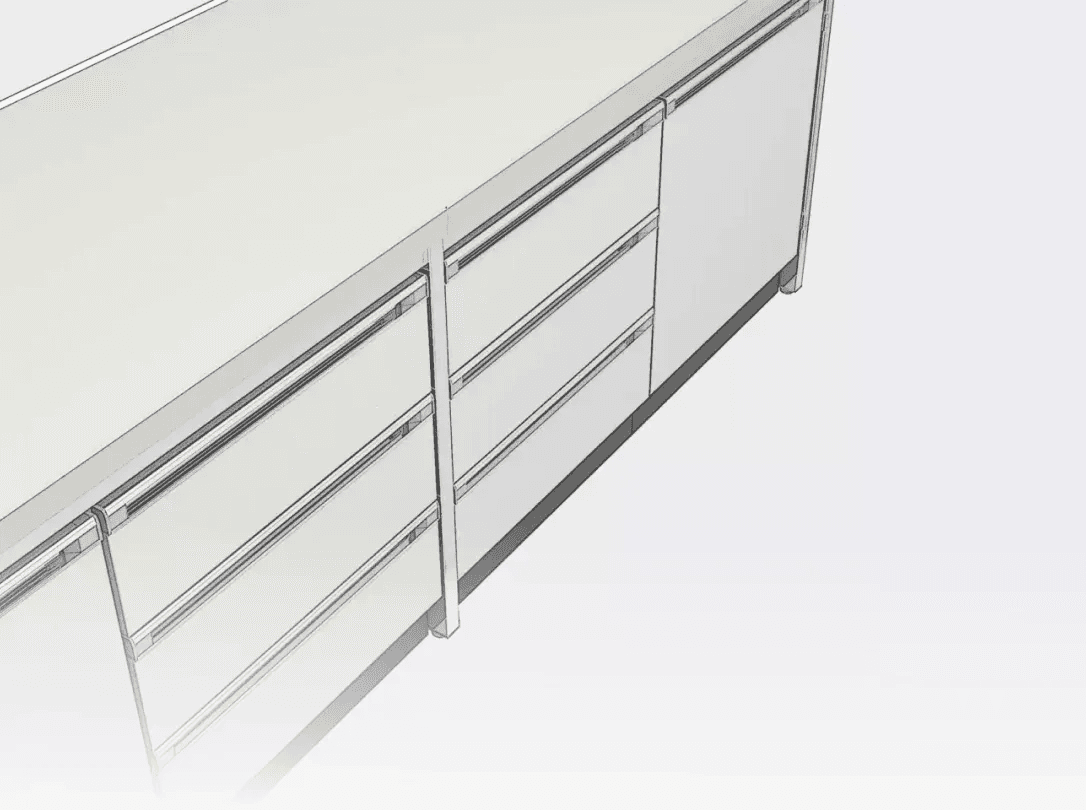
Polypropylene worktops are modern laboratory worktops used wherever durability, chemical resistance and ease of cleaning are of key importance. Polypropylene is a plastic with very good performance properties, making it ideal for demanding work environments. Polypropylene worktops are resistant to acids, alkalis, salts and many aggressive chemicals, which significantly extends their service life compared to traditional materials.
An additional advantage of polypropylene worktops is their low water absorption and smooth, non-porous surface. This prevents liquids and contaminants from penetrating the structure of the material, which translates into a high level of hygiene and safety at work. Polypropylene worktops are also resistant to moisture and high temperatures, so they can be used in heavily used technical and specialist rooms.
Polypropylene worktop
Polypropylene worktops are valued not only for their technical parameters, but also for their functionality and aesthetics. This material allows for the production of worktops in various thicknesses, shapes and configurations, which allows them to be precisely tailored to the individual needs of the user. Polypropylene worktops can be equipped with raised edges, integrated sinks or technological openings, increasing the comfort of everyday work.
Compared to other worktops (e.g. epoxy resin worktops), polypropylene worktops are also relatively lightweight, which facilitates their installation and possible modernisation of workstations. At the same time, they retain high mechanical resistance to impact and abrasion. This makes a polypropylene worktop a long-term investment that reduces maintenance costs and the need for frequent replacement of equipment.
Polypropylene worktop for laboratories
Polypropylene worktops for laboratories are standard in modern research, educational and industrial laboratories. In a laboratory environment, polypropylene worktops ensure safe working with chemical reagents and provide a stable, easy-to-disinfect work surface. Their resistance to aggressive substances makes them the ideal choice for chemical, biological, pharmaceutical and medical laboratories.
Polypropylene worktops, like conglomerate worktops, meet high standards and ergonomic requirements. They enable cleanliness, reduce the risk of contamination and allow for comfortable organisation of the workspace. Thanks to the possibility of full customisation, polypropylene worktops can be adapted to the specific type of laboratory, number of workstations and the nature of the research conducted. They are a reliable solution for users who expect durability, safety and a professional standard of workmanship.