Stainless steel medical furniture: design and equip
Choosing stainless steel medical furniture guarantees complete sterility and corrosion resistance in treatment rooms. Studies confirm that the smooth surface of AISI 304 steel stops the growth of pathogens. The Swiss manufacturer Renggli has been providing these custom-made solutions in Poland since 2013.
Stainless steel medical furniture in clinic design
The approval of a clinic by the Sanitary Inspection (Sanepid) depends primarily on the presence of smooth, non-absorbent, and easy-to-disinfect surfaces. When planning modern and fully ergonomic equipment for medical clinics, hygiene and the optimization of staff movement must be prioritized. Steel medical furniture, such as acid-resistant cabinets or mobile assistants, creates an uncompromisingly sterile environment. Wherever the highest cleanliness counts, professional laboratory furniture is the optimal choice, and to meet these high sanitary requirements, it is worth implementing the proven, modular RL6 system. By choosing professional acid-resistant steel furniture, you gain a full guarantee of meeting restrictive legal standards. The entire specialized equipment is complemented by ergonomic laboratory chairs and laboratory stools.
Why does AISI 304 steel facilitate hygiene and disinfection?
The non-porous surface of AISI 304 steel does not absorb organic matter and is easily disinfected, which limits microbial colonization. Alcohol- or active oxygen-based agents are recommended; chlorine preparations only diluted and thoroughly rinsed. The properties of AISI 304 steel result directly from its microstructure. The smooth, non-porous surface effectively limits the adhesion of organic matter and the multiplication of bacteria, making it easier to maintain sterility. Thanks to this, professional stainless steel medical furniture easily meets the restrictive Sanepid requirements in treatment and diagnostic zones. Proper clinic disinfection relies on certified chemicals. For daily cleaning, alcohol or active oxygen-based agents are recommended, which eliminate pathogens without the risk of degrading the passive protective coating. Preparations with chlorine are used only in a highly diluted form and rinsed thoroughly to avoid dangerous corrosion spots. Hygiene is also supported by well-thought-out design details. Mobile cabinets have a running system with a lock and antistatic wheels, which definitely facilitates floor washing. In tool preparation zones, laboratory sinks are crucial. Laboratory fittings, including precise laboratory valves, are responsible for the safe handling of utilities. The whole creates durable stainless steel medical furniture, guaranteeing the highest standard of hygiene.
How is custom acid-resistant furniture produced?
The individual production of custom-made medical furniture takes place based on a precise technological design, guaranteeing optimal development of treatment and laboratory zones. Individual production begins with an inquiry and the development of a technological design. Using a modern machine park, precise sheet metal bending and gas-shielded welding are carried out. The process is closed by rigorous weld inspection and final assembly, which guarantees structural stability and optimal ergonomics in difficult clinical conditions. Local production in a Polish factory shortens the order processing time to 4-8 weeks. This allows for full personalization of cabinet dimensions and easy integration with utilities. Each dedicated project is created in close cooperation with the client. In turn, complementary, tailored office furniture works well in administrative zones. By choosing custom stainless steel medical furniture, you get a guarantee of a perfect fit for the architectural layout. Every custom stainless steel medical furniture project is subject to individual pricing. This transparent B2B approach eliminates the limitations of rigid catalog solutions, allowing you to perfectly balance technical parameters with the facility's budget.
Assembly and passive protection of steel in a medical clinic
Proper assembly of medical furniture requires precise leveling of the structure and strict avoidance of contact with hydrochloric acid. Precise leveling is crucial during assembly. Properly set steel frames guarantee table top stability and work ergonomics. Regular service is also important, including checking seals and adjusting elements such as acid-resistant hinges. To protect the passive coating, absolutely avoid agents containing hydrochloric acid. It destroys the oxide layer, initiating corrosion spots. Proper assembly and care will ensure that stainless steel medical furniture for the clinic will retain full and long-term chemical resistance.
Steel medical furniture vs. powder-coated coatings
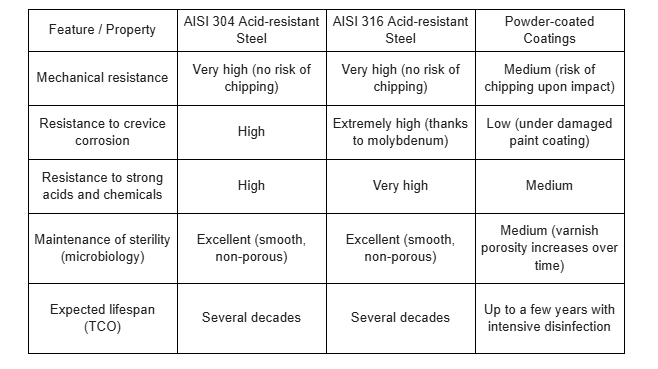
AISI 316 acid-resistant steel surpasses powder-coated furniture in terms of mechanical damage resistance and significantly reduces the risk of crevice corrosion. When comparing a solid alloy (AISI 304 or 316 acid-resistant steel) with powder-coated furniture, mechanical resistance is decisive. Paint coatings are very susceptible to impacts. Possible chips expose the raw metal, where rust develops. Solid stainless steel significantly reduces, but does not completely eliminate, the risk of crevice corrosion, maintaining cohesion even with deep scratches. Laboratory treatment tops have a characteristic recess around the perimeter, effectively protecting equipment and fluids from sliding off. Resistance is increased by drawers with steel bottoms and reliable acid-resistant hinges. In dynamic work, mobile assistants are perfect: LABO MAYO type medical table and maneuverable stainless steel treatment tables. Investing in the highest quality alloy eliminates the need for frequent infrastructure replacement. A broader context of selection is discussed in the comparison: stainless steel vs. HPL laminate, and the area of precise clinical measurements will be perfectly complemented by weighing tables (including weighing and anti-vibration tables).
How does acid-resistant steel outperform HPL laminates?
Acid-resistant steel provides high moisture resistance and facilitates the maintenance of sterility, outperforming HPL laminates in a treatment environment. In a humid environment, medical furniture made of furniture board quickly swells. Even hard HPL chemical-resistant laminate delaminates under the influence of water and aggressive chemicals. Acid-resistant steel, on the other hand, is completely resistant to moisture and extreme temperatures. Its non-porous structure effectively inhibits the growth of bacteria, which can be a problem when choosing plastic medical furniture. The cost-effectiveness of this solution confirms that by implementing durable stainless steel medical furniture, you gain the certainty of a sterile and failure-free environment for years.
How to care for stainless steel in the clinic to avoid corrosion spots?
Proper care of stainless steel, avoidance of hydrochloric acid, and taking care of the passive layer protect medical furniture from pitting corrosion. Daily care of steel furniture in the treatment room and analytical laboratory is the key to preserving their anti-corrosion properties. The natural passive coating, i.e., a thin layer of chromium oxides on the steel surface, protects the alloy from external factors. To avoid damaging it, only soft microfiber cloths and mild, dedicated cleaning preparations should be used for daily care. The use of rough wire sponges, which could scratch the metal structure, is strictly forbidden. The greatest threat to stainless steel are preparations containing hydrochloric acid and strong chlorides. Contact with these chemical compounds destroys the metal passivation and initiates dangerous pitting corrosion. Regular steel maintenance, removing moisture from work surfaces, and reacting quickly to any discoloration allow effectively preventing the formation of the first corrosion spots, guaranteeing the impeccable hygienic condition of the furniture for years.
July 20, 2026