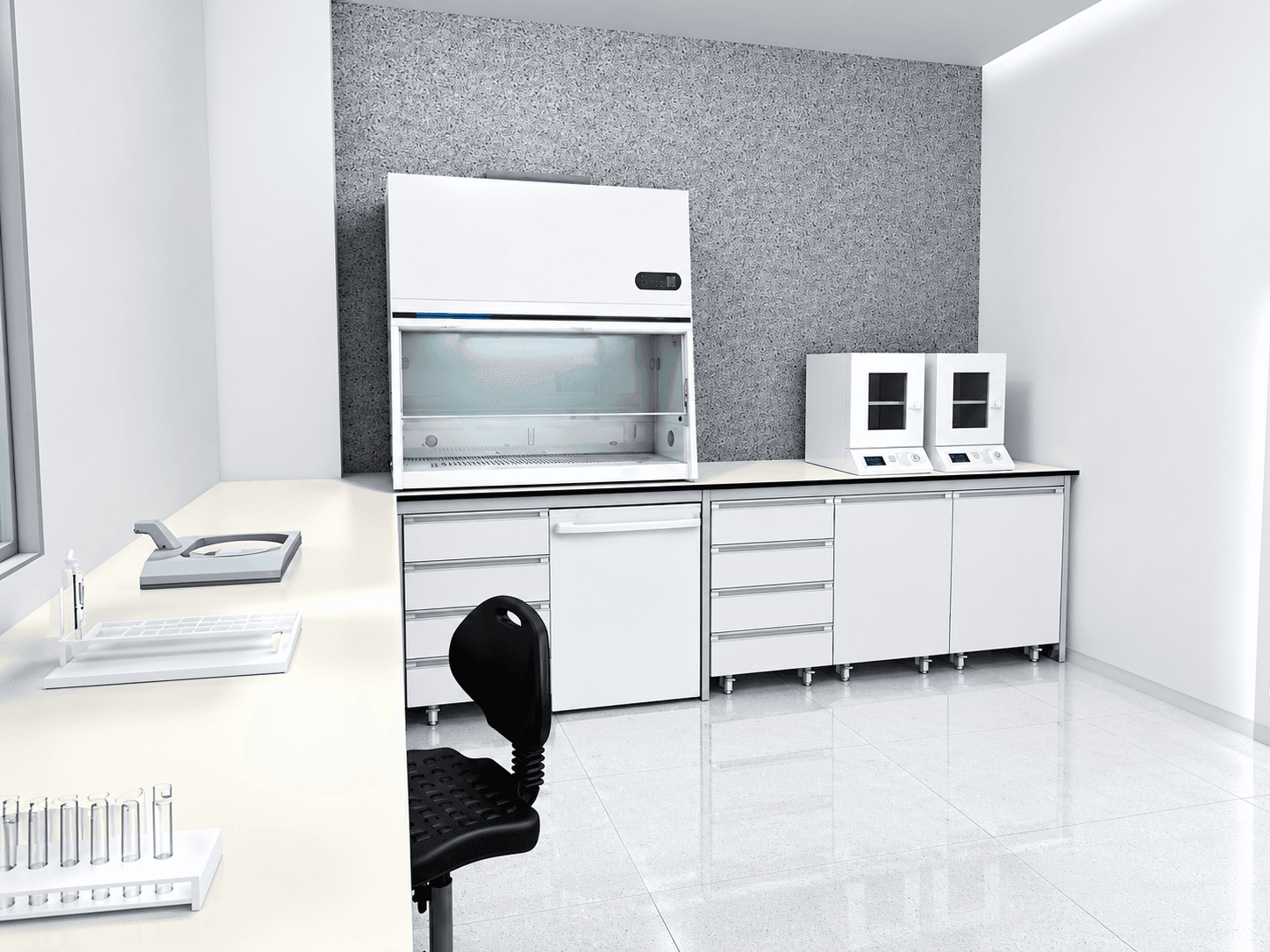
The role of ventilated cabinets in ensuring occupational safety
The primary purpose of using ventilated cabinets is the effective health protection of laboratory personnel. During routine analytical work, opening containers, or pouring liquids, harmful substances are released. These cabinets constitute the first line of defense against exposure to volatile organic compounds (VOCs), toxins, and irritating vapors.
An active extraction system prevents the accumulation of dangerous gas concentrations in the laboratory's workspace. This eliminates the risk of an explosive atmosphere and prevents chronic inhalation poisoning among employees.
The absence of harmful vapors in the air directly translates into continuity of work and the comfort of analysts. Adequate air quality in the breathing zone reduces fatigue and improves concentration, which is crucial when conducting precise research procedures that require focus.
Legal regulations and standards - when is a ventilated cabinet mandatory?
The issues of storing chemical substances are strictly regulated by occupational health and safety (OHS) regulations and relevant European standards. The most important include the PN-EN series guidelines, which specify the structural requirements and ventilation parameters for furniture intended for storing chemicals and flammable materials.
Storing hazardous substances "on the bench" or in ordinary, unventilated cabinets is a serious violation of safety procedures. Such practices lead to the uncontrolled release of vapors, which in light of applicable law is treated as a direct threat to the life and health of employees.
Labor inspectorates and independent auditors absolutely require the presence of ventilated systems in situations where substances with high volatility, toxicity, or flammability are used in the unit. The lack of a certified ventilated cabinet in such scenarios usually results in the suspension of research processes and the imposition of administrative penalties.
Storage safety as an element of modern laboratory design
A modern laboratory is not a collection of random furniture, but a precisely designed, well-thought-out infrastructure. The systemic approach assumes that safety begins at the stage of planning the room layout. The proper placement of workstations relative to chemical storage areas determines the fluidity and safety of the entire analytical process.
In the design process, dedicated storage zones should be separated, properly isolated from clean office work zones and evacuation routes. The integration of ventilated systems in these zones allows for shortening the transport time of reagents to fume hoods, minimizing the risk of accidental dropping or spilling of substances.
The optimization of communication paths in the research space goes hand in hand with work ergonomics. The placement of cabinets in the immediate vicinity of workstations, while maintaining collision-free passages, creates a coherent and safe environment that responds to the real needs of laboratory personnel.
Overview of solutions: cabinets for reagents, acids, bases, and fire-resistant models
Ventilated reagent cabinets are a universal solution designed for storing less aggressive chemical substances. Their design provides basic protection against the accumulation of vapors from typical laboratory reagents, guaranteeing order and easy access to everyday preparations.
Cabinets for acids and bases require a completely different specification. Their interior must be strictly lined with chemically resistant material, most often polypropylene (PP), which shows inertness to highly corrosive vapors. A key safety element in these models is the equipment with pull-out polypropylene (PP) trays with a raised edge, which in the event of packaging failure prevent liquid spillage and the mixing of reactive chemicals.
A separate category is fire-resistant safety cabinets, dedicated to flammable substances. They are distinguished by a certified fire resistance class (e.g., Type 90, which means 90 minutes of protection in fire conditions). They have an integrated ventilation system and mechanisms for automatically sealing doors and closing ventilation valves under the influence of an increase in ambient temperature.
When is it worth investing in cabinets with continuous vapor extraction?
Investing in cabinets with continuous vapor extraction is essential primarily when working with aggressive acids, volatile organic solvents, and substances with a strong, irritating odor. In such scenarios, natural air exchange is insufficient to eliminate occupational risk.
The fundamental difference between passive storage and a system with active forced air flow lies in the constant control of the atmosphere inside the cabinet. Active extraction mechanically removes dangerous gases before they can escape to the outside when the operator opens the door.
The use of continuous extraction is also economically and operationally justified in high-throughput laboratories. This prevents the progressive degradation of electronic and analytical equipment in the room, which is often the result of long-term exposure to micro-amounts of escaping, corrosive vapors.
How do extraction systems in Renggli furniture work?
High-class extraction systems are based on precisely designed airflow mechanics. The process begins with forced circulation, which typically directs the air stream from the bottom to the top of the cabinet. Polluted vapors are then discharged through special connection spigots located in the upper part of the structure, from where they go to the exhaust installation or advanced filtration systems.
Technologically advanced laboratory furniture is characterized by the aerodynamic optimization of the interior. Thanks to the use of appropriate seals and the precise fitting of elements, these cabinets provide exceptionally high tightness. This allows for the effective capture of gases while maintaining a very quiet operation of the entire system, which significantly increases comfort in the laboratory.
The operational safety of these systems is also based on control electronics. Structures are equipped with airflow monitoring modules that continuously analyze the exhaust parameters. If the extraction efficiency drops below a safe level, the system immediately generates acoustic and optical alarms for the personnel.
Materials and construction - why is chemical resistance crucial?
In a laboratory environment, the choice of materials used to build the cabinet body determines its suitability and safety. Ordinary steel quickly degrades under the influence of vapors. Therefore, professional solutions use advanced epoxy coatings, acid-resistant steel, and high-density plastics, such as polypropylene.
Adequate chemical resistance is not only a matter of aesthetics but, above all, of maintaining the structural integrity of the furniture. The lack of corrosion inside the cabinet means that guides, hinges, and locking systems work smoothly throughout the entire period of operation, and possible spills do not lead to the formation of rust centers that could weaken the load-bearing capacity of the shelves.
Choosing equipment built from certified, chemically resistant materials is a strategic investment. The use of appropriate raw materials drastically extends the lifespan of laboratory equipment, reducing the costs associated with the need to prematurely replace worn-out and corroded furniture.
Integration of ventilated cabinets with the facility's HVAC system
The proper operation of a ventilated cabinet requires appropriate technical implementation, because this device cannot function in a vacuum. The cabinet must be physically connected to the building's general exhaust ventilation system (HVAC) or alternatively be equipped with a dedicated, top-mounted filtering (recirculation) module that cleans the air and returns it to circulation.
A key aspect of integration is air balancing in the laboratory. The amount of air extracted by cabinets and fume hoods must be continuously compensated by the supply system. Disturbing this balance leads to the creation of undesirable underpressures or overpressures, which can result in difficulties opening doors and even drawing in pollutants from other zones of the facility.
Proper installation also includes the use of chemically resistant ventilation ducts and constant air volume (CAV) or variable air volume (VAV) regulation systems. This allows for the optimization of energy consumption in the building while guaranteeing continuous, safe vapor extraction from the interior of the cabinets.
September 24, 2026