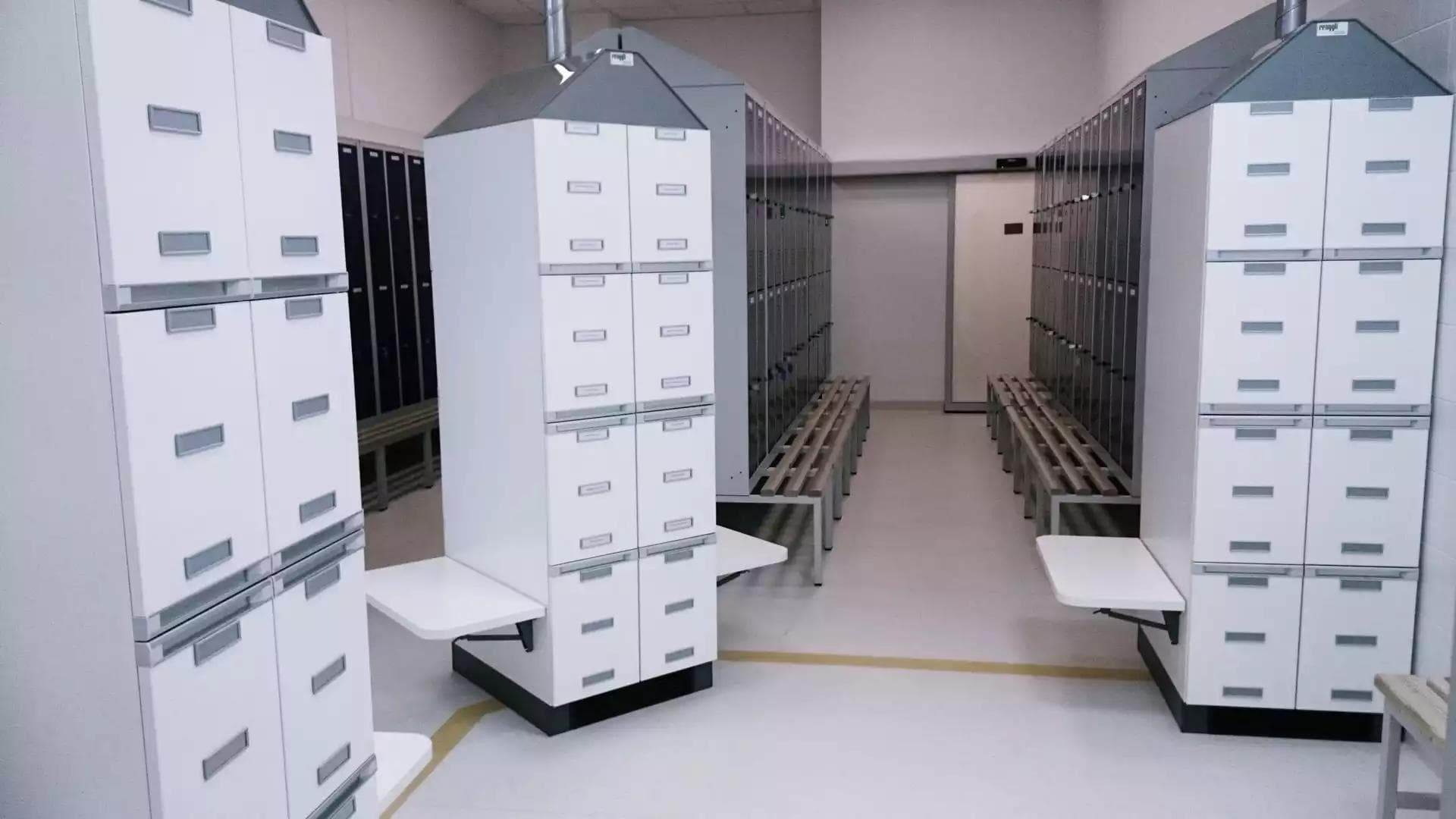
ISO standards for laboratories specify requirements for the quality of work, reliability of results and safety of testing processes, and their fulfilment is crucial for certification. These include both the organization of work and the technical equipment, which must ensure repeatability and control of all stages of the analysis.
What do ISO 17025 and ISO 15189 standards define for laboratories?
ISO/IEC 17025 (General Requirements for the Competence of Test and Calibration Laboratories) and ISO 15189 (Medical Laboratories – Quality and Competence Requirements) set the basic principles for the functioning of laboratories in terms of quality, competence and reliability of results.
ISO/IEC 17025, developed bythe International Organization for Standardization (ISO) and the International Electrotechnical Commission (IEC), specifies technical and organizational requirements for testing and calibration laboratories. It forms the basis of accreditation and includes, among m.in, the competence of personnel, the validation of methods and the control of measuring equipment.
ISO 15189, on the other hand, refers directly to medical laboratories and is a standard of quality and competence tailored to diagnostics. It is complementary to ISO/IEC 17025, but takes into account the specifics of working with medical samples and the requirements related to patient safety.
Being ISO certified means that the laboratory has implemented an appropriate management framework, including instrument calibration systems and sample handling procedures, which translates into repeatability and reliability of test results.
How does laboratory equipment affect PCA accreditation?
The equipment of the laboratory has a direct impact on the possibility of obtaining accreditation of the laboratory, because it depends on it to meet the requirements of ISO/IEC 17025. In practice, it is about whether the devices are properly selected, correctly installed and regularly serviced. If the equipment does not operate stably, it is difficult to demonstrate the reliability of the test results and full compliance with the requirements of the standard.
The assessment process is carried out by the Polish Centre for Accreditation (PCA), which checks whether the laboratory has the right conditions to perform tests and whether it has the appropriate technical competence of the staff. PCA evaluates not only the documentation, but also the real operation of the equipment in everyday work. In practice, components such as laboratory sinks are also evaluated, which must meet chemical resistance and hygiene requirements.
If the technical condition of the equipment is insufficient or does not allow for confirmation of competence and impartiality, the accreditation body may refuse to grant accreditation. Therefore, properly selected and maintained laboratory equipment is one of the basic conditions for entering and maintaining quality standards. In modern laboratories, laboratory fittings are also of particular importance, as they affect the safety and stability of the entire installation.
What technical requirements must the test equipment meet?
Above all, the test equipment must be clearly marked and identifiable at any time of use. This includes, m.in example, the designation of the device, its purpose and the current calibration status to control whetherthe laboratory equipment is approved for operation. This approach also applies to installation components, e.g. laboratory valves must be clearly described and assigned to a specific function.
Another requirement is complete and up-to-date laboratory documentation. Each appliance should have an instruction manual, maintenance procedures, and storage and usage rules. This applies to the entire laboratory infrastructure, including auxiliary equipment such as laboratory batteries, as this ensures repeatability and process reliability.
It is also important who operates the equipment – the equipment should only be used by personnel with appropriate authorizations and training. If the device fails or no longer meets the technical requirements, it must be immediately decommissioned and subjected to equipment maintenance or repair.
How do calibration and measurement consistency ensure reliable results?
Regular calibration and calibration of the equipment are the basis for accurate and comparable measurement results over time. Thanks to them, you can check whether the device is working according to the pattern and, if necessary, correct its indications.
Measurement consistency means an uninterrupted chain of reference to higher-ranking standards, from the result in the laboratory to national or international standards. Such metrological traceability allows you to estimate the uncertainty of the measurement and assess how much the result may deviate from the actual value.
Certified reference materials, which serve as a point of reference, and calibration certificates, which confirm that the device in question has been checked in accordance with the requirements of metrology, play an important role in this process. This allows the laboratory to demonstrate that its results are reliable and reproducible.
How do environmental conditions and software affect the quality of measurements?
The quality of results in the laboratory is greatly influenced by environmental conditions such as temperature, humidity or air stability. Therefore, they need to be monitored and recorded regularly, because even small fluctuations can disrupt the operation of the equipment and affect the test results.
Equally important is laboratory software, which is now treated as part of the equipment. It must ensure data supervision, data integrity and protection against unauthorized access. This means that the results cannot be changed at will, and any modification should be traceable.
IT systems in laboratories must also supportthe quality assurance of results, while guaranteeing impartiality and confidentiality of data. This allows the laboratory to maintain the reliability of its analyses and meet the requirements of standards and audits.
How to implement a quality management system for equipment supervision?
The implementation of a quality management system (compliant, m.in, with ISO 9001 – Quality Management Systems) in the area of equipment supervision begins with organizing the rules of control and use of equipment. This includes, m.in things, scheduled inspections, registration of technical condition and clear procedures for responding to irregularities.
Internal audit and technical audit play a key role in checking whether the supervision of equipment is working properly. On this basis, corrective actions and risk management elements are introduced, e.g. the withdrawal of non-compliant equipment or a change in its usage procedures.
Technical activities are also important in the quality system, such as:
- validation of test methods and their verification,
- regular indirect checks of the apparatus,
- participation in proficiency studies and inter-laboratory comparisons (PT/ILC) that confirm the reliability of the results.
Laboratory fume hood sets are also taken into account as their proper operation has a direct impact on safety and working conditions in the laboratory.
An important element is also the application of the principle of decision-making when determining the compliance of results with the requirements. Thanks to this, the laboratory is not based solely on a single measurement, but on the entire quality control system, which increases the reliability and repeatability of the work.
May 11, 2026