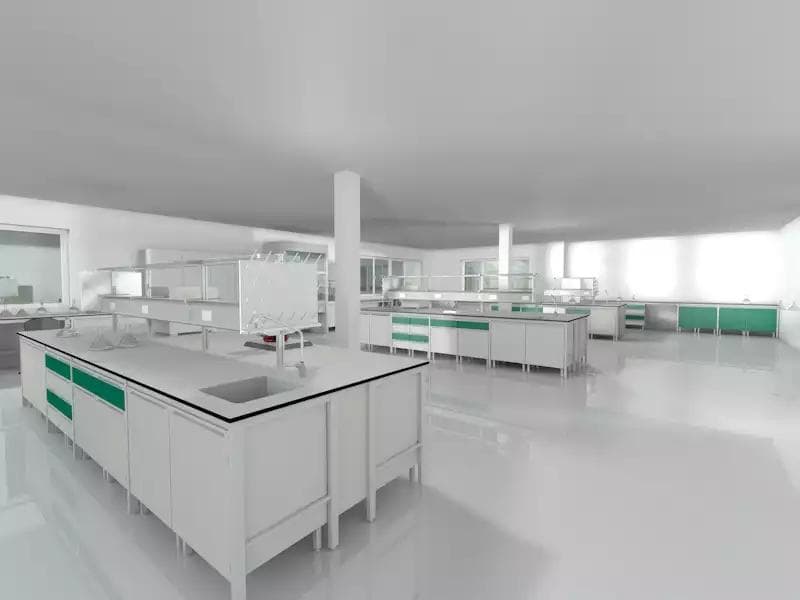
Laboratory fittings - types of valves, gases and media in laboratory equipment
The safety and precision of work in the laboratory largely depend on the quality of the technical installations. Laboratory fittings, i.e. a system of valves and faucets responsible for controlling the flow of gases and water, play a key role here. It enables the safe use of media, minimizes the risk of failure and supports the maintenance of high hygiene standards in modern laboratories.
What are the types of laboratory valves?
Laboratory fittings are specialized laboratory valves and faucets that enable precise flow control and safe media management in installations. They must be made of materials that are resistant to chemicals, such as stainless steel or brass, and provide high tightness.
The most important types of valves include:
ball valves – used as shut-off valves, allow for quick shut-off of the flow while maintaining high tightness
needle valves – act as control valves, allowing for very precise flow regulation
diaphragm valves – ideal for working with media requiring high purity, provide tightness and chemical resistance
In more advanced installations, the following are also used:
coaxial valves – often made of brass, used in gas installations
solenoid valves (i.e. solenoid valves, e.g. NAMUR type) – allow automatic shut-off of the flow
Proportional valves and pneumatic valves – used for advanced process control and automation
measuring valves – used where accurate control of flow parameters is crucial
Choosing the right type of valve is crucial for the safety and precision of the entire laboratory system.
How to choose fittings for tap and demineralized water?
The selection of the right fittings depends primarily on the type of medium – the installation is designed differently for cold and hot water thanfor demineralized water (DEMI) or deionized water (DI). In practice, specialized water valves and laboratory batteries are used to ensure the safety and cleanliness of the installation.
In the case of a standard water supply system, the following are used:
floor-standing faucets and wall-mounted faucets (e.g. table faucet, wall-mounted faucet)
single-column and double-column faucets, including a two-tap faucet or a single-lever mixer faucet for temperature control
Solutions adapted to cold water, hot water, as well as special media such as ice water or distilled water
Dedicated solutions are used to work with purified water:
demineralized water faucet equipped with membrane heads to prevent secondary pollution
materials resistant to high purity of the medium and lack of ions
An important element is also the elbow faucets, which, thanks to the extended handle, allow hands-free operation, which significantly improves work hygiene in the laboratory.
The installation is complemented by spouts – both tabletop screeds and angle screeds, used as an element of every laboratory tap. They can be equipped with:
aeration aerator water jet
oil for the hose, allowing the connection of auxiliary installations
The entire system works with elements such as laboratory sinks and siphons to ensure safe drainage of liquids and wastewater.
What valves are used for technical and flammable gases?
Specialized gas valves and pressure reducing valves are used for gas installations in laboratories to ensure safe flow and pressure control. They handle both combustible gases (e.g. hydrogen, propane-butane, LPG, methane, natural gas) and technical gases and non-flammable gases, such as nitrogen, helium, oxygen or argon, as well as more demanding media such as ammonia, chlorine, hydrogen chloride or sulphur dioxide.
The key element of the installation are pressure reducers (one- and two-stage), which are responsible for precisely lowering the pressure of gas from gas cylinders and stabilizing it in the system. They are used in expansion stations, at tapping points and in the entire gas distribution system, where they cooperate with control devices such as pressure gauges, pressure transducers or pressure switches.
In the case of high-purity gases and UHP (Ultra High Purity) gases, the fittings must meet very strict material standards (e.g. purity 6.0 and higher) in order to avoid contamination of the medium. This also applies to medical gas and inert gas applications.
Modern gas fittings are increasingly integrated with automation and safety systems – they cooperate with gas analyzers, leak detection systems and control systems, which allows for ongoing monitoring of the installation and quick response in emergency situations.
What valves support vacuum and compressed air systems?
Specialized vacuum valves are used in laboratory installations to ensure tightness and precise control of parameters in systems where there isa vacuum. Components such as vacuum connections, seals and O-rings are crucial here, as they prevent vacuum loss and guarantee stable operating pressure.
In the case of systems using compressed air, compressed air valves are standard, most often in the form of ball valves, valued for their durability and reliability when operating under a specific static pressure and nominal pressure PN. Such installations work with power sources, such as compressors or pumps, which supply the medium to the system.
Both vacuum and compressed air are distributed to the workstations via hydraulic systems, including pipes, flexible hoses and appropriate connections. Depending on the application, the system can also handle other media, such as steam or oil, that require properly selected fittings and sealing materials.
How are station fittings and fume hood valves installed?
The fittings are installed as countertop valves on laboratory tables, wall-mounted valves on walls and panel valves in built-in systems. Depending on the needs, various configurations are also used, such as single, double and quadruple valves, as well as three-way, pass-through or check ball valves, which provide adequate control of the flow of media.
A special role is played by fume valves, installed in fume hoods, hoods and extractors, where they are responsible for safe control of utilities and effective removal of fumes from the working chamber. In such installations, the control valve is often separated from the spout and connected to it by a flexible connection hose, which increases safety and ergonomics.
What standards and safeguards apply to laboratory fittings?
Laboratory fittings must meet safety standards and requirements for working with chemicals and aggressive media, ensuring tightness, durability and risk control. The markings are basedon colour markings in accordance with EN 13792 – e.g. yellow for flammable gases and blue for oxygen, which allows for quick identification of the medium. Mechanical protections are also used, such as the Press & Turn (PRESS-TURN) function, which prevents the gas valves from being opened accidentally. In practice, fittings often operate as part of laboratory fume hood kits that integrate valves into exhaust systems and flow control
In addition, the fittings have chemical-resistant coatings (e.g. epoxy) and sealing materials (PTFE, EPDM, NBR), which increases resistance to corrosive substances and solvents. Such systems also use a sink made of monolithic ceramics, resistant to aggressive chemicals.
Emergency devices such as laboratory eye washes, safety showers and eye showers are also mandatory in the safety system, which allow for a quick reaction in the event of contact with chemicals.
April 09, 2026