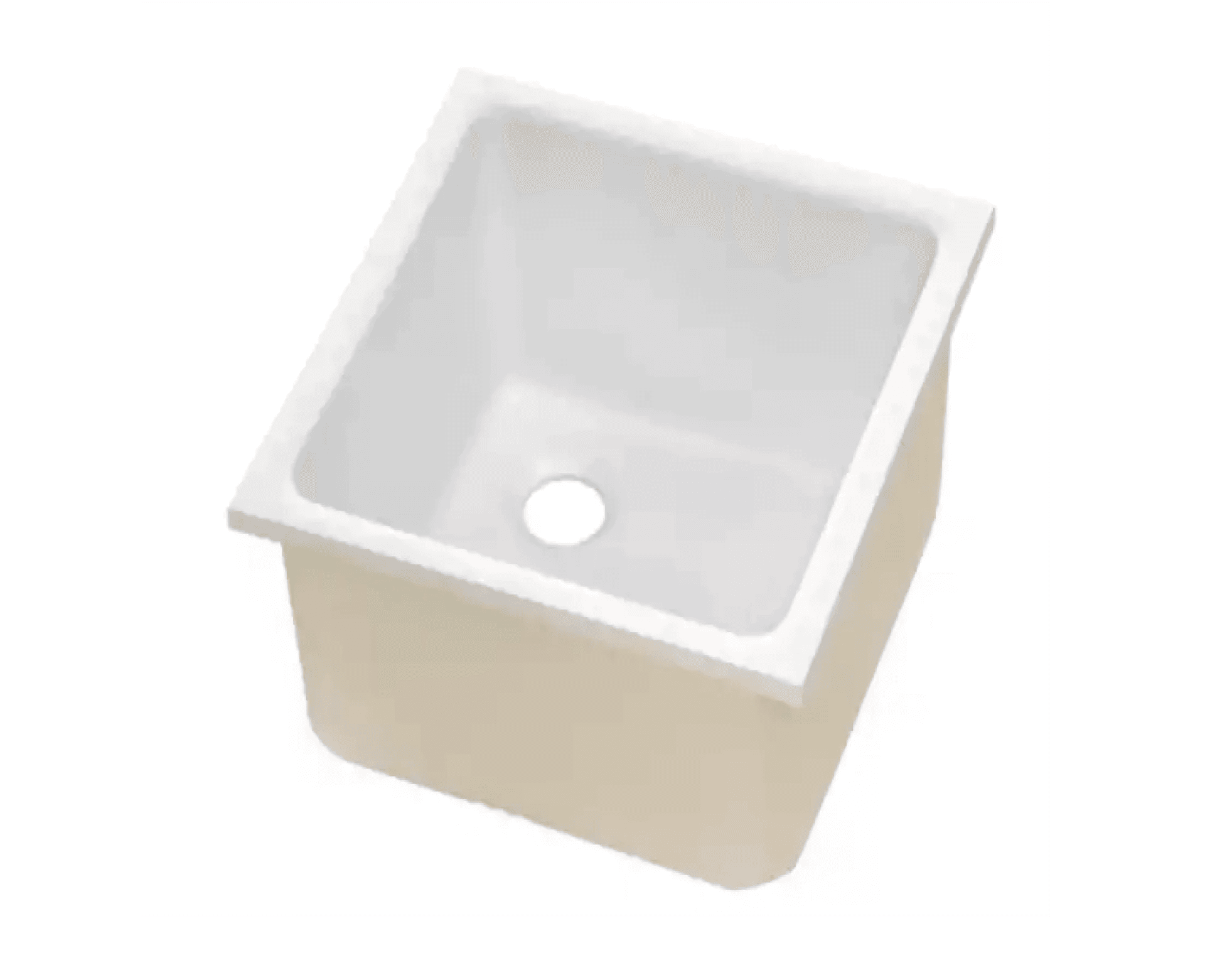
High-quality ceramic laboratory sinks are an indispensable piece of equipment in any modern laboratory – whether chemical, biological or industrial. Their main advantage is their exceptional resistance to chemicals, high temperatures and mechanical damage. This makes ceramic laboratory sinks the perfect solution for everyday use in demanding working conditions.
Laboratory ceramics are a material with an extremely durable structure that retains its properties even after many years of intensive use. Ceramic sinks are resistant to acids, alkalis, dyes and organic solvents, making them indispensable in environments where precision, safety and hygiene are important.
In addition, the ceramic surface is smooth and non-porous, making it easy to keep clean. It does not absorb liquids or odours, and its neutral white colour blends in perfectly with other laboratory equipment. It combines aesthetics, durability and functionality to meet the highest industry standards.
Depending on the user's needs, laboratory sinks are available in various sizes and configurations – from small countertop sinks to larger models installed in workbenches or specialised workstations. They can be made of stainless steel or other materials.
Ceramic sinks for laboratories
Modern ceramic sinks for laboratories combine elegant design with excellent functional properties. They are designed for intensive use in research, educational and industrial facilities, where resistance to chemical and thermal factors is important.
In chemical and pharmaceutical laboratories, ceramic sinks are used not only for standard washing of glassware and equipment, but also for draining aggressive substances that could damage sinks made of other materials. Thanks to its structure, ceramic does not corrode, does not react with substances and retains its appearance for many years.
Another important feature is its high temperature resistance. A ceramic laboratory sink can easily withstand contact with hot water, steam and sudden temperature changes, making it an extremely versatile solution.
Manufacturers offer various sink models – classic rectangular ones, deep bowls for washing large items, as well as corner versions or ones integrated with laboratory worktops. The choice of the right model depends on the specific nature of the work and the available workspace.
It is also worth paying attention to the ease of installation – sinks can be installed in laboratory furniture with laminate worktops as well as with epoxy resin or conglomerate worktops. Their universal design allows them to be adapted to different types of research stations. Epoxy resin sinks are also available.
Ceramic laboratory sink – price
The cost of purchasing a ceramic laboratory sink depends on many factors, such as size, ceramic thickness, type of installation and manufacturer. Standard countertop models are available at attractive prices, while more advanced sinks for specialised laboratories may have a higher price due to additional reinforcements or customised dimensions.
It is worth remembering that investing in a laboratory sink is a purchase for years to come. Ceramic is an extremely durable, damage-resistant and easy-to-maintain material, which means that the total cost of ownership over the long term is lower than for sinks made of other materials, such as polypropylene.
We offer a wide range of models – from compact single and double sinks to large bowls for installation in worktops. We can manufacture sinks to individual orders, taking into account the dimensions and installation method adapted to a specific room.
An additional advantage is that the sinks do not require frequent maintenance or specialised cleaning. Their smooth, glazed surface can be kept clean with standard cleaning products, which significantly reduces operating costs.