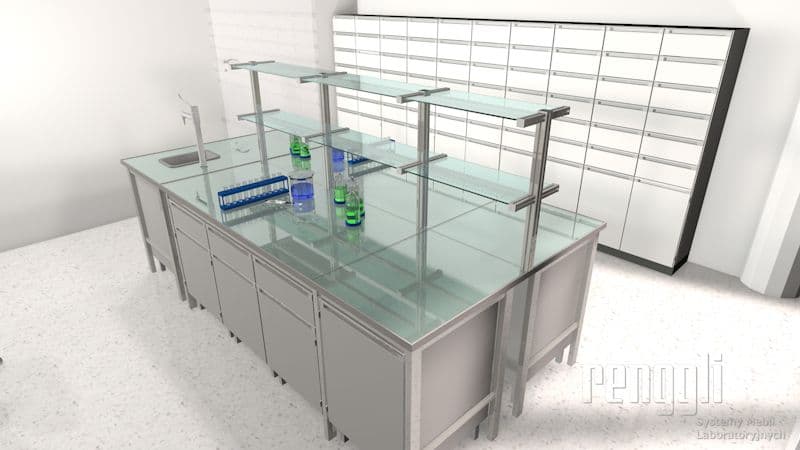
When planning laboratory equipment, one of the key elements is choosing the right table. Its durability, chemical and mechanical resistance determine the comfort of work, safety and longevity of the entire laboratory station. There are many types of countertops available on the market, and each of them has its own advantages and limitations. Below are the most popular options to consider when designing a laboratory.
The most common types of laboratory worktops
Choosing the right material for laboratory countertopsis not easy – each work surface has different chemical, thermal and mechanical properties. It is important to match the type of worktop to the specifics of work in the laboratory, the type of analysis carried out, as well as safety and ergonomic requirements. Below is an overview of the most popular materials used in laboratories that work well in a variety of working conditions, from school laboratories to professional industrial and analytical laboratories.
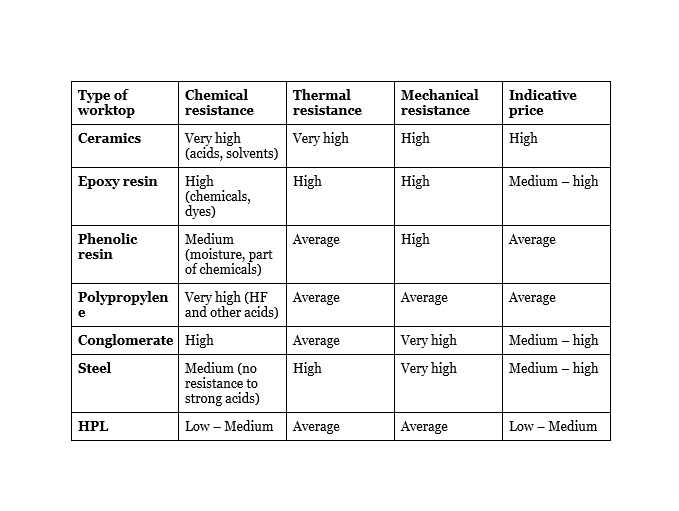
- Ceramic – resistant to high temperatures, acids and solvents; ideal for chemical laboratories.
- Epoxy resin – durable, resistant to chemicals, easy to clean.
- Phenolic resin – mechanically resistant, resistant to moisture and many chemicals.
- Polypropylene – lightweight and resistant to chemical corrosion, used in biological laboratories.
- Conglomerate – aesthetically pleasing, durable, resistant to impact and most chemicals.
- Steel – extremely durable and easy to clean, used in industrial laboratories.
- HPL (High Pressure Laminate) – a cost-effective option, resistant to scratches and most chemicals.
Choosing the right worktop for your lab should take into account the type of testing being performed, the frequency of use, and occupational health and safety requirements. To make it easier to quickly choose the right laboratory table, below is a summary of the properties of the most common materials in the form of a comparison table.
When choosing laboratory worktops, it is worth paying attention to common mistakes that can lead to rapid wear of the material or safety risks:
- Do not use glass countertops in areas where hydrofluoric acid (HF) is used – glass deteriorates quickly when exposed to hydrofluoric acid.
- Avoid HPL laminate when working with open flames or high temperatures – the material is not heat resistant and may deform or burn.
- Do not combine harsh chemicals with surfaces that do not have adequate chemical resistance, such as chipboard or standard laminates.
- Pay attention to raised edging in worktops that are prone to spills – not having them increases the risk of chemicals splashing onto the user and the floor.
- In medical and microbiological laboratories, do not neglect the ease of cleaning and antibacterial properties – smooth surfaces, stainless steel or glass, make disinfection much easier.
By following these tips, you can maximize the life of your worktops and ensure safety in chemical, biological and educational laboratories.
What criteria should be considered when choosing a worktop for the laboratory?
Choosing the right worktops for the laboratory is a decision that affects both the safety of employees and work efficiency. When designing a laboratory station, it is worth being guided by three main pillars that determine the functionality and durability of work surfaces: chemical resistance, thermal resistance and mechanical resistance.
1. Chemical resistance
This is a key feature in chemical and analytical laboratories. Worktops must withstand contact with acids, alkalis and various solvents. Not all materials meet these requirements, so when choosing, it is worth taking into account the specifics of the research conducted and the type of chemicals we will work with. For example, epoxy resin or conglomerate countertops havehigh chemical resistance, while glass countertops require caution with aggressive acids such as hydrofluoride.
2. Thermal resistance
Laboratories often use heat sources – burners, heaters or furnaces. In such conditions, it is worth choosing materials with high thermal resistance, which do not deform under the influence of temperature or release harmful substances. Also be sure to have a proper safety edge and raised edges that minimize the risk of hot liquids splashing onto the user or the floor.
3. Mechanical resistance
Laboratory surfaces are subject to impacts, scratches and abrasion – especially in school laboratories where the equipment is used extensively by many users. Countertops with high mechanical resistance ensure durability for years, minimizing maintenance and replacement costs.
Additional factors
* Specifics of work: Analytical laboratories require more chemically and thermally resistant countertops, while in school laboratories, mechanical resistance and ease of cleanliness are crucial.
- Safety standards: When choosing worktops, it is worth paying attention to standards, e.g. PN-EN 14727, which specify the requirements for laboratory furniture and work surfaces.
- Ergonomics: Countertops should be designed with user comfort in mind, taking into account the working height and safety edging to prevent accidental chemical spills.
Choosing the right worktop for the laboratory is a balance between chemical, thermal and mechanical resistance, the specificity of use and compliance with standards and principles of ergonomics. This decision directly affects the comfort of work and the safety of all users.
Why is monolithic ceramics recommended for chemical laboratories?
Monolithic ceramics, also called technical ceramics or solid ceramics, are a material with exceptional properties that is widely used in chemical laboratories requiring the highest resistance to aggressive substances and high temperatures. Unlike traditional glazed surfaces, solid ceramics are uniform throughout the structure, which ensures full durability and protection even with intensive use.
The most important features of monolithic ceramics:
- Acid resistance and alkali resistance – ceramic countertops can withstand contact with harsh chemicals, including acids and alkalis, making them ideal for chemical and analytical laboratories.
- Non-flammability and resistance to high temperatures – monolithic ceramics retain their properties even when working with open flames, e.g. with burners or other heat sources.
- Safety of use – the possibility of making a worktop with a raised edging to protect against spillage of chemical substances increases the safety of work with fume hoods.
Laboratory applications
Monolithic ceramic worktops are particularly recommended when working in fume hoods, open flame stations and wherever full resistance to chemicals and extreme working conditions is required. Thanks to its structure, the solid material does not degrade even with prolonged contact with acids or alkalis, which distinguishes it from only glazed surfaces.
Monolithic ceramic countertops are an investment in durability, safety and reliability in chemical laboratories, where resistance to acids, alkalis, non-flammability and high thermal resistance are crucial.
What is the difference between epoxy resin countertops and SPC phenolic countertops?
Epoxy resin laboratory worktops form a monolith cast in a mold, which provides high chemical resistance, to dyes, solvents and high temperature. They are reportable and ideal for chemical laboratories, especially for heavy chemicals. In contrast, SPC phenolic worktops are created as a high-pressure, electron beam-hardened laminate (EBC technology), which gives a surface that is resistant to moisture and everyday use.
This type of worktops, used m.in others in brands such as Trespa, works well in microbiological and general laboratories. So the choice depends on your needs: epoxy for aggressive chemicals and high temperature, SPC phenol for general operation and moisture resistance.
In what conditions will polypropylene and stainless steel worktops work?
Polypropylene (PP) is a unique monolithic plastic that is resistant to even the most aggressive chemicals, including hydrofluoric acid (HF). This makes it perfect for wet areas, laboratory sinks and wherever there is contact with strong acids. The material is lightweight, resistant to chemical corrosion and easy to process, making it indispensable in chemical laboratories requiring protection from aggressive substances.
On the other hand, stainless steel in grades AISI 304 and AISI 316 (chromium-nickel austenitic steel, acid-resistant) is a standard in medical and microbiological laboratories, where sterility and easy disinfection of surfaces are a priority . Stainless steel allows for quick cleaning and hygiene, but it is not suitable for working with strong inorganic acids, which can lead to corrosion.
In practice, the choice between polypropylene and stainless steel depends on the type of work being carried out: PP is best suited where chemical resistance is required in wet zones, while stainless steel is indispensable in laboratories that require sterility and easy disinfection.
What are the uses of conglomerate, granite and tempered glass countertops?
Granite is a heavy material, making it ideal for weighing tables and anti-vibration countertops, where stability and measurement precision are crucial. Its natural hardness and scratch resistance make it valued in specialist laboratories that require stable surfaces for accurate analyses.
Quartz-granite conglomerate is a hard, aesthetic and durable material that works great in intensively used quartz countertops. It is characterized by high resistance to abrasion and scratches, and at the same time allows for an elegant finish on the work surface, which makes conglomerate worktops of choicefor chemical and analytical laboratories.
Tempered glass, also known as safety glass, is an easy-to-clean and chemically resistant surface, making it easier to maintain hygiene in laboratories. At the same time, it is fragile, so it works best as glass countertops in places with a lower risk of mechanical damage or in combination with other protective materials.
In practice, the choice between granite, conglomerate and tempered glass depends on the needs of the laboratory: granite for precise measurements, conglomerate for intensive work with chemicals, and tempered glass for easy maintenance of cleanliness and aesthetics of the surface.
Are HPL laminate countertops suitable for school labs?
HPL laminate is an economical solution made in postforming technology, embedded on the basis of double-sided laminated chipboard. Laminate worktops have good mechanical resistance, which makes them ideal for intensive use in school laboratories, physical laboratoriesand dry workstations such as laboratory desks or laboratory counters.
Due to its limited chemical resistance, HPL laminate is not recommended for working with aggressive chemicals, but it works perfectly in educational laboratories, where water, simple physical reactions or harmless materials are most often used. It is worth noting that special versions of HPL chemical-resistant laminate are available for chemical-resistant needs, but standard laminate worktopsremain the most frequently chosen and most economical solution for schools.
Which materials guarantee the highest chemical and thermal resistance?
If chemical and thermal resistance is a priority in the laboratory, several materials stand out in this regard. Ceramics remain the best choice overall – they are completely resistant to most chemicals, high temperatures and long-term stresses, which makes them suitable for demanding analytical laboratories and when working with aggressive substances. Epoxy resin worktops, on the other hand, are best suited for environments where dyes and aggressive solvents are present, and thanks to their monolithic structure, they remain durable and easy to regenerate.
For working with extremely aggressive hydrofluoric acid (HF), polypropylene (PP) is irreplaceable, which, as a chemical worktop,provides complete chemical resistance in wet areas and at laboratory sinks. Ceramic sinters are a modern alternative to traditional materials, offering high resistance to UV radiation, fire and low water absorption, thanks to which they are suitable for operation in the most demanding conditions.
In practice, the choice of material should take into account the nature of the work and the specifics of the laboratory. Ceramics and ceramic sinters are a premium choice for the most demanding surfaces, epoxy protects against dyes and high temperatures, and polypropylene guarantees full resistance to aggressive acids.
How to properly clean and maintain laboratory surfaces?
Maintaining proper hygiene of work surfaces in the laboratory is crucial for safety and quality of work. Non-porous surfaces such as ceramics, stainless steel or monolithic plastics are easy to clean and have a reduced risk of dirt build-up, making it easier to maintain high hygiene standards. Laminates and chipboards, on the other hand , require regular cleaning with appropriate detergents to avoid the substance from penetrating the porous structure.
Some antibacterial countertops have additional protective properties, such as built-in silver ions, and smooth surfaces such as glass or stainless steel themselves reduce bacterial growth. In medical and microbiological laboratories, ease of cleaning is particularly important – it facilitates the disinfection of both under-counter laboratory cabinets and installation extensions, as well as the worktops themselves.
Keeping surfaces clean regularly not only extends their durability, but also minimizes the risk of cross-contamination, which is crucial in any laboratory.
March 16, 2026