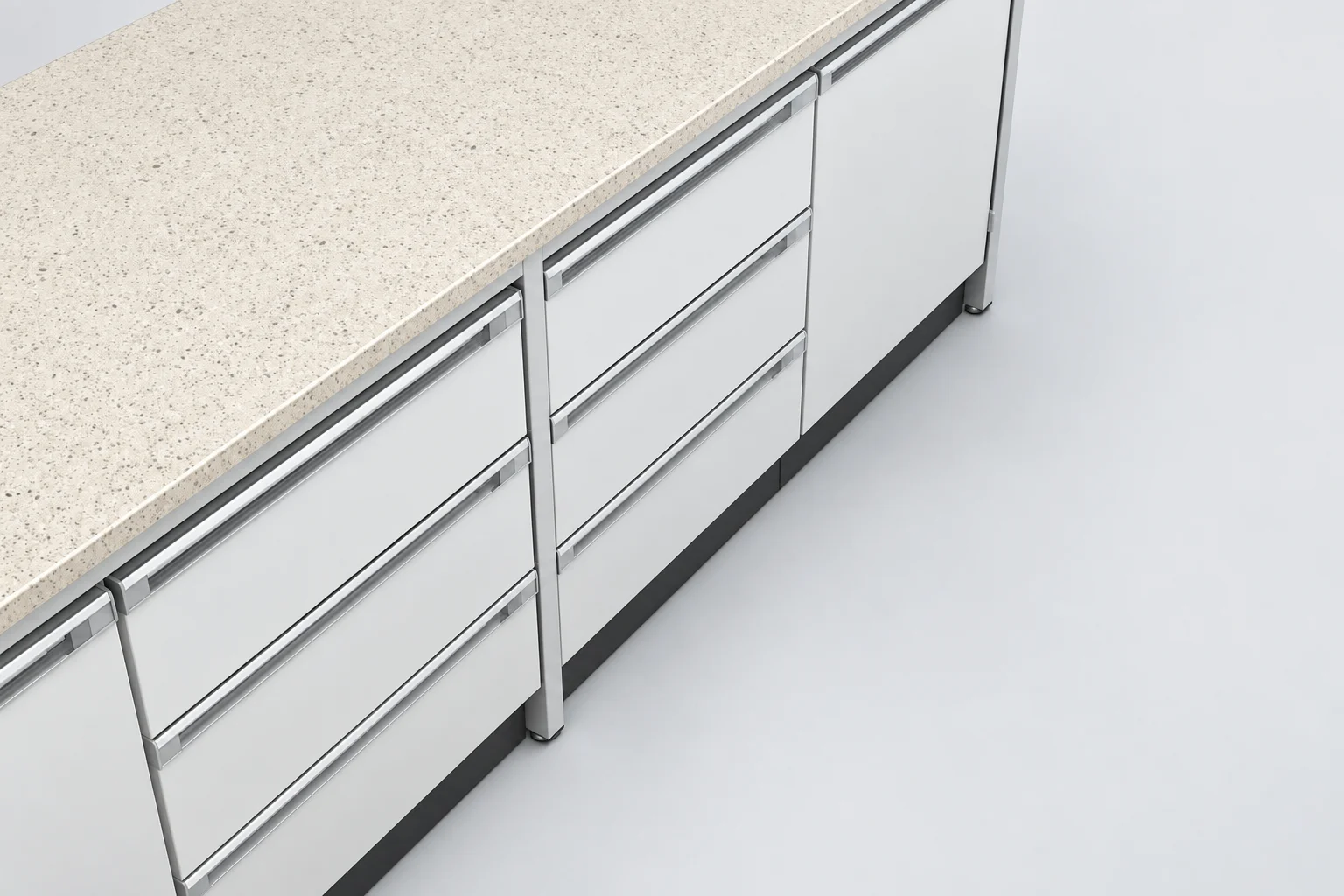
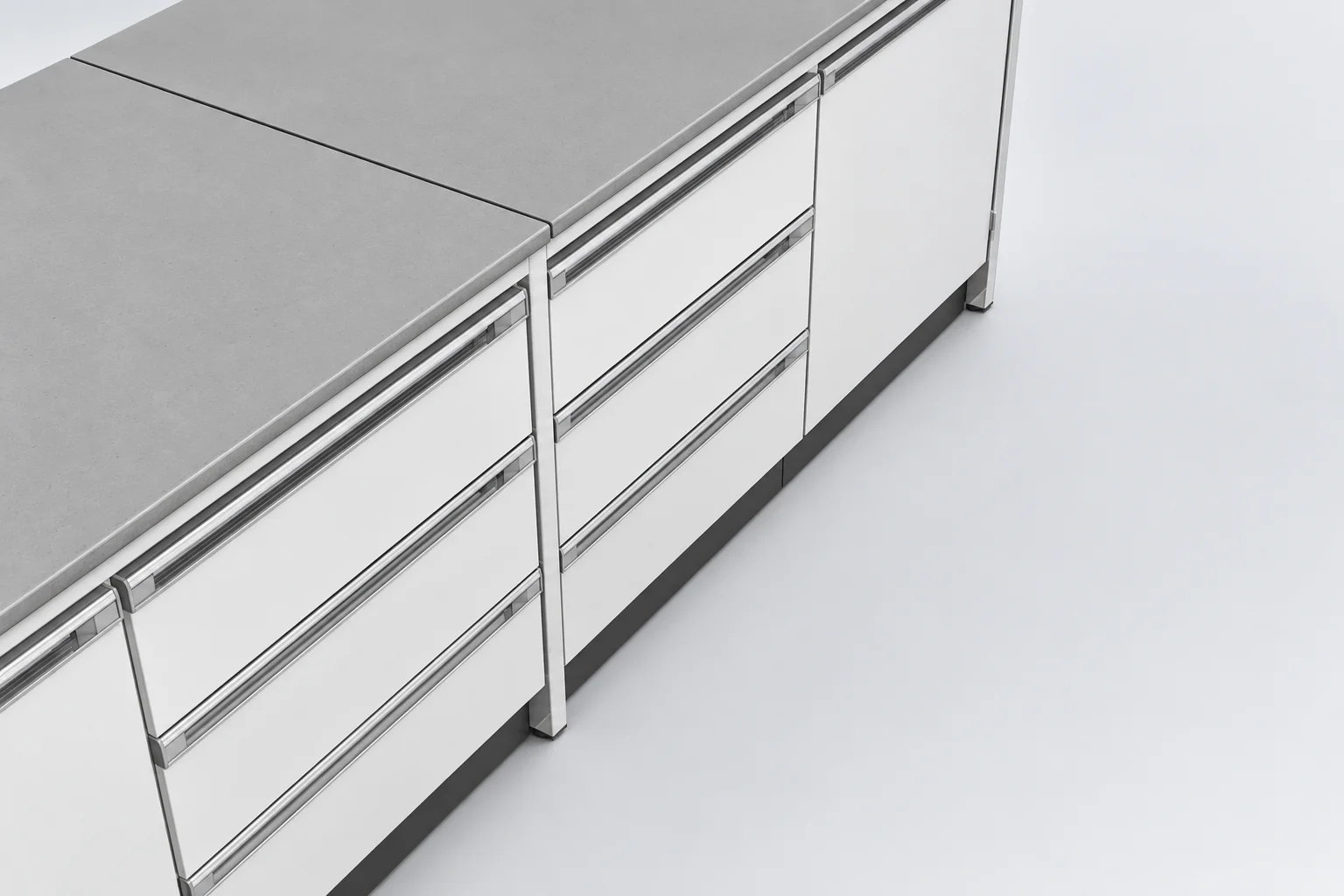
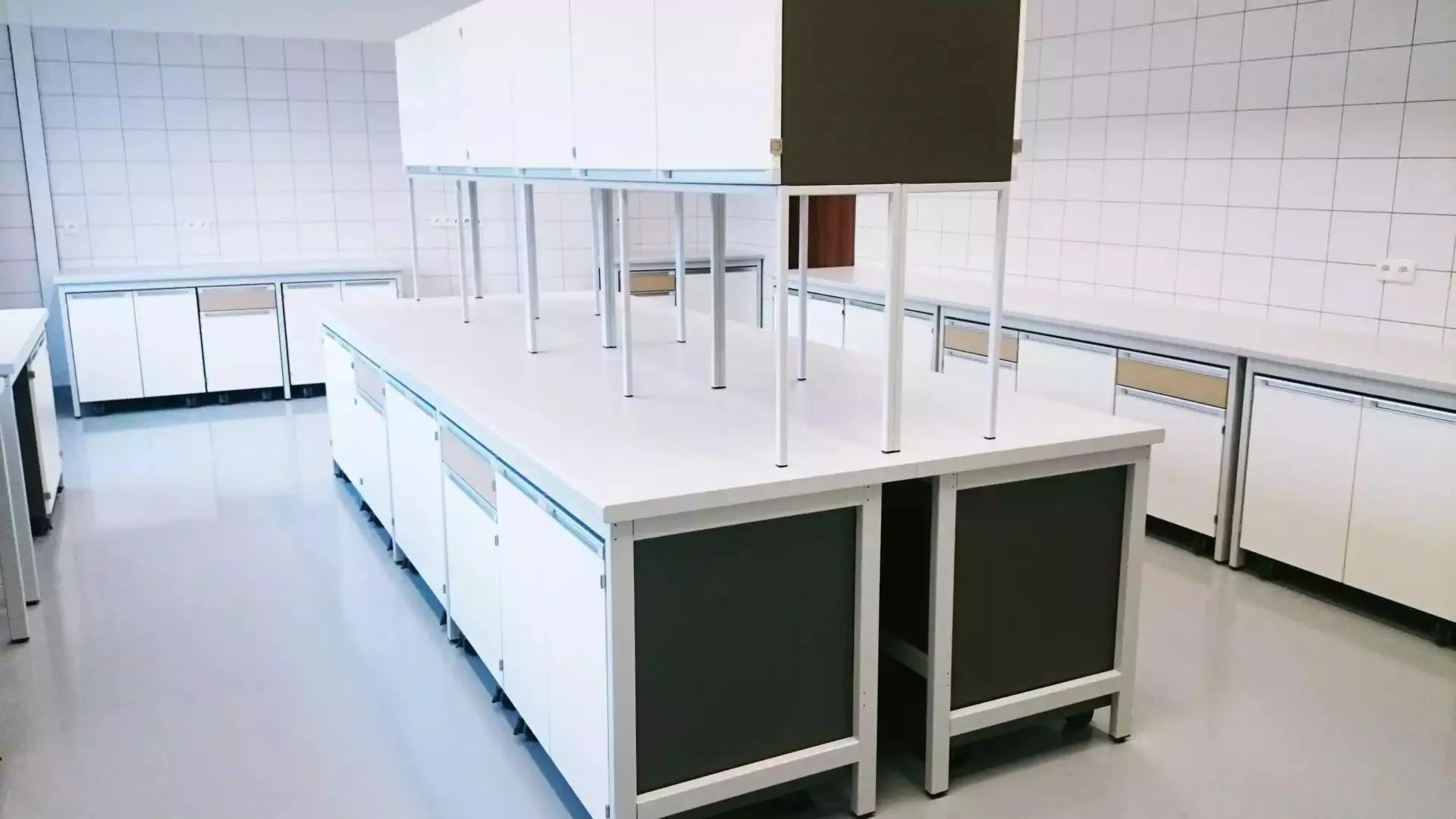
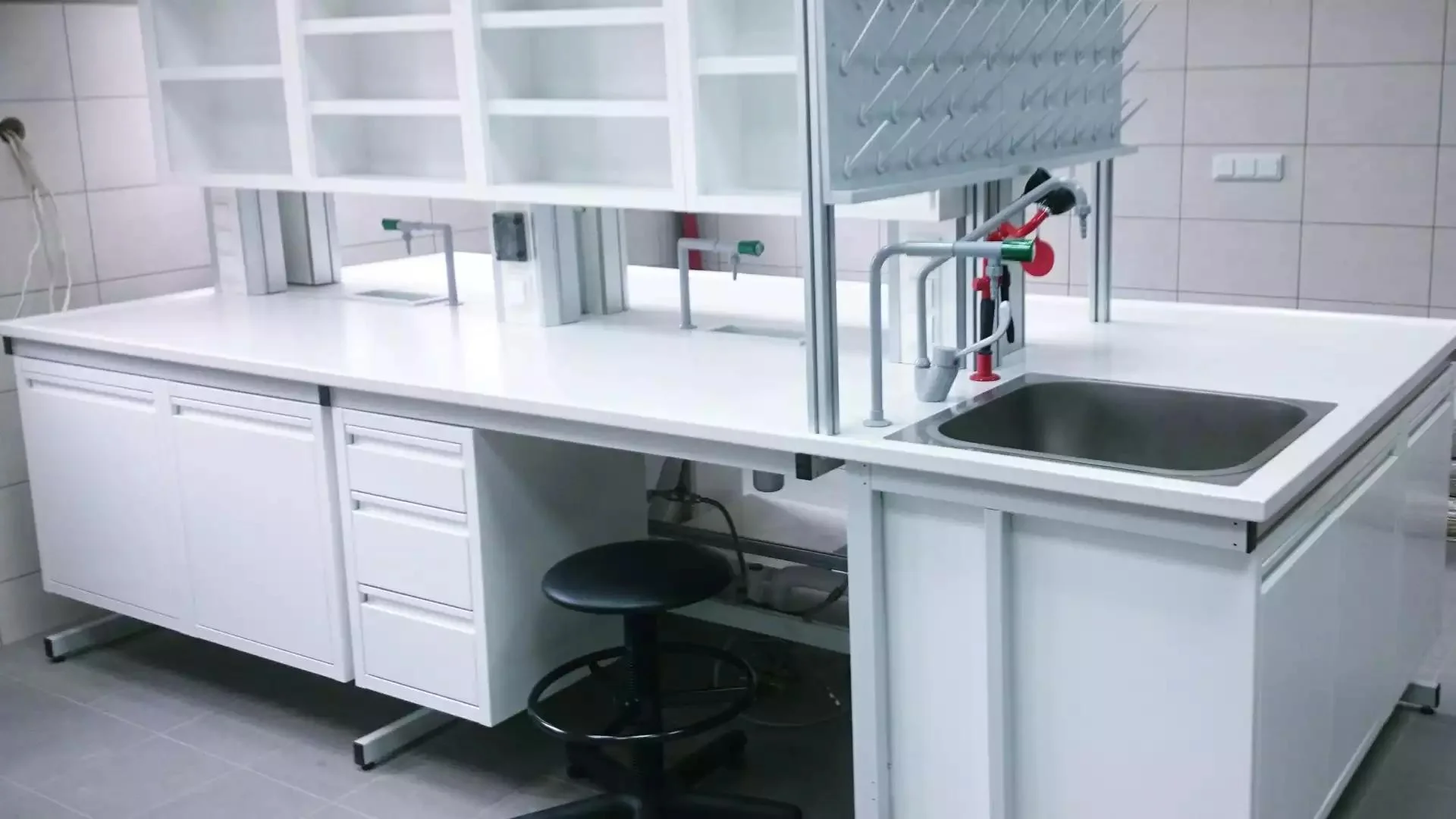
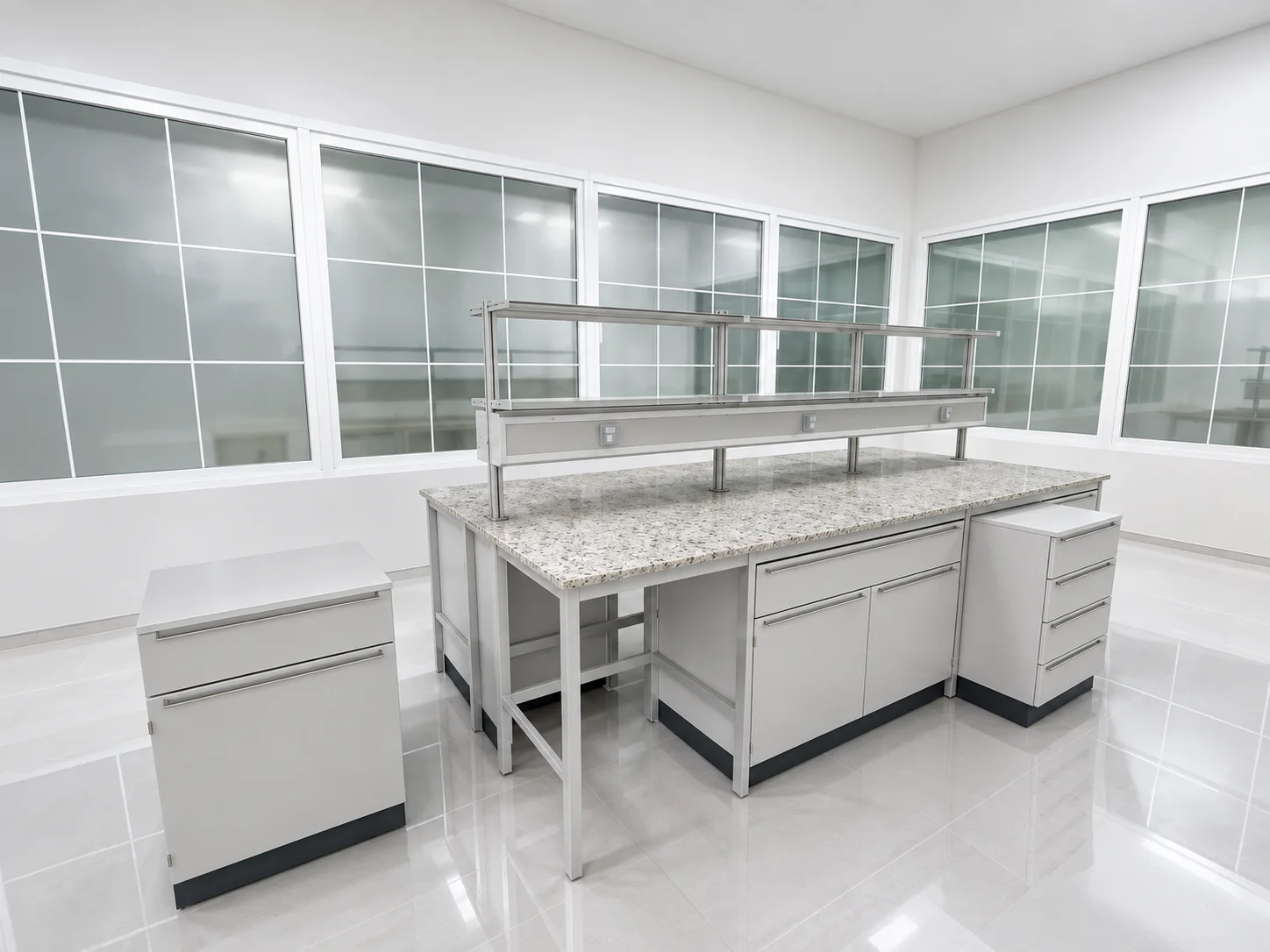
Phenolic resin countertops are made from phenolic resins that are hardened on both sides using electron beams. The advanced EBC (Electron Beam Curing) technology is applied here. Thanks to this technology, a material with exceptional properties is obtained. High chemical resistance and high resistance to mechanical damage are the key features of phenolic resin countertops, making them suitable for use in almost any laboratory.
Phenolic resin countertops
Phenolic resin worktops are one of the most popular solutions in modern laboratories, where durability, chemical resistance, and safety of use are of key importance. This material is produced by compressing layers of paper impregnated with phenolic resin under high pressure and at high temperature, which gives it exceptional mechanical properties and a long service life. Each phenolic resin worktop is highly resistant to aggressive chemicals, moisture, and elevated temperatures.
Compared to solutions such as laminate or conglomerate worktops, phenolic resin worktops offer a much higher level of damage resistance and dimensional stability. Thanks to their smooth, non-porous surface, they are easy to keep clean, which is important in environments requiring high hygiene standards. This makes them popular in both research and industrial laboratories.
Phenolic resin worktops for laboratories
Phenolic resin worktops for laboratories are designed for intensive use and work with chemicals, acids, alkalis, and solvents. Their properties make them an excellent alternative to materials such as epoxy resin worktops, especially where impact resistance and ease of installation are important.
Each phenolic resin worktop can be precisely tailored to the individual needs of the user - both in terms of dimensions and cutouts for sinks, fittings, or laboratory equipment. These countertops work perfectly with other equipment to create functional and ergonomic workstations. Compared to laminate countertops, phenolic solutions offer higher resistance to prolonged contact with moisture and chemicals, which translates into durability and safety of use.
Phenolic resin laboratory worktops
Phenolic resin laboratory worktops are a solution designed for laboratories where reliability and compliance with technical and health and safety standards are a priority. Their versatility makes them suitable for use in chemical, biological, analytical, and educational laboratories. Unlike conglomerate worktops, which can be sensitive to strong reagents, phenolic resin worktops retain their properties even in demanding working conditions.
An additional advantage is their aesthetic appearance and the possibility of choosing different edge finishes, which allows the phenolic resin worktop to be matched to a specific interior design. Phenolic resin laboratory worktops combine high functionality, durability, and a favorable price-quality ratio, making them a proven solution for professional laboratories looking for reliable and long-term solutions.