How to Choose a Laboratory Fume Hood? 5 Parameters Worth Checking
A properly selected laboratory fume hood is the foundation of safe work with chemical substances. Find out which technical parameters to check before settling on a specific model.
 Renggli TeamEditorial team
Published: Updated Reading time: 5 min read
Contents
An Investment in Laboratory Safety#
The fume hood is the most important piece of collective protection equipment in any chemical, analytical, or research laboratory. It is not just another piece of equipment - it is a device that directly determines the health and safety of everyone who works daily with harmful and hazardous substances.
Choosing the right model should never be random or driven by purchase price alone. It requires an earlier analysis of the specific research being carried out, the space available in the room, and the technical conditions of the installation the fume hood will be connected to.
Below we present five key parameters worth considering when choosing a laboratory fume hood. Our reference point is the modern design standards set out by, among others, the LABAIRTEC fume hood line.
Type of Work and Intended Use - The Foundation of Choosing an Extractor#
The starting point when choosing a fume hood is always the type of research being conducted. The unit must be matched to the chemical substances laboratory staff work with on a daily basis - their aggressiveness, volatility, and storage requirements.
A fume hood intended for general chemistry work looks different from a model designed for constant work with acids, which requires a chemical-resistant lining inside the working chamber. Highly aggressive substances, such as hydrofluoric acid, and specialist applications (for example, work with isotopes or high-temperature processes) place still different demands on the equipment.
The LABAIRTEC fume hood line offers full modularity and a wide range of configuration options, including acid-resistant and radiochemical models. This flexibility makes it possible to match the equipment to the analytical or research profile of a specific laboratory, rather than forcing the team to adapt its procedures to the limitations of the device.
Selecting a fume hood based on intended use should be the first stage of the conversation with a supplier, before dimensions or media configuration are even discussed. This decision determines every other technical parameter of the unit.
Working Dimensions and Ergonomics - Space Tailored to Your Needs#
Another important parameter is the external size of the fume hood and the size of the internal working space - its width, depth, and height. A working chamber that is too small restricts freedom of movement, while one that is too large generates unnecessary ventilation running costs.
All the necessary equipment (reactors, scales, stands, or other measuring instruments) must fit inside the chamber without disrupting the free flow of air within the fume hood. Overcrowding the working chamber with equipment can reduce the effectiveness of fume extraction.
Workstation ergonomics matter just as much: the height of the worktop should match whether staff work standing or seated, and access to media outlets must remain unobstructed and intuitive. The operator's visual comfort during long working sessions at the unit is important too.
The solutions used in LABAIRTEC fume hoods allow the unit to be seamlessly integrated into the existing architecture of the laboratory room. Glazed side panels and carefully designed fronts in these models maximise visibility inside the chamber and improve staff working comfort.
Advanced Ventilation - Aerodynamics and Airflow#
The ventilation system is the heart of every fume hood. The effectiveness of fume extraction and the stability of airflow inside the working chamber have a direct impact on the safety of the people working at the unit.
How the fume hood is connected to the building's central ventilation system matters a great deal. An incorrectly designed system - for example, mismatched duct diameter, excessive system resistance, or a poorly selected fan - can reduce extraction performance regardless of how good the fume hood itself is.
Modern fume hoods, including models from the LABAIRTEC line, use Variable Air Volume (VAV) systems that automatically adjust ventilation output to how far the front sash is currently open. This solution significantly reduces energy consumption without compromising safety.
Equally important are the aerodynamic edge profiles of the working chamber, which prevent air turbulence from forming. Well-designed fume hood aerodynamics reduce the risk of hazardous fumes being pulled back toward the operator's breathing zone, even during dynamic movements while working.
Reliable Materials and Full Media Equipment#
The material used for the worktop should be selected individually based on working conditions. Solid ceramic performs well with most chemical reagents and high temperatures, epoxy resin is a versatile and mechanically resistant option, while stainless steel often proves the optimal choice when working with organic solvents.
Regardless of the material chosen, the worktop and the chamber's internal lining must guarantee lasting resistance to both chemical substances and variable thermal loads.
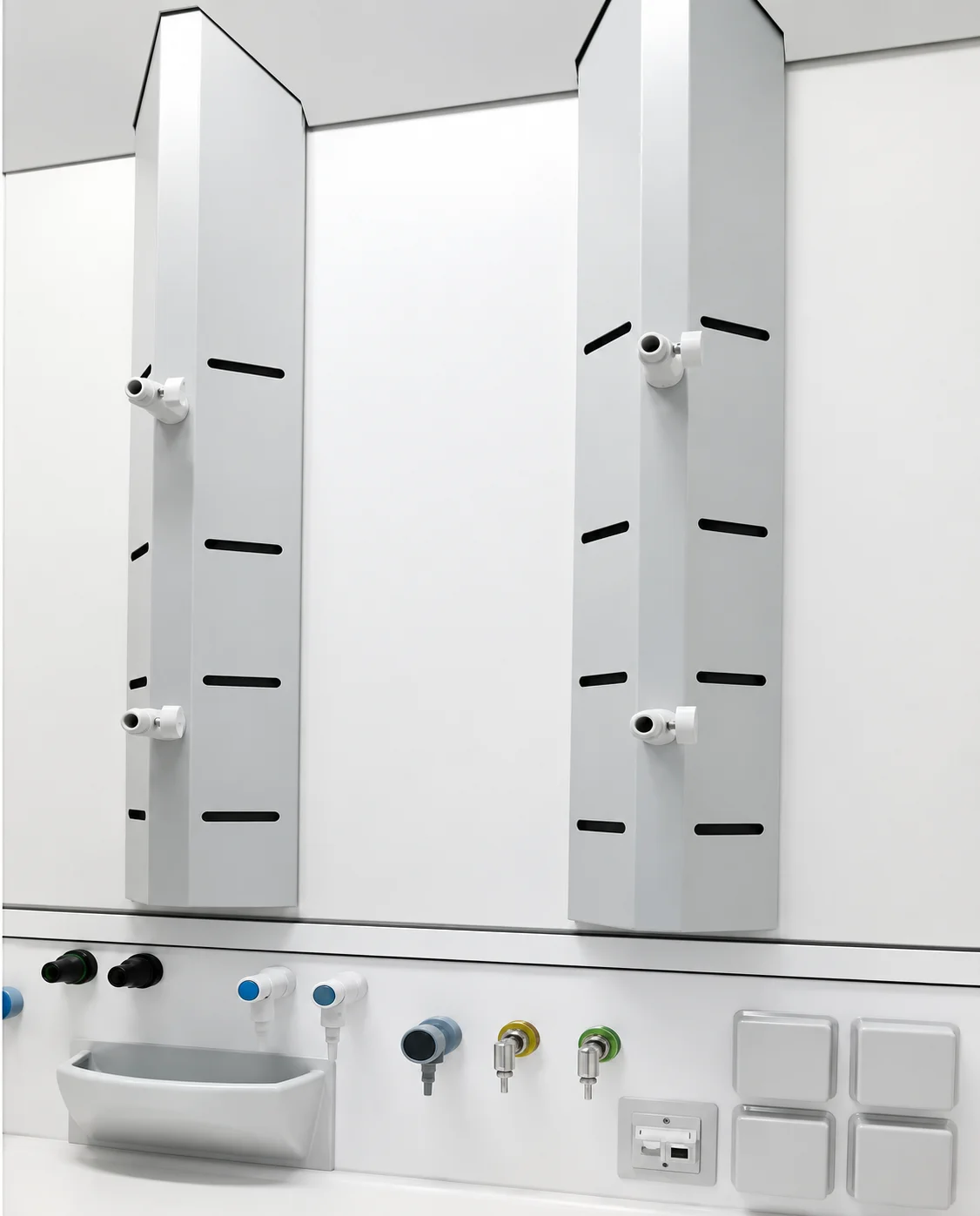
Full media equipment is equally important. The availability of water, combustible and technical gas, vacuum, and compressed air outlets should match the actual needs of the processes being carried out. Properly protected electrical sockets, suited to working in a chemical fume atmosphere, should not be overlooked either.
LABAIRTEC systems offer a high degree of configuration flexibility. Media valves can be routed to external control panels or placed directly inside the working chamber, depending on the working methodology adopted. These solutions use high-quality technical ceramics, the result of Renggli's Swiss engineering.
Certified Safety, Standards, and Authorised Service#
The physical safety of a fume hood depends largely on the construction of its front sash. Safety glass, lock systems that prevent the sash from dropping suddenly, and height-limiting stops are all features worth verifying at the selection stage.
Integrated airflow control systems are also significant. Optical and acoustic alarms that signal a drop in ventilation performance allow staff to react immediately, before the situation puts anyone's health at risk.
The key benchmark for assessing fume hood safety should be compliance with the EN 14175 standard, which sets out the construction, performance, and testing requirements for laboratory fume hoods.
Trust the Experts in Laboratory Design#
Intended use, dimensions, ventilation, materials and media equipment, and certified safety - these are the five parameters that determine the choice of a laboratory fume hood. This decision shapes both workplace safety and laboratory running costs for years to come.