Offer
Weighing tables
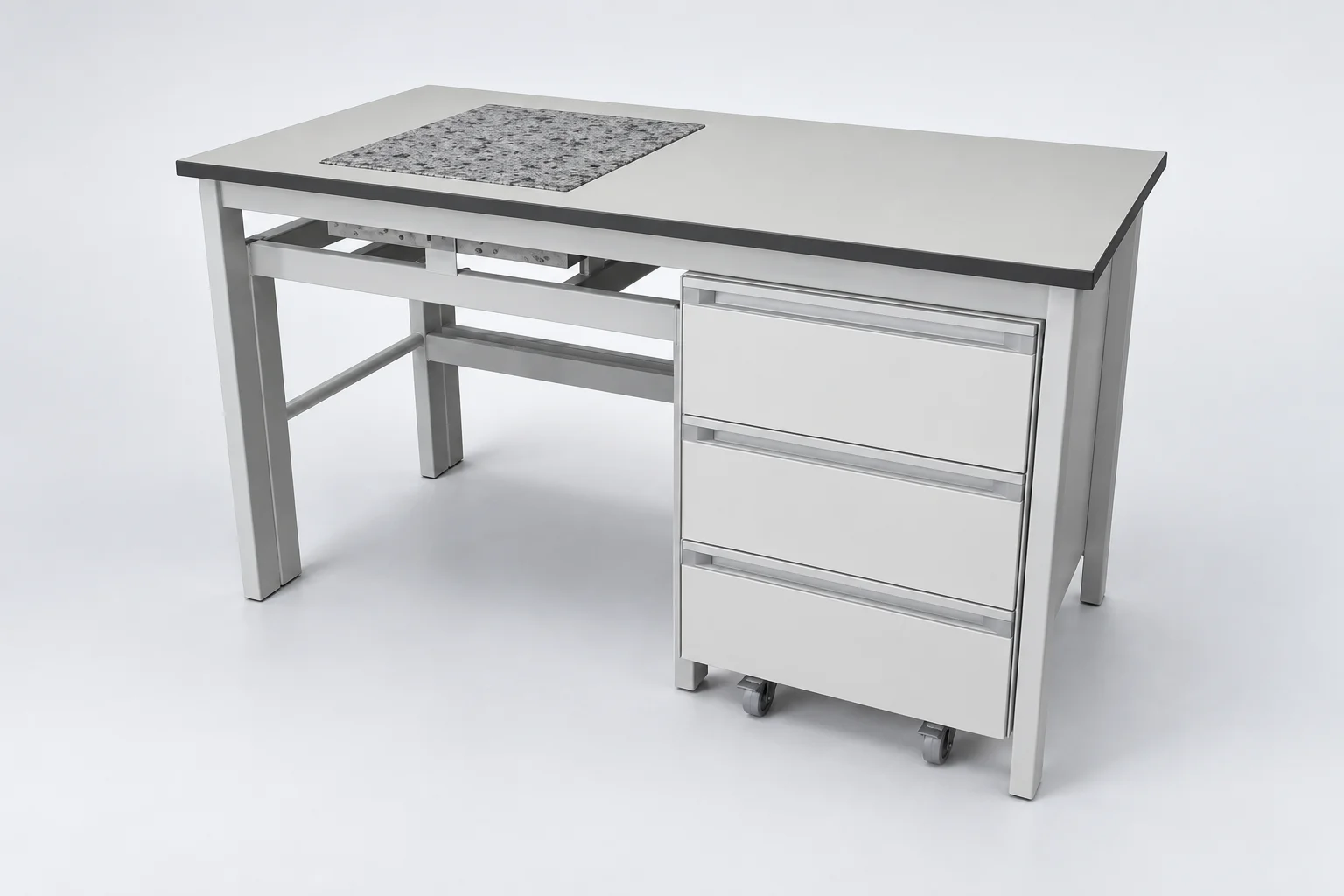
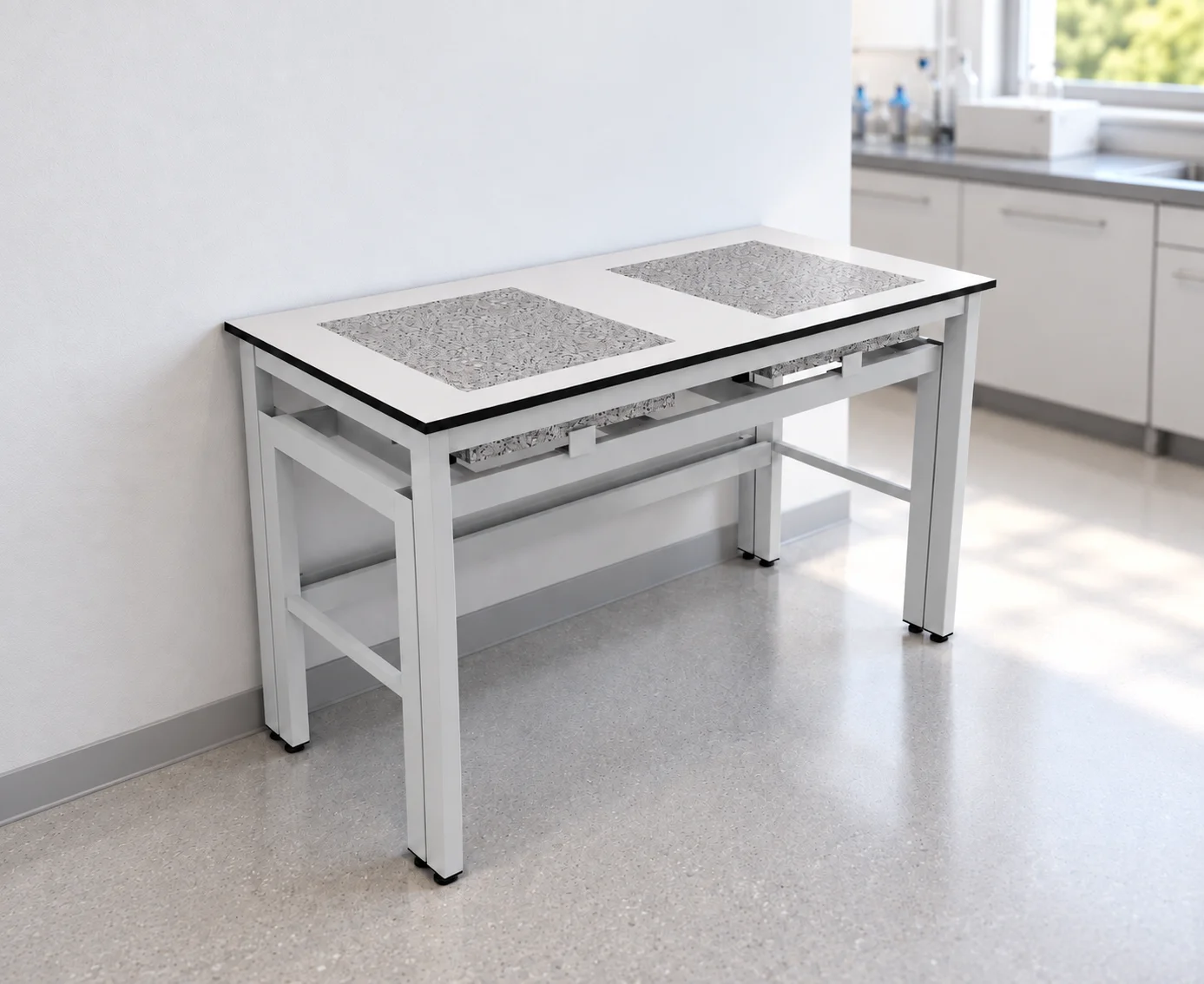
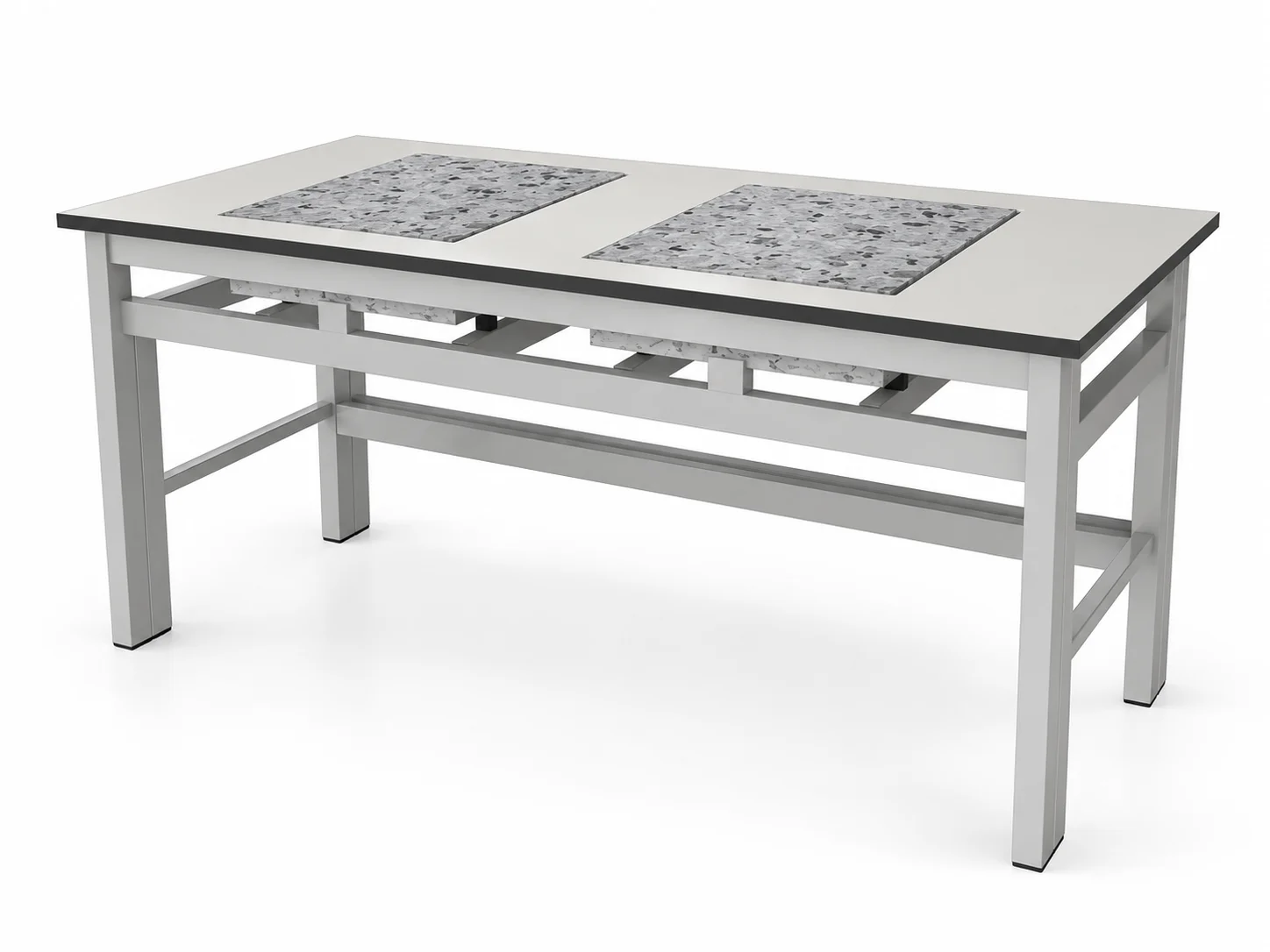
Weighing tables are anti-vibration workstations for analytical balances and microbalances.
Models
Types of Balance Tables
Our offer includes both single and dual workstation tables. We also fulfill orders for balance tables according to individual customer requirements.
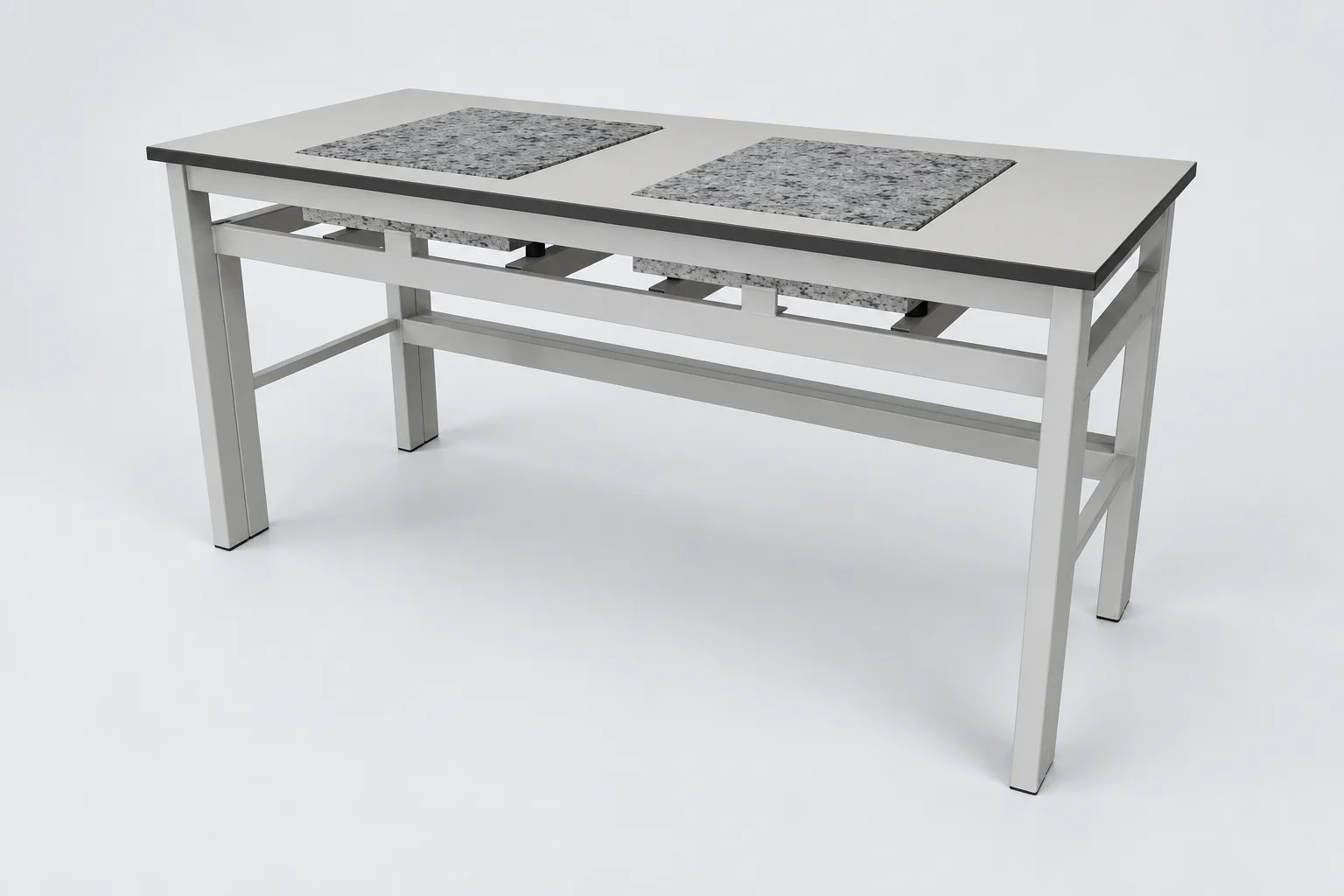
Double-station weighing table
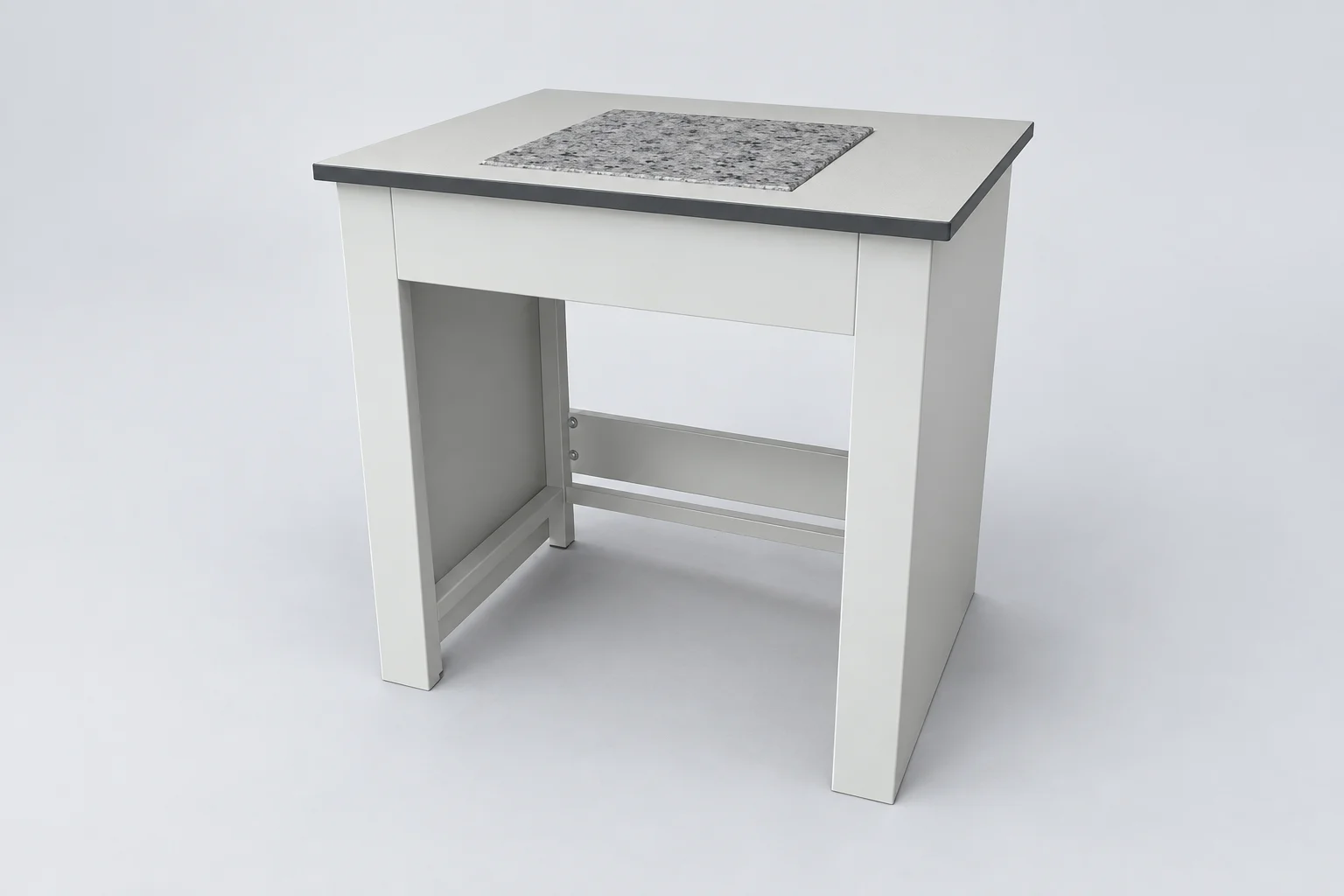
Single-station weighing table with an enclosed frame
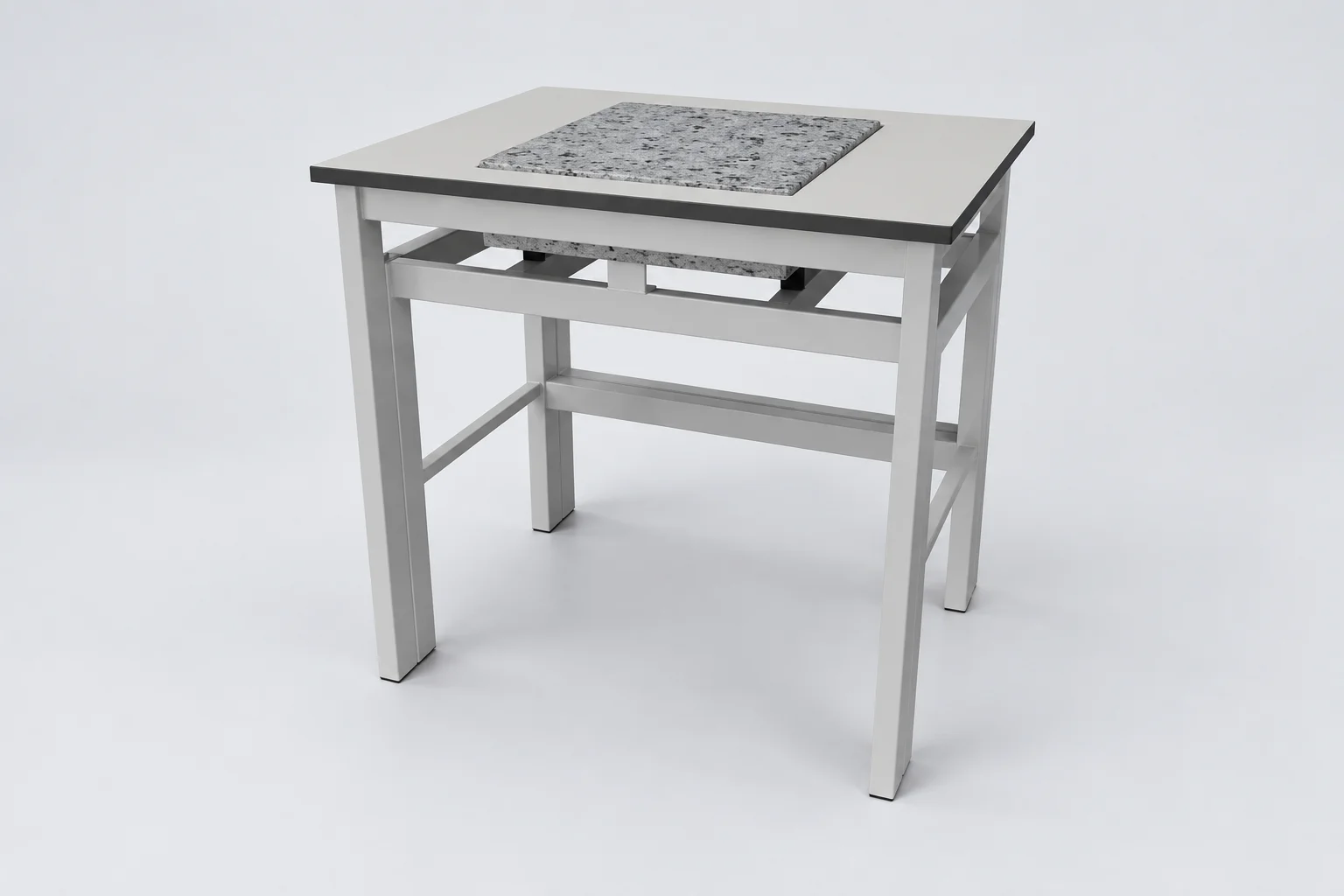
Single-station weighing table without an enclosed frame
Overview
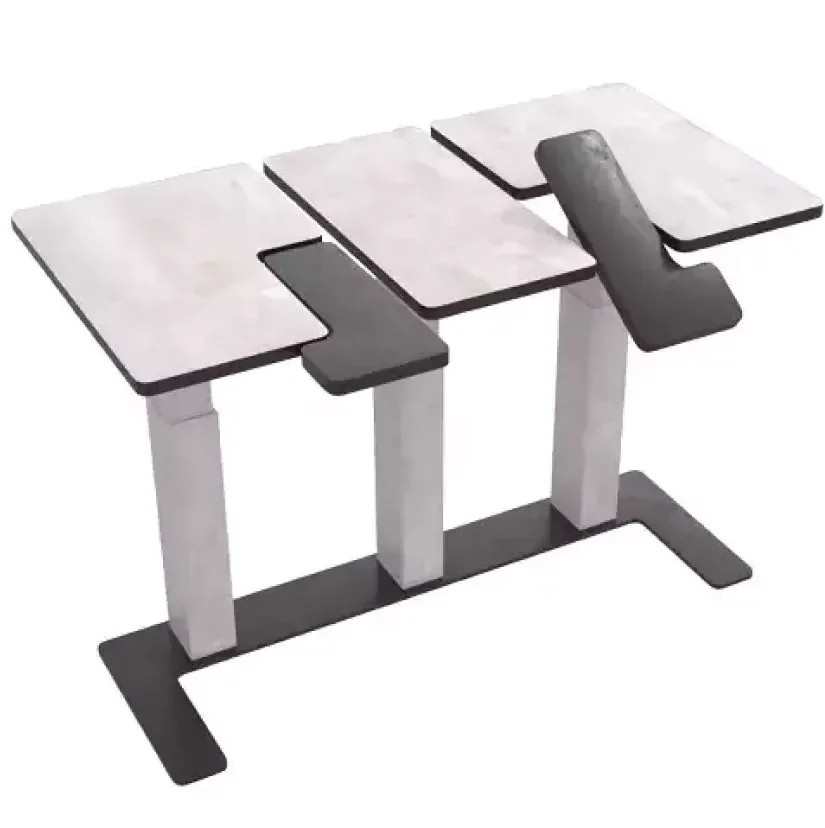
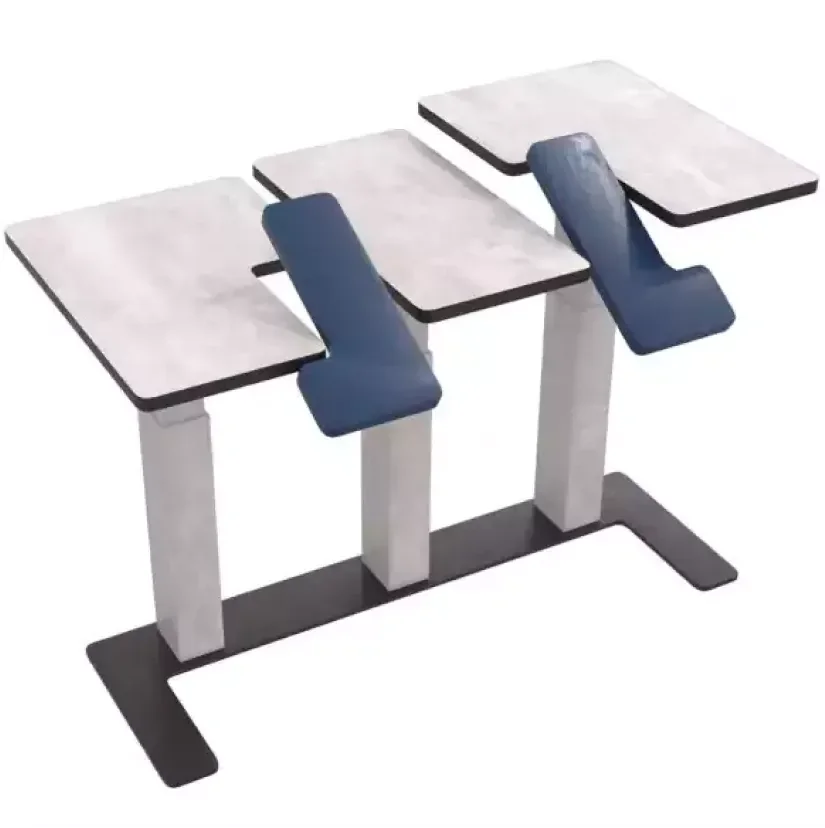
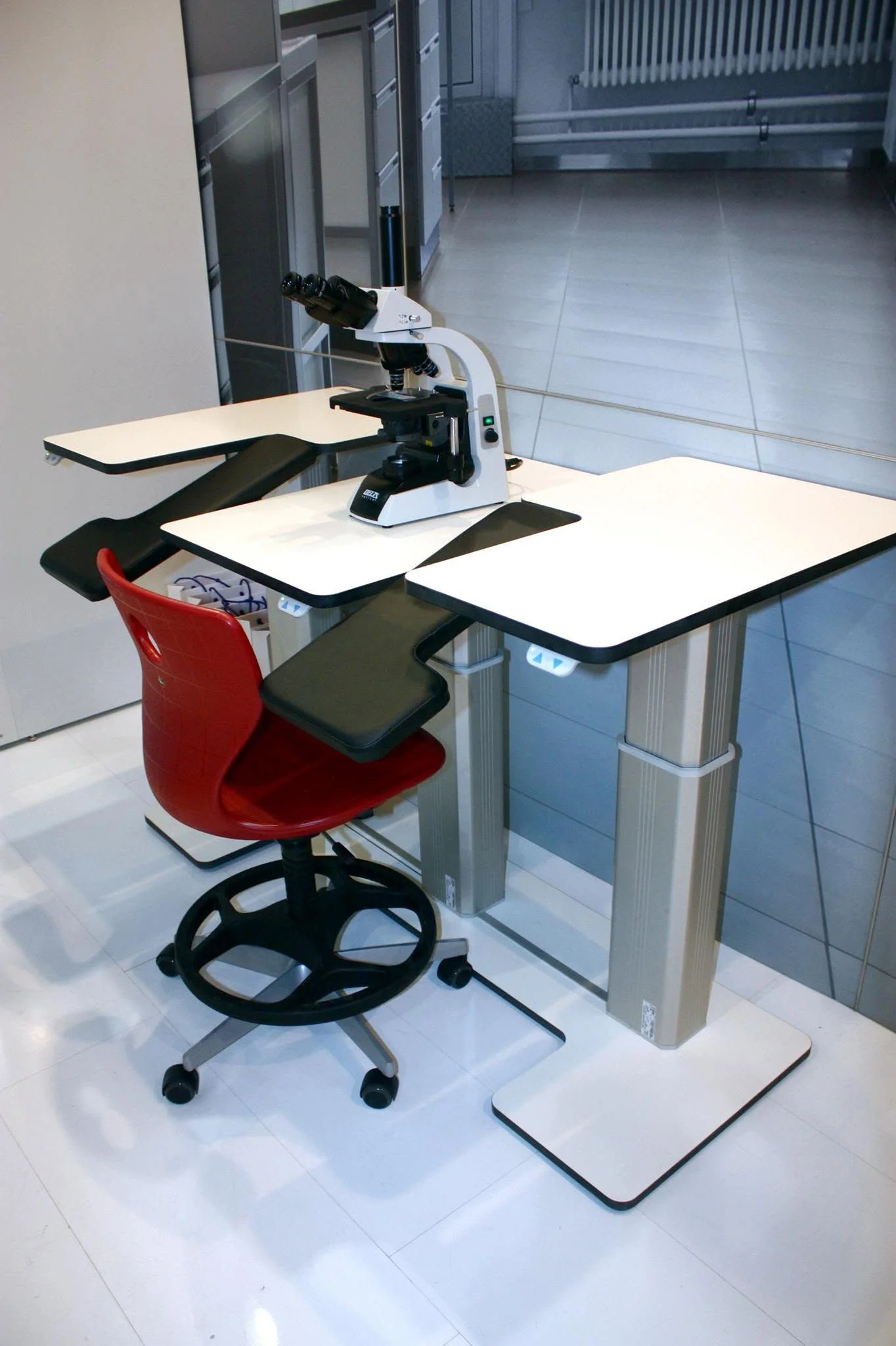
RLM MOTION Microscope Work Tables
The RLM MOTION table is designed with ergonomics and convenience in mind for working with microscopes. Thanks to innovative solutions, users can customize the table according to their needs, ensuring full comfort during long research hours.
Key Features
Projects
Weighing tables in our projects

About the category
FAQ
Questions about weighing tables
The difference lies in the construction. In an ordinary bench, the worktop, frame and cabinets form one rigid structure that transmits vibration across the whole surface. A weighing table consists of two parts that do not touch, and the balance stands on a heavy slab mounted on vibration isolators. An ordinary bench is fine for sample preparation and weighing on precision balances. We compare the two solutions in the article weighing table versus ordinary bench.
Ideally in a corner against a load-bearing wall and, if the building allows, on the ground floor. The table should be placed away from walkways and from equipment that vibrates itself, such as centrifuges or vacuum pumps. Humidity in the weighing room is kept between 45 and 60%, because an analytical balance also responds to air conditions.
A complete weighing table weighs between 80 and 150 kg. The slab is made from a high-density material, most often polished granite. Granite has a low resonant frequency, so it damps micro-vibrations rather than amplifying them. Adjustable feet compensate for unevenness in the floor, so the table stands level and stable even on an uneven floor.
There is no single price, because each table is made up of a selected slab, frame and configuration. When comparing quotations, check that they refer to the same balance class, number of stations and slab material. Also check that the slab is genuinely separated from the frame and the worktop. A table in which the slab touches the structure transmits vibration to the balance, even though it looks no different.
One in which a heavy weighing slab rests on vibration isolators and has no contact with the rest of the unit. When vibration comes from road traffic, a lift or building services, the mass of the block matters: a heavier slab of granite or vibration-isolating concrete responds less to impulses. With a microbalance or a laboratory on a high floor, the requirements increase. Our 10 parameters for choosing a table will help.
From the blog
We write about it
- Tables and measuring stations
Weighing table in practice - when is its use particularly important?
Precise measurements are the foundation of any reliable laboratory research. Even the smallest vibrations can disrupt the operation of analytical balances, leading to errors.

- Tables and measuring stations
How to choose a weighing table for a laboratory? 10 parameters worth checking before buying
Are you wondering which laboratory weighing table will guarantee the highest precision of measurements? Choosing the right piece of furniture is an investment in accuracy, repeatability of results, and the daily safety of the entire research team. Discover 10 key technical parameters that will help you adapt the equipment to the rigorous standards of your facility. Understanding these criteria is the foundation of flawless analytics.
- Tables and measuring stations
Anti-vibration weighing table - why stability matters?
Precise analytical measurements are the foundation of reliable laboratory research. Even microscopic vibrations can disrupt the operation of sensitive balances, leading to errors and losses. Find out why a professional anti-vibration weighing table is an essential piece of equipment in a modern laboratory.
- Tables and measuring stations
Precision Balance in the Laboratory - Weighing Table and Ambient Requirements
A precision balance is a measuring device used to determine the weight of samples very accurately in a laboratory setting. Laboratory balances cover different types of equipment, from basic technical balances to high-precision analytical balances.

Newsletter
Stay up to date with Renggli
New projects, products and guides on laboratory furniture, in one place.
Not sure which model to choose?
Tell us about the workstation and the room. We will select the configuration and prepare a standard quote within 1-5 days.