Laboratory Fume Hood and Workplace Safety - What to Pay Attention To
Essential work in any modern chemical, analytical, or biological laboratory is inextricably linked to daily exposure to hazardous vapors, toxic gases, and harmful aerosols. In such conditions, appropriately selected laboratory equipment is the absolute foundation for protecting the health of all research personnel.
 Renggli TeamEditorial team
Published: Updated Reading time: 6 min read
Contents
The first and most important line of employee defense in this case is the laboratory exhaust system, commonly called a fume hood. It should be clearly emphasized that choosing the right device of this type is not just a matter of everyday operational convenience. Above all, it is a guarantee of meeting strict technical standards that genuinely build safety in the laboratory.
The Role of the Fume Hood in the Laboratory Safety System#
The primary task of a fume hood is to separate the operator from the hazardous environment inside the working chamber. The operating principle is based on a constant, directed airflow from the outside to the inside of the device. Such forced local exhaust ventilation effectively prevents harmful substances from escaping the workspace directly into the employee's breathing zone.
From an OHS perspective, a professional laboratory fume hood acts as a triple protective shield. First, it provides maximum protection against vapors, eliminating the risk of acute or chronic inhalation of volatile toxic compounds. Second, the physical barrier in the form of a front sash protects the operator's face and body against the sudden spread of corrosive chemicals during a reaction.
Third, the robust construction of the device is designed to minimize the effects of potential micro-explosions that may occur inside the chamber due to an unforeseen course of an experiment. For this reason, a fume hood is not merely a standalone piece of furniture, but the central point of any safe research space layout, without which modern OHS in a laboratory could not function properly.
Key Technical Parameters - How to Choose a Safe Fume Hood?#
Choosing the right device requires an analysis of a number of advanced technical parameters. Below are the key design aspects that determine the highest quality and reliability of fume hoods.
Airflow and Control Systems#
Airflow stability is an absolutely critical factor determining the effectiveness of a fume hood. Constant and precise airflow control ensures that hazardous vapors are immediately extracted to the ventilation system, regardless of the conditions in the room. Any turbulence in the opening of the front sash can result in contaminants flowing back towards the operator.
To optimize this process, modern devices use advanced VAV (Variable Air Volume) systems. This technology automatically adjusts the exhaust capacity depending on the degree to which the front sash is open. This provides not only a constant level of safety but also significant energy savings. Furthermore, devices of this type must be equipped with alarm systems (acoustic and visual) that immediately inform the user of a dangerous drop in ventilation efficiency.
Material Resistance and Worktops#
The interior of the fume hood's working chamber is an environment subjected to extreme chemical and thermal loads. For this reason, the construction materials used for the inner walls and laboratory worktops must be strictly tailored to the specificity of the conducted research. Improper selection of the substrate risks its rapid degradation, which lowers hygiene and safety standards.
Professional implementations use materials with the highest available resistance to aggressive acids, bases, and solvents. The best example here is solid ceramics and specialized conglomerates. These materials not only exhibit excellent chemical passivity but are also resistant to scratches, discoloration, and high temperatures, making them an ideal solution for years.
Front Sash (Window) and Mechanical Safeguards#
The front sash of the fume hood is the main physical barrier between the hazardous reaction and the operator. To fulfill its function, it must be made of certified safety glass (tempered or laminated), which in the event of damage does not shatter into sharp fragments.
Mechanical sash position control systems are equally important. The standard in safe devices is a sash lifting lock at a height of 500 mm. This prevents accidental, excessive opening of the chamber during work, which would disrupt proper air circulation. An essential structural element is also a mechanism preventing the uncontrolled, sudden drop of the sash in case the suspension cables break.
Compliance with Standards - The European EN 14175 Standard#
A key element in verifying compliance with the EN 14175 standard is rigorous containment testing (also known as tracer gas tests). During these tests, the fume hood's ability to effectively retain contaminants inside the working chamber is measured at various sash opening degrees and in the presence of external aerodynamic disturbances.
It should be clearly emphasized that independent, documented certification of laboratory equipment is the only objective proof of the device's effectiveness. By investing in equipment from reputable manufacturers, the investor gains a guarantee that the declared protective parameters are confirmed by actual test results from notified bodies.
Work Ergonomics and Safety - Workstation Design#
OHS is not only about physical barriers but also about limiting factors that lead to human errors. Operator fatigue is one of the main causes of accidents. Therefore, proper ergonomics in the laboratory is an integral part of the safety system. A properly designed fume hood provides full visibility without the need to assume uncomfortable positions.
An important aspect is the lighting of the chamber interior; it must be shadowless, adequately bright, and non-glaring. Additionally, well-thought-out internal installations (access to running water, power supply, technical gases) should be controlled from an external panel. The operator must be able to adjust parameters without having to dangerously insert their head deep into the working space.
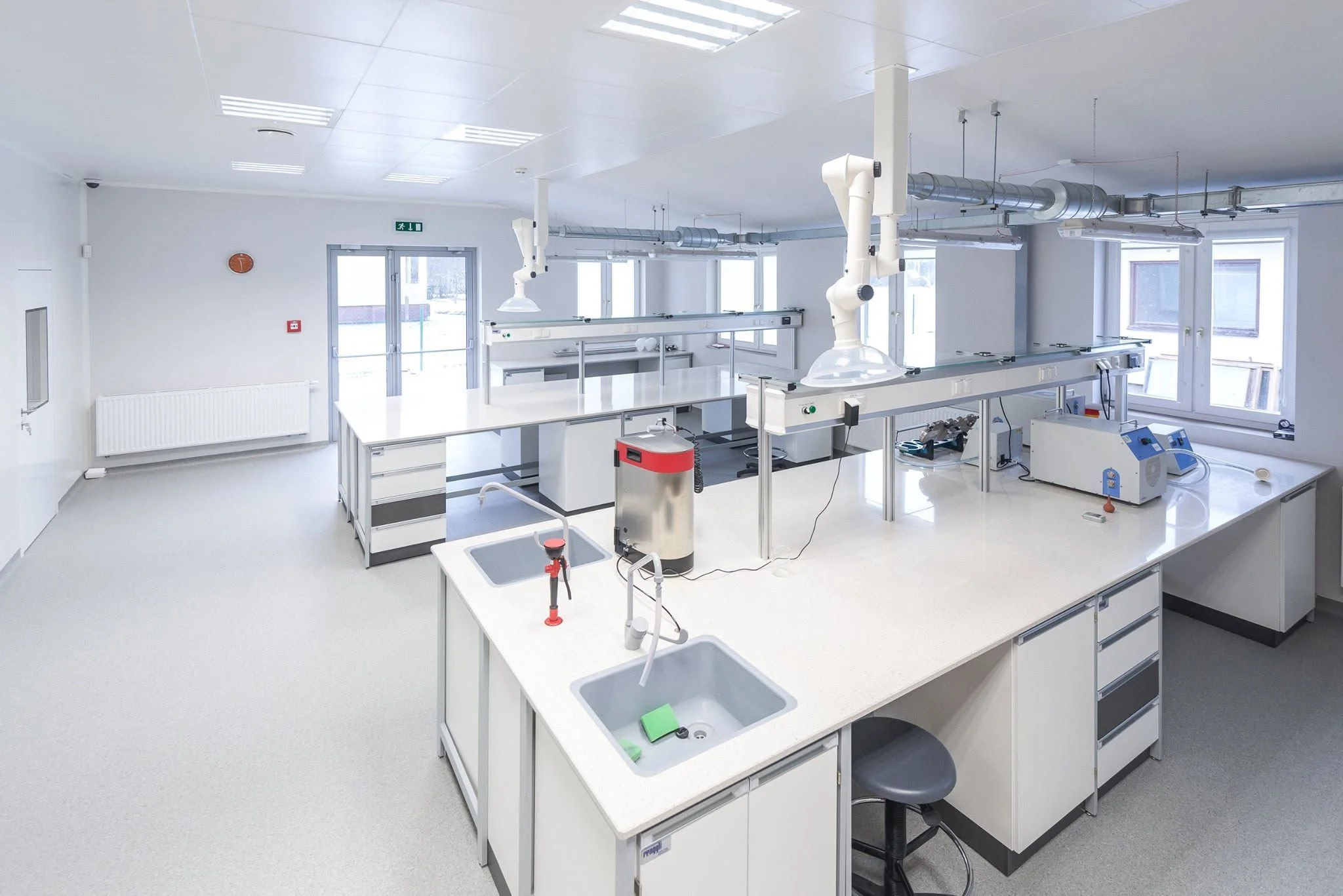
It should be remembered that a fume hood never functions as an isolated island. This device must fully integrate with its surroundings. Modern laboratory equipment is designed as a cohesive ecosystem, in which the layout of workstations allows for the free movement of personnel and guarantees collision-free and optimized air circulation within the volume of the entire room.
Regular Inspections and Maintenance - A Guarantee of Long-Term Protection#
Even the most technologically advanced device will not provide maximum protection if it is not properly maintained. Purchasing a fume hood is just the beginning of the road to a safe working environment. According to technical and legal guidelines, regular, periodic inspections of laboratory equipment are strictly required.
Standard maintenance procedures include, among others, physical testing of airflow velocity and stability, verification of exhaust system efficiency, testing of alarms, and precise calibration of sensors. Professional fume hood servicing allows for the early detection of wear in mechanical components, such as cables or bearings, before they lead to failure.
Awareness of the necessity of after-sales care is crucial for management staff. Efficient and cyclical technical service is the only way to ensure the continuity of the research facility's work. Reliable maintenance in the laboratory minimizes the risk of unplanned downtime and protects the health of personnel throughout the entire lifecycle of the equipment.