Skip to content

Laboratory cabinets

Cabinets for non-flammable chemicals

An acid and alkali storage cabinet is a chemical storage cabinet for non-flammable substances, with a corrosion-resistant interior and spill trays, compliant with EN 16121 and EN 16122. It offers no fire resistance: flammable liquids belong in 30-minute and 90-minute cabinets.

Request a quoteAddedIn enquiry

See products
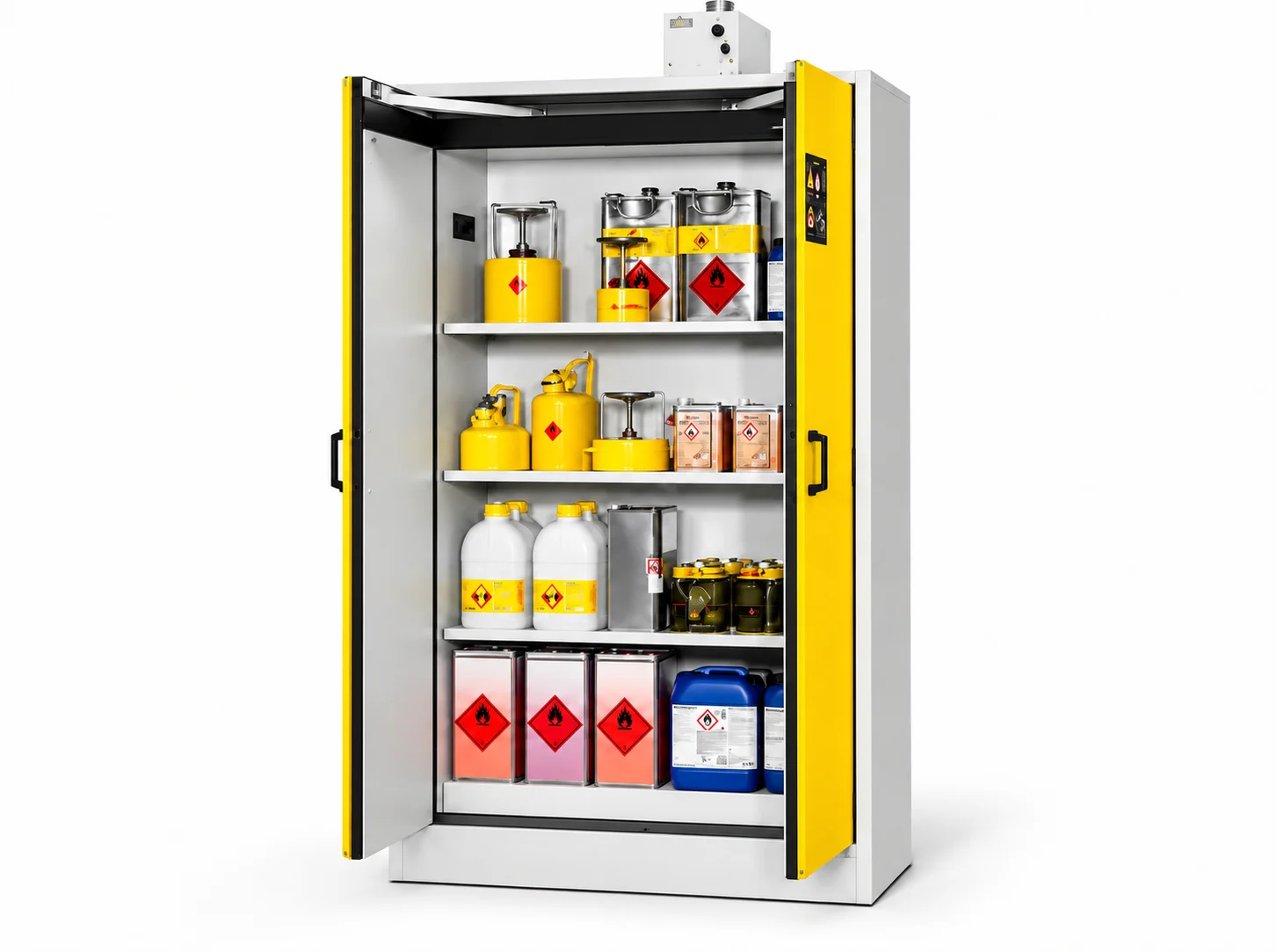
Double-door fire-resistant chemical cabinet in a laboratory
Products

What you will find in this category

Projects

Laboratory cabinets in our projects

About the category

Contents

What is an acid and alkali storage cabinet used for?

An acid and alkali storage cabinet is used to store non-flammable corrosive substances: acids, alkalis and their solutions, as well as other chemicals that do not require protection from fire. It protects people from contact with reagents and the room from the effects of spills and corrosion. It is no substitute for a fire-resistant safety storage cabinet: solvents and other flammable liquids are kept in 30-minute fire-resistant safety storage cabinets or 90-minute models to EN 14470-1. The general rules for laboratory storage are covered in our article on storing hazardous substances.

EN 16121 and EN 16122: what the standards test

Both standards apply to storage furniture. EN 16121 specifies safety, strength, durability and stability requirements for cabinets, while EN 16122 describes the test methods: shelf loading, the opening and closing of doors and drawers, and the stability of the cabinet both full and empty. For a chemical storage cabinet, this means that shelves do not sag under heavy bottles, extended drawers do not tip the cabinet over and the doors stand up to daily use. The corrosion resistance of the interior depends on the materials and construction, so it is worth checking where the hinges and locks are mounted.

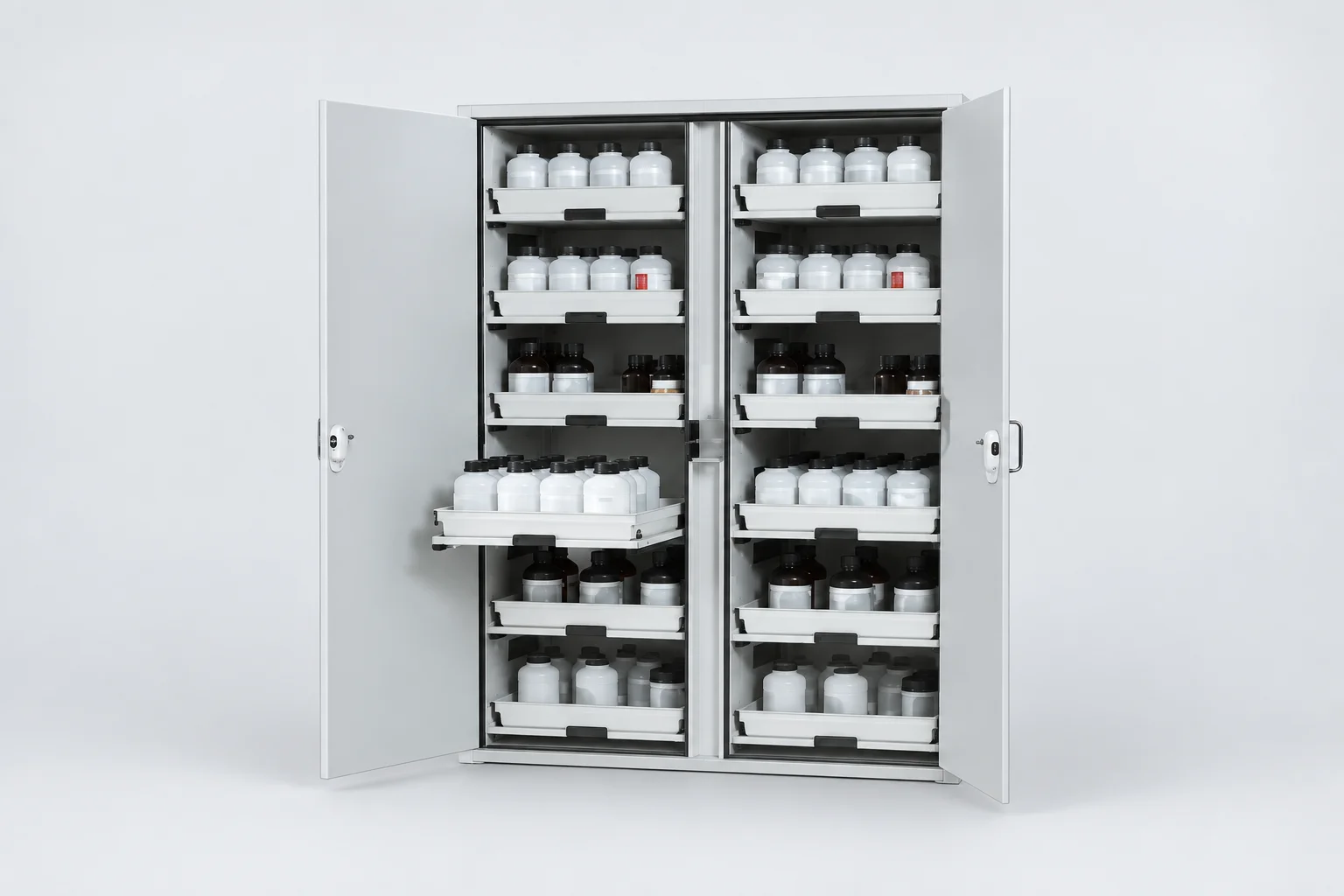
From this categoryAcid and alkali cabinet SL-ClassicThe SL-Classic is a cabinet for acids and alkalis, compliant with EN 16121 and EN 16122, featuring pull-out shelves and trays, available in widths of 1200 and 597 mm.See productOpen SL-Classic safety cabinet with pull-out shelves for chemical bottles on a light background

Acids and alkalis in one cabinet: how to separate them

Acids are not stored on the same shelf as alkalis, because in a spill they react with each other, giving off heat and fumes. They can share a cabinet only on separate shelves with their own spill trays, and ideally they should be kept in separate compartments or cabinets. Our guide to storing acids and alkalis explains why this matters so much and how to plan the shelf layout.

Ventilation and corrosion-resistant materials

In SL-Classic cabinets, the safety components are mounted outside the storage compartment, so acid vapours do not corrode them. Built-in air ducts allow the cabinet to be connected to an extraction system. The model data sheets state the recommended extraction rate: for SL-Classic, 31 m³/h at a width of 1200 mm and 14 m³/h at 597 mm, which corresponds to 30 air changes per hour. Where the room has no extract duct, the alternative is a ventilated chemical cabinet with a filter. We have brought together the full requirements for this type of cabinet in our article on requirements for acid and alkali cabinets.

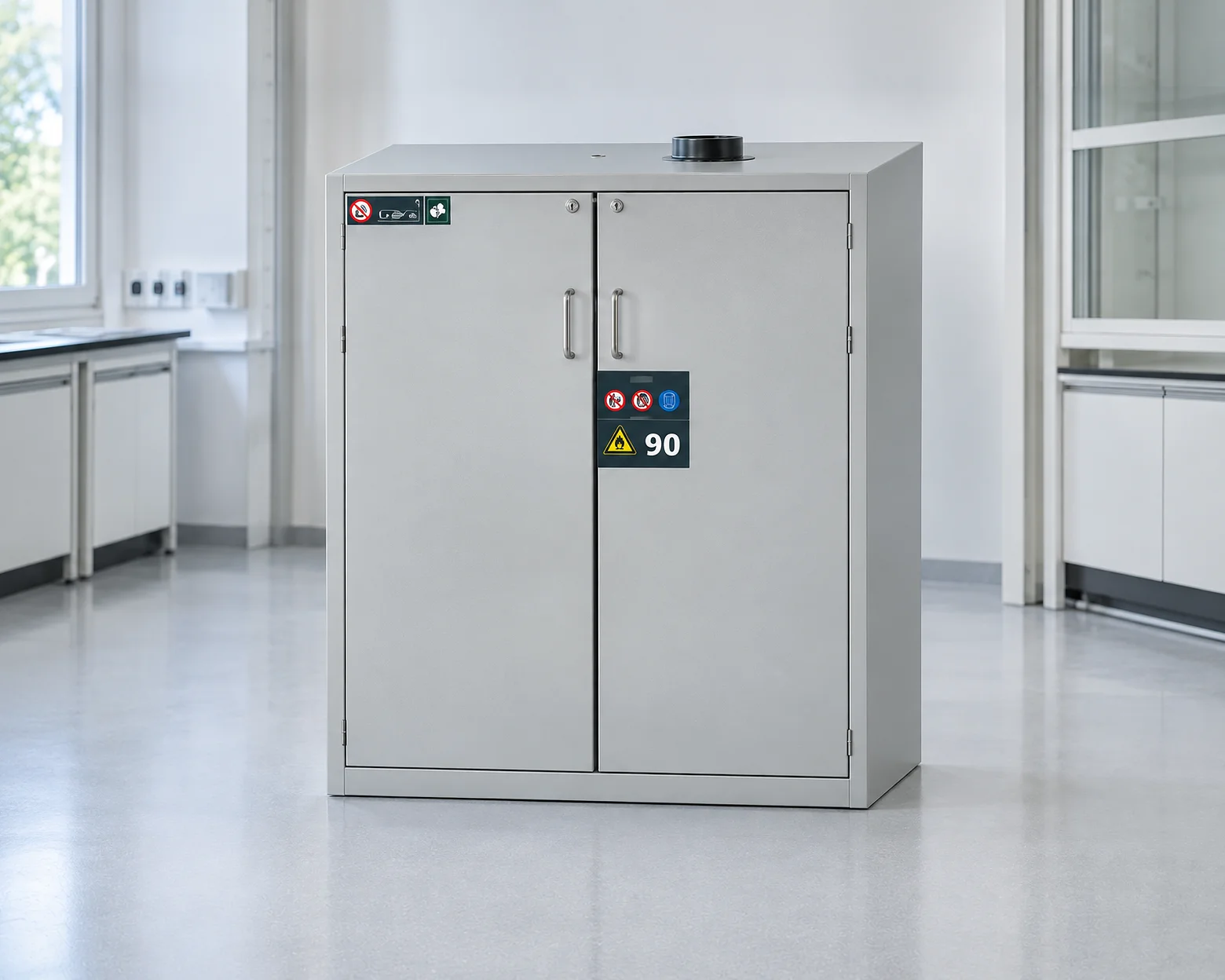
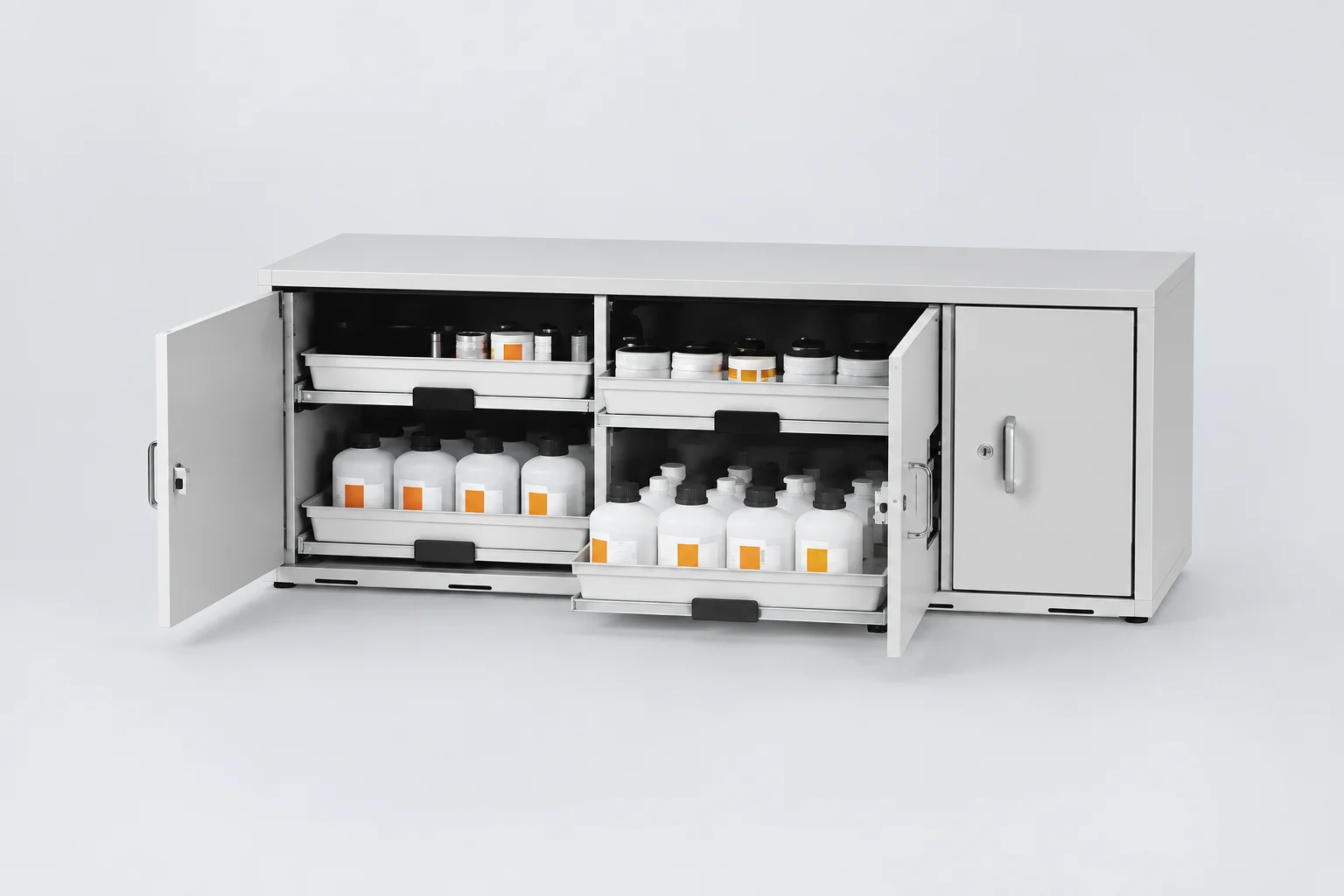
From this categoryAcid and alkali cabinet SL-Classic-UBSee productSL-Classic-UB under-bench safety cabinet with pull-out drawers for bottles on a light background

SL-Classic, SL-Classic-UB and CS-Classic models

  • SL-Classic: tall cabinet (1965 mm), 597 or 1200 mm wide, with pull-out shelves and removable plastic spill trays.
  • SL-Classic-UB: under-worktop version, 600 mm high, in widths of 590, 1100 and 1400 mm, with pull-out shelves; recommended extraction rate from 4 to 11 m³/h.
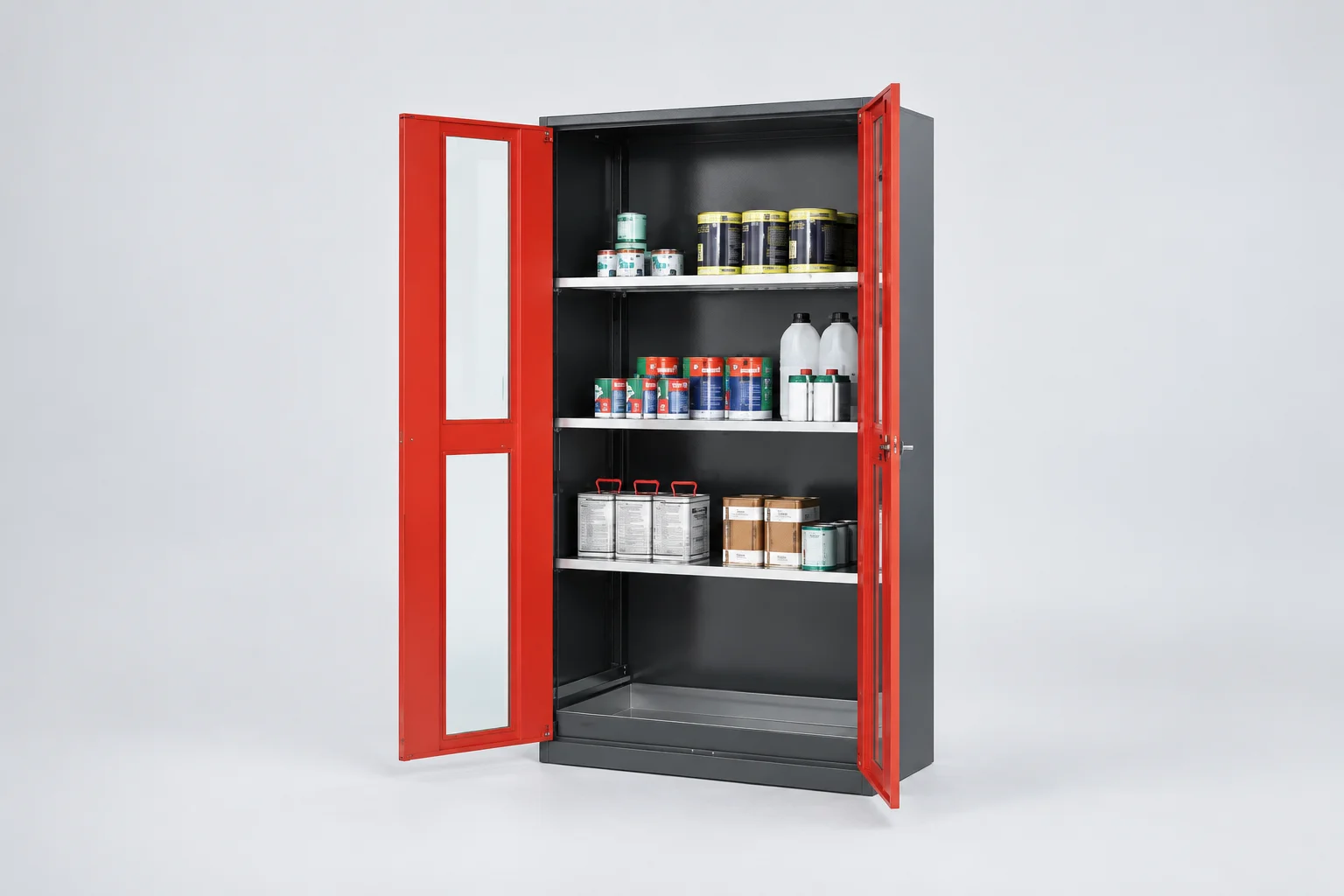
  • CS-Classic: steel body with a textured paint finish, 1950 or 1105 mm high, three door options (hinged, hinged with opening glass panels, folding), metal shelves on pull-out runners, a cylinder lock and levelling for uneven floors.
FAQ

Frequently asked questions about acid and alkali storage cabinets

Only if they are separated from each other: on separate shelves with their own spill trays, or in separate compartments. In a spill, an acid and an alkali react with each other, giving off heat and fumes, so the safest option is to store them in two cabinets. Whatever the layout, containers must be tightly sealed, labelled and placed in spill trays.

SL-Classic and CS-Classic cabinets have built-in ducts for connection to an extraction system, and the model data sheets state the recommended air volume. Connecting the cabinet removes acid vapours from the interior before they can corrode the fittings and escape into the room when the doors are opened. Where there is no extract duct, a ventilated chemical cabinet with an activated carbon filter is used.

A fire-resistant safety storage cabinet to EN 14470-1 protects flammable liquids from fire for 30 or 90 minutes and has insulated walls and self-closing doors. An acid and alkali storage cabinet has no fire resistance, but its interior and hardware are corrosion-resistant. Solvents are therefore not stored in an acid cabinet, and acids are not placed in a flammable liquids cabinet without a separate compartment.

From the blog

We write about it

  • 6 min read
    Cabinets and chemical storage

    Acid and base cabinet - what features should it have?

    Storing corrosive and toxic substances is one of the biggest organizational challenges in a modern chemical, industrial, or research laboratory. Concentrated acids and bases generate vapors capable of damaging the respiratory tracts of personnel, as well as expensive measuring equipment and installations located in the room. Therefore, safe storage of chemicals requires more than just a standard storage cabinet. What is needed is a solution designed with chemical resistance, tightness, and effective vapor extraction in mind.
  • 8 min read
    Cabinets and chemical storage

    Storage of hazardous substances in the laboratory

    he storage of hazardous substances in the laboratory has a direct impact on the protection of the health of employees and the reduction of the risk of failures and accidents. Improper segregation of chemicals, lack of proper cabinets or negligence in the control of installations can lead to serious consequences - from dangerous chemical reactions to fire hazards. Check out what you need to pay special attention to to ensure compliance and a high level of security.

Newsletter

Stay up to date with Renggli

New projects, products and guides on laboratory furniture, in one place.

By subscribing you agree to receive messages from Renggli and accept the privacy policy. You can opt out at any time.

Let us plan your laboratory

Tell us what has to happen in the room. We will pick the furniture and work out the rest.

Request a quoteAddedIn enquiry

See the projects

Free project quote.