Cabinets and chemical storage
Flammable storage cabinet: which type to choose?
A flammable storage cabinet has a type that shows how long it protects liquids in a fire. How to match it to your stock and lab, and what goes in the order?
Offer
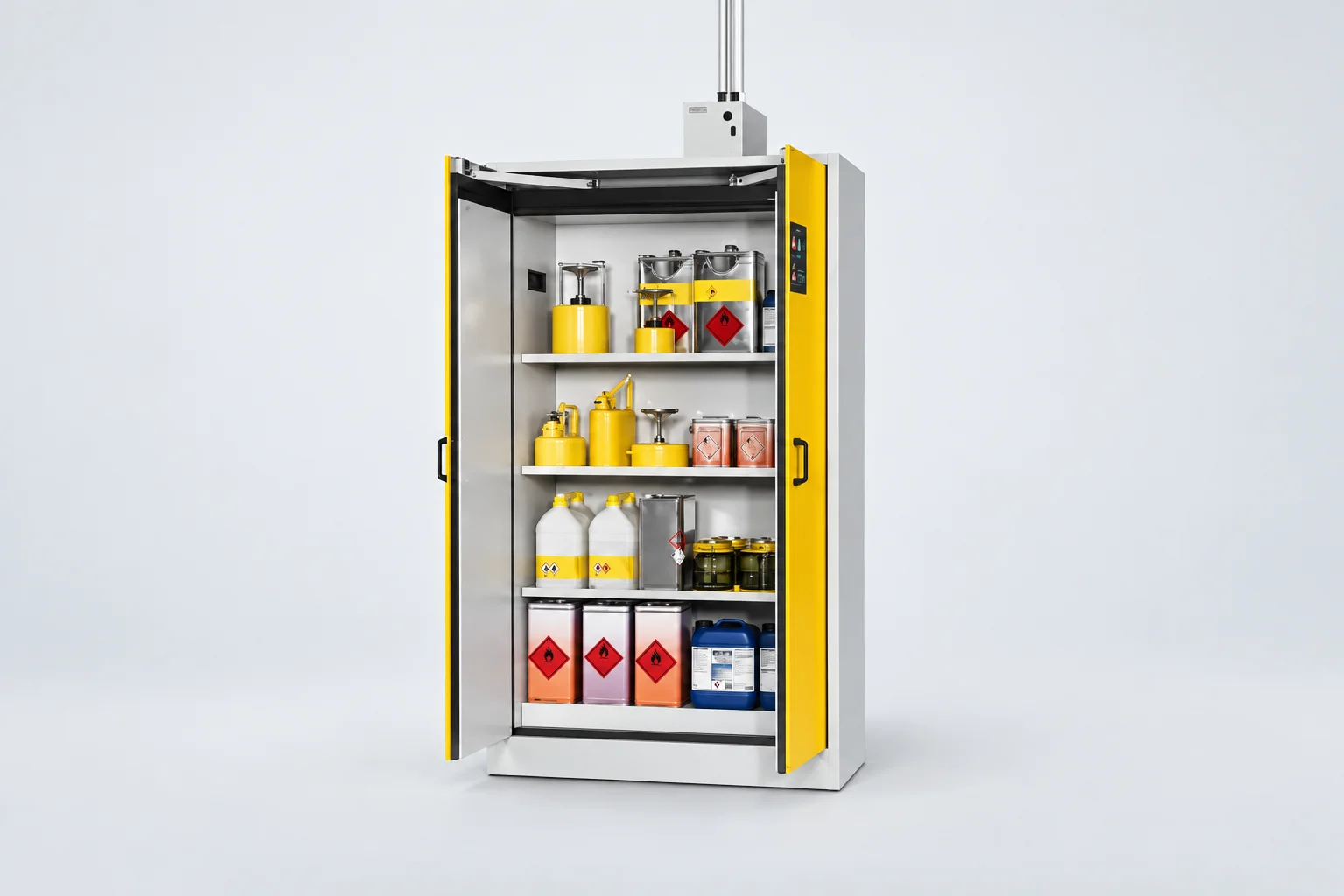
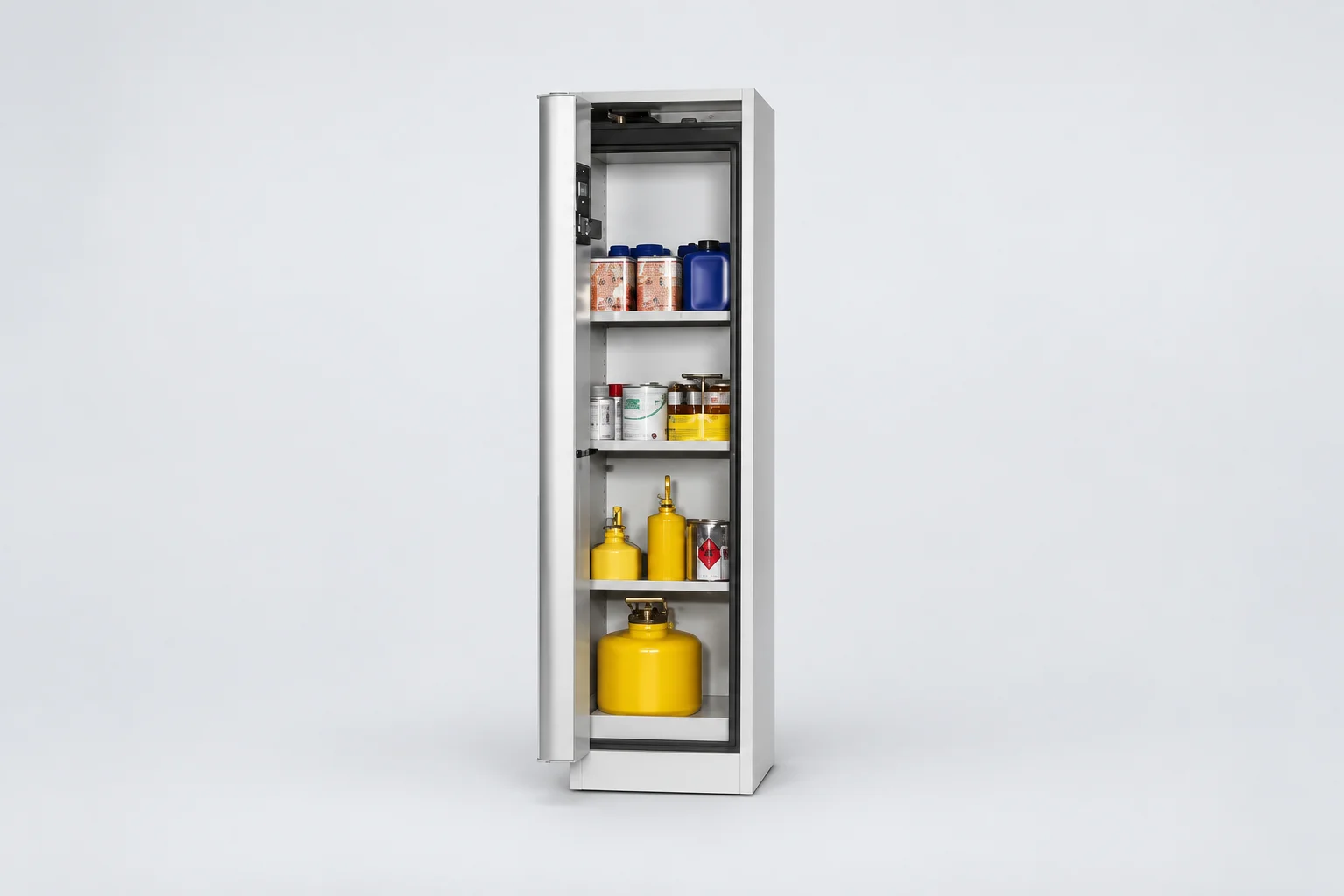
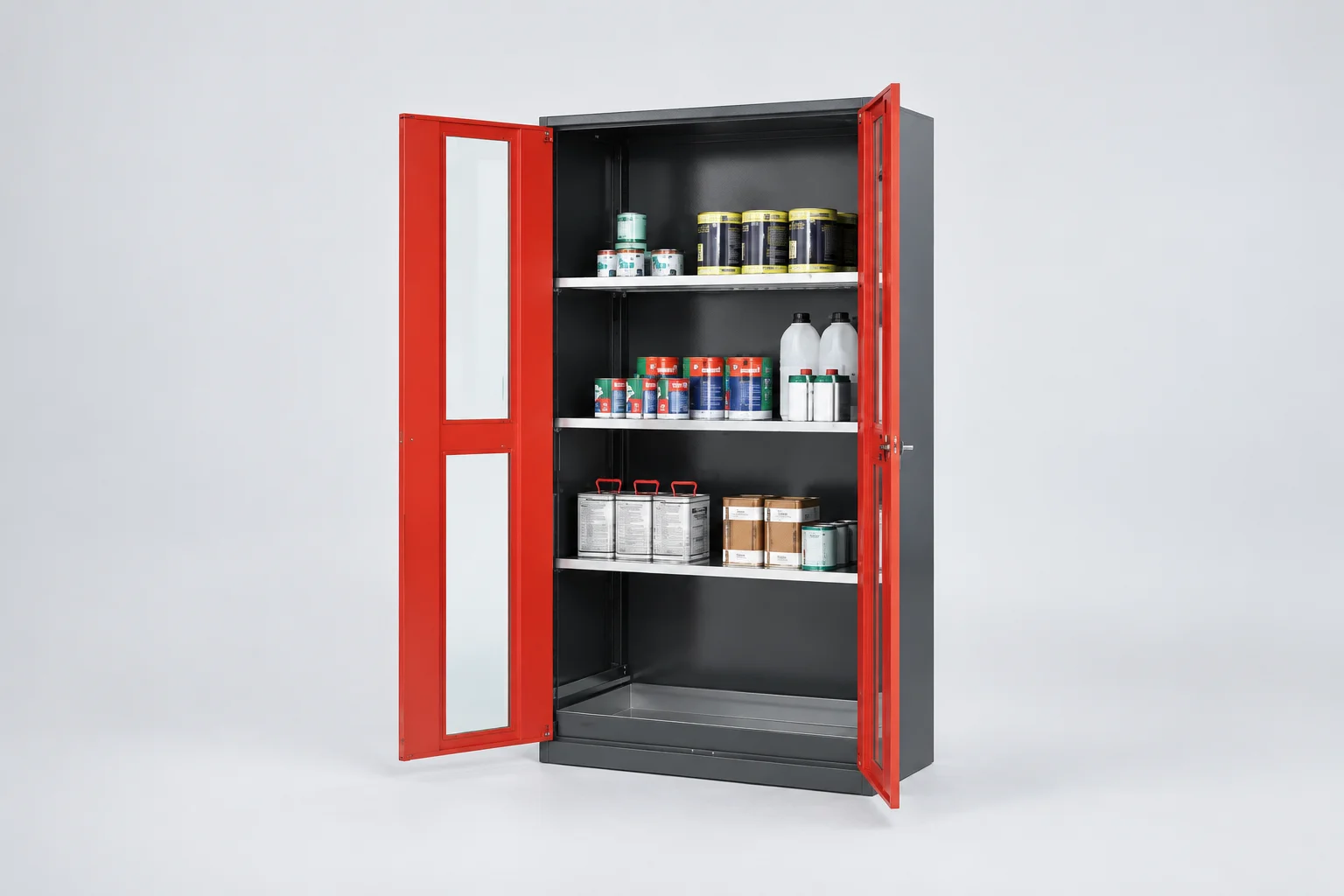
Laboratory chemical storage cabinets are enclosed units for storing reagents safely: fire-resistant safety storage cabinets for flammable liquids to EN 14470-1, cabinets for acids and alkalis to EN 16121, and ventilated chemical cabinets with a filter.
About the category
The type of cabinet depends on what it will hold. Three questions are enough:
Our guide to the storage of hazardous substances covers the storage rules in more detail.
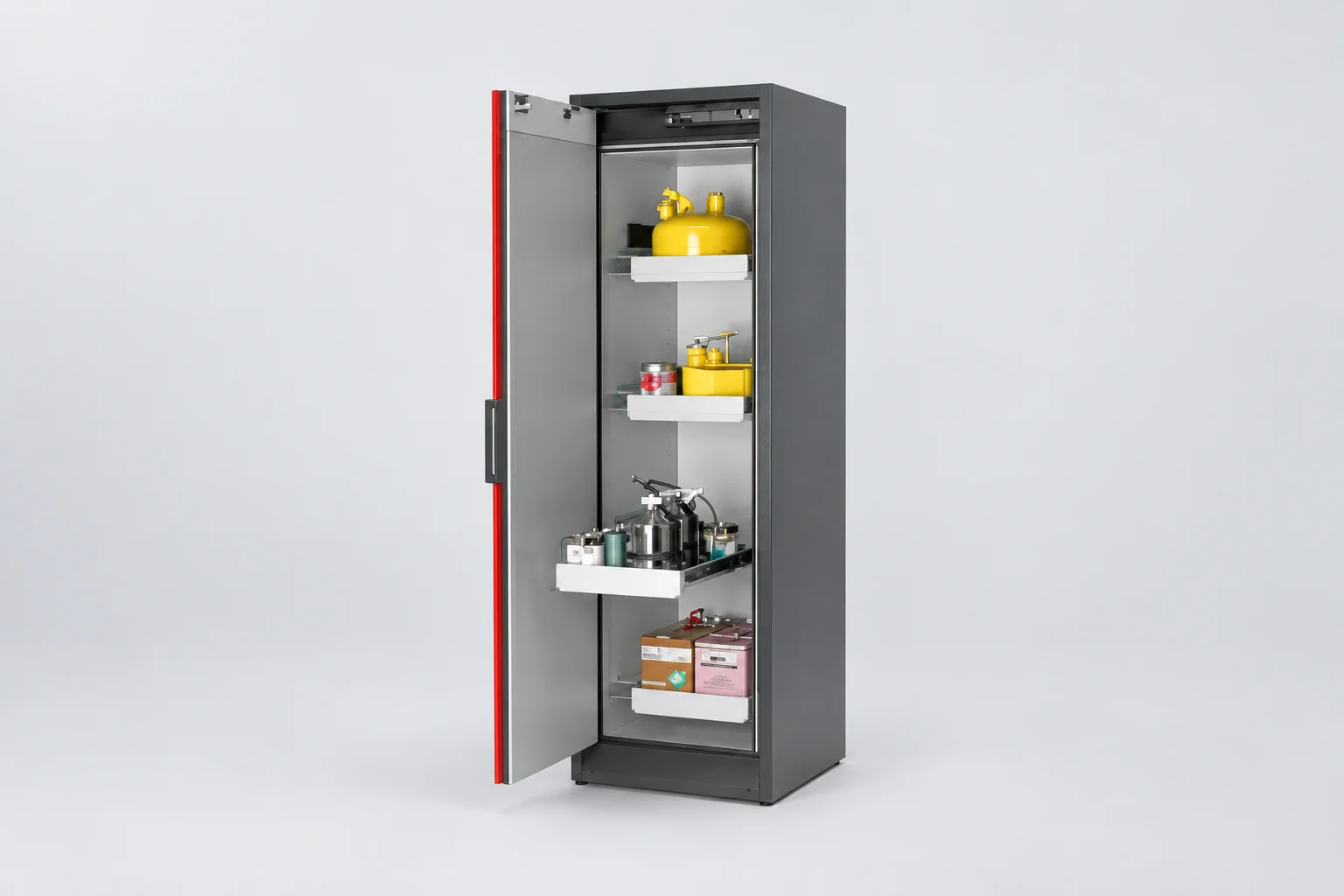
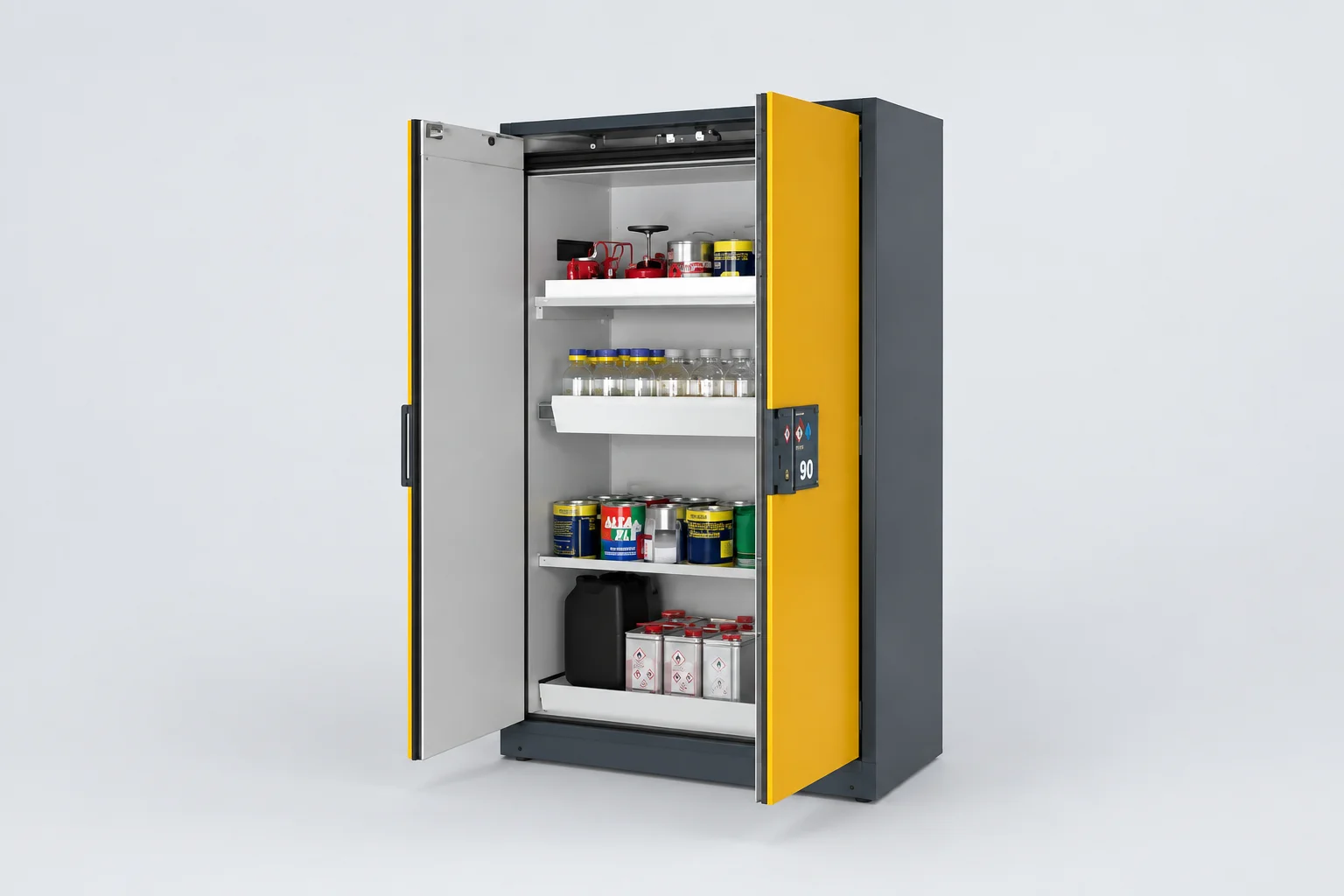
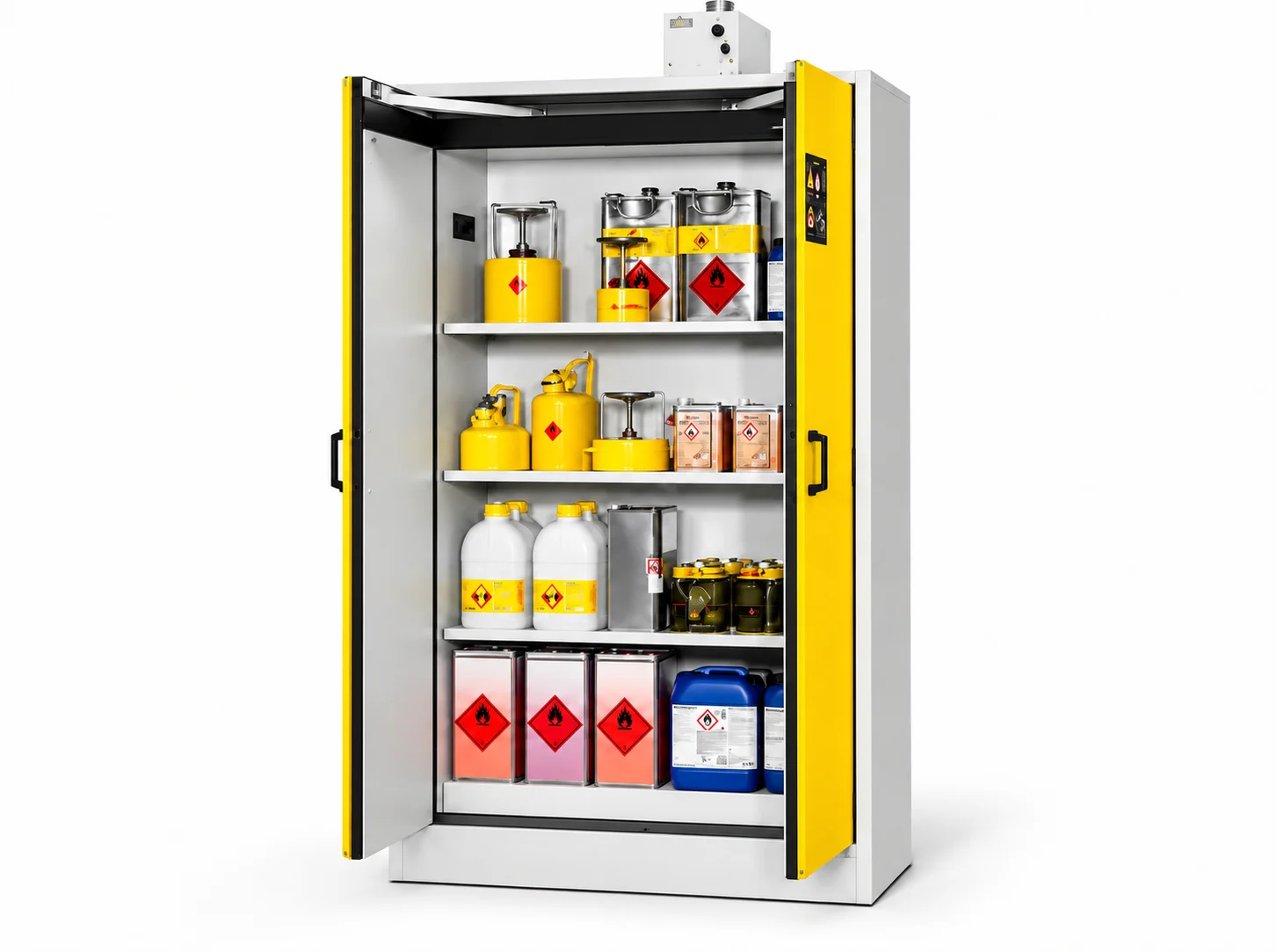
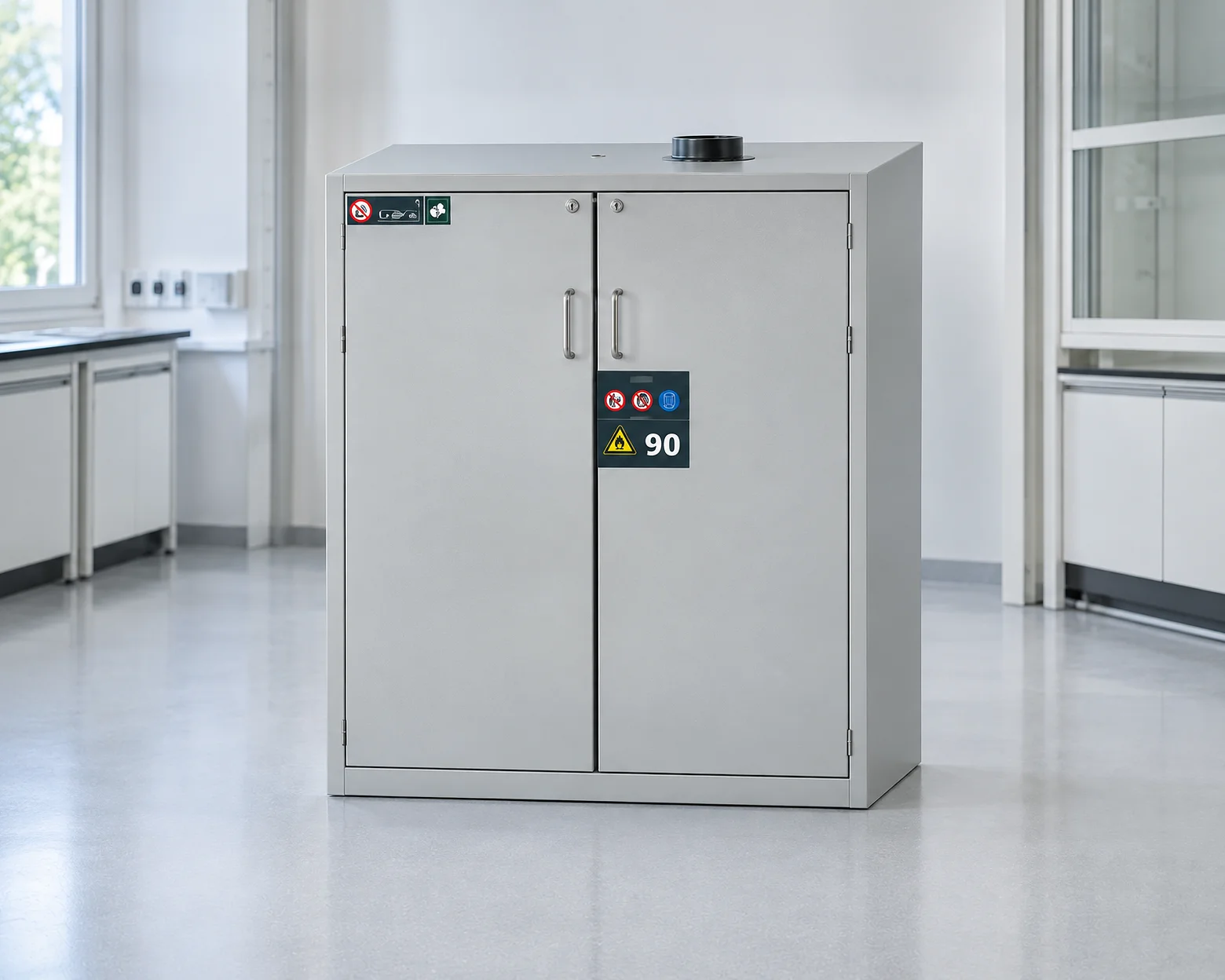
A fire-resistant safety storage cabinet (safety cabinet) protects flammable liquids from an external fire for the time stated in its type designation: EN 14470-1 defines types of 15, 30, 60 and 90 minutes. In a fire, the doors close automatically and valves in the air ducts shut off the airflow.
We explain what the symbols on the cabinet's rating plate mean in our article on reading cabinet markings and fire resistance class.
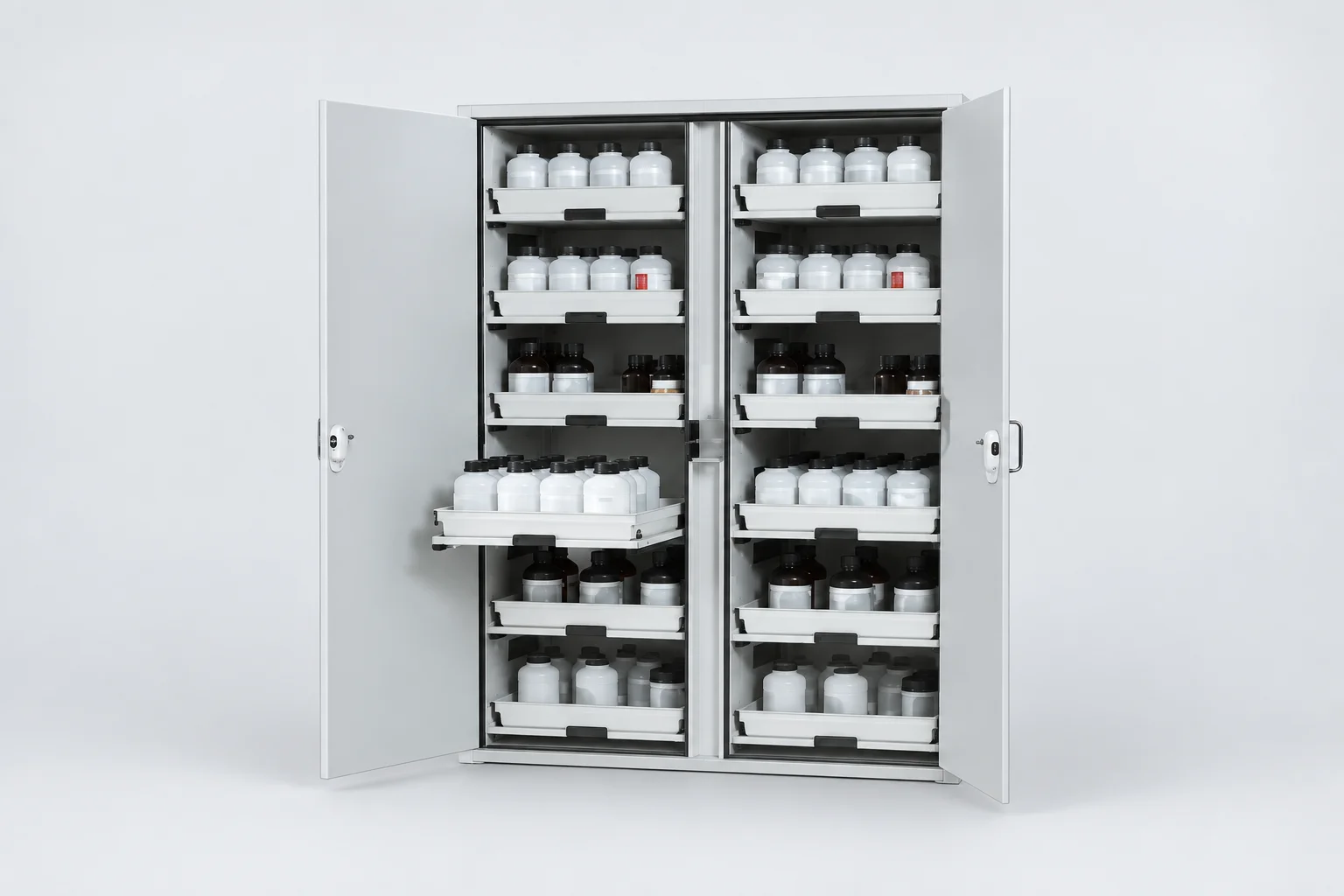
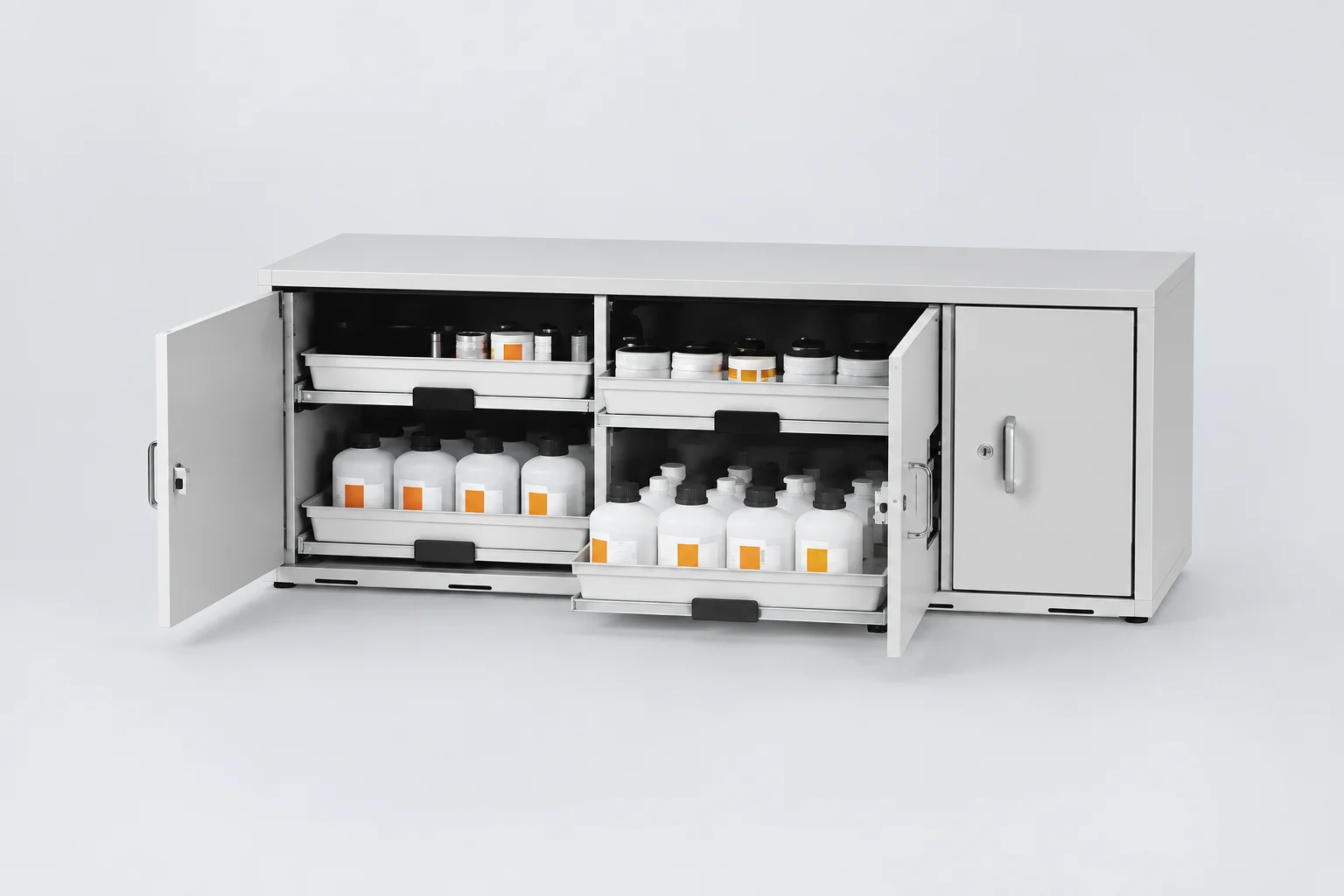
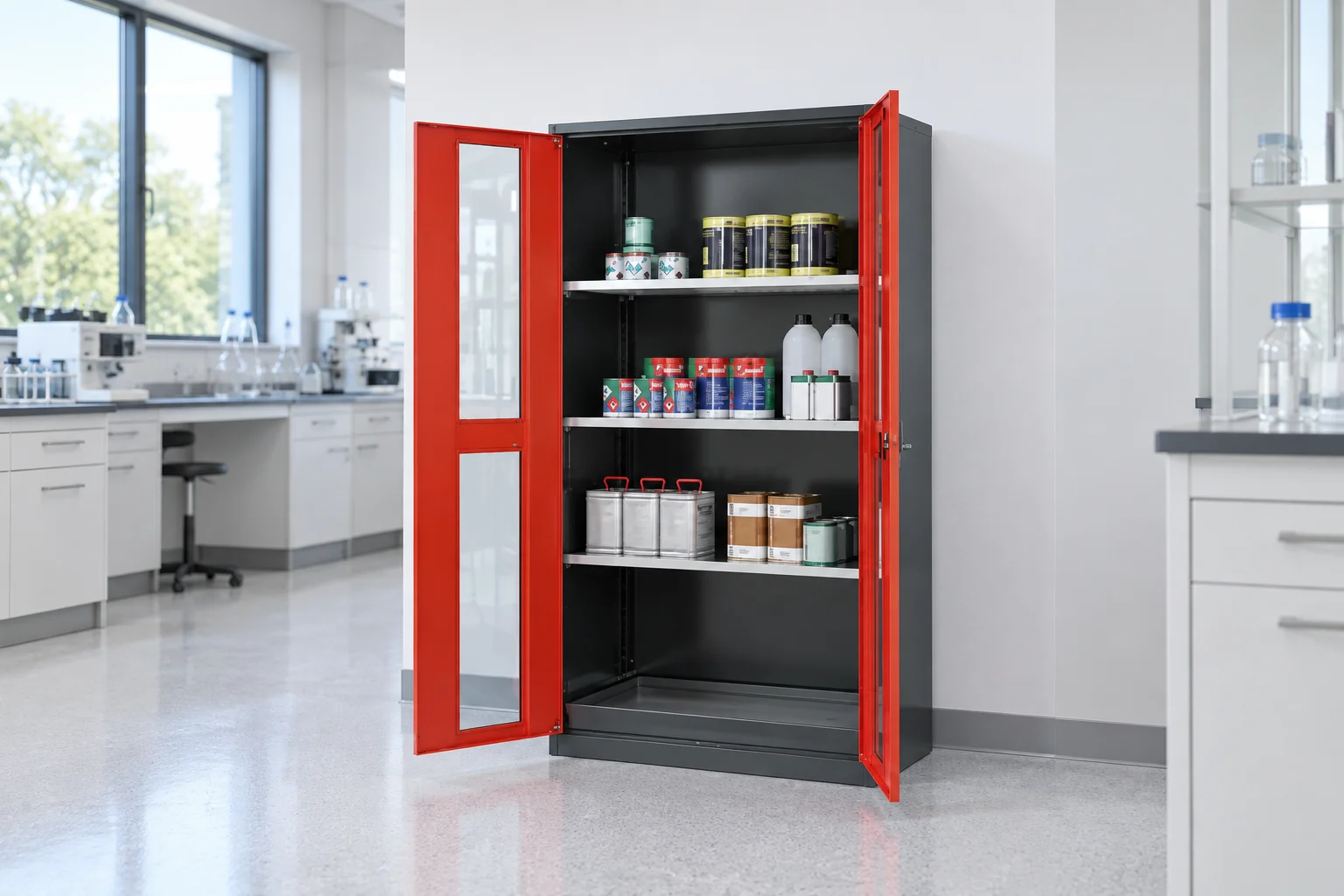
A cabinet for acids and alkalis has no fire resistance, but its interior is corrosion-resistant and its shelves have spill trays. EN 16121 and EN 16122 apply to storage furniture: the first sets out requirements for safety, strength, durability and stability, the second the methods for testing them. Our range of cabinets for acids and alkalis comprises the SL-Classic, the under-worktop SL-Classic-UB and the CS-Classic. We explain why acids are not stored next to alkalis in our article on organising the storage of acids and alkalis.
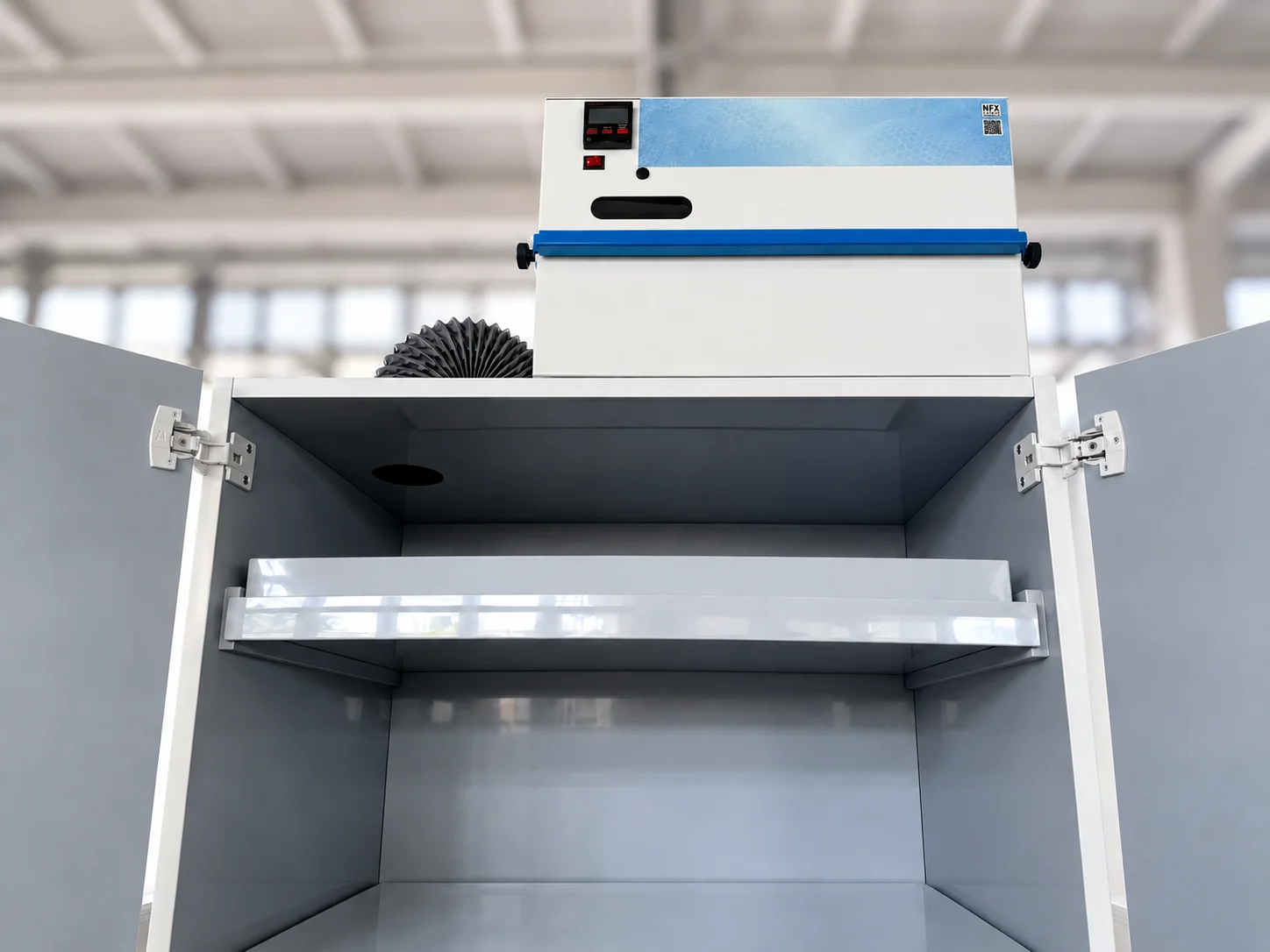
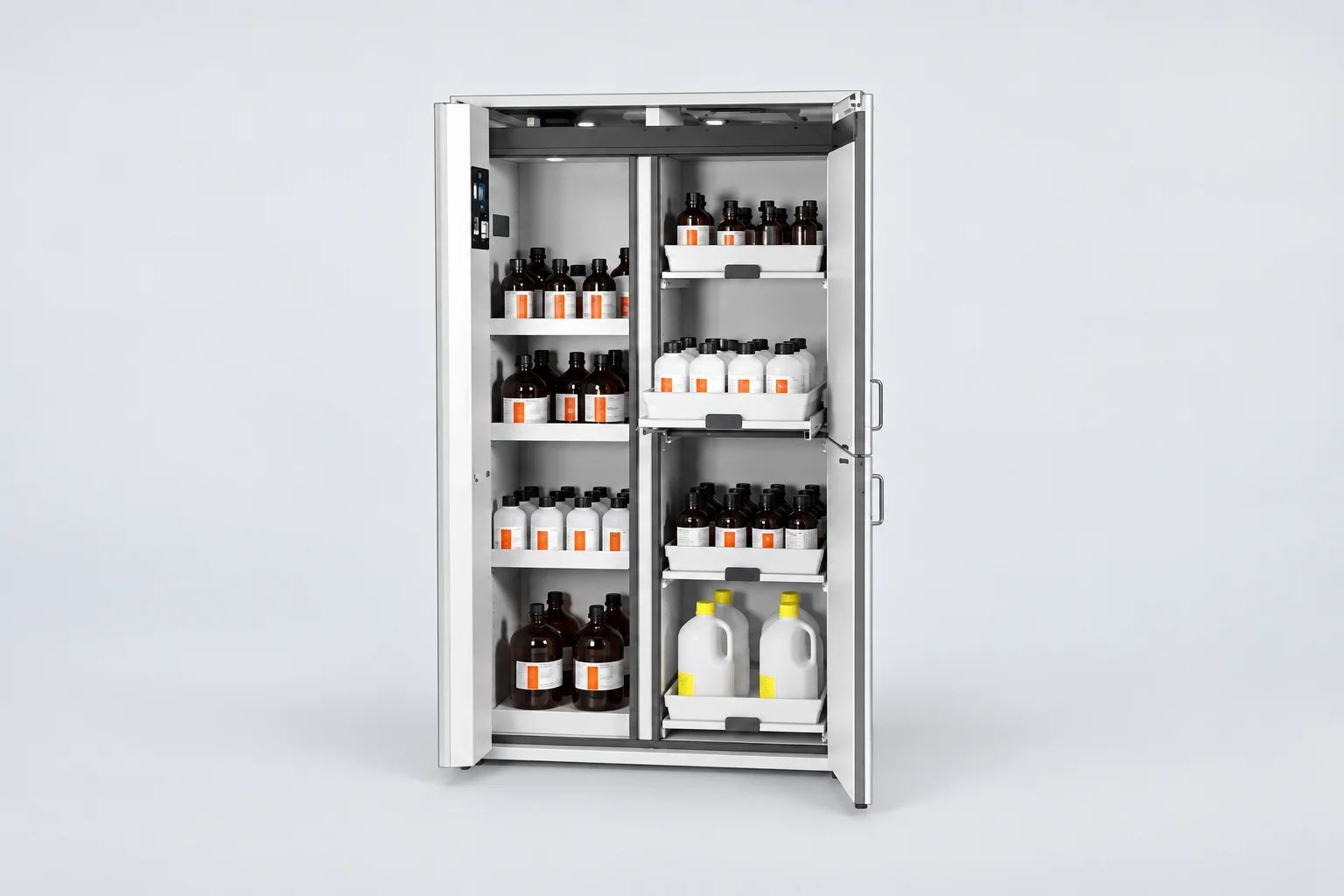
A ventilated chemical cabinet has a filter-fan unit with an activated carbon filter on top, so it does not need to be connected to the building's ventilation system. The carcass, made of chipboard bonded to polypropylene, withstands acids, alkalis and moisture, and the pull-out shelves have polypropylene spill trays.
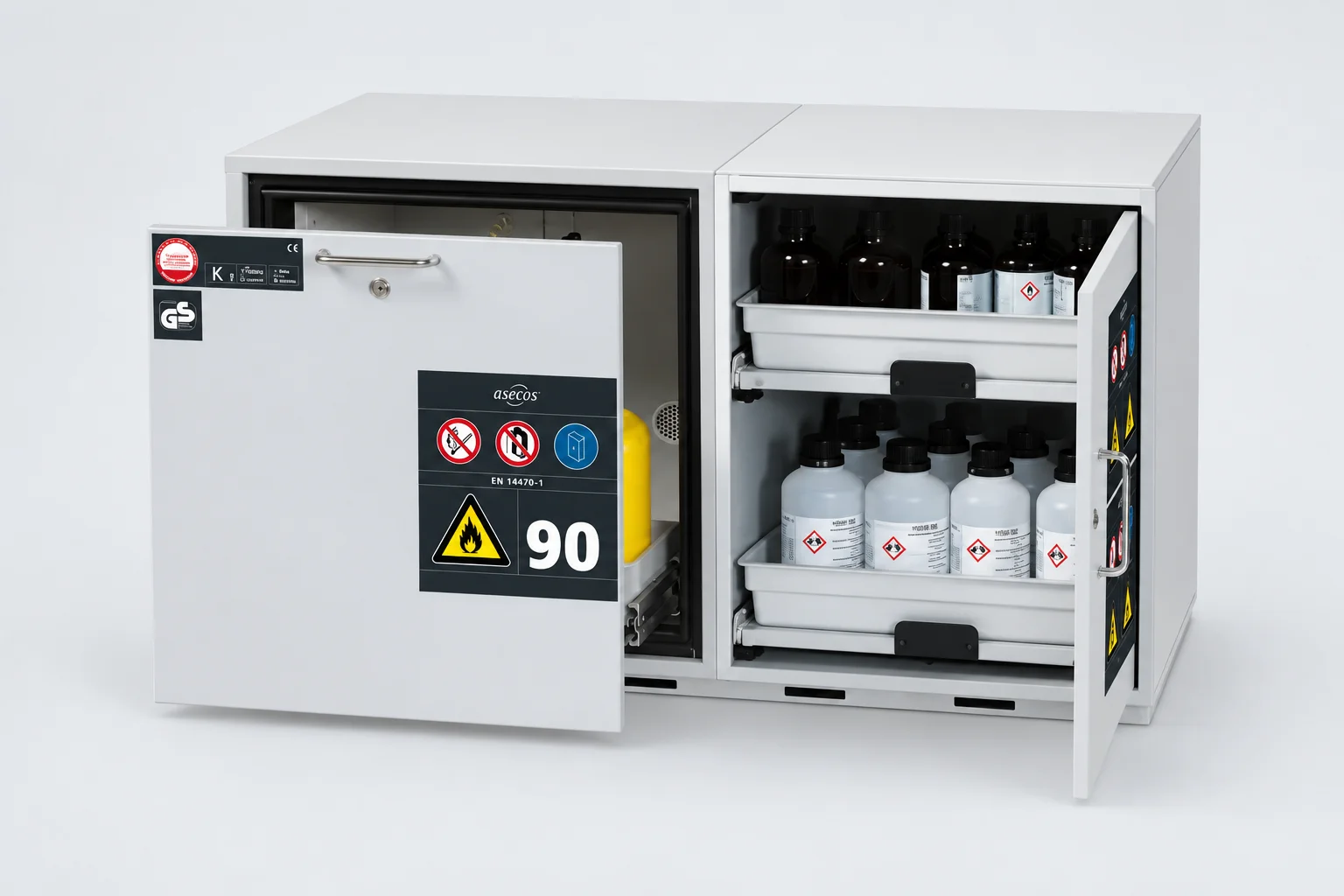
Fire-resistant safety storage cabinets and cabinets for acids have built-in air ducts that can be connected to an extraction system. The connection removes vapours from the interior before they can escape into the room when the doors are opened. Model data sheets state the recommended extraction rate: for example, a 1200 mm wide SL-Classic cabinet needs 31 m³/h, which equals 30 air changes per hour. Whether a connection is necessary is determined by the risk assessment for the substances stored. Industrial gas cylinders require a separate cabinet to EN 14470-2; we set out the requirements in our article on how to install a gas cylinder cabinet safely.
The price of a cabinet depends on several features, so we provide it in a quotation for the model you select:
The number in the type designation is the length of time the cabinet protects its contents from an external fire when tested to EN 14470-1. A 90-minute cabinet has heavier insulation in its walls and doors, so it allows more time for evacuation and firefighting. Type 30 is chosen for smaller quantities of liquid, type 90 where more solvent is stored.
The cabinets have air ducts ready for connection to an extraction system, and the model data sheets state the recommended air volume. The connection removes vapours from the interior, so they do not escape when the doors are opened. Whether it is necessary is determined by the risk assessment for the substances stored. Where the room has no duct, the solution is a ventilated chemical cabinet with its own carbon filter.
Acids and alkalis are stored in a chemical storage cabinet for non-flammable substances that complies with EN 16121, with a corrosion-resistant interior and spill trays. Acids should not stand on the same shelf as alkalis, and ideally the two are separated into different compartments. We describe the requirements for this type of cabinet in our article acid and alkali cabinet: requirements.
EN 14470-1 is the European standard for fire-resistant safety storage cabinets for flammable liquids. It defines the fire resistance types (15, 30, 60 and 90 minutes), the furnace test method for the cabinet, automatic door closing in a fire and the closure of the air ducts. Gas cylinder cabinets are covered by the second part of the standard, EN 14470-2. Cabinets for acids and alkalis have no fire resistance and meet the storage furniture standards EN 16121 and EN 16122.
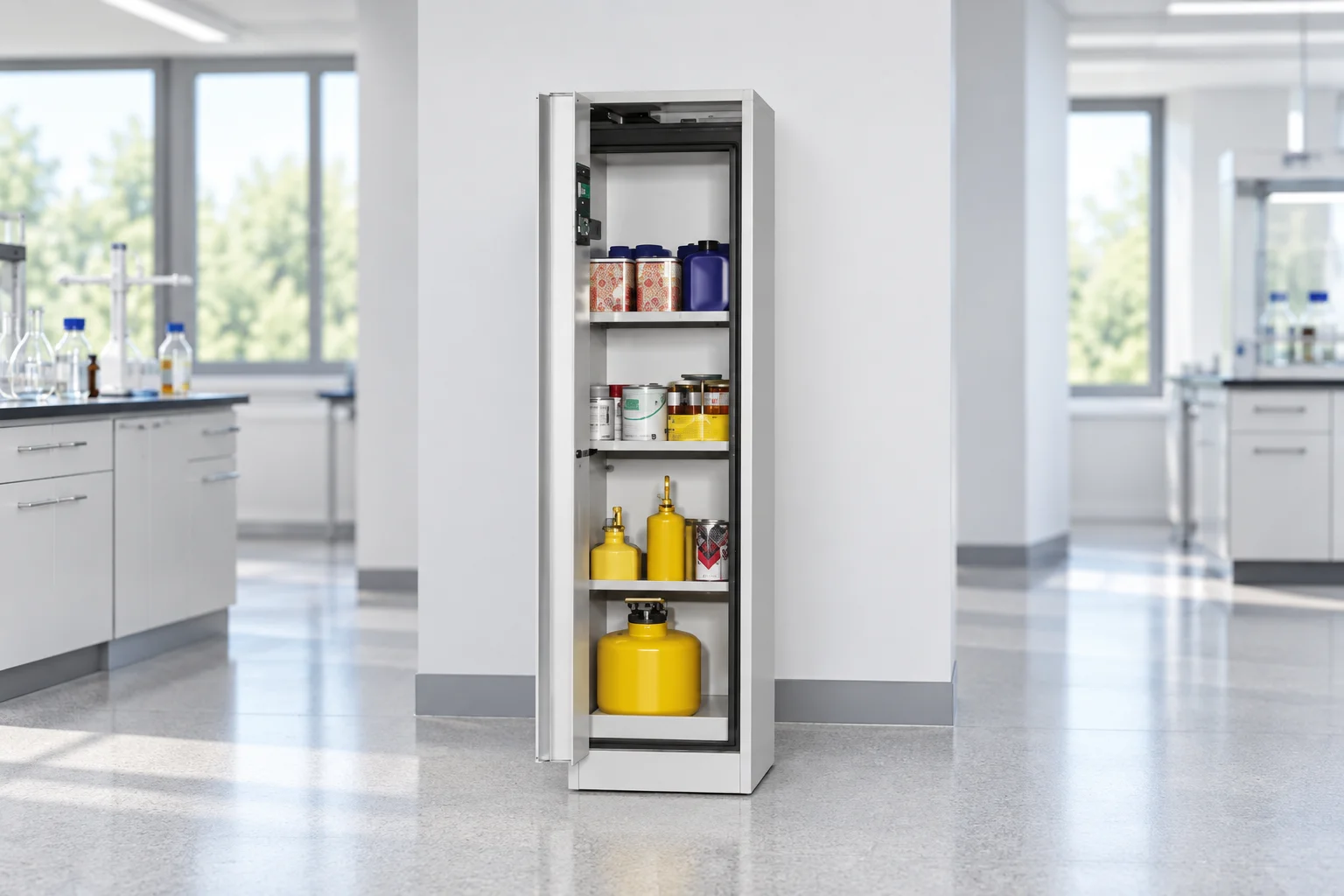
Solvents require a fire-resistant safety storage cabinet to EN 14470-1, of a type matched to the quantity of liquid and the room. In the documentation, check the fire resistance type on the rating plate, the standard number, the capacity of the spill sump and the recommended air extraction rate. We explain how to match a cabinet to the type of reagent in our guide to choosing laboratory reagent cabinets.
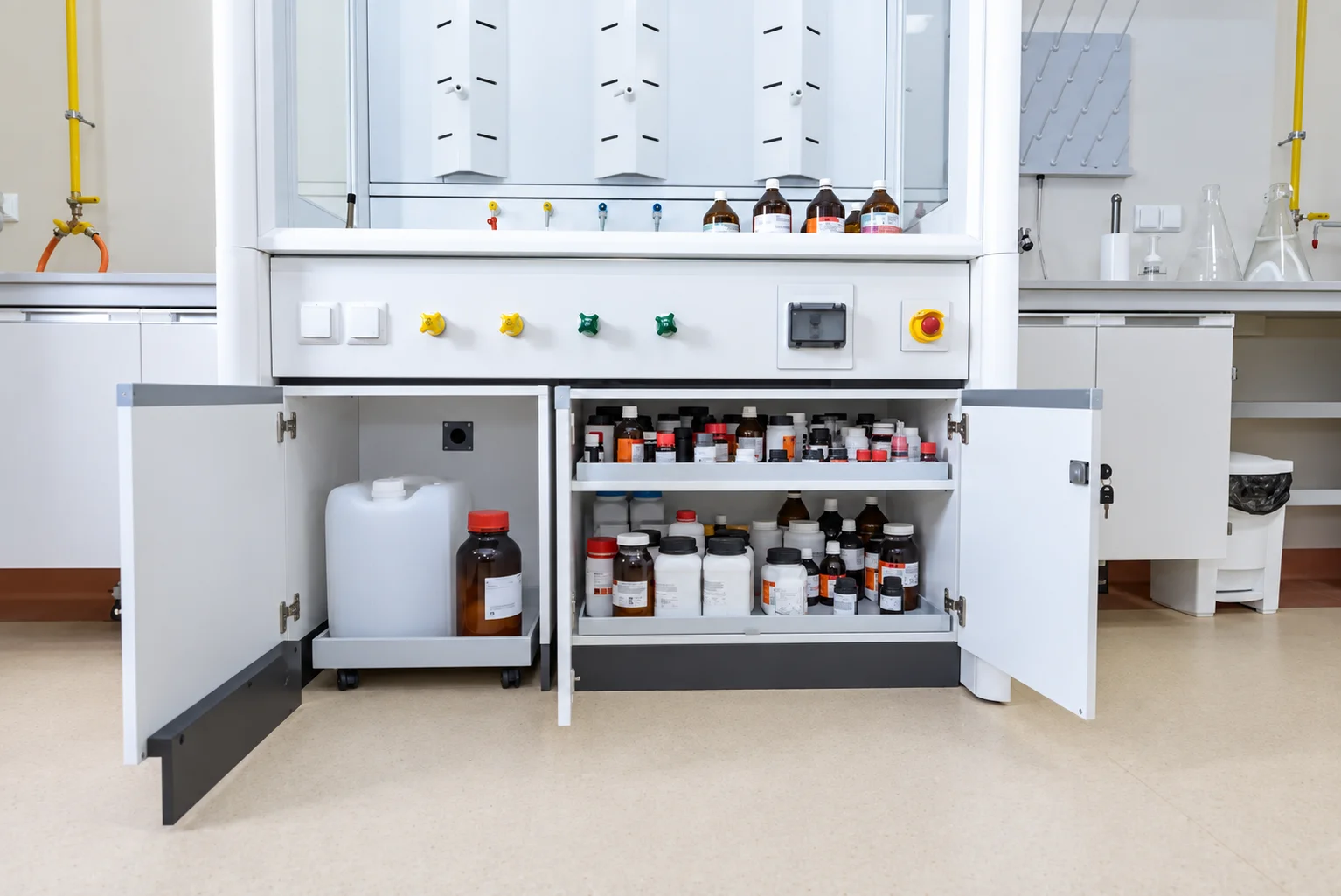
Reagents are separated by hazard: flammable liquids go in a fire-resistant safety storage cabinet, acids and alkalis in a chemical storage cabinet for non-flammable substances, and volatile substances in a ventilated chemical cabinet. Containers are placed in spill trays, labelled and kept away from heat sources. We have gathered the detailed rules in our article on how to store chemical reagents.
A flammable storage cabinet has a type that shows how long it protects liquids in a fire. How to match it to your stock and lab, and what goes in the order?
Acid and base storage: what must not stand together according to ICSC cards and the CIOP-PIB booklet, why HF is not kept in glass and which EN 16121 cabinet.
A modern laboratory combines precision of analysis with strict occupational safety requirements. Proper storage of glassware and reagents determines efficiency and staff protection against hazardous substances. Therefore, properly planning furniture arrangements at an early design stage helps avoid costly changes in the future.
Storing chemical reagents in the laboratory is not a matter of alphabetical order - safety is what matters here. Each substance should be segregated by hazard class, not by name. Proper safety cabinets, ventilation, temperature control and consideration of chemical compatibility are the foundations of work in any laboratory. By following these rules, the risk of accidents, fires and contact with toxic or corrosive substances is minimized.
New projects, products and guides on laboratory furniture, in one place.
Tell us what has to happen in the room. We will pick the furniture and work out the rest.
Free project quote.