Cabinets and chemical storage
Flammable storage cabinet: which type to choose?
A flammable storage cabinet has a type that shows how long it protects liquids in a fire. How to match it to your stock and lab, and what goes in the order?
Laboratory cabinets
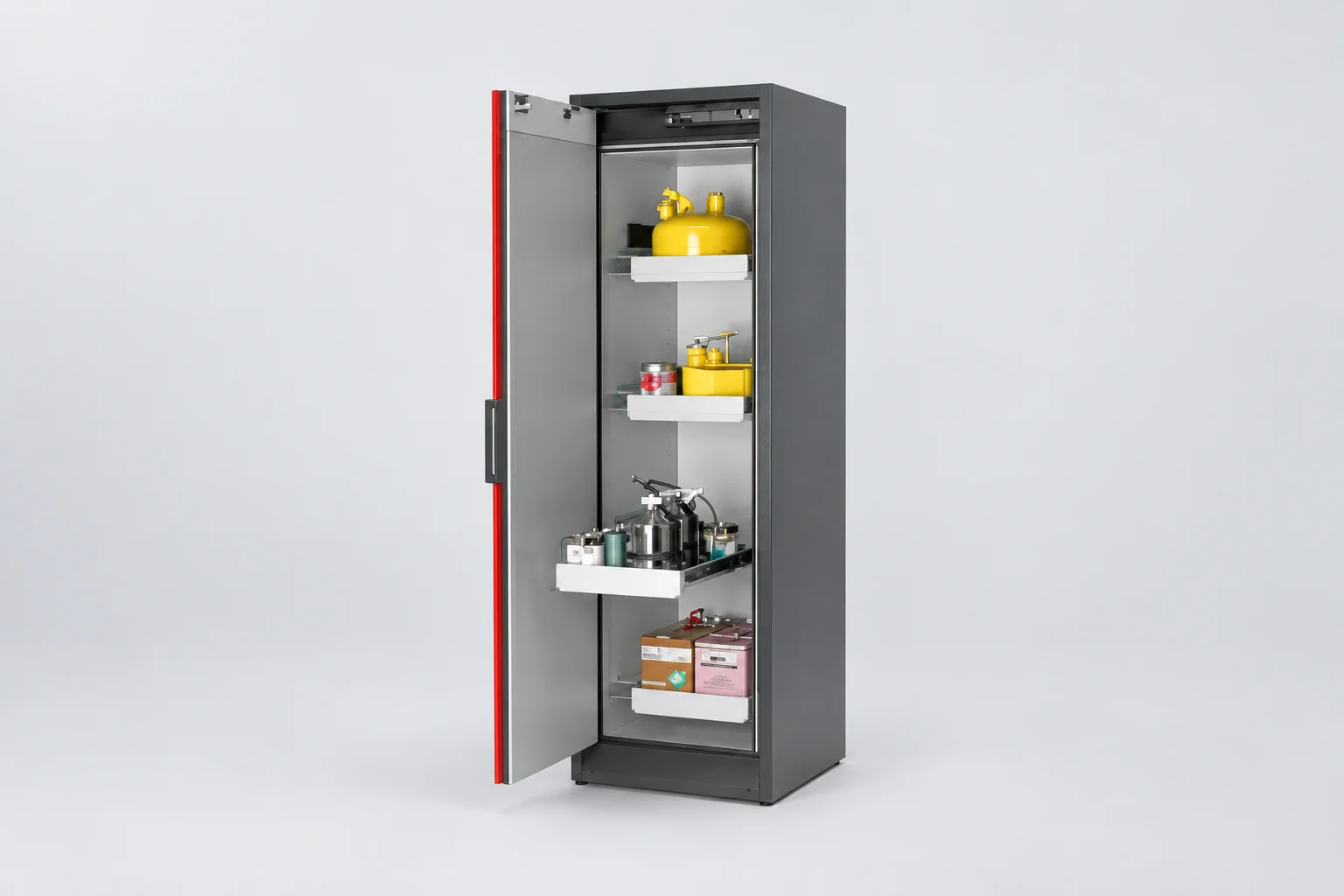
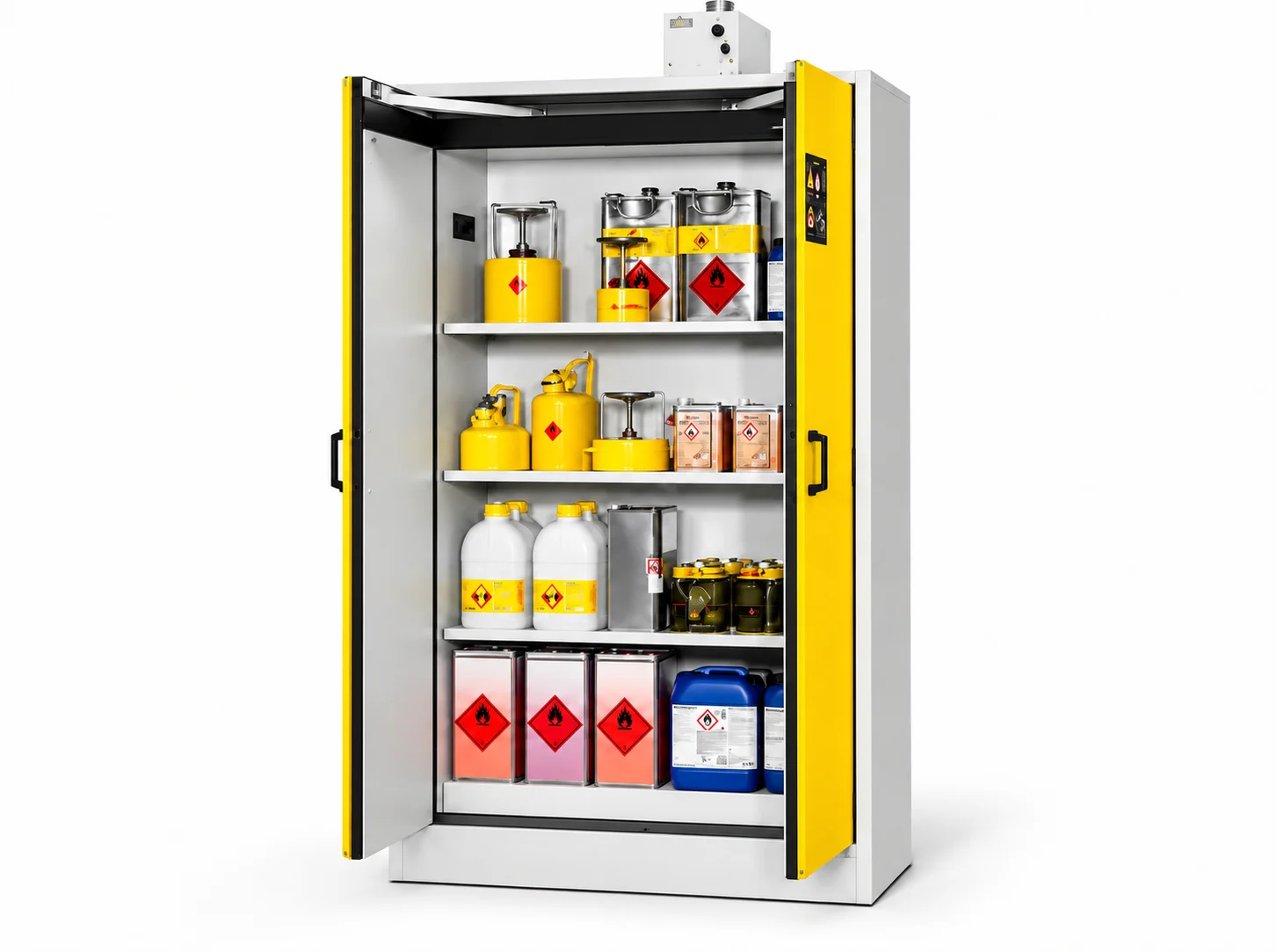
Type 30 fire-resistant safety storage cabinets are classed as type 30 under EN 14470-1: in a fire, their insulated body and self-closing doors keep the flammable liquids inside the compartment isolated from the flames for 30 minutes.
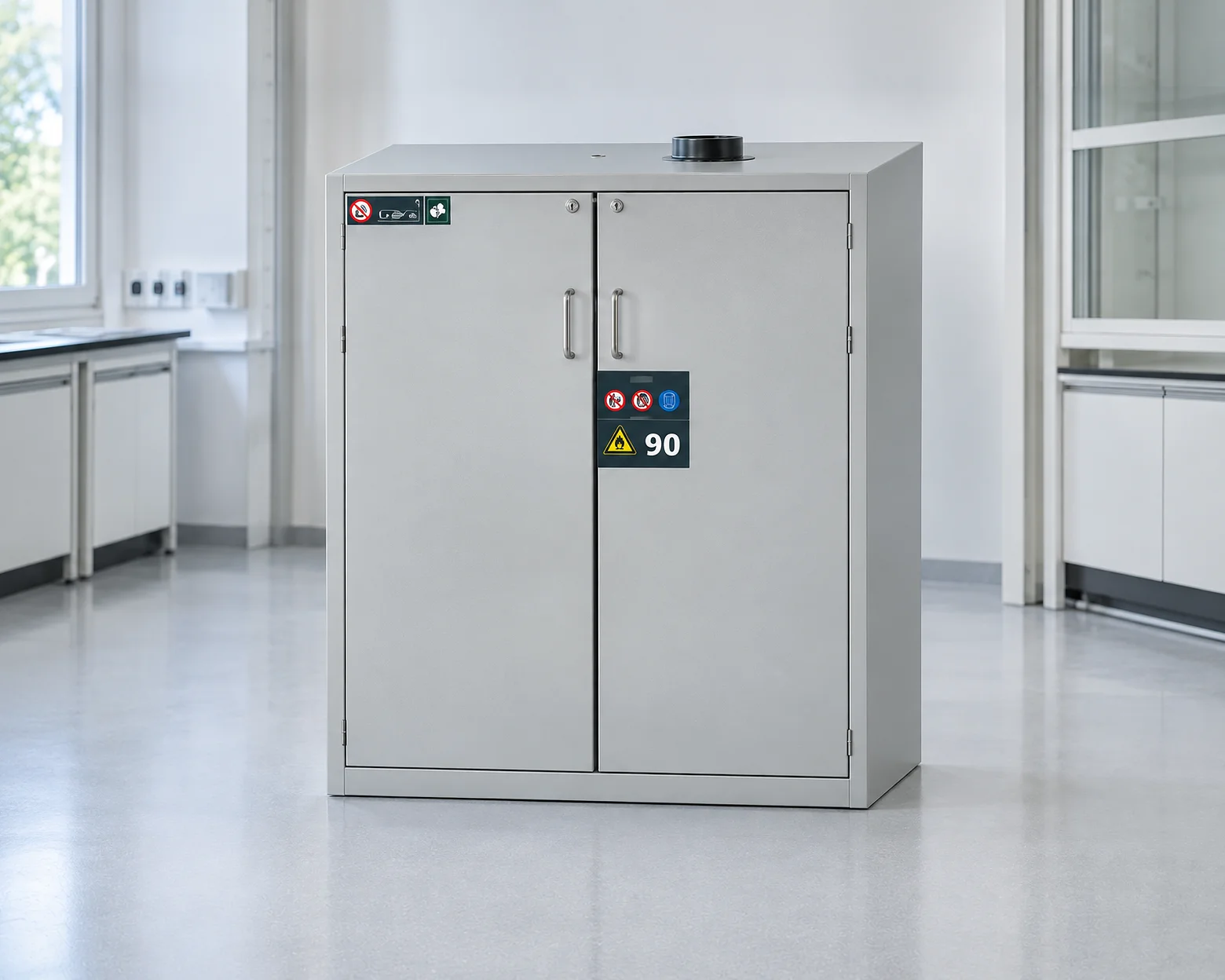
About the category
Type 30 means that, in a fire, the cabinet shields its contents from the rising temperature outside for 30 minutes. The number in the designation gives the protection time in minutes. It says nothing about the cabinet's capacity or the material it is made from. The protection comes from the whole construction: a multi-layer body filled with insulation, self-closing doors, intumescent seals that expand at high temperature and shut-off dampers in the ventilation connection. Once a temperature threshold is exceeded, a mechanism releases the door hold-open and the doors close. If the temperature keeps rising, the dampers close and the seals swell to fill the gaps. All of this works without power and without anyone having to act. Our article on how to choose a cabinet's fire resistance class explains how to read the markings on the rating plate and in the technical data sheet.
A 30-minute fire-resistant safety storage cabinet is sufficient where smaller quantities of flammable liquids are stored. The choice of class depends on the substances' safety data sheets and the quantities kept. A longer protection time gives more minutes for evacuation and more time for the fire service, which is why larger stocks of solvents call for type 90 fire-resistant safety storage cabinets. Cabinets of any type are placed away from the main escape routes, so their position is best decided together with the rest of the furniture layout. We cover this in our guide on how to plan storage in the laboratory. Acids and alkalis that are not flammable belong in chemical storage cabinets, because what matters for them is an interior that resists fumes, not a fire rating. We have set out their requirements in the article cabinets for acids and alkalis. Other cabinet types are in the category fire-resistant and safety cabinets.
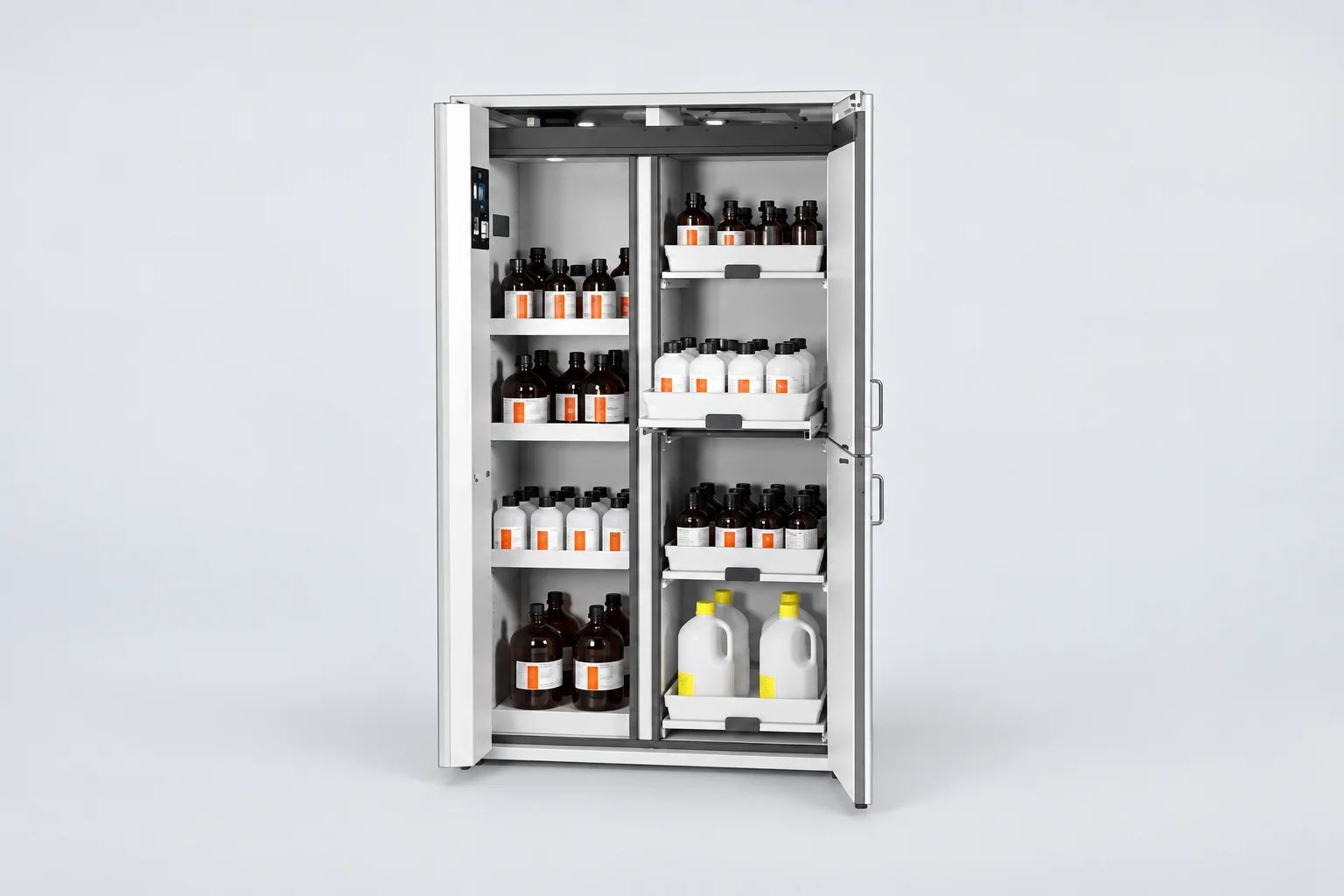
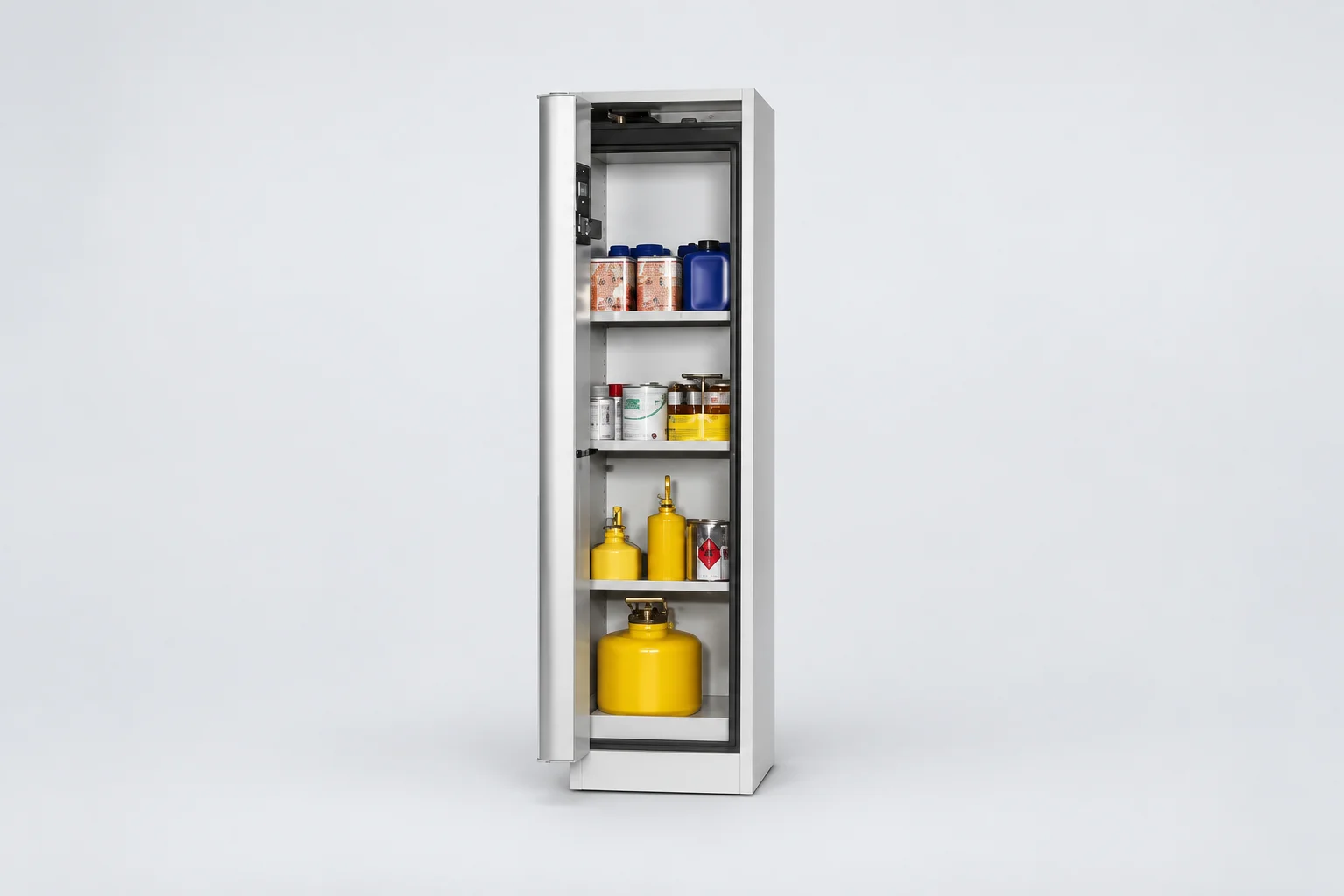
All three series offer 30 minutes of fire resistance to EN 14470-1 and have a cylinder lock. They differ in their doors, width and interior.
A 30-minute cabinet can be connected to an extraction system through the connection in its body. The model data sheets give the minimum air extraction based on 10 air changes per hour. For the Q-Classic-30 this is 9 m³/h at a width of 1164 mm, 6 m³/h at 864 mm and 4 m³/h at 564 mm; for the K-Phoenix-30 it is 9 m³/h. Extraction removes vapours from the compartment, which escape even from properly closed bottles. In a fire, the dampers in the connection close automatically, so hot gases cannot enter the compartment through the duct. The criteria for choosing a cabinet with permanent extraction when vapours are toxic or corrosive are covered in our article on when you need a ventilated cabinet.
The difference is how long the compartment stays isolated from a fire: type 30 protects the contents for half an hour, type 90 for an hour and a half. Both classes are defined by the same standard, EN 14470-1. The extra sixty minutes are a margin for evacuation and firefighting. For small quantities of solvents type 30 is usually enough; for larger stocks, type 90 is the choice.
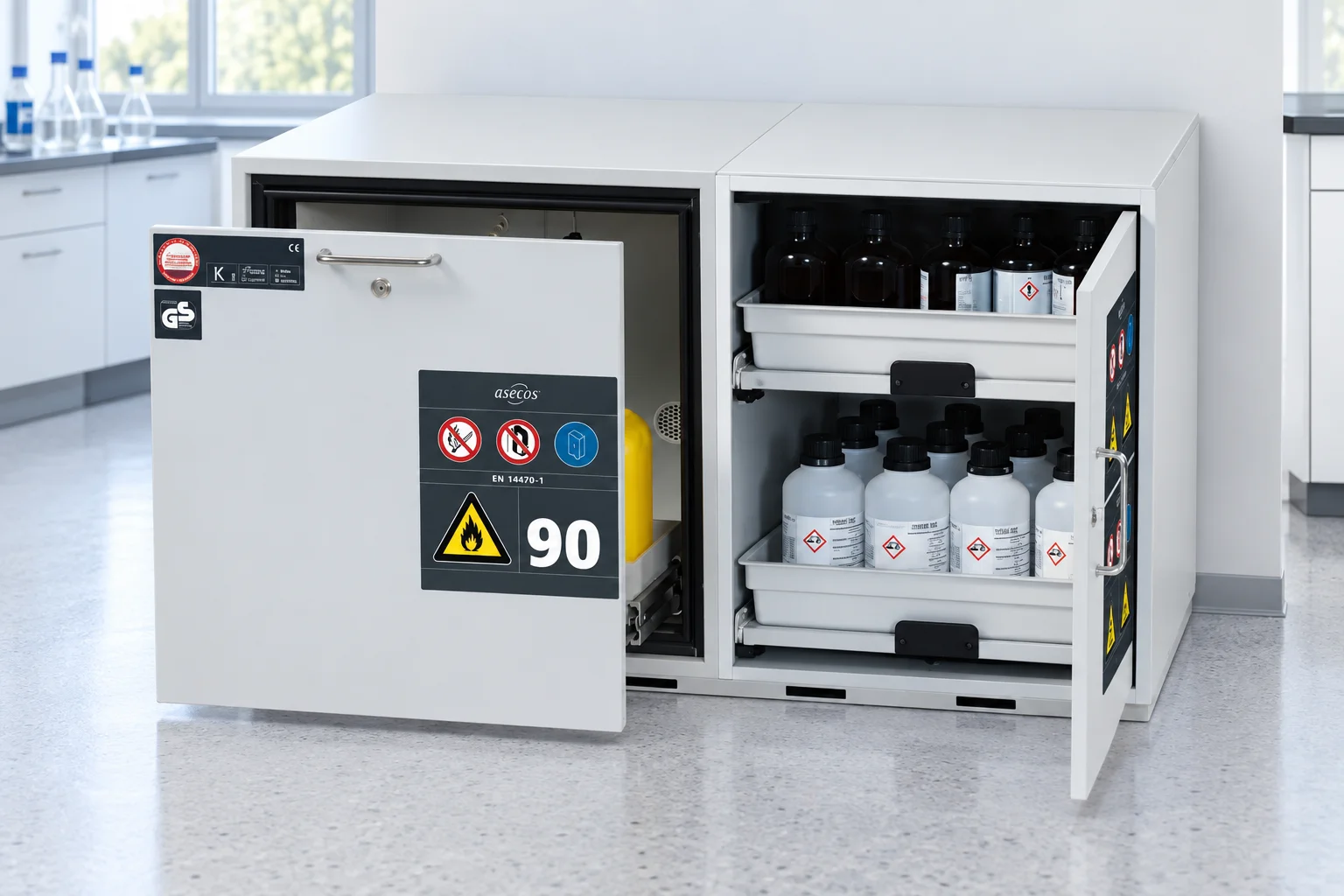
No, the 30-minute class includes only floor-standing cabinets with heights from 1947 to 1968 mm. For under-worktop use there is the K-UB-90 from the 90-minute class: it is 601 mm high and 1102 or 1402 mm wide. It is chosen when flammable liquids need to be kept right at the workstation and the room has no space for a tall cabinet.
No, they are two separate solutions. A ventilated chemical cabinet removes vapours but has no thermal insulation and no fire resistance class. A type 30 cabinet protects flammable liquids from fire and, when connected to extraction, also removes their vapours. For volatile, non-flammable reagents a ventilated cabinet is usually sufficient, as we explain in the article ventilated cabinets for laboratory reagents.
By its type designation under EN 14470-1 and the test documentation, not by its trade name. The standard requires the complete cabinet to be tested in a test furnace, and the result is confirmed by a document from an independent body. A material's reaction to fire class, for example B-s1,d0 to EN 13501-1, describes only how the board behaves and says nothing about how long the cabinet will protect its contents.
A flammable storage cabinet has a type that shows how long it protects liquids in a fire. How to match it to your stock and lab, and what goes in the order?
A reagent cabinet is not an ordinary piece of furniture, but the first element of a laboratory's safety system. A poorly chosen design quickly makes itself known: through housing corrosion, leaks, the risk of uncontrolled chemical reactions, and remarks during health and safety inspections. The choice of a cabinet depends on five factors: the method of storing substances, material resistance, ventilation efficiency, leak protection, chemical segregation, and adapting the format to the laboratory.
Acid and base storage: what must not stand together according to ICSC cards and the CIOP-PIB booklet, why HF is not kept in glass and which EN 16121 cabinet.
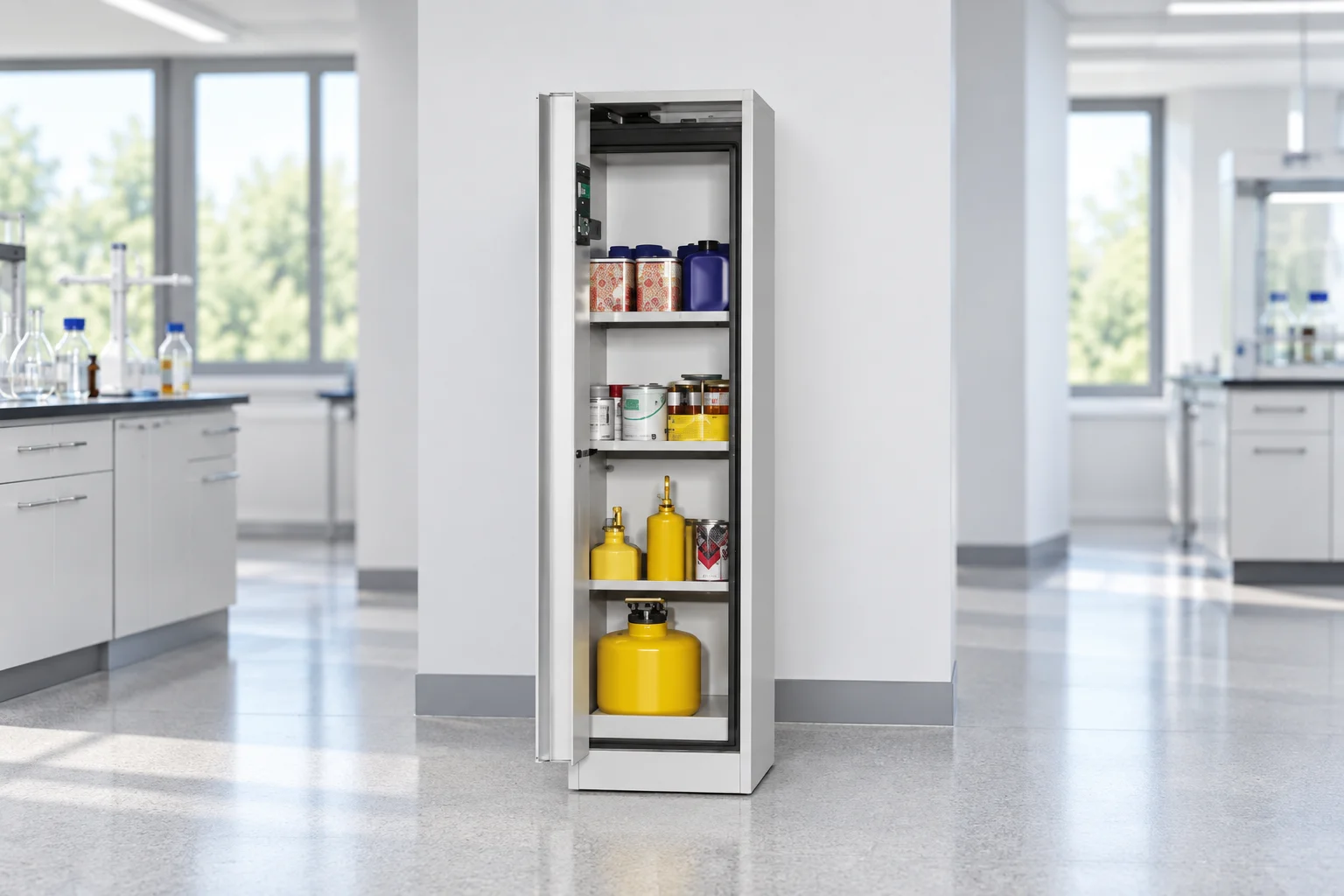
When planning a modern laboratory, there is a growing trend to move away from ready-made solutions in favor of personalization. Custom laboratory cabinets allow for optimal use of space and strict adaptation to the specificity of research, guaranteeing the highest standards of safety and ergonomics.
New projects, products and guides on laboratory furniture, in one place.
Tell us what has to happen in the room. We will pick the furniture and work out the rest.
Free project quote.