Cabinets and chemical storage
Flammable storage cabinet: which type to choose?
A flammable storage cabinet has a type that shows how long it protects liquids in a fire. How to match it to your stock and lab, and what goes in the order?
Laboratory cabinets
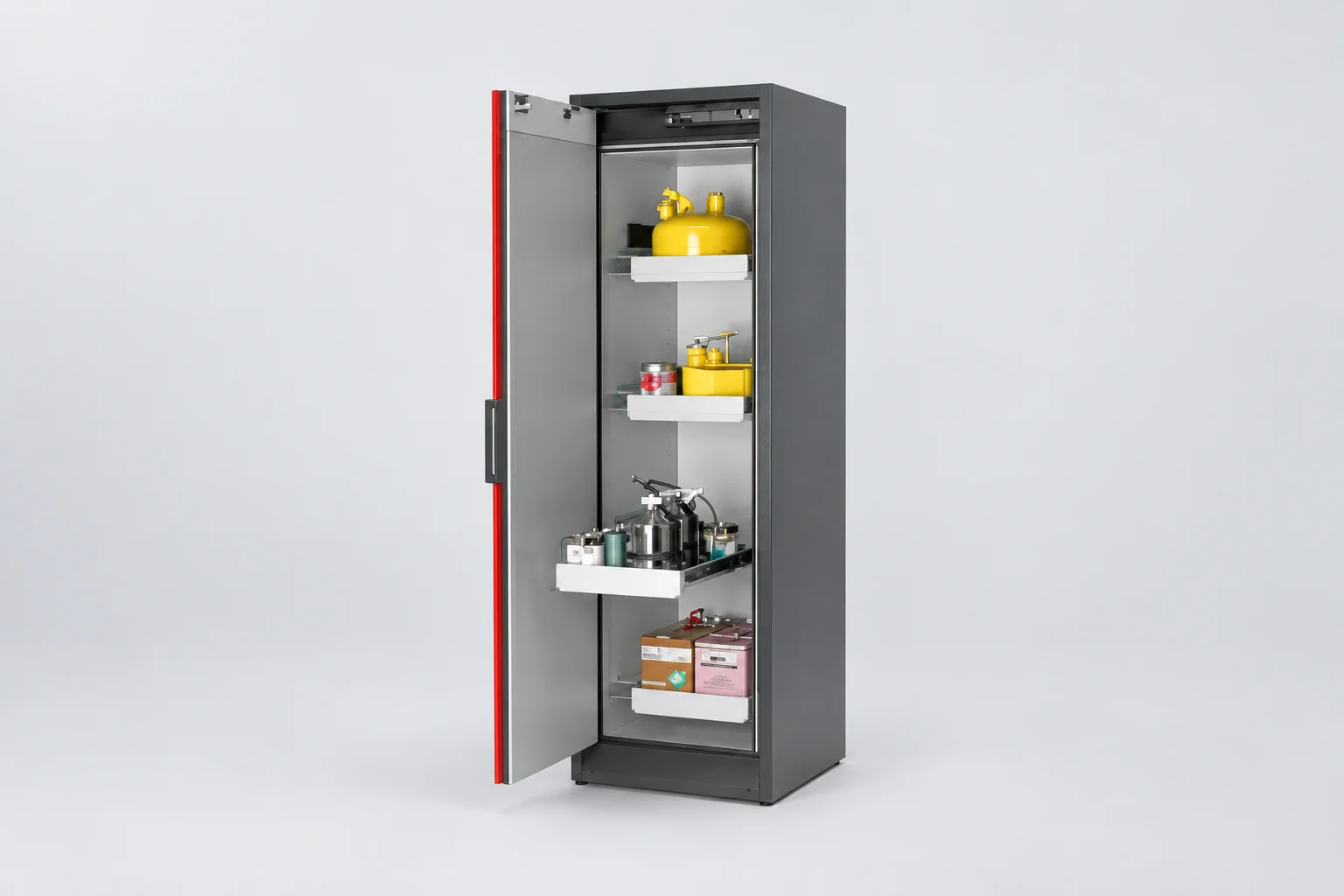
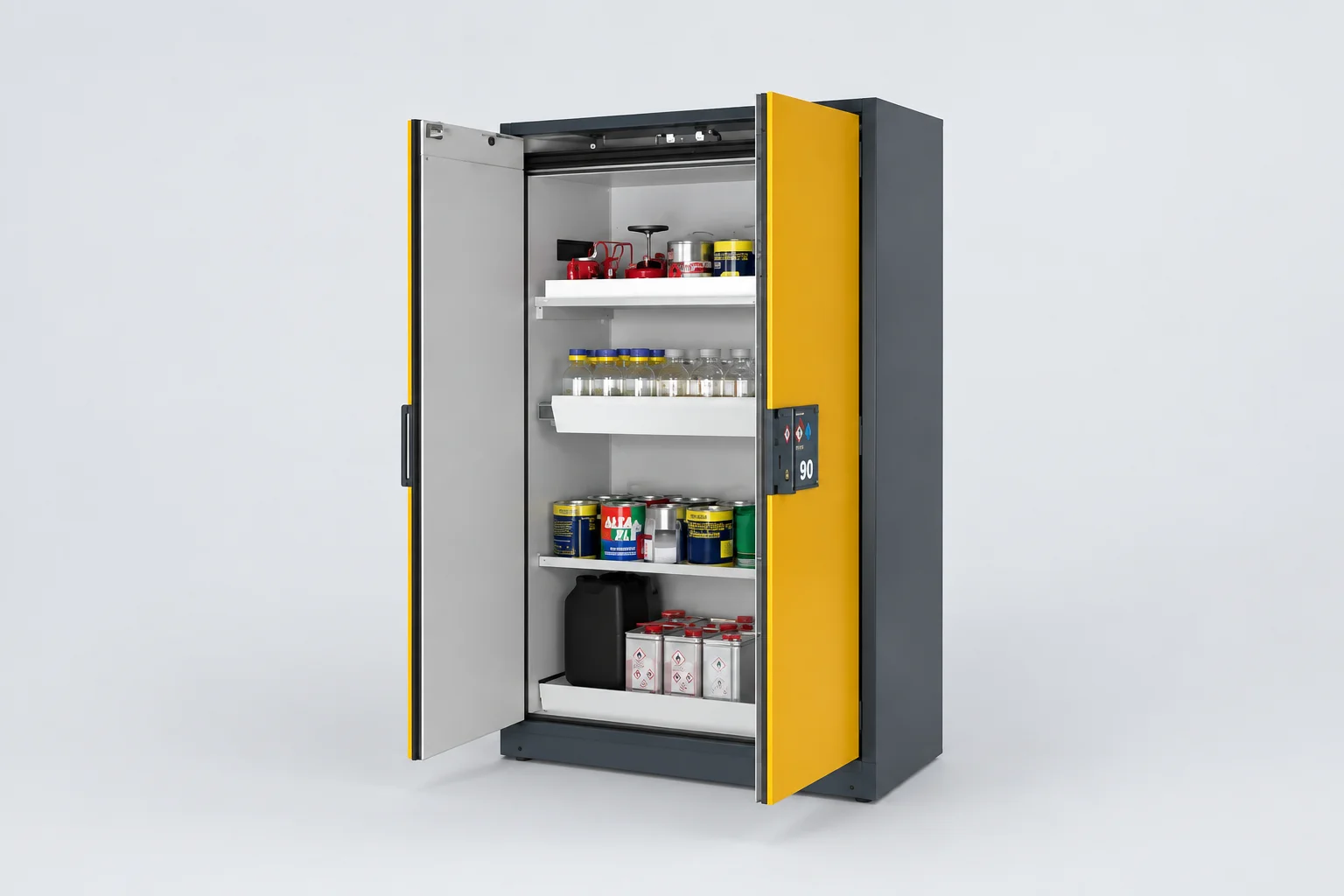
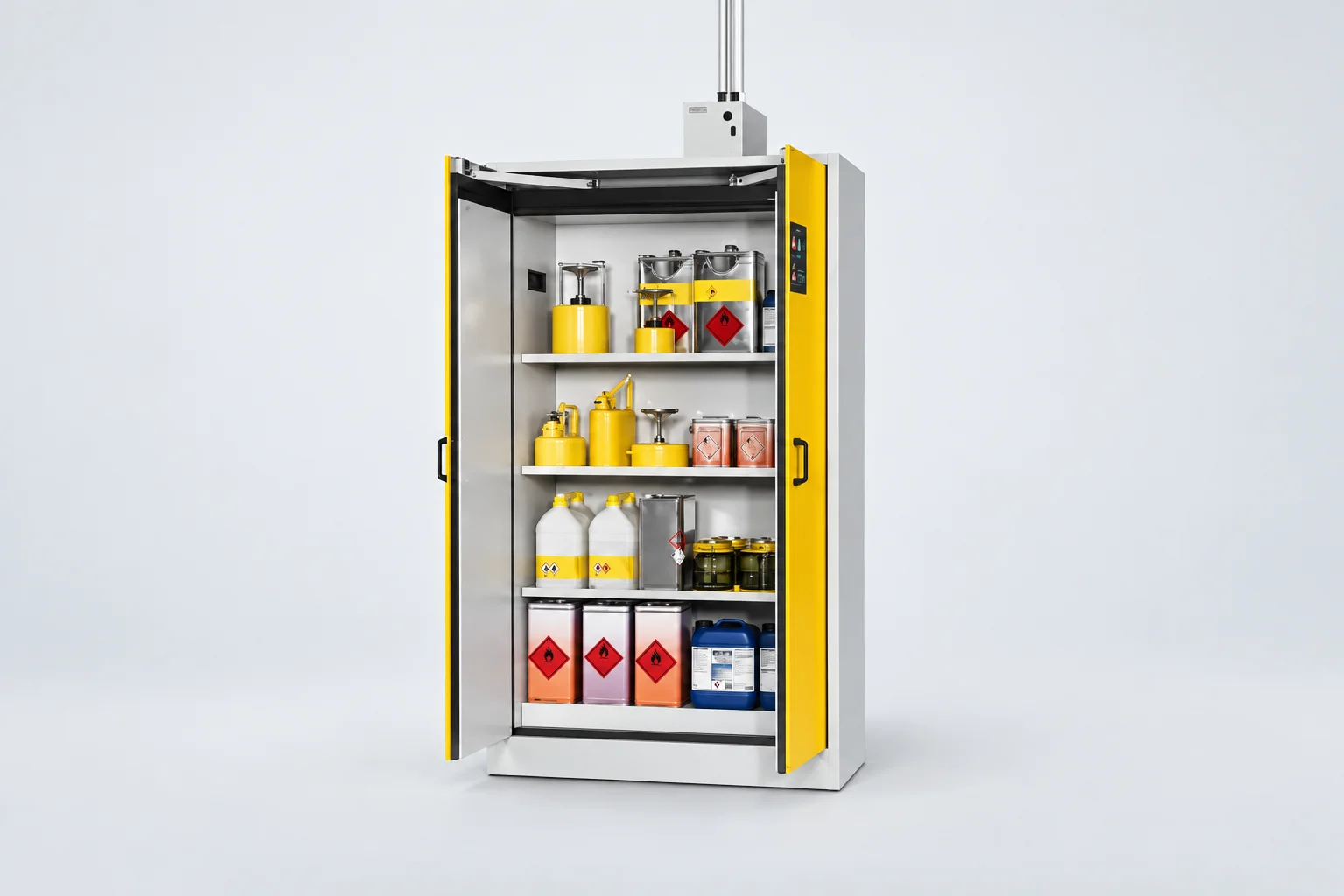
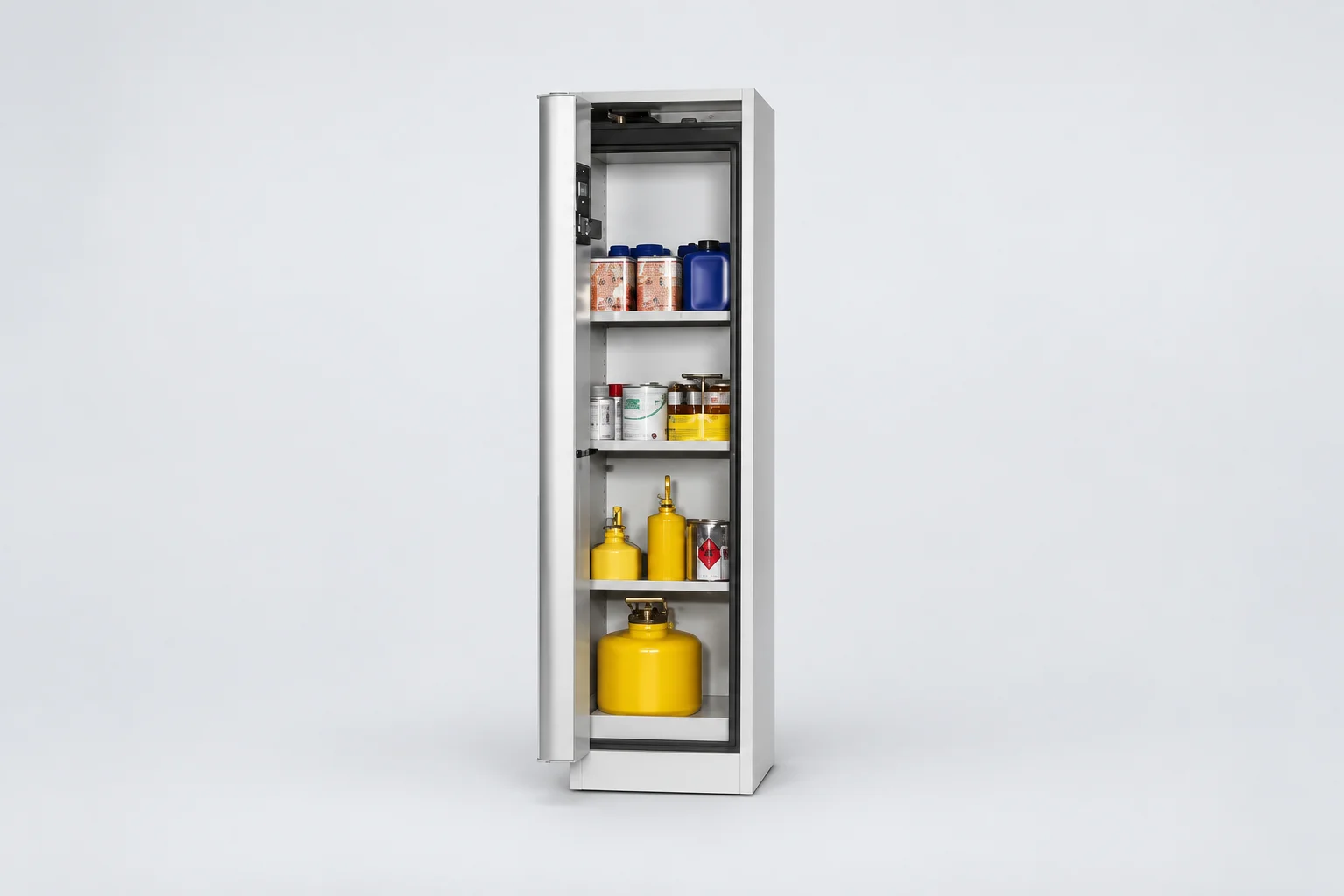
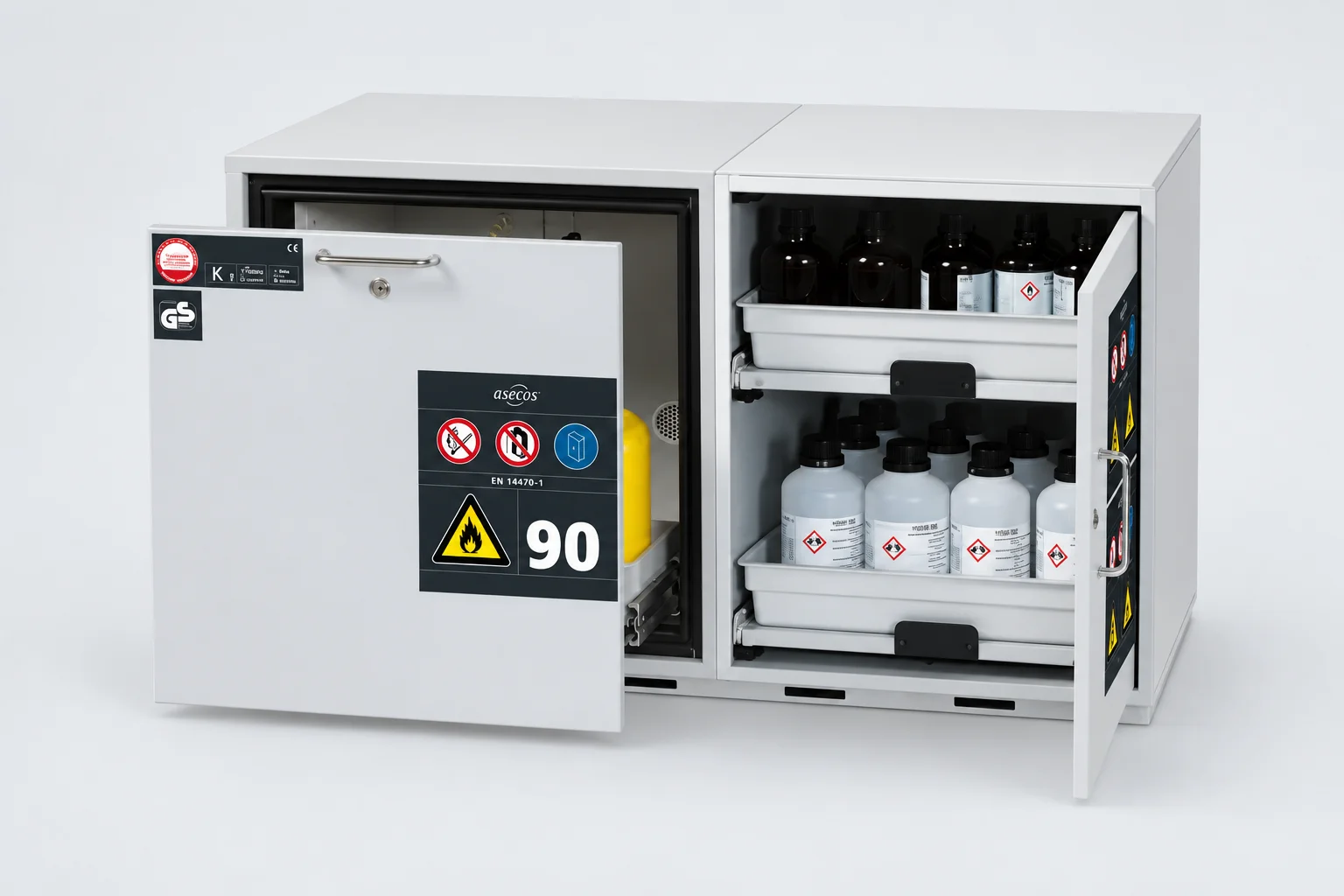
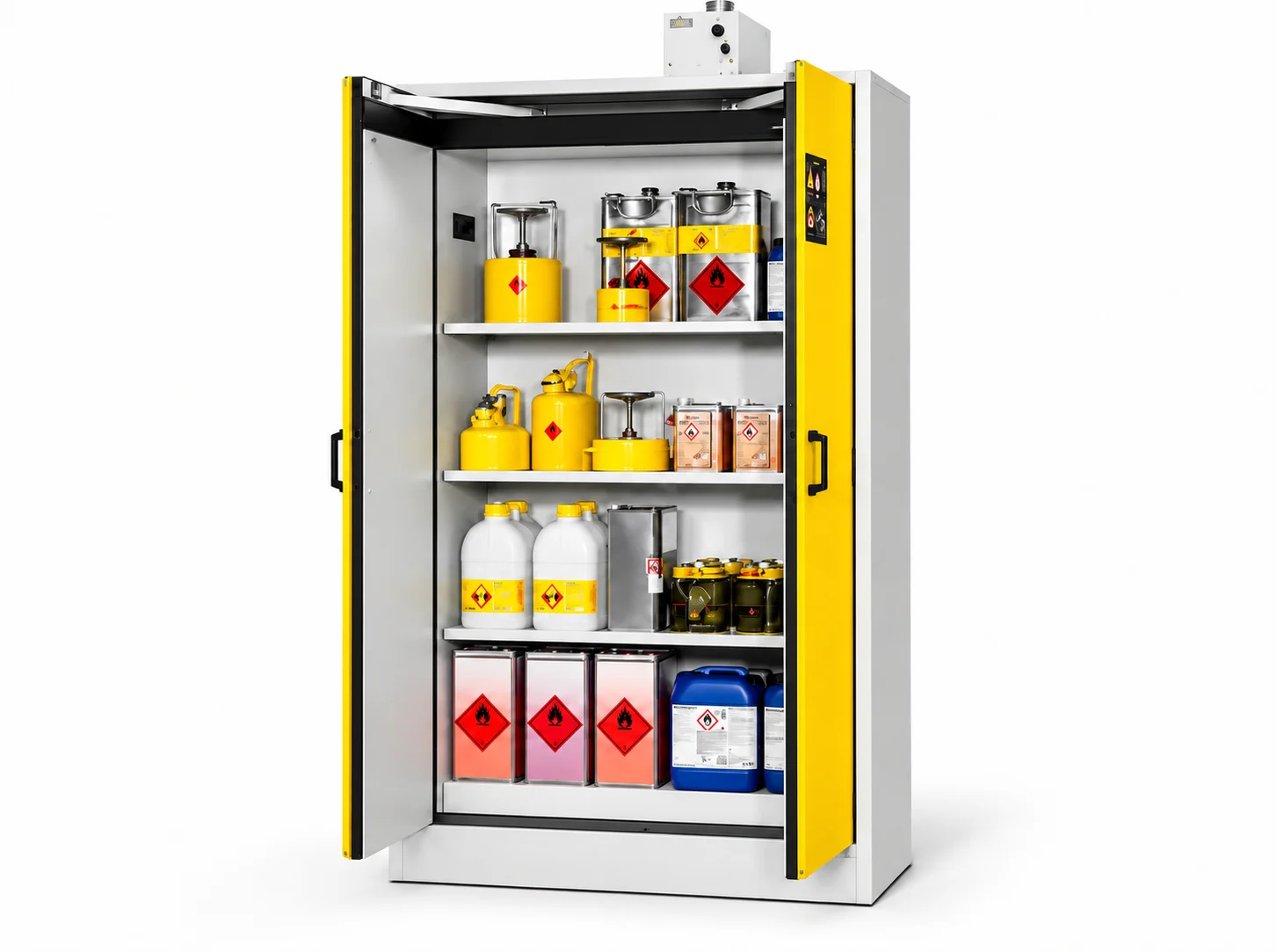
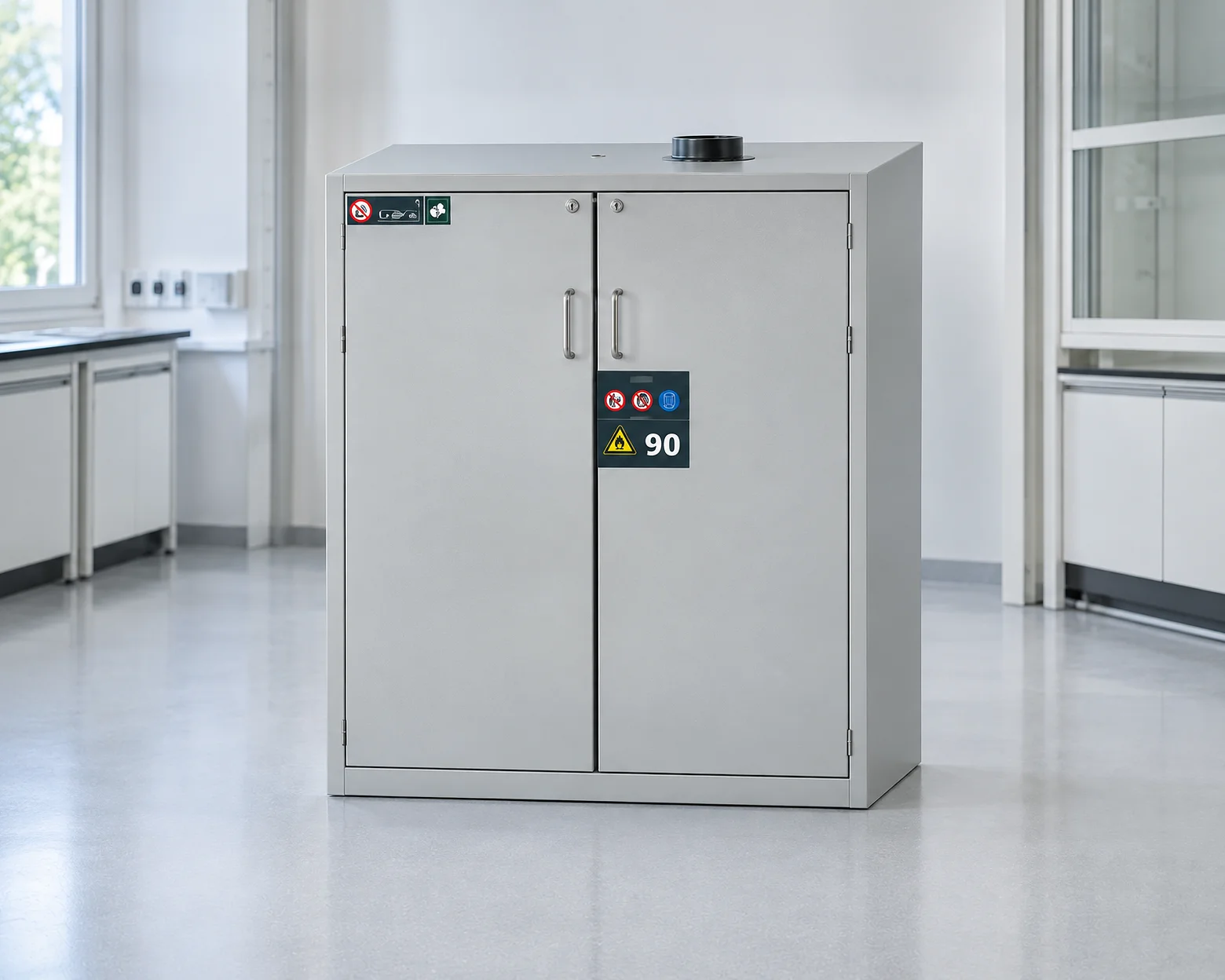
Type 90 fire-resistant safety storage cabinets are safety cabinets for flammable liquids, classified as type 90 under EN 14470-1, which in a fire insulate their contents from the outside temperature for 90 minutes.
About the category
Type 90 means that for 90 minutes the cabinet insulates the stored flammable liquids from the fire temperature rising outside. It is the highest class in EN 14470-1. The number in the designation gives the protection time in minutes.
In a fire, the mechanisms act in sequence. Once a temperature threshold is exceeded, the doors close by themselves. The dampers in the ventilation connections then close, and intumescent seals expand to close the gaps so that hot gases cannot enter the interior. None of these steps needs a power supply or human intervention.
A trade name alone does not confirm the class. That requires a furnace test and a document issued in accordance with EN 14470-1. We explain how to read these designations in our guide on choosing the right fire resistance class.
A 90-minute cabinet is used where larger quantities of flammable liquids are stored in the room. The extra 60 minutes of protection give staff time to evacuate and leave the fire brigade a margin before the solvent compartment becomes another seat of the fire. For smaller quantities, 30-minute fire-resistant safety storage cabinets are used. The choice depends on the safety data sheets of the substances and the quantities stored.
An ordinary cabinet with extraction has no thermal insulation, so it cannot replace a fire-resistant cabinet for flammable liquids. The two solutions complement each other, as we explain in our article ventilated chemical cabinet vs safety cabinet. Non-flammable acids and bases belong in chemical storage cabinets with a corrosion-resistant interior, and the other cabinet types are in the fire-resistant and safety cabinets category. A fire-resistant cabinet is placed away from the main escape routes. We show how to lay out storage zones in our article on how to plan storage in the laboratory.
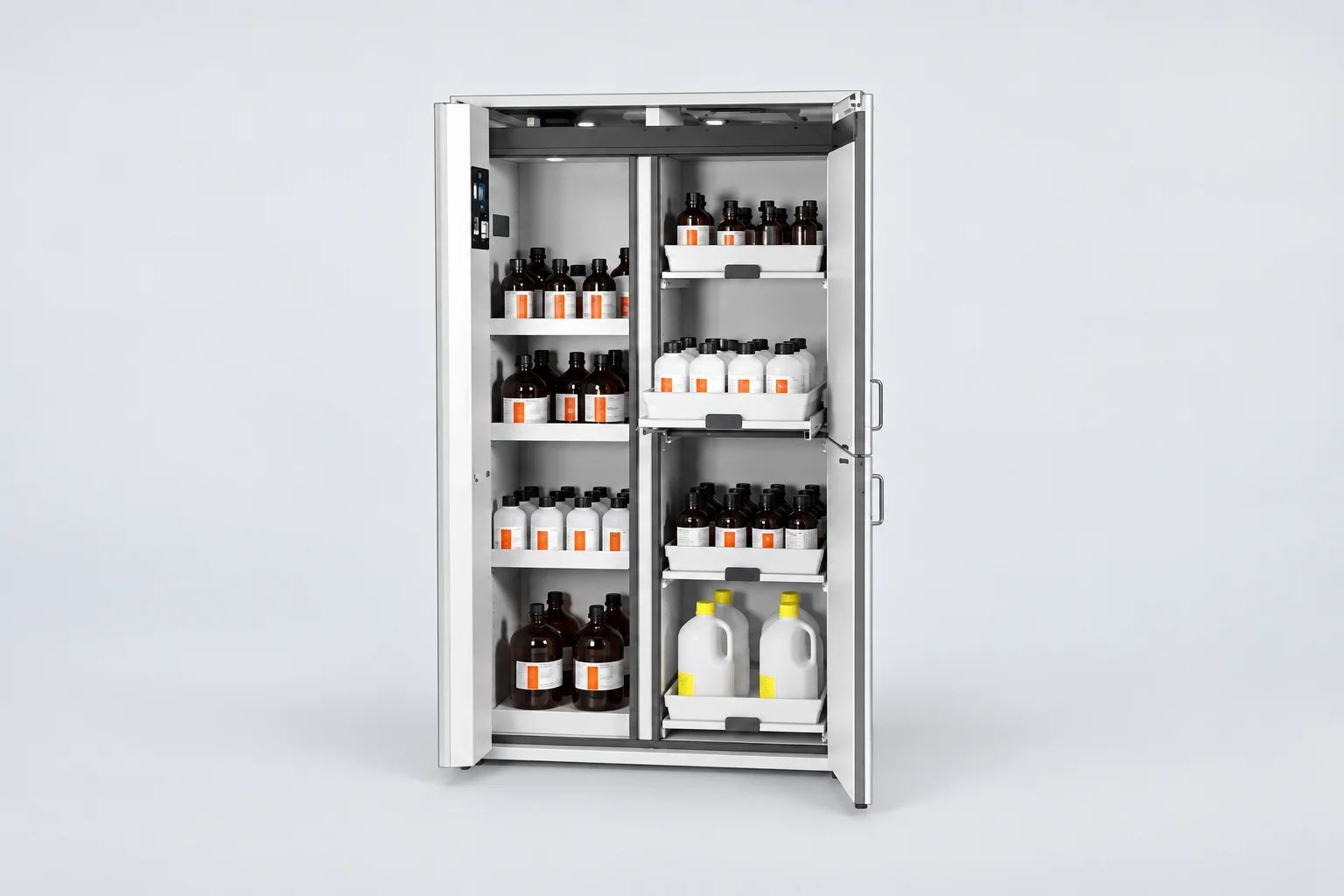
According to their data sheets, all models offer 90 minutes of fire resistance in accordance with EN 14470-1. They differ in their doors, interior and dimensions.
The data sheets for all models give a minimum air extraction rate based on 10 air changes per hour, so it increases with the size of the interior. The Q-Classic-90 and Q-Pegasus-90 need 4, 6 or 9 m³/h at widths of 599, 893 and 1193 mm. The S-Classic-90 and S-Phoenix-90 with a height of 1968 mm need 4, 7 or 10 m³/h, the lower S-Classic-90 needs 3 or 6 m³/h, and the K-Phoenix-90 needs 9 m³/h. The under-worktop K-UB-90 needs 2 or 3 m³/h and has a single rear outlet shared by both compartments. Extraction removes solvent vapours from the interior before they escape into the room when the doors are opened. We explain when a connection to extraction is necessary in our article when you need a ventilated chemical cabinet.
It is the number of the standard for safety storage cabinets for flammable liquids. The type given next to it is the time in minutes for which the cabinet protects its contents from a fire outside, and type 90 is the highest class in this standard. The standard also requires the cabinet to stay sealed in a fire, because insulating the body alone is not enough once hot gases get into the interior.
As a rule, no. Acids, bases and flammable substances are stored separately, in dedicated and labelled cabinets. For two groups of substances in one cabinet, there is the K-Phoenix-90 with an absorbent insert for spills of two types. Before combining substances, check their safety data sheets. We explain how to segregate chemicals in our article acid and base cabinets: requirements.
The K-UB-90, which is 601 mm high and 1102 or 1402 mm wide. It has two compartments with a shared air outlet, and its doors and drawers stop in any position and close automatically in a fire. We show other cabinet layouts at the workstation in our article on choosing laboratory cabinets for reagents.
Yes. In a fire, the doors close automatically once a temperature threshold is exceeded, and they need no power supply to do so. The Q-Pegasus-90 also closes its doors during everyday use: the TSA system closes them 60 seconds after opening, after first giving an audible and visual signal. On the Q-Classic-90 and K-Phoenix-90, the doors can be held in a selected position.
A flammable storage cabinet has a type that shows how long it protects liquids in a fire. How to match it to your stock and lab, and what goes in the order?
Choosing the appropriate fire resistance class for a laboratory cabinet is the foundation of fire safety. Proper interpretation of markings and building standards allows for effective protection of flammable substances and gains invaluable time for the safe evacuation of personnel in a situation of extreme danger.
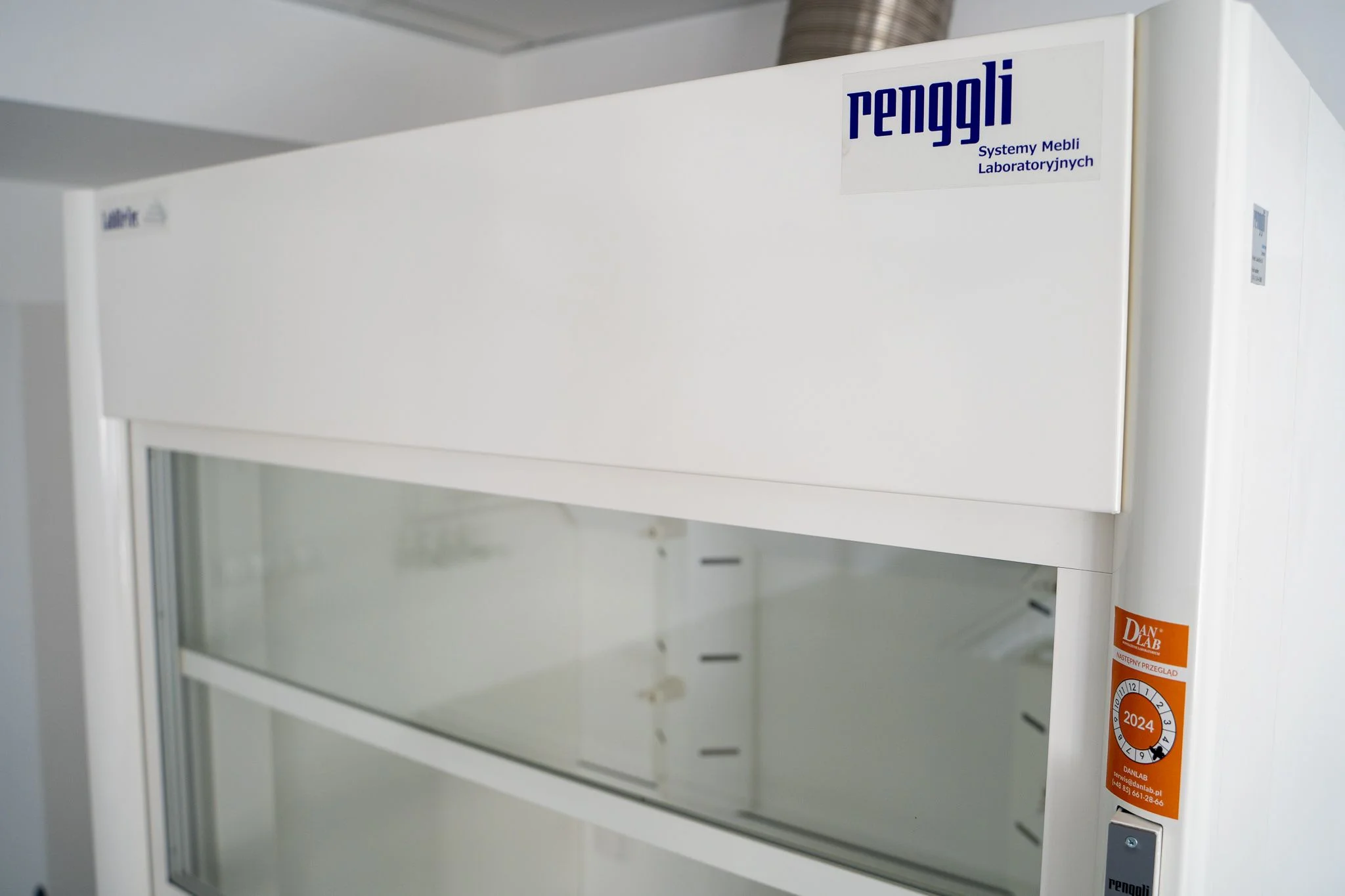
A reagent cabinet is not an ordinary piece of furniture, but the first element of a laboratory's safety system. A poorly chosen design quickly makes itself known: through housing corrosion, leaks, the risk of uncontrolled chemical reactions, and remarks during health and safety inspections. The choice of a cabinet depends on five factors: the method of storing substances, material resistance, ventilation efficiency, leak protection, chemical segregation, and adapting the format to the laboratory.
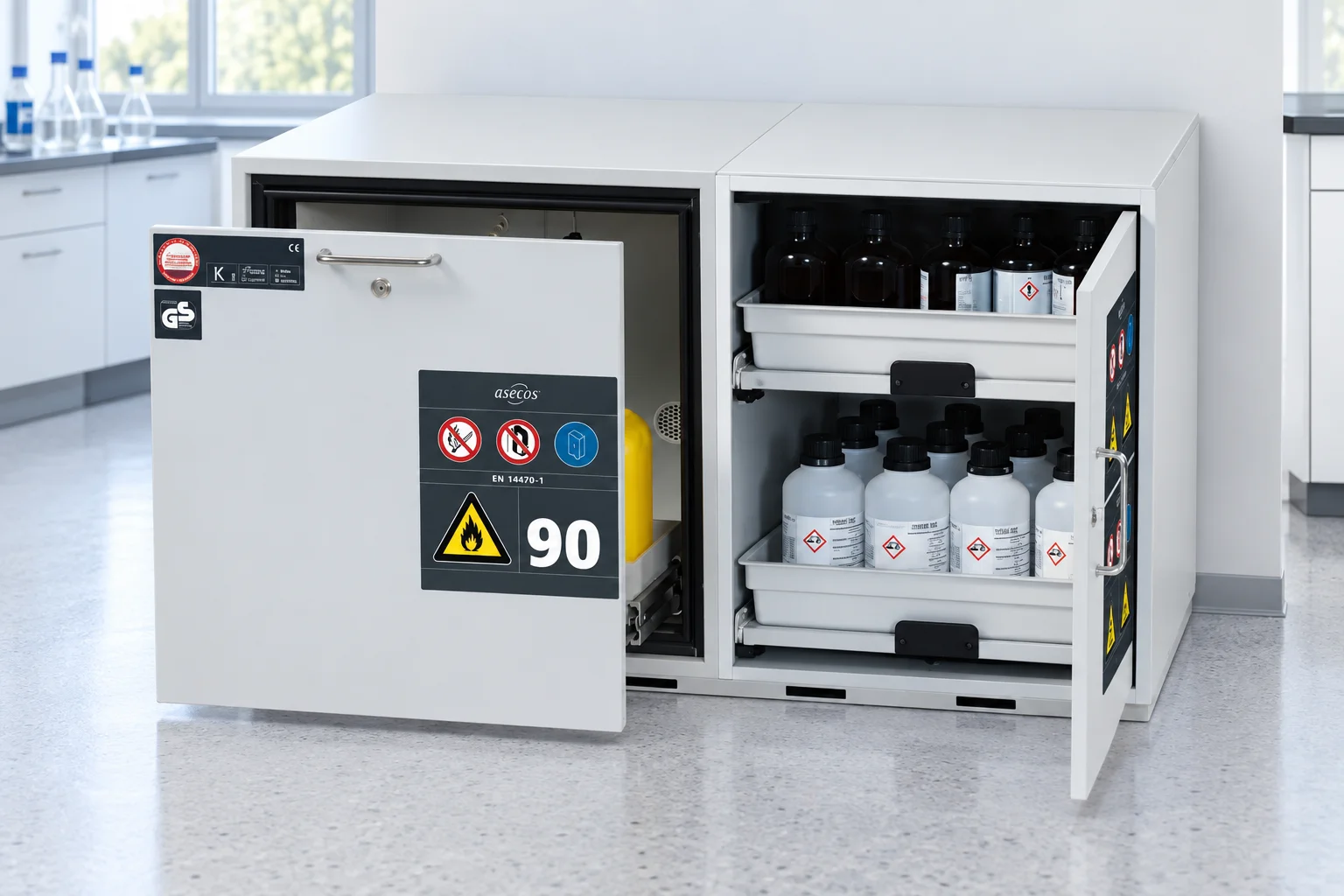
A gas cylinder cabinet protects laboratory personnel from fire and explosion by safely isolating pressurized cylinders containing technical gases. In this article, we explain the requirements set out in the EN 14470-2 standard, what the G90 fire resistance class means, and how to select the right ventilation and grounding for the cabinet.
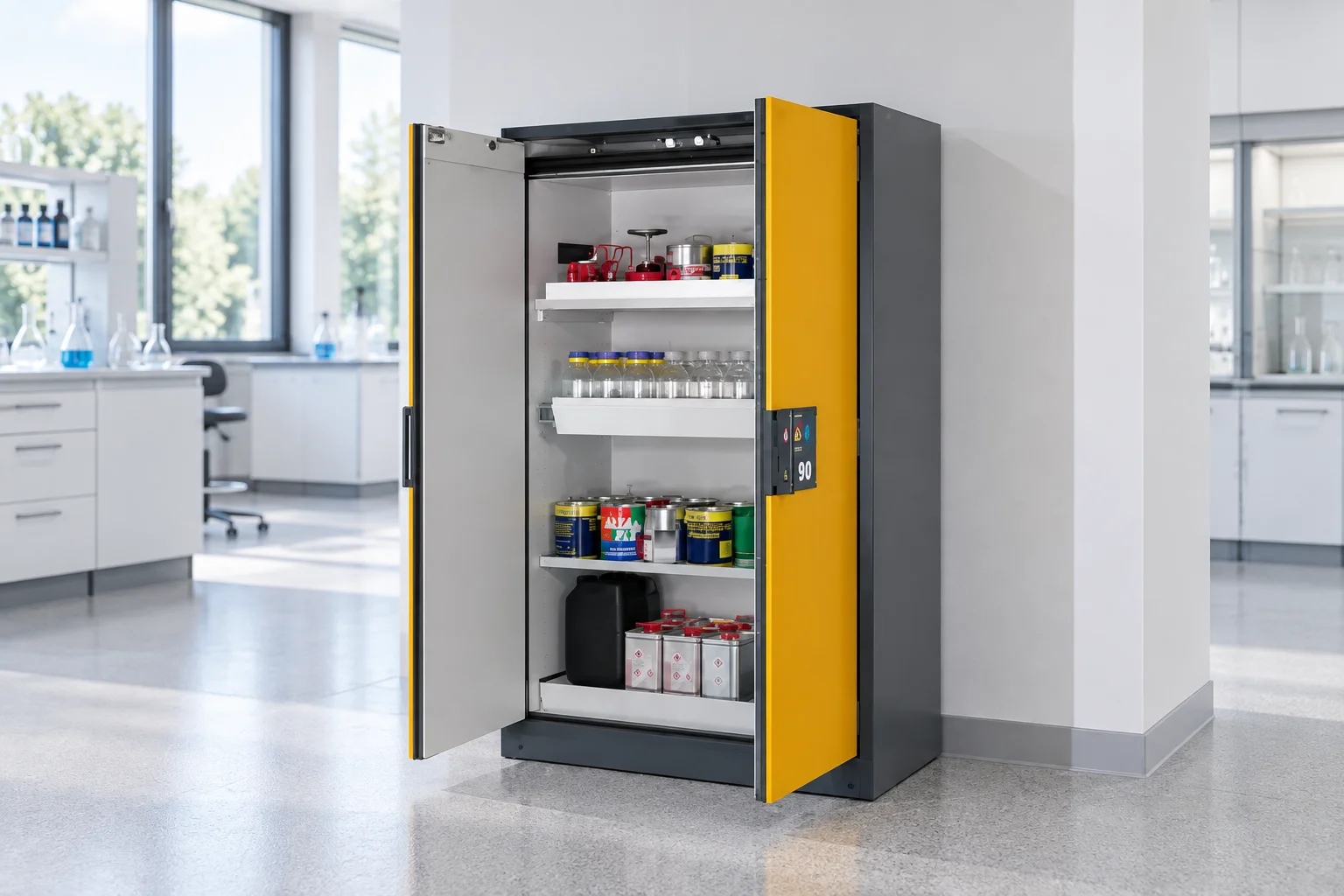
New projects, products and guides on laboratory furniture, in one place.
Tell us what has to happen in the room. We will pick the furniture and work out the rest.
Free project quote.