Skip to content

Laboratory cabinets

Ventilated cabinets

A modern, highly functional laboratory cabinet designed for the safe storage of chemical reagents and volatile substances.

Interested in this product?

Add to enquiryAddedIn enquiry

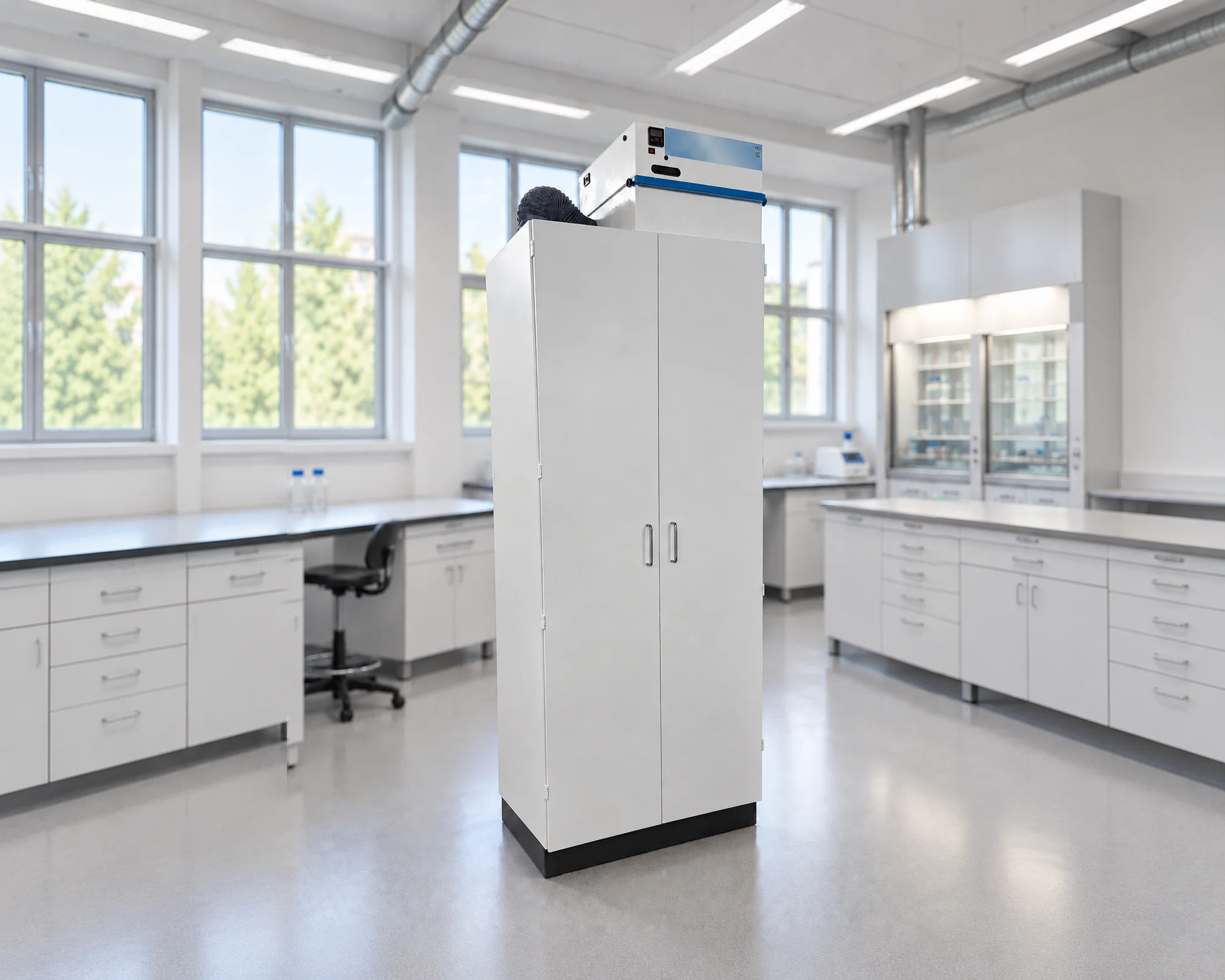
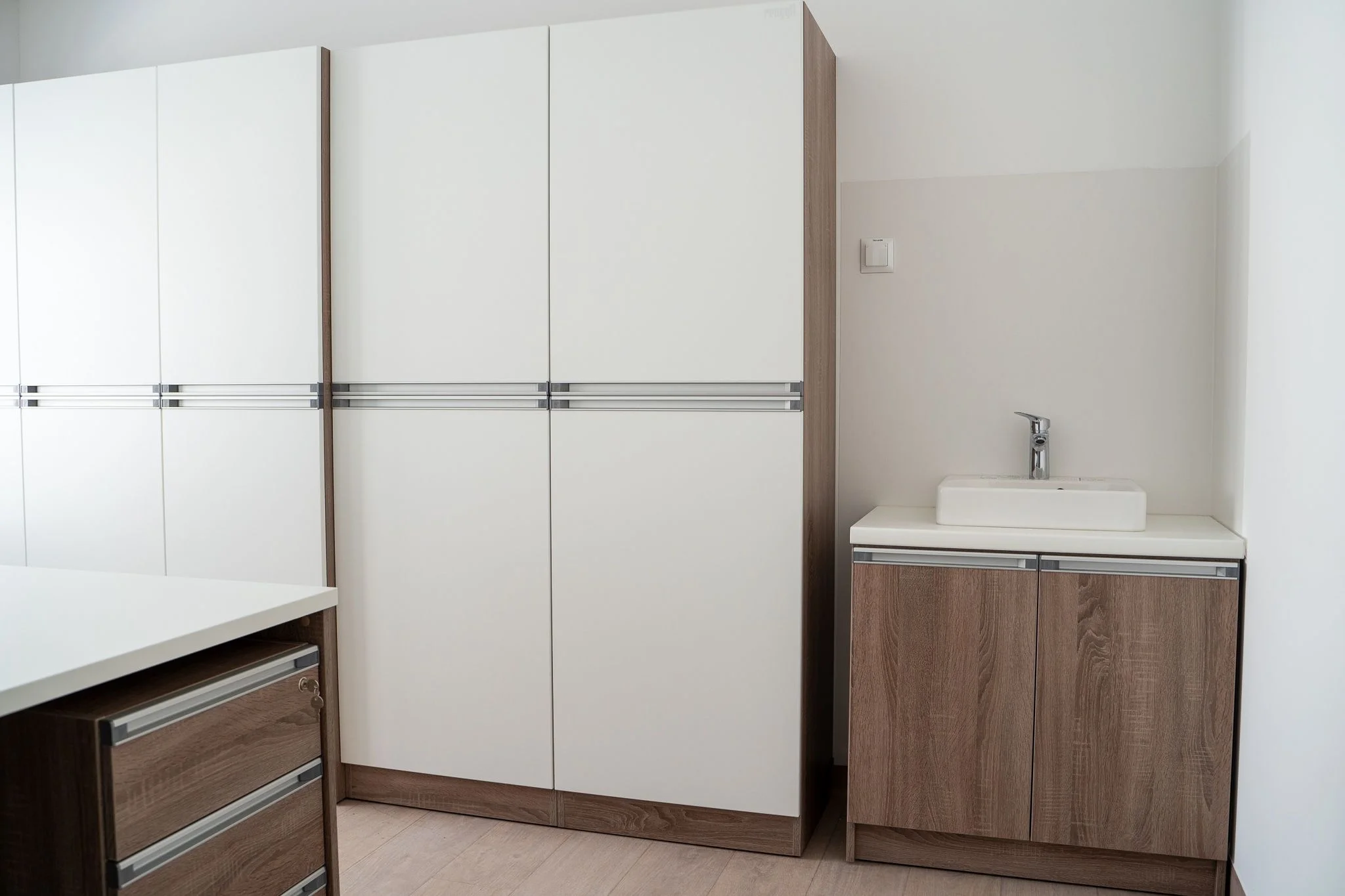
Renggli ventilated cabinet with a filter ventilation unit on the top panel in a laboratory

Overview

Thanks to its advanced hybrid construction and integrated filter ventilation unit, the cabinet guarantees the highest level of work safety in the laboratory, eliminating the risk of harmful vapors escaping into the surroundings.

Features

Key features and construction

  1. Hybrid body construction

    The main body of the cabinet is made of high-quality chipboard permanently bonded to polypropylene (PP) board. This combination provides excellent structural rigidity while making the interior completely resistant to aggressive chemicals, acids, bases and moisture.

  2. Pull-out tray shelf system

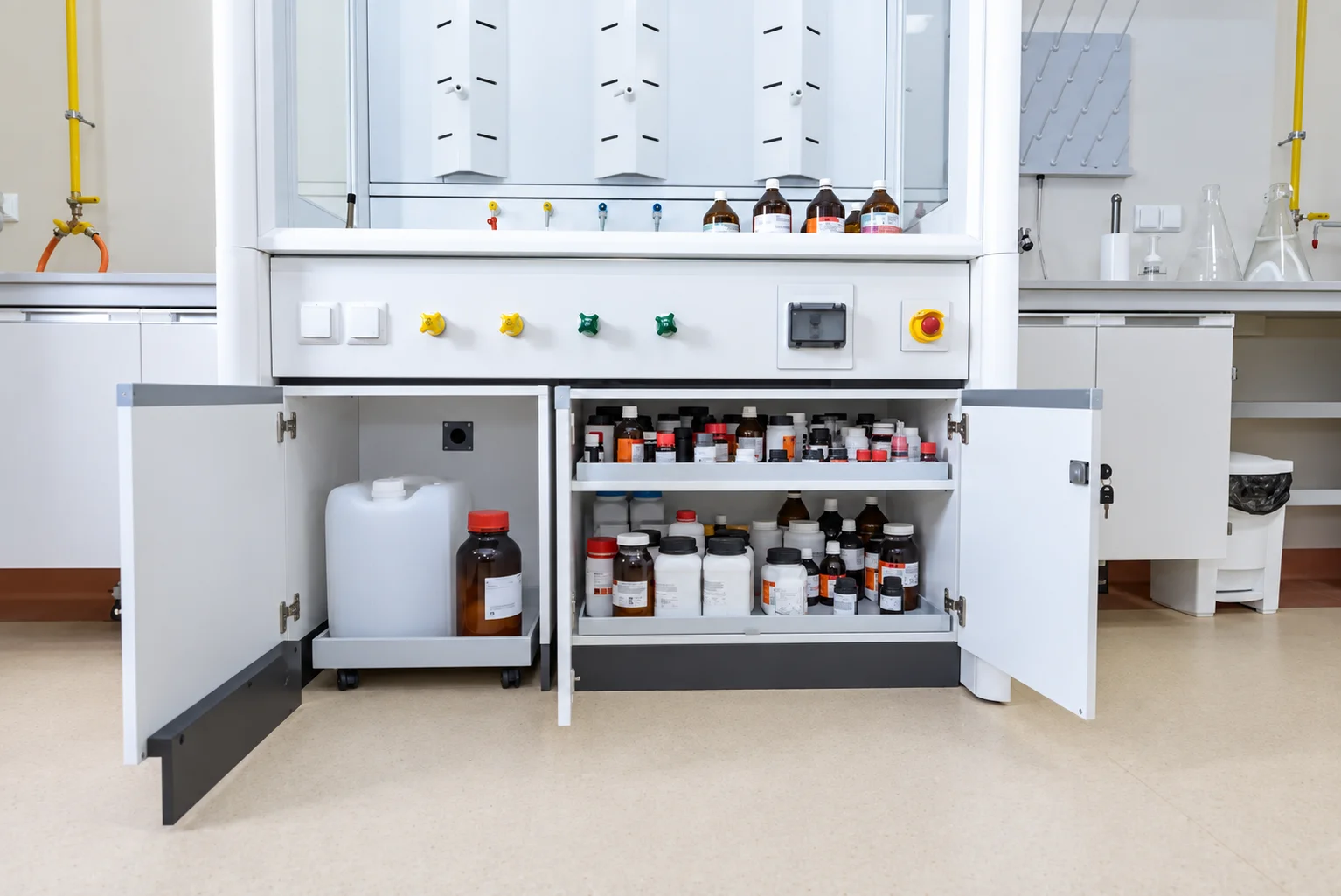
    The cabinet interior is fitted with convenient, fully extendable drawers/shelves. This design gives easy access to stored containers across the full depth of the cabinet, and raised edges effectively prevent substances from spilling if reagent containers leak. As standard, each pull-out shelf has a tray made of polypropylene board.

  3. Integrated, self-contained filtration system

    A filter ventilation unit is mounted on the top panel of the cabinet. It is designed to filter and neutralize toxic and flammable vapors from cabinets (e.g. concentrated acids, bases and non-flammable substances). It does not need to be connected to an existing ventilation system: thanks to the activated carbon filter, unwanted vapors are cleaned and released into the atmosphere without posing a threat to the environment or human life.

Projects

Laboratory cabinets in our projects

About the category

Contents

What is a ventilated chemical cabinet?

A ventilated chemical cabinet is a laboratory cabinet in which a fan continuously draws air from the interior and passes it through an activated carbon filter. Reagent vapours do not build up inside the cabinet or escape into the room when the door is opened. On our model, the filter-fan unit sits on the top panel, so the cabinet needs no connection to the building's ventilation system and can be installed where there is no extraction duct. Our guide to choosing a ventilated chemical cabinet for reagents explains how to match the cabinet to the type of reagent.

Ventilated or fire-resistant cabinet?

A ventilated chemical cabinet is intended for reagents that give off vapours but are not flammable: concentrated acids, alkalis and other volatile substances. It has no fire resistance, so solvents and other flammable liquids must not be stored in it. These belong in 90-minute fire-resistant safety storage cabinets or 30-minute models to EN 14470-1. Where substances are corrosive but do not give off much vapour, an acid and alkali storage cabinet with a duct for connection to an extraction system is sufficient. The situations that call for a ventilated cabinet are covered in our article on when a ventilated chemical cabinet is needed.

Carbon filter: inspection and replacement

The activated carbon filter captures vapours until the carbon becomes saturated with the substances stored in the cabinet. How often it needs replacing depends on the type and quantity of reagents, the room temperature and how often the door is opened. The cartridge is therefore replaced according to the filter manufacturer's recommendations and inspection results, not on a single schedule for all cabinets. When replacing it, record the date and a list of the substances stored: at the next inspection it is then easier to judge whether the filter is saturating faster than usual.

Construction and tray shelves

The cabinet carcass is made of chipboard permanently bonded to polypropylene sheet. The chipboard provides rigidity, while the polypropylene on the inside withstands acids, alkalis and moisture. The interior is fitted with fully extending shelves, each with a polypropylene tray. The raised tray edges contain the liquid if a container starts to leak, and full-depth extension gives access to bottles at the back without reaching deep into the cabinet. Reagents with different hazards are best kept on separate shelves, so that a leak cannot bring an acid into contact with an alkali.

FAQ

Frequently asked questions about ventilated chemical cabinets

A ventilated chemical cabinet is the right choice for reagents that give off vapours but are not flammable, where the room has no extraction duct or running one to it would be difficult. The activated carbon filter cleans the air from inside the cabinet, so vapours do not reach the room. Flammable liquids require a fire-resistant safety storage cabinet to EN 14470-1.

There is no single interval for all cabinets. The service life of the filter depends on the type and quantity of reagents stored, the temperature and how often the door is opened. The cartridge is replaced according to the filter manufacturer's recommendations and the results of saturation checks. It is worth recording the replacement date and a list of the substances stored, so that at the next check you can judge whether the filter is being used up faster than usual.

No. A ventilated chemical cabinet has no fire resistance, so it does not protect its contents during a fire. Solvents, alcohols and other flammable liquids are stored in fire-resistant safety storage cabinets tested to EN 14470-1, of either the 30-minute or the 90-minute type. A ventilated chemical cabinet is intended for acids, alkalis and other volatile non-flammable substances.

From the blog

We write about it

  • 7 min read
    Cabinets and chemical storage

    When is a ventilated reagent cabinet necessary?

    A ventilated reagent cabinet effectively removes dangerous chemical vapors, preventing their escape into the research space and protecting the respiratory tracts of the personnel. The problem of vapor accumulation arises because many substances transition into the gas phase even from properly closed bottles. Every opening of a package intensifies this effect, and gases accumulate in an unventilated space.
  • 8 min read
    Cabinets and chemical storage

    How to store chemical reagents properly in the laboratory?

    Storing chemical reagents in the laboratory is not a matter of alphabetical order - safety is what matters here. Each substance should be segregated by hazard class, not by name. Proper safety cabinets, ventilation, temperature control and consideration of chemical compatibility are the foundations of work in any laboratory. By following these rules, the risk of accidents, fires and contact with toxic or corrosive substances is minimized.

  • 4 min read
    Fume hoods and ventilation

    Why is laboratory ventilation crucial for staff safety?

    Laboratory ventilation is one of the most important safety systems in every chemical and biological laboratory. Its primary role is to protect the health and life of staff by effectively removing toxic vapors, flammable gases, aerosols, and bioaerosols generated during research and technological processes. Efficiently designed general mechanical ventilation prevents the accumulation of hazardous substances in the air, minimizing the risk of poisoning, explosions, and biological contamination. Equally important is the role of ventilation in creating a healthy work environment, which directly impacts staff concentration and comfort.

Newsletter

Stay up to date with Renggli

New projects, products and guides on laboratory furniture, in one place.

By subscribing you agree to receive messages from Renggli and accept the privacy policy. You can opt out at any time.

Let us plan your laboratory

Tell us what has to happen in the room. We will pick the furniture and work out the rest.

Add to enquiryAddedIn enquiry

See the projects

Free project quote.