Skip to content

Laboratory taps and valves

Water taps

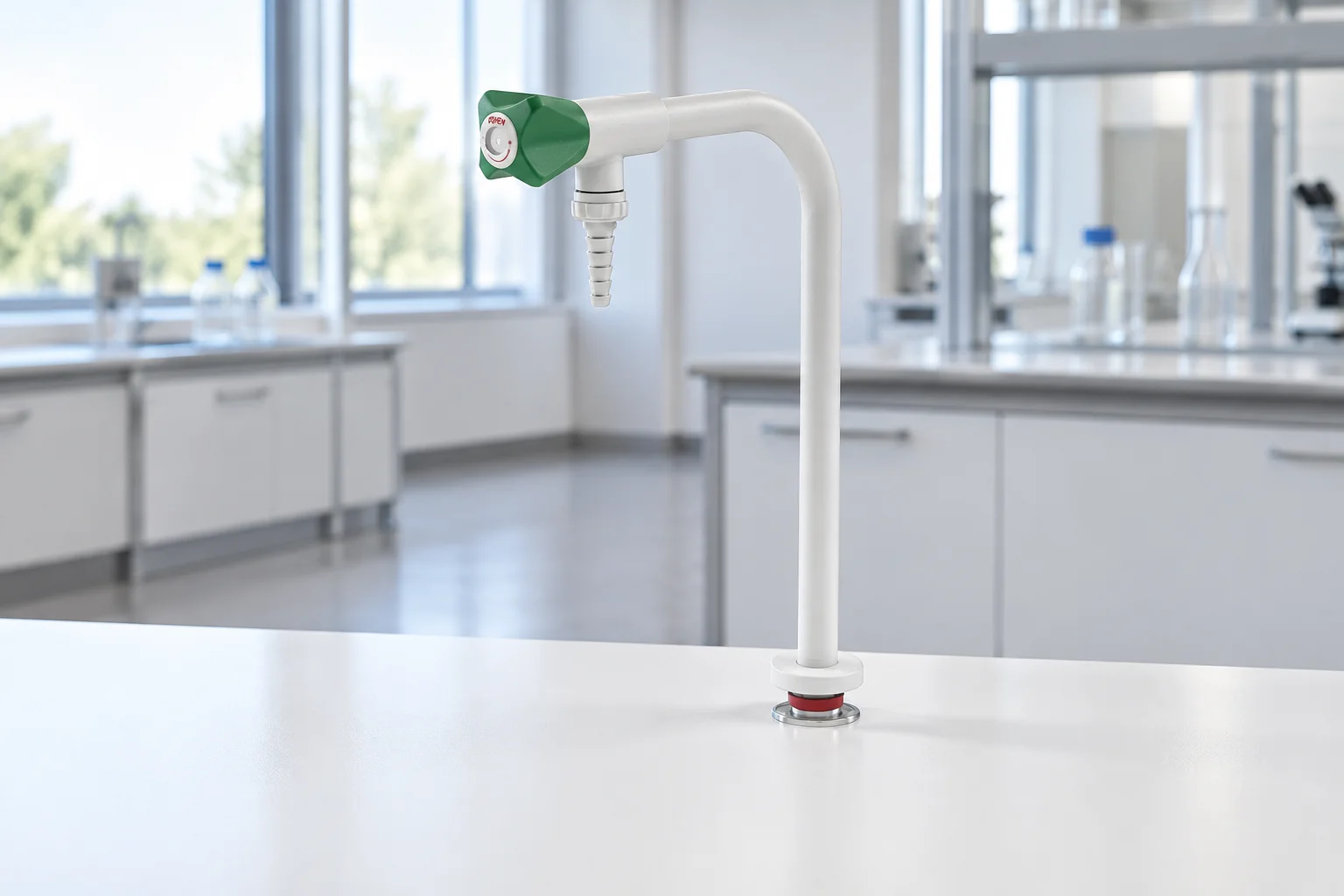
Laboratory water taps are worktop-mounted and wall-mounted laboratory taps that supply cold, hot or demineralised water to glassware washing and reagent preparation stations in the laboratory.

Request a quoteAddedIn enquiry

See products
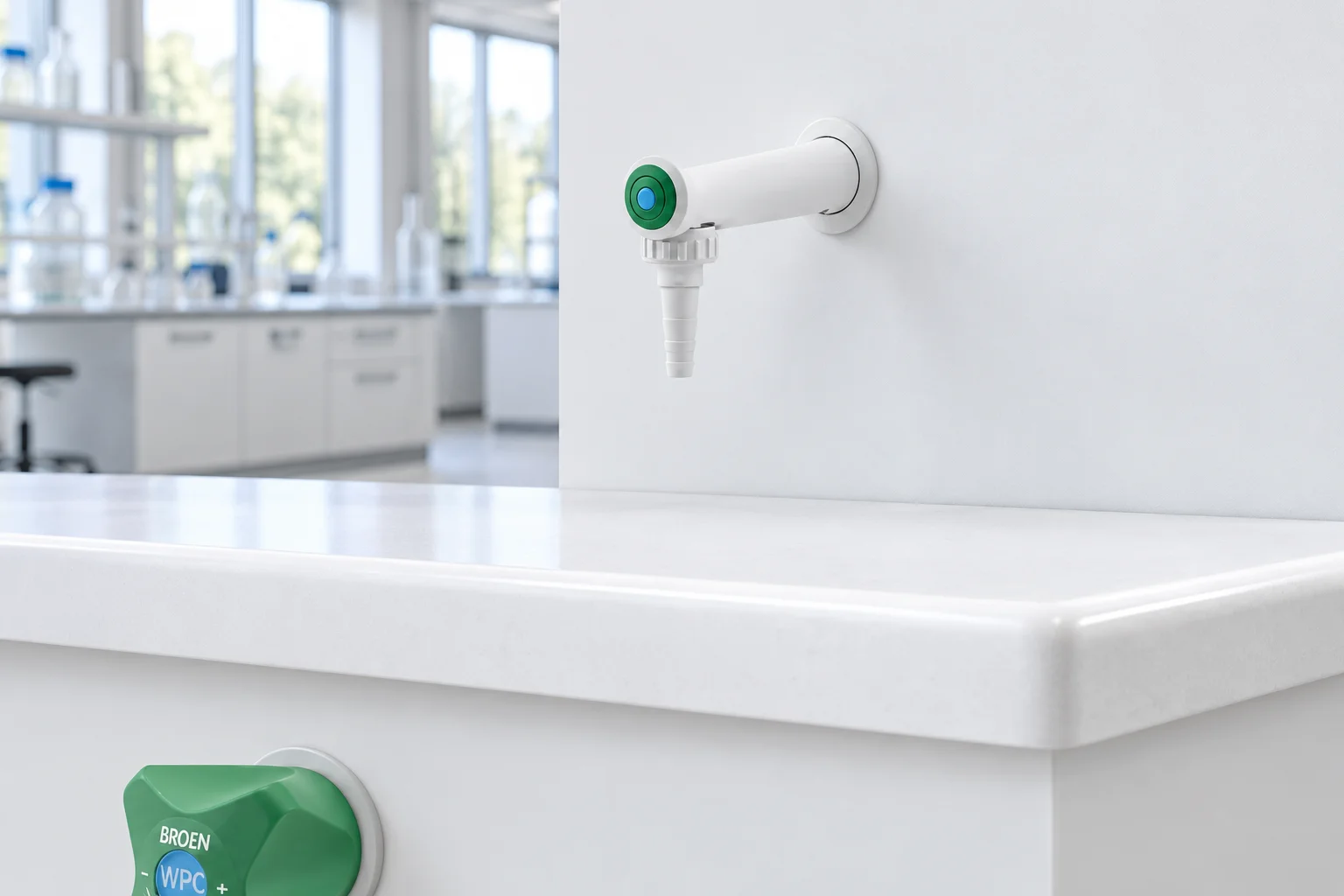
Laboratory tap with a green handle and a hose-nozzle spout on a white worktop

About the category

Contents

How to choose a laboratory tap for the type of water

A laboratory tap is chosen according to the water it has to deliver: cold only, cold and hot, or demineralised. Taps are part of our laboratory taps and valves range, which also includes laboratory valves for water and gases. There are four models to choose from:

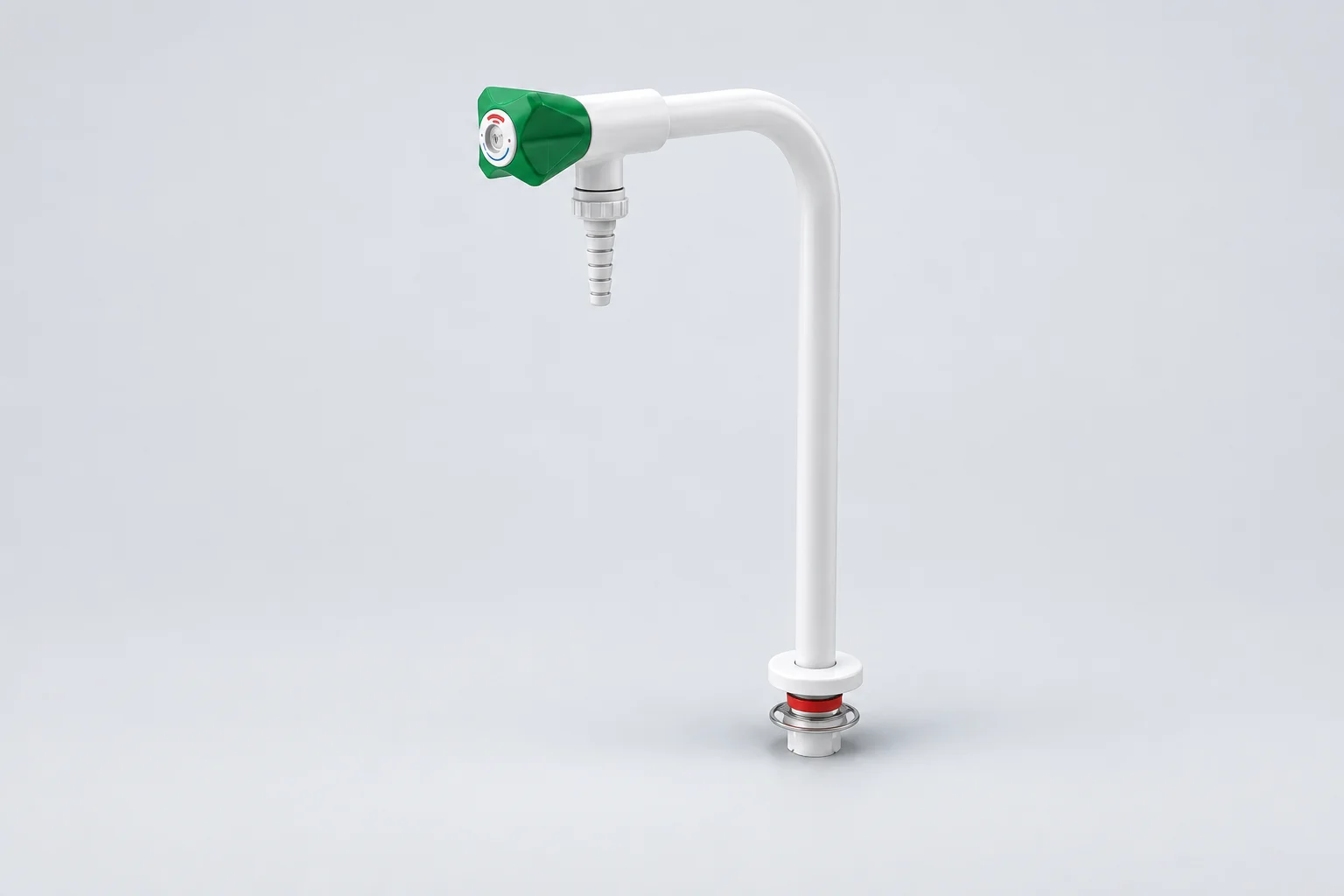
The diaphragm valve head in the demineralised water tap prevents secondary contamination of the purified water. A demineralised water loop typically operates at a pressure of 3 to 6 bar, and the draw-off points are installed at the glassware washing stations. We cover the wider classification into pillar, wall-mounted, single-column and double-column taps in our article on the types of laboratory taps and valves.

Brass, epoxy coating and swivel spout

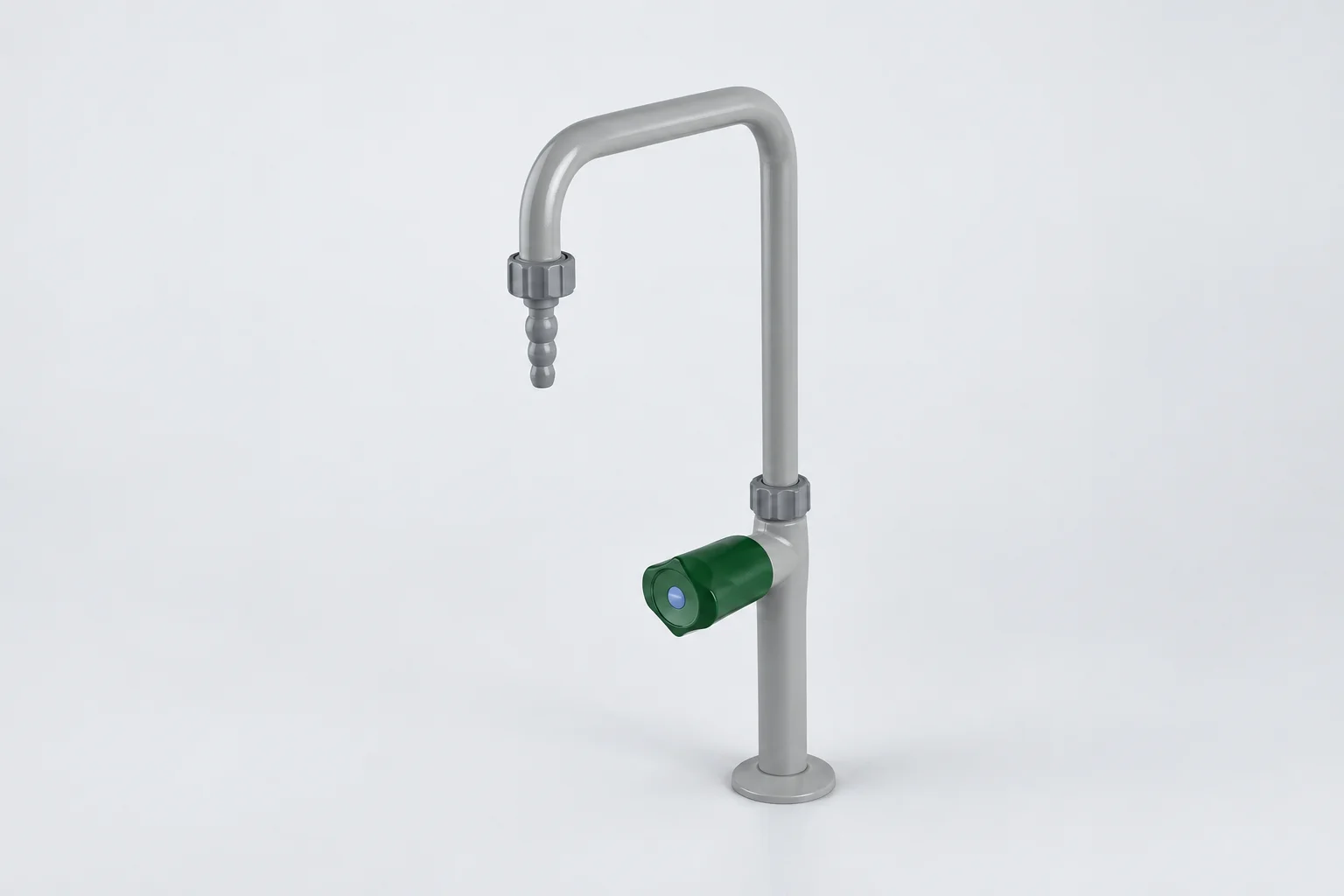
All four taps have internal pipes made of brass sheet coated with a layer of epoxy paint. The spouts swivel, so the flow can be directed over a vessel or to another part of the sink bowl.

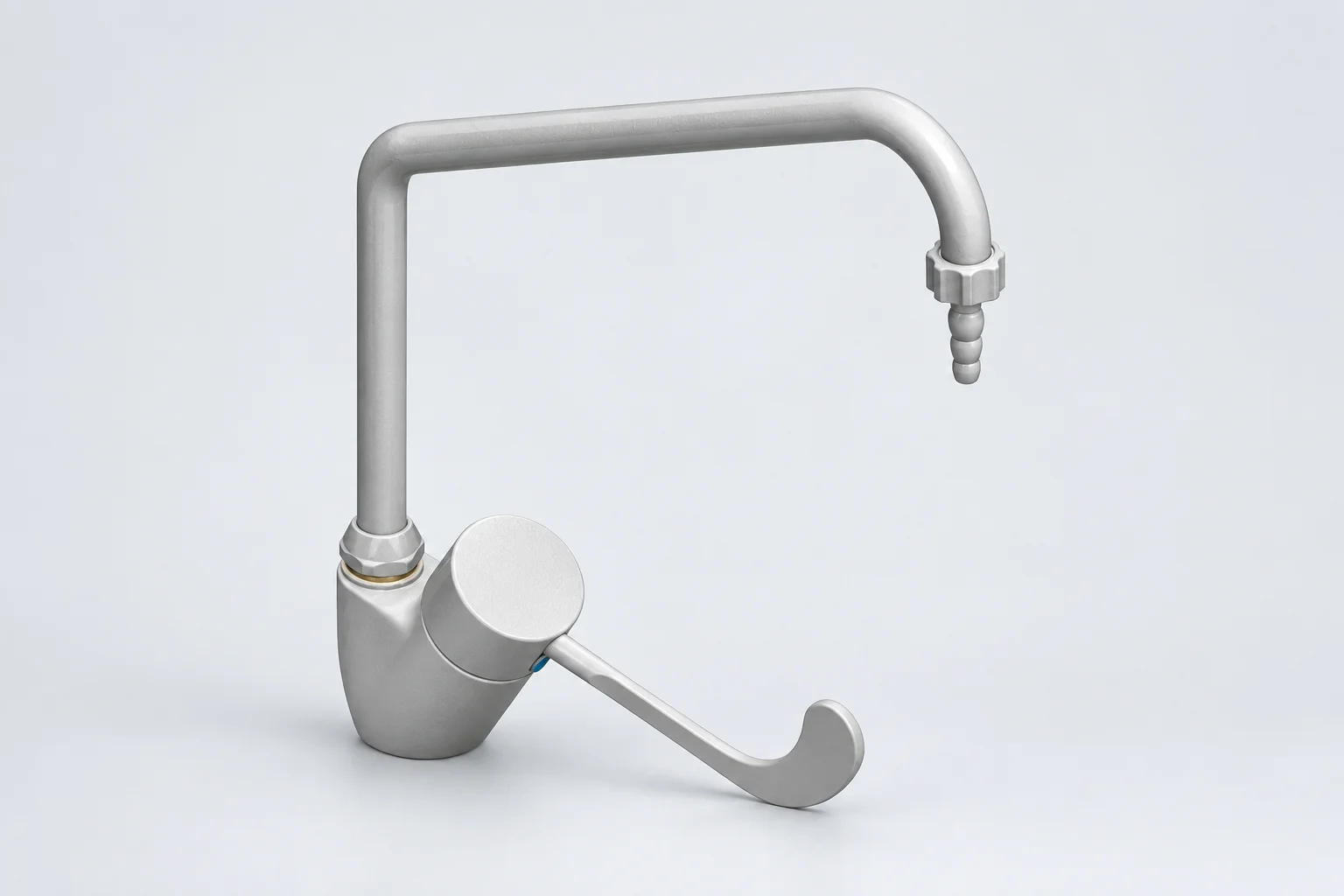
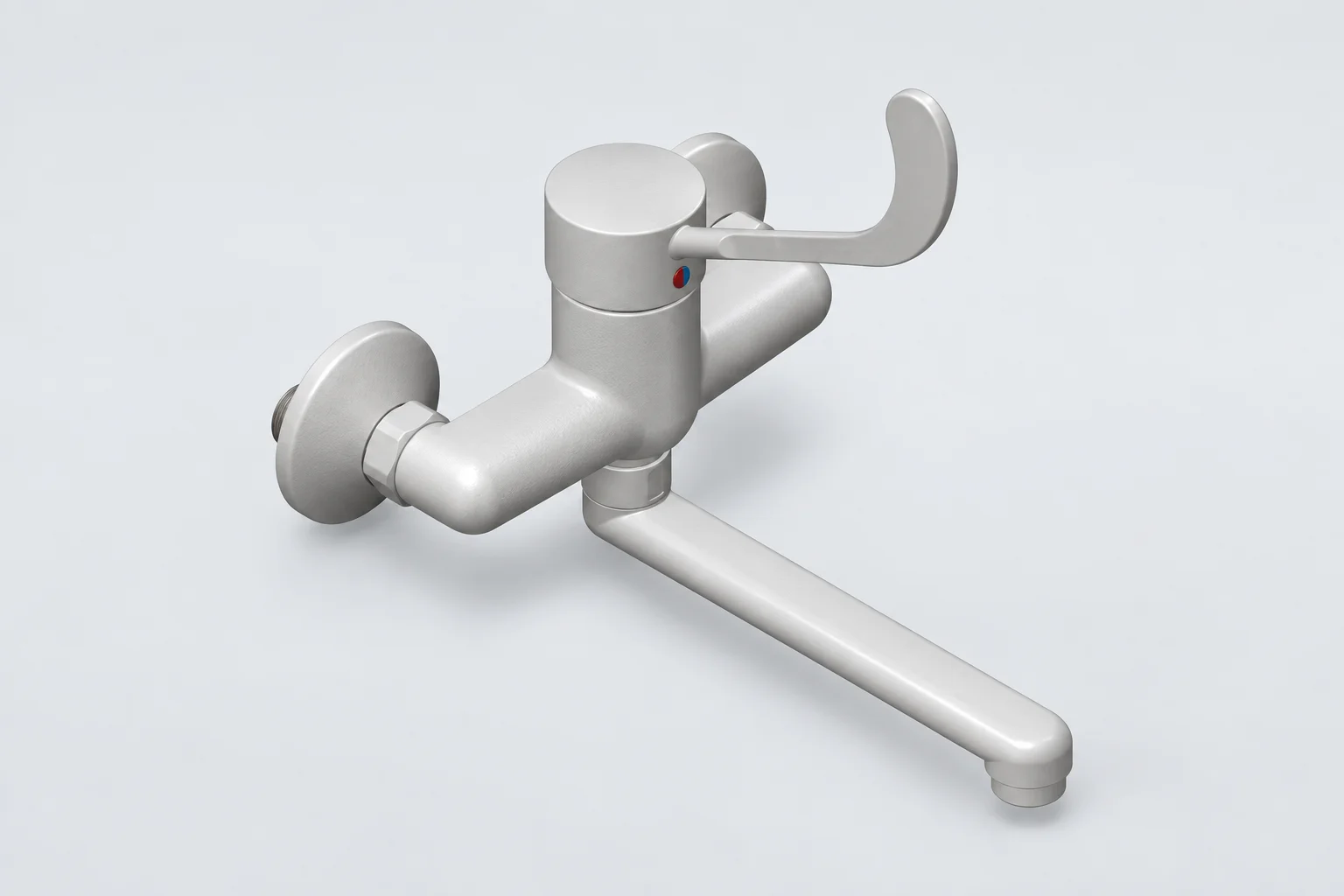
The cold water and demineralised water taps have a hose barb at the end of the spout, onto which a hose can be fitted to connect auxiliary equipment. The mixer taps have an extended lever: the technician can turn the water on and off with an elbow when both hands are occupied, which improves hygiene at work.

When matching a tap to a sink, spout length matters: 15 cm on the cold water and demineralised water taps, 30 cm on both mixer taps. The flow should land in the centre of the laboratory sink bowl, so spout length is checked together with the bowl dimensions and the position of the mounting hole.

From this categoryLaboratory cold water tapA cold water faucet is a very commonly chosen solution in laboratories. This solution is designed for tabletop installation.See productCold water tap: grey swivel spout with a green handle on a light background

Installation, labelling and maintenance

Worktop-mounted taps are installed through the laboratory worktop or through the sink, at workstations where water is used.

Each draw-off point is labelled in accordance with EN 13792: a colour marker on the handle, supplemented by an abbreviation or symbol, shows which water the tap delivers. In this system, cold, hot and demineralised water are treated as separate media. We have summarised the coding rules in our article on how to label media in the laboratory.

Taps are wiped daily with a damp cloth and a mild detergent, together with the sink they serve. Once a quarter, check that the levers and handles move smoothly, and carry out a technical inspection once a year. Leak tests on the installation are performed by a qualified maintenance engineer. We describe the schedule and the division of responsibilities in our guide to maintaining laboratory taps and valves.

FAQ

Questions about laboratory taps

A laboratory tap has features a kitchen tap lacks: internal brass pipes coated with epoxy paint, a swivel spout with a hose barb, and a lever extended for elbow operation. A separate model with a diaphragm valve head is used for demineralised water. At the workstation, the tap is also given a colour code for the medium, in the same way as gas valves.

It should not be. Demineralised water draws missing ions from its surroundings, so ordinary brass fittings without a suitable coating corrode, and the water leaches zinc and copper from them. Plasticisers from standard seals also pass into the medium. A tap with a diaphragm valve head is therefore used, with EPDM or PTFE seals, as we explain in our article on choosing taps and valves for demineralised water.

That depends on the water used to wash and rinse the glassware. For cold water only, a worktop-mounted tap with a hose barb is sufficient; washing in hot water requires a mixer model; and rinsing with purified water calls for a demineralised water tap. Two taps can be fitted at one sink, each with its own colour code for the medium.

The price of a laboratory tap depends on the model and the number of draw-off points. A mixer with an extended lever and a diaphragm valve head for demineralised water are features that the cold water tap does not have. The cost is also affected by the mounting version, worktop or wall, and by the number of workstations where taps are installed together with sinks and worktops.

From the blog

We write about it

Newsletter

Stay up to date with Renggli

New projects, products and guides on laboratory furniture, in one place.

By subscribing you agree to receive messages from Renggli and accept the privacy policy. You can opt out at any time.

Let us plan your laboratory

Tell us what has to happen in the room. We will pick the furniture and work out the rest.

Request a quoteAddedIn enquiry

See the projects

Quote within 1-5 days, furniture design free with your order.