Laboratory fume hood - how to choose the right model for the type of research and applicable standards?
Choosing the right laboratory fume hood is one of the most important decisions when designing and equipping a modern research space. This device not only serves as a central point for protecting personnel from harmful vapors, but it is also crucial for maintaining the reproducibility of results and the purity of the analyses themselves. For a chemical fume hood to perform its task flawlessly, its specification must precisely match the profile of the research being conducted, the specifics of the reagents used, and the rigorous criteria of international safety standards.
 Renggli TeamEditorial team
Published: Updated Reading time: 7 min read
Contents
Laboratory fume hood - how to choose the right model for the type of research and applicable standards?
Choosing the right laboratory fume hood is one of the most important decisions when designing and equipping a modern research space. This device not only serves as a central point for protecting personnel from harmful vapors, but it is also crucial for maintaining the reproducibility of results and the purity of the analyses themselves. For a chemical fume hood to perform its task flawlessly, its specification must precisely match the profile of the research being conducted, the specifics of the reagents used, and the rigorous criteria of international safety standards.
The role of a fume hood in ensuring laboratory safety#
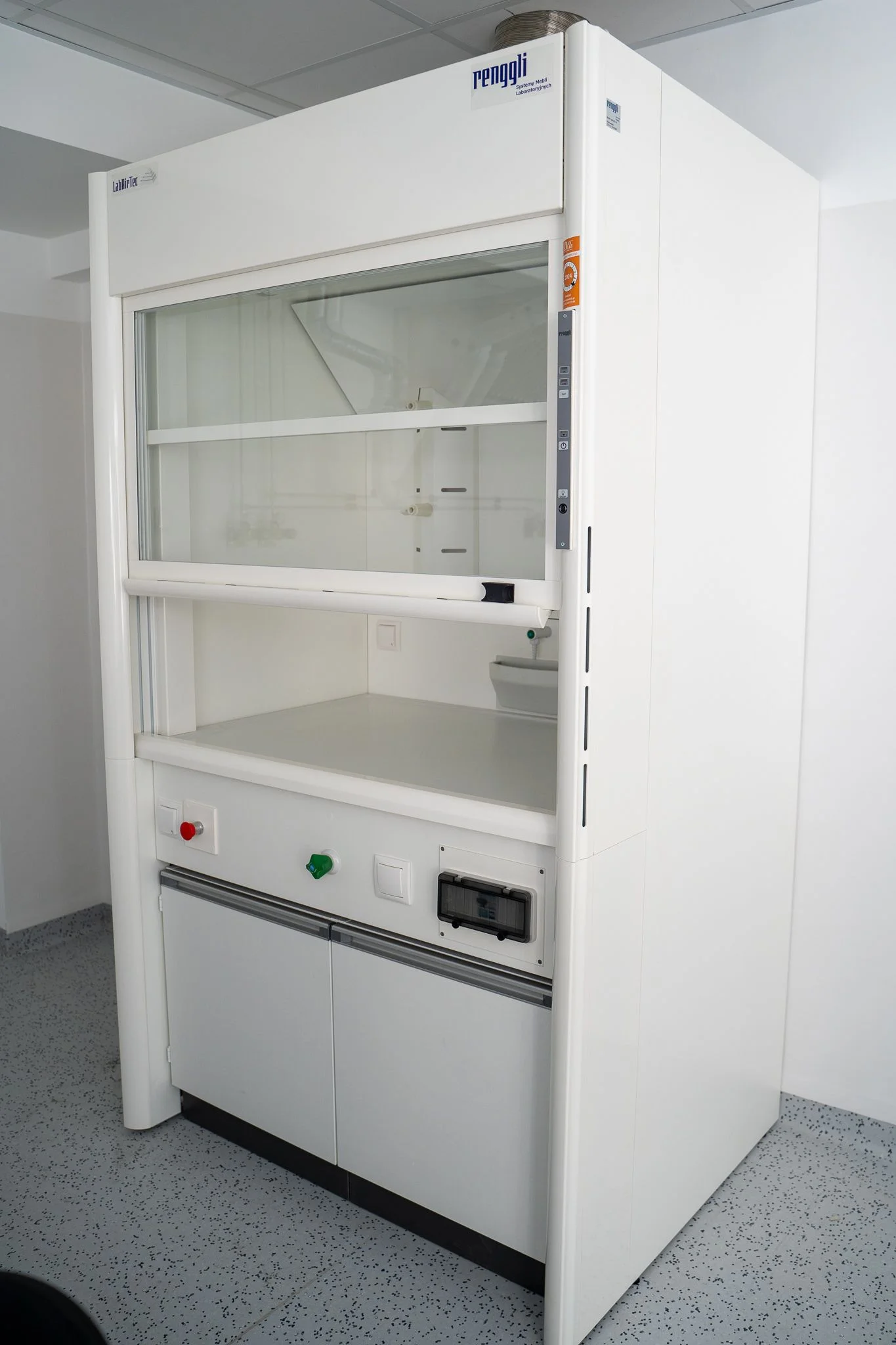
A laboratory fume hood, also known as a chemical fume hood, is a key element of protective infrastructure in any modern research and industrial environment. The main task of this device is the effective extraction of dangerous vapors, dusts, gases, and toxic substances generated during experiments. Operating based on controlled airflow, it prevents harmful compounds from entering the workers' breathing zone.
In addition to protecting personnel, fume hoods secure the analyzed samples and protect the laboratory from the ignition of volatile substances. However, creating a fully safe working environment requires integration with appropriately designed elements, such as laboratory furniture. Modern research space requires consistent equipment. In laboratories where flexibility and the ability to easily modify workstations are important, the modular RL6 system is perfect, allowing for quick adaptation to current needs.
The selection of an appropriate model must be preceded by a thorough analysis of the specific chemical procedures being carried out. The type of reagents used, their concentration, the reaction temperature, and the frequency of work must be taken into account. Only then will the fume hood fulfill its protective task and ensure full compliance with rigorous OHS requirements.
Types of fume hoods - from general chemistry to specialized applications#
The diversity of research work means that there are various fume hood variants available on the market, tailored to specific chemical and thermal loads. Traditional fume hoods dedicated to general chemistry are designed with universal synthesis and analytical work in mind. They stand out with their solid construction and standard equipment for water and gas media.
In laboratories where precise physicochemical measurements are conducted, chemical fume hoods often adjacent to specialized measurement workstations. In such places, weighing and anti-vibration tables prove irreplaceable, eliminating ground vibrations that could disturb sample weighing results. The correct placement of these elements in the space prevents the airflow from affecting sensitive measuring devices.
To maintain full functionality of the working zone, the fume hood is equipped with integrated access points to water and sewage. In modern chemical laboratories, the focus is primarily on polypropylene sinks and models made of monolithic ceramics, which guarantee the highest possible resistance to aggressive acids, bases, and organic solvents. Much less frequently, mainly for less demanding procedures and flushing non-aggressive residues, a standard stainless steel sink is used as an economical variant.
Fume hoods for general and analytical chemistry#
Models used for daily analytical work are characterized by resistance to a wide spectrum of organic solvents, dilute acids, and bases. The standard interior of the working chamber is lined with materials highly insensitive to corrosive substances and high temperatures, hence technical ceramics or polypropylene are the most frequently chosen solutions.
In analytical fume hoods, seamless access to auxiliary media such as natural gas, compressed air, or a vacuum also plays an important role. Dedicated laboratory fittings are mounted in a way that prevents direct contact between the user and the dangerous atmosphere inside the chamber. Control valves are placed on the front panel of the device to ensure maximum convenience and safety.
For efficient work with liquid reagents, properly selected chemically resistant laboratory sinks are essential, draining process wastewater to appropriate tanks. Their construction and material must prevent corrosion and reactions with the draining chemical mixtures. Precise dosing of liquid and gaseous substances inside the fume hood chamber is guaranteed by appropriate laboratory valves. They are characterized by increased tightness and resistance to operating pressure, constituting a reliable element of the entire media installation.
Specialized laboratory fume hoods for special tasks#
Some research processes require the use of fume hoods with very rigorous material and construction specifications. An example is working with hot, concentrated inorganic acids, such as hydrofluoric or perchloric acid, which destroy standard ceramics and metals. In such cases, the chamber lining is made of specialized plastics, e.g., polypropylene, or solid ceramic plates.
Another group of devices are fume hoods intended for work in explosive atmospheres (ATEX), equipped with spark-free electrical and lighting installations. On the other hand, radiochemical fume hoods have a reinforced base structure and lead shields protecting the operator from ionizing radiation. At microscopic preparation and biological synthesis stations, dedicated weighing tables are used next to chemical fume hoods. Such technological integration allows for safe handling of dangerous powdered reagents before they are dissolved in the fume hood.
Fume hood design and user protection effectiveness#
The effectiveness of a fume hood depends on its geometry, which prevents air turbulence from pushing toxins out of the chamber. Exhaust panels on the rear wall play a key role, with slots ensuring an even flow of gases of varying densities. The front sliding sash made of tempered or laminated glass acts as a barrier protecting the operator from splashing liquids and debris. Modern windows feature systems preventing them from dropping suddenly and aerodynamic handles directing the airflow inside.
An extremely important technical parameter is the materials used for the laboratory worktops that form the working surface of the fume hood. They must have a raised edge to prevent spilled chemicals from leaking outside the device and feature full thermal resistance. The ergonomics of working at a fume hood affects the analyst's comfort and focus during multi-hour procedures. Therefore, the workstation should be equipped with professional laboratory chairs that have certified washable coatings resistant to disinfectants.
Key technical parameters: airflow, control, and energy efficiency#
The proper functioning of a fume hood relies on maintaining optimal airflow velocity at the working opening. Too low a velocity will not ensure the capture of dangerous gases, while too high a velocity can cause turbulence and push vapors outside. Modern laboratories increasingly use intelligent VAV (Variable Air Volume) control systems, which adjust the amount of extracted air to the degree of the fume hood window's opening. This solution significantly reduces electricity consumption and lowers the costs of air conditioning and heating the supply air to the room.
Legal standards requirements and safety standards#
The primary document regulating the requirements for fume hoods in Europe is the EN 14175 standard. It specifies rigorous type-testing methods, acceptance procedures, and constant criteria for assessing the protective zone's effectiveness. Compliance with this standard guarantees that a given device has been tested for its ability to contain contaminants. The certification process includes, among other things, airflow tests, testing resistance to external disturbances, and verifying the performance of the VAV monitoring system. The fume hood user should regularly carry out periodic inspections and control measurements of the inlet air velocity to maintain the highest level of protection.
Safety standards apply not only in chemical laboratories but also in the medical sector. In these environments, fume hoods are essential equipment in diagnostic and analytical facilities, where they provide necessary personnel protection when working with harmful reagents. To ensure the continuity of the infrastructure of a medical or diagnostic facility, investors reach for specialized medical furniture. They meet strict hygiene criteria, exhibit a high degree of sterility, and perfectly complement the technological lines of vapor extractors.
Comprehensive laboratory space equipment#
Creating a safe and efficient laboratory requires coherent planning of all functional zones. The fume hood, as a central device for hazardous work, must cooperate with furniture systems, washing zones, and administrative facilities. Harmonious organization also includes the documentation area and test result preparation zone. Properly selected office furniture located in the clean zone allows analysts to comfortably keep records without the risk of contaminating paper documentation.
The ergonomics of working at fume hoods and laboratory furniture translates directly into the efficiency of the research team. The use of certified components guarantees the longevity of the installation and lowers the total operating costs of the facility. In summary, the choice of an appropriate fume hood should take into account the nature of the analyses, EN 14175 regulations, and compatibility with the rest of the infrastructure. Investing in a modern fume hood with intelligent control is a guarantee of the highest level of personnel protection and precision in the research conducted.